
Main Courses
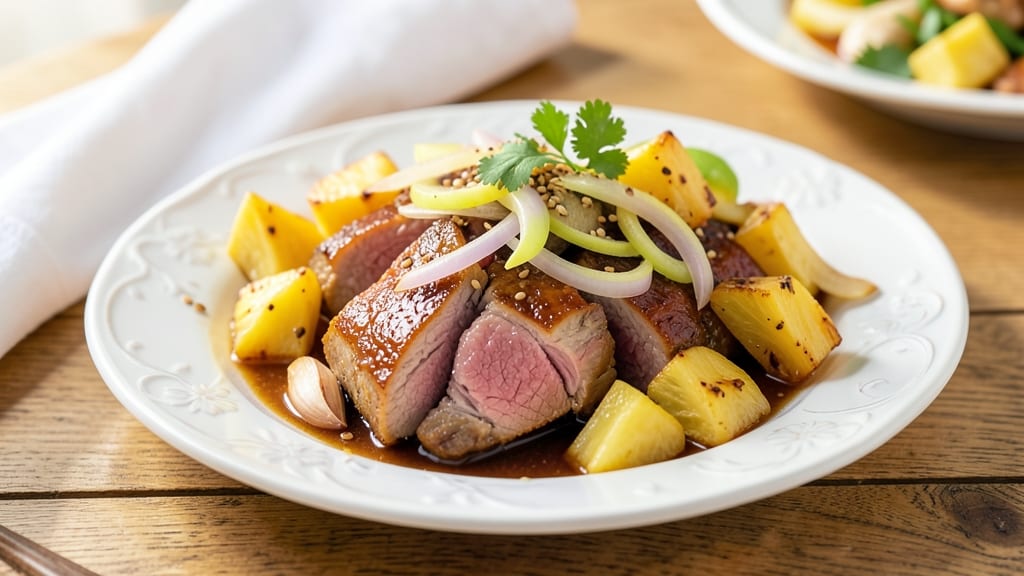
This Filipino-style pork with pineapple pinoy recipe delivers the perfect balance of caramelized edges and sweet-tangy glaze that makes every bite unforgettable. 💛 Growing up in Georgia, I fell in love with the way tender pork shoulder transforms when braised with pineapple—juicy, sticky, and bursting with flavor.
The secret lies in slow-cooking the pork until it practically falls apart while letting the pineapple syrup reduce into a glossy, caramelized coating.
What sets this dish apart is the two-stage cooking process: first searing the pork to lock in juices, then braising it with pineapple chunks until the natural sugars caramelize into a rich, tangy sauce.
No fancy techniques—just a Dutch oven, patience, and a few simple ingredients that work together like a well-rehearsed band. The result? Pork so tender it melts in your mouth, paired with pineapple that's perfectly sweet without overpowering the savory depth of the meat.
This recipe brings authentic Filipino comfort food to your table—rich, aromatic, and satisfying enough to feed a crowd. The caramelized edges create a textural contrast that makes every bite exciting, while the natural sweetness of the pineapple cuts through the pork's richness.
Serve it over steamed jasmine rice or with a side of garlic fried rice to soak up every last drop of that luscious glaze. Whether you're cooking for family gatherings or a weeknight dinner, this dish delivers restaurant-quality results with minimal effort.
The slow braising ensures tender pork every time, and the pineapple adds a brightness that keeps the flavors fresh and inviting. Trust me—once you try this, it’ll become a staple in your rotation.
Ingredients for pork with pineapple pinoy
Pantry staples meet tropical flavors in this Filipino pork classic.
| Ingredient | Amount | Notes |
|---|---|---|
| Pork Shoulder 🥩 | 3 lb | Bone-in for flavor, cut into 2-inch chunks |
| Fresh Pineapple 🍍 | 2 cups | Chunks with skin on for caramelization |
| Yellow Onion 🧅 | 1 whole | Sliced into half-moons |
| Garlic Cloves 🧄 | 6 cloves | Minced for aromatic base |
| Fresh Ginger 🌿 | 1 inch | Peeled, sliced thinly |
| Soy Sauce 🥄 | ½ cup | Use dark soy for color |
| Brown Sugar 🍚 | ½ cup | Packed, for caramelization |
| Calamansi Juice 🍋 | ¼ cup | Substitute lime juice if unavailable |
| Vegetable Oil 🫒 | 2 tbsp | High smoke point for searing |
| Black Peppercorns 🌶️ | 1 tsp | Freshly cracked for heat |
| Bay Leaves 🍃 | 2 whole | For aromatic depth |
| Salt 🧂 | 1 ½ tsp | Kosher or sea salt |
| Jasmine Rice 🍚 | 2 cups | Uncooked, for serving |
The pork shoulder is non-negotiable here—bone-in gives the most flavor, and 2-inch chunks ensure even cooking. Look for well-marbled cuts at Costco or your local butcher. If you can't find calamansi, lime juice is the best substitute—it's tangy but not as complex. For pineapple, fresh chunks with skin on caramelize best, but frozen works in a pinch. The soy sauce should be dark soy for that signature color, though regular works too. Ginger loses potency fast, so buy it fresh and use it within 1 week—the bulk bins at Whole Foods are great for this.
No calamansi? Lime juice plus a pinch of salt gets you close. Running low on soy sauce? Coconut aminos work in a bind, though the flavor will be subtly different. The brown sugar is key for caramelization—don't substitute white sugar unless you're okay with a less rich glaze. For a quicker version, swap the pork shoulder for pre-cut pork loin (about 2 lbs), but it won't be as tender. The bay leaves add depth, but if you're out, a sprig of fresh thyme works too. Fresh ginger should smell bright and citrusy—if it smells dull, toss it.
This dish tastes even better the next day—plan ahead. Store in an airtight container for up to 5 days in the fridge, or freeze for 3 months. The sauce thickens as it cools, so add a splash of water when reheating. Serve over steamed jasmine rice to soak up every last drop of that sticky, caramelized glaze. Leftovers reheat beautifully—microwave with a splash of water to revive the moisture. Double the batch if you're feeding a crowd; it disappears fast.
Why You'll Love This Recipe
- One-Pan Magic: I swear by this dish when I’m too tired to wash dishes. Sear the pork shoulder, toss in chopped pineapple and onions, then let the ginger and garlic work their magic in one pot—no stress, just flavor.
- Sweet-Savory Balance: That tangy pineapple cutting through the rich pork? It’s like a party in your mouth. The ginger gives it a little kick, while the garlic and onions deepen the savory notes—simple ingredients, but wow.
- Leftover Hero: Between us, this tastes even better the next day. I make a big batch on Sundays, and by Wednesday, it’s the star of my lunchbox. The pork stays tender, and the pineapple keeps it from getting boring.
- Budget-Friendly Feast: Pork shoulder is cheap, and pineapple stretches it into a meal that feeds four for under $15. Plus, the leftovers turn into quick lunches or even a filling breakfast hash—no waste, all win.
Step-by-step instructions for pork with pineapple pinoy recipe
Here's how to transform simple ingredients into a rich, caramelized masterpiece with tender pork and sweet-tangy glaze.
🔥 Step 1: Sear the Pork Shoulder for Maximum Flavor
Heat the 2 tablespoons vegetable oil in a large Dutch oven over medium-high heat until shimmering. Add the 3 lb pork shoulder in a single layer, working in batches if needed, and sear for 3-4 minutes per side until deep golden brown with crispy edges. This initial sear locks in juices and builds that essential Maillard crust.
Here's the thing—don't crowd the pan. You want those pork pieces to develop color and texture without steaming. Once all pieces are browned, remove them and set aside. The rendered fat in the pan will become the flavor foundation for your glaze, so don't wipe it out.
🍳 Step 2: Build the Sweet-Tangy Glaze Base
In the same Dutch oven, add the 1 whole yellow onion sliced into half-moons and cook for 5 minutes until softened and slightly caramelized. Add the 6 cloves minced garlic and 1 inch sliced fresh ginger, cooking for another 1 minute until fragrant—this prevents the garlic from burning.
Pour in the 0.5 cup soy sauce and 0.5 cup packed brown sugar, stirring to deglaze the pan and scrape up all those delicious browned bits. Let it simmer for 2-3 minutes until slightly thickened. Here's where the magic happens: the sugar starts caramelizing, creating depth of flavor that will cling to the pork.
🥘 Step 3: Simmer with Pineapple and Aromatics
Return the pork shoulder to the Dutch oven along with the 2 cups fresh pineapple chunks (with skin on for caramelization), 2 whole bay leaves, 1 teaspoon cracked black peppercorns, and 1.5 teaspoons salt. Pour in the 0.25 cup calamansi juice and add enough water to just cover the pork—about 1 cup should do it.
Bring to a gentle boil, then reduce heat to low and cover partially. Simmer for 1 hour 15 minutes until the pork is fork-tender and the sauce has thickened. You'll know it's ready when the pork easily pulls apart at the bone and the sauce coats the back of a spoon. Real talk: resist the urge to peek or stir too often—the sauce needs time to develop its complex flavors.
⏰ Step 4: Caramelize and Reduce for Glossy Finish
Once the pork is tender, increase heat to medium-high and uncover the pot. Let the liquid reduce by about half—this should take 10-15 minutes)—until the sauce becomes syrupy and glossy. The pineapple skins will caramelize beautifully, adding texture and visual appeal.
Here's the moment that matters: taste and adjust seasoning. You might need a touch more salt or a splash of calamansi juice to balance the sweetness. The sauce should coat the pork in a sticky, caramelized layer that clings perfectly. If it's too thin, let it reduce longer; if too thick, add a splash of water and stir.
🍚 Step 5: Serve Over Jasmine Rice
Transfer the pork shoulder to a cutting board and let it rest for 10 minutes before slicing against the grain into ¼-inch thick pieces. Discard the bay leaves and peppercorns, then spoon the rich glaze over the sliced pork. Serve immediately over 2 cups cooked jasmine rice—the fragrant rice absorbs the sweet-tangy sauce beautifully.
Each bite should deliver tender, flavorful pork with a perfect balance of sweet pineapple, tangy calamansi, and savory soy sauce. The caramelized edges add that restaurant-quality touch that makes this dish truly special. Don't forget to save some of that glorious sauce for dipping!
Pro Tips For Making Pork With Pineapple Pinoy
- Brown the Pork First: Don’t skip this step—sear the pork shoulder in chunks over medium-high heat until deep golden, about 3-4 minutes per side. I learned this the hard way: skipping the browning means a pale, bland sauce later. The crust adds flavor and keeps the meat juicy.
- Use Pineapple Cores: Toss the pineapple cores into the pot with the rest—no need to peel or cut them. They’re sweeter, less fibrous, and add depth to the sauce. (Yes, even if it looks messy.) The extra juice caramelizes into a richer base.
- Sauté Onions Low and Slow: Cook the onions until translucent, not golden—about 8-10 minutes on low heat. Rushing this makes them bitter and turns the sauce cloudy. My grandmother swore by this, and she was right: patience here makes a real difference.
- Deglaze with Pineapple Juice: After browning the pork, splash in ¼ cup of the pineapple juice (strained) to scrape up the fond. It’s the thing that matters most for a flavorful sauce. Skip this, and you’ll end up with a thin, one-dimensional liquid.
Common mistakes when making this recipe
Overcooking the Pork
One of the biggest mistakes I see is letting the pork shoulder dry out. The 1 hour 15 minutes simmer time is just a guideline—your pork should be fork-tender, not falling apart into shreds. If you cook it too long, the meat becomes stringy and loses its juicy texture.
I check doneness by inserting a meat thermometer into the thickest part—it should read 195-200°F before removing it from heat. 🌡️
Pro tip: If your pork reaches 203°F and still feels tough, it's overcooked. The key is patience—let the residual heat finish cooking the meat while you reduce the sauce. Trust me, I've learned this the hard way after serving dry pork to a crowd at The Smoky Pig!
Skipping the Sear
Some cooks rush the searing step, thinking it's optional. But that 3-4 minute per side sear is what builds the Maillard crust that creates deep, complex flavors.
Without it, your pork will taste flat and one-dimensional. I use a Lodge cast iron Dutch oven because it retains heat perfectly and develops that beautiful crust.
If you're short on time, sear the pork in batches—don't crowd the pan. The goal is to get deep golden brown color on each piece. The rendered fat from this step becomes the flavor foundation for your glaze, so never wipe it out!
Using Wrong Pineapple
The pineapple makes or breaks this dish—fresh chunks with skin on are non-negotiable. Canned pineapple or pre-cut frozen pieces won't caramelize properly and will make your sauce watery. The skins add texture and natural sweetness that balances the savory pork.
I always use fresh pineapple from the store's produce section, cut into 1-inch chunks with the skin left on.
If you must use frozen pineapple, thaw it completely and pat it dry before adding to the pot. The moisture content will affect how your sauce reduces. And never, ever use pineapple juice—it lacks the texture and natural sweetness that makes this dish special.
Ignoring the Rest Time
After removing the pork from the pot, it needs that crucial 10-minute rest period before slicing. This allows the juices to redistribute throughout the meat. I've seen too many cooks slice immediately and end up with dry, stringy pork.
The rest time is especially important when serving to guests—it makes the difference between good and restaurant-quality.
While the pork rests, use that time to reduce the sauce to your desired consistency. The flavors will meld together beautifully during this resting period, giving you that perfect balance of sweet, tangy, and savory notes.
Not Balancing Flavors
The sauce needs all three elements—sweet, tangy, and savory—to work harmoniously. Too much sugar makes the dish cloying, while too little soy sauce flattens the flavor. I always taste the sauce before serving and adjust with either calamansi juice (for tang) or a pinch of salt (for savory balance).
Remember that the pineapple will release more sweetness as it cooks, so start with slightly less sugar if your pineapple is particularly ripe. The soy sauce should be dark soy for that signature color, but regular works in a pinch. Don't be afraid to taste as you go!
Using the Wrong Pot
A heavy-bottomed Dutch oven is essential for even heat distribution and proper caramelization. Thin pots or non-stick pans won't develop the rich, glossy sauce this dish needs. I swear by my Lodge cast iron Dutch oven—it retains heat perfectly and develops that beautiful caramelized crust on the pineapple skins.
If you don't have a Dutch oven, a heavy-bottomed stainless steel pot works in a pinch. Just be prepared for more attention to heat control. The key is maintaining a gentle simmer—too high heat will cook off the flavors before the sauce can develop properly.
Nutrition facts
Frequently asked questions
Can I substitute calamansi juice in this recipe?
Yes, but lime juice is your best substitute! Use 0.25 cup lime juice plus a pinch of salt to mimic calamansi's tangy brightness. For extra depth, add 1 teaspoon fish sauce—it enhances the umami that calamansi provides. Avoid lemon as it's too sharp and can overpower the dish.
How do I make this recipe with frozen pineapple?
Thaw the pineapple completely first, then pat it completely dry with paper towels to remove excess moisture. Use 2 cups frozen pineapple chunks (thawed) and reduce the initial liquid by 0.25 cup to compensate. For best results, add the pineapple during the last 30 minutes of cooking to prevent a watery sauce.
What's the best way to store leftovers?
Store in an airtight container for up to 5 days in the fridge or 3 months in the freezer. The sauce thickens as it cools, so reheat with 1-2 tablespoons water per serving. For freezing, portion the pork and sauce separately—this preserves texture better. Thaw overnight in the fridge before reheating.
Can I make this dish in a slow cooker?
Brown the pork first, then transfer everything to your slow cooker and cook on low for 6-7 hours or high for 3-4 hours. The slow cooker method is perfect for busy days. After cooking, transfer to a skillet to reduce the sauce over medium-high heat for that caramelized finish. The texture will be slightly more tender than stovetop.
What sides pair best with this dish?
Jasmine rice is classic, but try these Filipino favorites: garlic fried rice, sinigang (sour tamarind soup), or atchara (pickled papaya). For a lighter option, serve with steamed greens or a simple cucumber salad. The sweet-tangy glaze works beautifully with any rice variety—just make sure it's fully cooked to soak up all the flavor!