
Main Courses
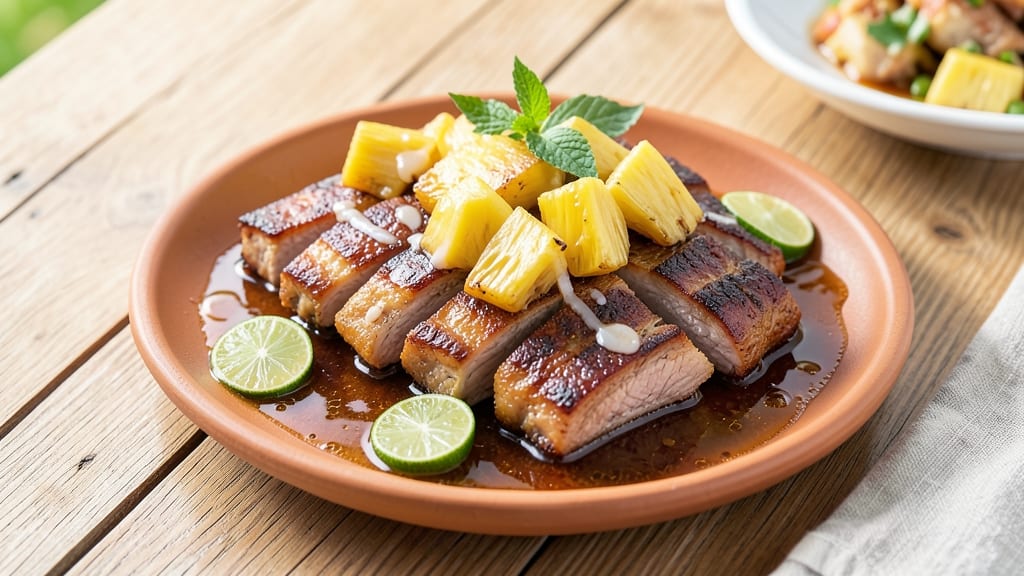
This Filipino pork pineapple recipe brings the bold, caramelized flavors of lechon kawali together with pineapple's signature sweet-tart bite—creating a dish that's both nostalgic and restaurant-worthy. 🌟 The secret lies in balancing salty-sweet marinades with slow caramelization, transforming tender pork into melt-in-your-mouth perfection. Whether you're grilling skewers or braising a whole cut, this method delivers depth Filipino home cooks swear by.
The magic starts with marinating pork in a blend of soy sauce, calamansi (or lime), and brown sugar—allowing flavors to penetrate deeply before cooking. For extra richness, a quick glaze of soy, vinegar, and pineapple juice caramelizes beautifully over medium heat, creating that signature glossy finish.
The pineapple isn't just a garnish; it's a flavor anchor, cutting through the pork's savory notes with its bright acidity.
By the time you're done, you'll have succulent pork with a caramelized crust, served alongside crisp pineapple slices that add both texture and contrast. The dish pairs effortlessly with steamed rice or atchara (Filipino pickled papaya) for a complete meal.
Every bite delivers that perfect harmony of sweet, salty, and tangy—just like your favorite karinderia (Filipino eatery) dish.
This recipe scales beautifully for gatherings, and leftovers reheat just as well. Let's get cooking—your taste buds (and dinner guests) will thank you.
Ingredients for pork pineapple recipe filipino
Pork shoulder and pineapple take center stage in this Filipino caramelized masterpiece.
| Ingredient | Amount | Notes |
|---|---|---|
| Boneless Pork Shoulder 🥩 | 1 ½ lb | Cut into 1-inch cubes |
| Fresh Pineapple 🍍 | 1 whole | Cored, cut into chunks |
| Soy Sauce 🥄 | ½ cup | High-quality, light soy preferred |
| Brown Sugar 🍚 | ½ cup | Packed, light or dark |
| Calamansi Juice 🍋 | ¼ cup | Or substitute lime juice |
| White Vinegar 💧 | 2 tbsp | Distilled preferred |
| Garlic Cloves 🧄 | 6 cloves | Minced for marinade |
| Black Peppercorns 🌶️ | 1 tsp | Freshly cracked |
| Olive Oil 🫒 | 2 tbsp | For searing pork |
| Fresh Ginger 🌿 | 1 tbsp | Grated, fresh preferred |
| Green Onions 🧅 | 3 whole | Sliced, for garnish |
| Sesame Seeds 🌰 | 1 tbsp | Toasted, for garnish |
| Salt 🧂 | 1 ½ tsp | Kosher or sea salt |
The pork shoulder is your workhorse here—look for well-marbled cuts at Filipino markets or the butcher section, where they often carry lechon kawali-ready pieces. If you can't find calamansi (the Filipino lime), substitute lime juice—it's the next best thing, though slightly less tart. The pineapple should be ripe but firm; avoid overripe fruit that turns mushy when cooked. For the soy sauce, Silver Swan or Knorr are classic choices, but any high-quality light soy will do. Prep the pork cubes evenly—they'll caramelize more consistently that way. If you're short on time, frozen pineapple chunks work too, just thaw and drain them first.
No calamansi? Lime juice plus a pinch of salt mimics its bright, salty tang. Running low on brown sugar? White sugar plus a splash of soy sauce for depth. The ginger and garlic can be swapped for powdered forms (use half the amount), but fresh is ideal—it adds that aromatic punch. For extra richness, add 1 tbsp of coconut milk to the marinade. The green onions and sesame seeds are purely decorative but add that final Filipino touch, so don't skip them if you've got them. If you're serving a crowd, double the marinade and use it as a dipping sauce too—everyone loves it.
Marinate the pork for at least 4 hours (overnight is best)—this is where the magic happens. Store the marinade (without pork) in the fridge for up to 3 days, or freeze it for 3 months. The cooked pork reheats beautifully—microwave with a splash of water for 30 seconds to revive the caramelized crust. Garnish with pineapple slices just before serving to keep them crisp. Leftovers keep for 4 days in the fridge, and the pineapple glaze freezes well for 2 months—perfect for quick weeknight meals. Serve with steamed jasmine rice to soak up every last bit of that sticky-sweet glaze.
Why You'll Love This Recipe
- Here’s what sold me: the calamansi cuts through the richness of the pork while the brown sugar makes the pineapple melt into your meat. It’s the kind of dish where every bite feels like a little celebration.
- One-Pan Magic: I swear by this recipe for lazy nights—just toss the pork, pineapple chunks, and sauce in one pan. No chopping boards, no extra pots, and that caramelized brown sugar glaze? It does half the work for you.
- Sweet-Savory Balance: Here’s what sold me: the calamansi cuts through the richness of the pork while the brown sugar makes the pineapple melt into your meat. It’s the kind of dish where every bite feels like a little celebration.
- Leftover Goldmine: Between us, this tastes better the next day. The flavors meld into this perfect harmony—great for packed lunches or reheating for dinner. I’ve fed a crowd with leftovers, and no one ever complains.
Step-by-step instructions for pork pineapple Filipino recipe
Transform simple ingredients into a rich, caramelized masterpiece with this foolproof method.
🍳 Step 1: Sear the Pork for Maximum Flavor
Heat a large skillet over medium-high heat and add the 2 tablespoons olive oil. Once shimmering, add the 1.5 lb boneless pork shoulder cut into 1-inch cubes in a single layer. Let them sear undisturbed for 3-4 minutes until golden brown on one side—this creates that deep, caramelized crust we're after.
Real talk: Don't crowd the pan or you'll steam the meat instead of sear it. If needed, work in batches. Once the first side is browned, gently flip and sear the other sides for another 2-3 minutes. Transfer the pork to a plate and set aside—we'll return to it later.
👨🍳 Step 2: Build the Sweet-Tart Marinade
In the same skillet (no need to wipe it clean—those browned bits are flavor gold), add the 6 cloves minced garlic and 1 tablespoon grated fresh ginger. Sauté for 30 seconds until fragrant—you should smell that bright, citrusy aroma from the ginger.
Pour in the 0.5 cup soy sauce, 0.5 cup packed brown sugar, and 0.25 cup calamansi juice. Stir vigorously to scrape up all those delicious browned bits from the bottom of the pan. Bring to a gentle simmer over medium heat for 2-3 minutes until the sugar begins to caramelize slightly and the mixture thickens.
🍳 Step 3: Glaze the Pork and Add Pineapple
Return the seared pork to the skillet along with any accumulated juices. Add the 2 tablespoons white vinegar and 1.5 teaspoons salt, then stir to combine. The acidity from the vinegar will help tenderize the pork while balancing the sweetness.
Add the 1 whole fresh pineapple cut into chunks and bring everything to a simmer. Cover the skillet and cook for 25-30 minutes over medium-low heat, stirring occasionally, until the pork is fork-tender and the sauce has reduced to a glossy, syrupy consistency. Here's the thing—you want the pineapple to soften slightly but still hold its shape, so don't overcook.
⏰ Step 4: Finish with Toasted Sesame Seeds
Once the pork is tender and the sauce has thickened to your liking, remove the skillet from heat. In a dry pan over low heat, toast the 1 tablespoon sesame seeds for 1-2 minutes until golden and fragrant—this adds that nutty depth we love in Filipino dishes.
Sprinkle the toasted sesame seeds over the pork and pineapple mixture, then give it one final stir. Taste and adjust seasoning if needed—you might want to add a splash more soy sauce for saltiness or a bit of calamansi juice for brightness. Let it rest for 5 minutes before serving to allow the flavors to meld completely.
🍽️ Step 5: Garnish and Serve with Confidence
Transfer the pork and pineapple to a serving platter and garnish with the 3 whole green onions sliced thinly. The bright green against the caramelized pork creates that visual pop we all love. Serve immediately over steamed rice—each bite delivers tender pork, sweet-tart pineapple, and that perfect balance of umami and caramelized sweetness.
Pro tip: If you have leftovers, the flavors actually improve overnight as the sauce continues to meld with the pork. Just reheat gently on the stove with a splash of water to loosen the sauce.
Pro Tips For Making Pork Pineapple Recipe Filipino
- SEAR THE PORK FIRST: I learned this the hard way—skipping the initial sear makes the pork turn out bland and mushy. Sear the pork shoulder slices in a hot pan for 2-3 minutes per side until golden before adding any liquid. That crust locks in flavor and keeps the meat juicy.
- USE FIRM PINEAPPLE ONLY: Canned pineapple works in a pinch, but fresh is where this dish shines. Pick a firm, yellow pineapple with no bruises—those soft spots turn to mush when cooked. Cut it into ½-inch chunks and toss them in the sauce only at the very end to keep them from turning into a watery mess.
- DON’T BOIL THE SAUCE: After burning two batches, I finally figured out: simmer, don’t boil. Once the pork and sauce are in the pot, keep the heat at a gentle simmer (small bubbles, occasional swirls). Boiling makes the sauce split and the pork tough—low and slow is the only way to get that tender, caramelized result.
- ADD CALAMANSI LAST: Sounds weird, but it works: squeeze in the calamansi juice only in the final 5 minutes. The acidity cuts through the sweetness and brightens the dish, but too early and it’ll cook off, leaving you with a flat, overly salty sauce. Save it for the end—your taste buds will notice the difference.
Perfect pairings for this recipe
Classic Filipino Sides
No Filipino pork dish is complete without steamed jasmine rice—its neutral base lets the caramelized pork and pineapple shine. I always cook 2 cups uncooked rice with 2.5 cups water in a rice cooker for perfect fluffy grains.
For extra authenticity, try garlic fried rice using leftover pork and pineapple mixed with scrambled eggs and extra soy sauce. 🍚
Atchara (Filipino pickled papaya) adds a tangy crunch that cuts through the richness. Slice 1 cup papaya into thin strips, mix with 1 tbsp vinegar, 1 tsp sugar, and ½ tsp salt, then let sit for 30 minutes. Serve chilled alongside the pork. If you can't find papaya, pickled red onions work beautifully too.
Asian-Inspired Garnishes
Fresh cilantro leaves scattered over the dish add a bright herbal note that pairs perfectly with the caramelized flavors. I like to chop ½ cup cilantro finely and sprinkle it just before serving.
For a smoky twist, add 1 tbsp toasted garlic chips—simply fry 3 garlic cloves in oil until crispy, drain, and sprinkle on top. 🌿
Beverage Pairings
A cold San Miguel beer (the classic Filipino lager) is my go-to pairing—its crisp, clean taste balances the dish's sweet-savory complexity. For a non-alcoholic option, calamansi soda (mix ½ cup calamansi juice with 1 cup sparkling water and 1 tbsp sugar) is refreshing and authentic.
Avoid heavy or overly sweet drinks that would overpower the pork's flavors.
Unexpected Twists
For a modern twist, serve with crispy plantain chips—their caramelized sweetness mirrors the pork's glaze. I like Chiquita brand for convenience, but homemade fried plantains are even better.
Another fun addition is mango salsa: dice 1 ripe mango and mix with 1 tbsp lime juice, ½ tsp chili flakes, and 2 tbsp chopped red onion. The tropical flavors complement the pork beautifully. 🌶️
Dessert Harmony
End the meal with halo-halo (Filipino shaved ice dessert) for a sweet contrast. The creamy ube halaya (purple yam jam) and sweetened leche flan balance the dish's savory notes perfectly. For a quicker option, serve pineapple upside-down cake—its caramelized pineapple topping echoes the dish's star ingredient. 🍰
Nutrition facts
Frequently asked questions
Can I substitute fresh pineapple with canned pineapple?
Yes, but with a few adjustments! Use 1 (20 oz) can of pineapple chunks (drained) and add 1 tablespoon extra brown sugar to compensate for the lack of natural juices. For best texture, avoid crushed pineapple—it releases too much liquid and can make the sauce watery.
Why does my pork turn out dry when cooking?
Overcooking is the #1 cause of dry pork! Keep the heat at medium-low during the 25-30 minute simmering phase and cover the pan to trap moisture. If using thicker cuts, reduce cooking time by 5 minutes. The pork should be fork-tender with juices running clear—never dry or rubbery.
What's the best cut of pork for this recipe?
Boneless pork shoulder is ideal—it's flavorful and stays tender when cooked slowly. For extra tenderness, use pork loin (cut into ½-inch cubes) or pork belly (score the fat to render properly). Avoid lean cuts like tenderloin—they dry out quickly. Filipino markets often carry pre-cut lechon kawali pieces perfect for this dish.
Can I make this recipe in a slow cooker?
Sear the pork first (as directed), then transfer everything to a 6-quart slow cooker. Cook on LOW for 4-5 hours or HIGH for 2-3 hours until pork is tender. The slow cooking enhances the caramelization naturally. For extra richness, add 2 tablespoons coconut milk before cooking.
How do I adjust the sweetness level?
Reduce brown sugar by 2 tablespoons for less sweetness or add 1 extra tablespoon for more. For a tangier profile, increase calamansi/lime juice by 1 tablespoon. Balance is key—taste as you go! The pineapple's natural sweetness should complement, not overpower, the pork's savory notes.