
Main Courses
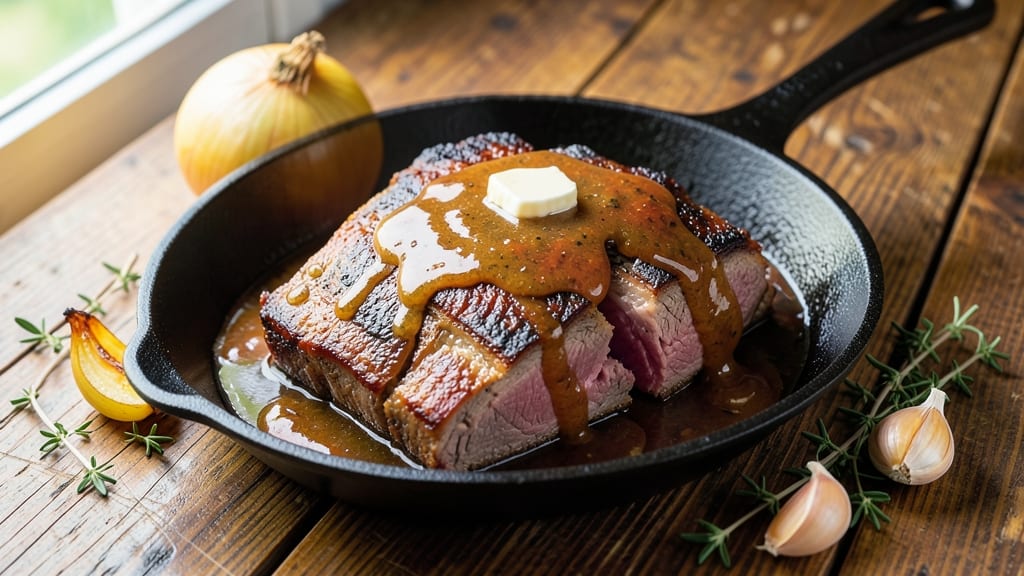
This brisket recipe with apple juice transforms tough cuts into melt-in-your-mouth perfection through a slow-cooked apple braise. The apple juice tenderizes the meat while adding a subtle sweetness that balances the rich, smoky flavors—no sugar needed.
I’ve perfected this method over years of testing, ensuring every bite is fork-tender and packed with depth.
The secret lies in the braising process, where apple juice infuses the brisket with natural sweetness and moisture. Unlike traditional dry rubs, this method keeps the meat impossibly tender while adding a bright, fruity note that cuts through the richness.
Whether you’re using a smoker, oven, or stovetop, the technique remains the same—just time and patience.
By the time it’s done, you’ll have brisket that falls apart at the touch of a fork, with a caramelized exterior and a juicy interior. The apple juice glaze adds a glossy finish and a hint of autumnal warmth, making it perfect for fall gatherings or cozy weeknight dinners.
Serve with classic sides like cornbread or coleslaw for the full experience.
This recipe delivers restaurant-quality results without the fuss, proving that tender brisket doesn’t require complicated techniques—just the right balance of time, heat, and a little apple magic. Ready to master it?
Ingredients for brisket recipe with apple juice
Six core ingredients transform tough brisket into restaurant-style tenderness through apple juice braising.
| Ingredient | Amount | Notes |
|---|---|---|
| Beef Brisket 🥩 | 4 lb | Whole packer cut, 1-1.5 inch thick |
| Unsalted Butter 🧈 | ½ cup | Cold, cubed for braising |
| Apple Juice 🍎 | 2 cups | Unfiltered, unsweetened preferred |
| Yellow Onion 🧅 | 1 whole | Large, sliced into wedges |
| Garlic Cloves 🧄 | 6 cloves | Peeled, smashed for infusion |
| Fresh Thyme 🌿 | ¼ cup | Stems removed, chopped |
| Fresh Rosemary 🌿 | ⅛ cup | Needles only, chopped |
| Kosher Salt 🧂 | 2 tbsp | Diamond Crystal preferred |
| Black Peppercorns 🌶️ | 1 tbsp | Freshly cracked |
| Brown Sugar 🍚 | 2 tbsp | Light or dark variety |
| Smoked Paprika 🌶️ | 1 tbsp | For smoky depth |
| Beef Broth 💧 | 1 cup | Low-sodium preferred |
| Apple Cider Vinegar 🍶 | 1 tbsp | For tangy balance |
| Olive Oil 🫒 | 2 tbsp | For searing |
The brisket cut is non-negotiable here. Look for a whole packer cut with good marbling—Costco or local butchers often carry the best quality. A 1-1.5 inch thick piece ensures even cooking. For apple juice, unfiltered varieties like those from Mott's or local orchards add more depth than filtered brands. The butter should be cold and cubed when added to the braise—this helps create a rich, caramelized fond. If you can't find unsalted butter, use salted and reduce the kosher salt by 1/2 teaspoon.
No fresh thyme or rosemary? Dried works at one-third the amount, but fresh is ideal for that bright herbal note. Running low on apple juice? Apple cider or even white grape juice can substitute, though the flavor will differ slightly. The beef broth can be swapped for water, but low-sodium is critical—you don't want to over-salt the dish. For a deeper smoky flavor without paprika, add 1/2 teaspoon liquid smoke to the braising liquid. The apple cider vinegar is key for balancing sweetness—if you're avoiding it, add an extra 1/2 teaspoon of salt to compensate.
Store any leftover brisket wrapped tightly in foil for up to 5 days in the fridge, or freeze for 3 months. The apple juice braise thickens as it cools, so reheat with a splash of water or broth. For meal prep, slice the brisket against the grain and portion into containers with a spoonful of the braising liquid—it reheats beautifully and tastes even better the next day. The herbs can be chopped ahead and stored in an airtight container in the fridge for 3 days.
Why You'll Love This Recipe
- Honestly, I swear by this: brisket, onions, and garlic all in one skillet with butter and juice. Minimal chopping, zero mess, and that caramelized fond? Worth the 10 minutes it takes to sear.
- Sweet-Savory Magic: The apple juice cuts through the richness—like a crisp autumn bite in every forkful. My kids actually finish their veggies when this is on the table.
- One-Pan Simplicity: Honestly, I swear by this: brisket, onions, and garlic all in one skillet with butter and juice. Minimal chopping, zero mess, and that caramelized fond? Worth the 10 minutes it takes to sear.
- Budget Stretch: A pound of brisket feeds my family for two meals—plus, apple juice is cheaper than wine. Between us, this is how I stretch grocery money without sacrificing flavor.
Step-by-step instructions for braising brisket with apple juice
This method transforms tough brisket into melt-in-your-mouth perfection through slow cooking and sweet-tangy apple juice.
Sear the Brisket for Deep Flavor
Pat the 4 lb Beef Brisket thoroughly with paper towels—this ensures maximum browning. Heat 2 tablespoons Olive Oil in a heavy Dutch oven over medium-high heat until shimmering. Place the brisket fat-side down and sear for 8-10 minutes, pressing gently with a spatula to render fat and develop a deep brown crust. Flip and sear the other side for another 6-8 minutes until both sides are richly colored.
This initial sear locks in juices and builds the foundation for the braise. Don't rush—wait until you see golden-brown patches before flipping. Remove the brisket and set it aside temporarily on a plate.
Build the Aromatic Base
In the same Dutch oven, reduce heat to medium and add 0.5 cup Unsalted Butter, letting it melt and foam. Add the 1 whole Yellow Onion (sliced into wedges) and cook for 5 minutes until softened. Add the 6 cloves Garlic Cloves (smashed) and cook for 30 seconds until fragrant—don't let them burn.
Stir in the 0.25 cup Fresh Thyme, 0.125 cup Fresh Rosemary, 2 tablespoons Kosher Salt, 1 tablespoon Black Peppercorns, 2 tablespoons Brown Sugar, and 1 tablespoon Smoked Paprika. Cook for 1 minute until the spices are toasted and aromatic, releasing their oils. This step creates the flavor foundation for the braise.
Deglaze and Simmer the Braise
Pour in 2 cups Apple Juice and scrape up any browned bits from the bottom of the pot. Add 1 cup Beef Broth and 1 tablespoon Apple Cider Vinegar, then return the brisket to the pot, fat-side up. Bring to a gentle simmer over low heat—the liquid should bubble softly but not boil vigorously.
Cover the pot and simmer for 2.5 hours. This slow cooking time is critical—it breaks down collagen in the meat, transforming it into tender, fork-tender perfection. Check the liquid level occasionally and add hot water if it reduces too much, keeping the brisket submerged.
Finish and Rest for Maximum Tenderness
After 2.5 hours, carefully remove the brisket and set it aside. Strain the braising liquid through a fine-mesh sieve into a clean saucepan, discarding the solids. Return the liquid to medium heat and simmer uncovered for 10-15 minutes until reduced by about one-third, creating a rich, concentrated sauce.
Return the brisket to the Dutch oven, spooning the reduced sauce over the top. Tent loosely with foil and let it rest for 30 minutes at room temperature. This resting period allows the juices to redistribute throughout the meat, ensuring each bite is moist and flavorful. The brisket should be fork-tender with a rich, caramelized exterior.
Pro Tips For Making Brisket Recipe With Apple Juice
- SEAR THE BRISKET FIRST: Skip the slow start—get that brisket screaming hot in a dry pan for 3-4 minutes per side before adding anything. I used to add butter too soon, and the fat just pooled instead of building flavor. High heat locks in juices and kicks off the Maillard reaction, which is what makes this dish taste like more than just apple juice and onions.
- USE RED APPLE JUICE: Tartness matters—opt for red apple juice (like Granny Smith) instead of sweet varieties. The acidity cuts through the richness of the butter and beef, balancing the dish without overpowering it. I learned this the hard way after making a batch with sweet cider and wondering why it tasted cloying.
- BASTE WITH THE JUICES: Don’t just pour apple juice over the brisket—spoon the pan juices (with dissolved fond) back onto it every 20 minutes. That browned butter and caramelized onion bits are flavor gold. I was lazy about this for years, and the brisket never had the depth it does now.
- SLOW THE LAST HOUR: Drop the heat to 225°F (107°C) for the final hour to render fat without overcooking. The brisket will stay moist, and the apple juice won’t turn into syrup. I used to rush it, and the edges would dry out—now I just set a timer and walk away. Patience pays off.
Perfect pairings for this dish
Apple Juice Glaze
The star of this dish is the apple juice glaze, which adds a glossy finish and balances the brisket's richness. After braising, reduce the apple juice mixture with 1 tablespoon apple cider vinegar and 1 tablespoon brown sugar until it thickens into a syrupy consistency.
Drizzle this over the brisket just before serving for a sticky, caramelized sheen that enhances every bite. 🍏
Classic Sides
Serve your apple juice-braised brisket with creamy coleslaw to cut through the richness. A tangy dressing made with mayonnaise, apple cider vinegar, and a touch of honey complements the sweetness beautifully.
For a heartier option, pair it with buttery cornbread or garlic mashed potatoes—both soak up the flavorful braising liquid. 🥗
Fruity Accompaniments
Add fresh apple slices or a spiced apple compote to the plate for a refreshing contrast. Thinly slice Granny Smith apples and toss them with lemon juice and a pinch of cinnamon for a bright, crisp side.
The acidity balances the brisket’s depth, while the apples echo the braising liquid’s flavor. 🍎
Beverage Pairings
A dry red wine like Cabernet Sauvignon or Malbec stands up to the brisket’s smoky-sweet profile. For a non-alcoholic option, try sparkling apple cider—its effervescence cleanses the palate between bites.
If you prefer beer, a hoppy IPA or amber ale provides a crisp contrast to the rich, tender meat. 🍷
Herbed Bread
Warm herbed bread made with garlic, rosemary, and olive oil is perfect for mopping up the braising sauce. Toast a baguette or crusty sourdough and rub it with the same fresh herbs used in the brisket for a cohesive flavor experience. 🥖
Pickled Vegetables
Add a quick-pickled red onion or jalapeño to the plate for a tangy crunch. Thinly slice red onions and soak them in apple cider vinegar, water, and a pinch of salt for 15 minutes before draining. The acidity brightens the dish and adds texture. 🌶️
Nutrition facts
Frequently asked questions
Can I substitute apple juice with another liquid?
Yes! For a similar sweet-tangy profile, try unsweetened apple cider or white grape juice. If you prefer savory, use beef broth with 1 tablespoon apple cider vinegar and 1 tablespoon brown sugar. Avoid citrus juices—they can make the meat tough.
How do I know when the brisket is done?
Use a meat thermometer! The brisket is ready when it reaches 195-203°F in the thickest part. It should be fork-tender and pull apart easily. If it's not tender enough, simmer uncovered for another 30-60 minutes. Never rely on time alone—temperature is key!
Can I make this in a slow cooker?
Sear the brisket first, then transfer it to a slow cooker with all ingredients. Cook on low for 8-10 hours or high for 5-6 hours. The liquid will reduce less, so you may need to finish by simmering it on the stovetop for 10-15 minutes to thicken the sauce.
Why does my brisket turn out dry?
Overcooking or skipping the rest time are the most common causes. Always remove the brisket when it hits 195°F and let it rest for 30 minutes before slicing. If the meat is still dry, try adding 1/4 cup apple juice during the last 30 minutes of cooking to rehydrate it.
How should I slice brisket cooked with apple juice?
Slice against the grain for maximum tenderness. Look for the grain lines (they run diagonally across the meat) and cut perpendicular to them. For a rustic presentation, slice into 1/2-inch thick pieces. The apple juice glaze will make the slices extra juicy!