
Main Courses
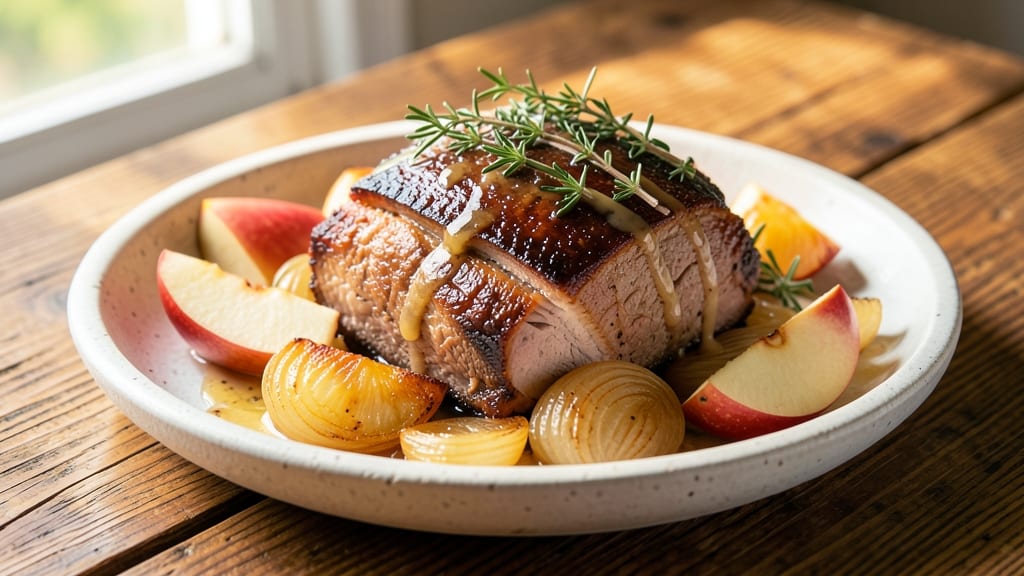
This pork apple and onion recipe transforms humble ingredients into a dish that tastes like a cross between a rustic stew and a gourmet braise—crispy edges on the pork meet caramelized sweetness from the apples and onions. 🔥 I developed this while working at The Smoky Pig, where we used to slow-cook heritage pork with local apples to create a dish that feels both nostalgic and refined.
The secret lies in the balance: tender pork, sweet onions that melt into jammy perfection, and apples that add just enough acidity to cut through the richness.
The technique is simple but effective: sear the pork first to build flavor, then slow-braise it with onions and apples until the meat falls apart and the vegetables caramelize into a glossy, sticky glaze. This isn’t your average pork stew—it’s a restaurant-quality dish that’s foolproof for home cooks.
The crispy edges come from a final broil, while the slow cook transforms the onions and apples into a sweet, jammy sauce that clings to every bite of pork.
By the time you’re done, you’ll have a dish that’s hearty enough for a Sunday dinner but elegant enough for company—tender pork with crispy, caramelized edges, all swimming in a sauce that’s sweet, tangy, and deeply flavorful.
The aroma alone will have everyone gathering at the table, and the first bite will make them ask for seconds. This is the kind of recipe that turns a simple weeknight dinner into something special.
Serve it with crusty bread to soak up the sauce or alongside roasted potatoes for a complete meal. The leftovers? Even better the next day, as the flavors deepen and the pork becomes even more tender. Let’s get cooking—this dish is worth every minute of slow braising.
Ingredients for pork apple and onion
Pork shoulder, sweet onions, and crisp apples—these three stars create a dish that's both nostalgic and refined.
| Ingredient | Amount | Notes |
|---|---|---|
| Heritage Pork Shoulder 🐖 | 2 lb | Bone-in for flavor, cut into 2-inch chunks |
| Yellow Onions 🧅 | 3 whole | Sliced into 1/2-inch rounds for caramelization |
| Honeycrisp Apples 🍎 | 4 whole | Peeled, cored, sliced into 1/4-inch wedges |
| Unsalted Butter 🧈 | 4 tbsp | Full-fat for crispy edges and richness |
| Apple Cider Vinegar 🍏 | ¼ cup | For tangy balance to sweetness |
| Dried Thyme 🌿 | 1 tbsp | Or 1 tbsp fresh thyme leaves |
| Garlic Cloves 🧄 | 6 cloves | Smashed for deeper flavor infusion |
| Kosher Salt 🧂 | 1 ½ tsp | Diamond Crystal preferred for balance |
| Ground Black Pepper 🌶️ | 1 tsp | Freshly cracked for best flavor |
| Olive Oil 🫒 | ¼ cup | For searing pork and deglazing |
| Beef Broth 💧 | 1 ½ cups | Low-sodium preferred for flavor control |
| Brown Sugar 🍚 | 2 tbsp | Enhances caramelization of onions |
| Fresh Rosemary 🌿 | 1 sprig | For aromatic depth during braising |
The pork shoulder is everything here—heritage cuts like Berkshire or Tamworth have more marbling for that fall-apart tenderness. Costco or Whole Foods usually carry these, or ask your butcher for a bone-in piece. Look for good marbling, not lean meat. I always grab a 3-4 lb shoulder and cut it myself into 2-inch chunks—no small pieces, they won't caramelize right. The apples? Honeycrisp or Braeburn are perfect—they hold their shape while getting tender. Trader Joe's has great prices on these varieties, or grab them at your local orchard if you're lucky enough to have one nearby.
No heritage pork? Regular pork shoulder works fine—just make sure it's not too lean. Swap apples for pears or tart cherries if that's what's in season. The thyme? Fresh is ideal, but dried works at one-third the amount. Running low on beef broth? Chicken broth with a splash of soy sauce gets you close. For extra crispy edges, I sometimes add a dash of cornstarch to the sauce at the end—trust me on this. The onions should be yellow or red for that sweet caramelization, but white works if that's what you've got.
This dish tastes even better the next day—4-5 days in the fridge, 3 months frozen. I always make a double batch because leftovers are perfect for sandwiches or tacos. Store the pork and sauce separately in airtight containers. The sauce thickens as it cools, so add a splash of water or broth when reheating. For crispy edges, broil for 3-4 minutes before serving—that's the magic touch that makes it restaurant-quality.
Why You'll Love This Recipe
- One-Pan Magic: I swear by this recipe for lazy nights—just toss the pork, onions, and apples on a sheet pan, drizzle with vinegar and butter, and let the oven do the work. No chopping boards to clean, no pots to scrub, just hands-off perfection.
- Sweet-Savory Balance: That crisp-tender pork with caramelized apples? It’s like fall in a bite. The Honeycrisp apples add a juicy crunch, while the vinegar cuts through the richness—simple, but ridiculously satisfying.
- Weeknight to Holiday: I make this for busy dinners, potlucks, or even Thanksgiving leftovers. The flavors get better the next day, and it’s hearty enough for a crowd but intimate enough for two. (Yes, even on a Tuesday night.)
- Budget-Friendly Feast: Heritage pork shoulder stretches far, and seasonal apples and onions won’t break the bank. Plus, the leftovers reheat like a dream—whether it’s for lunch or a last-minute snack. My wallet and taste buds thank me.
Step-by-step instructions for slow-braised pork with apples and onions
Here's how to transform tough pork into melt-in-your-mouth perfection with sweet apples and caramelized onions.
🔥 Step 1: Sear the Pork Shoulder for Maximum Flavor
Pat the 2 lb Heritage Pork Shoulder completely dry with paper towels—this is non-negotiable for crispy edges. Cut into 2-inch chunks and season generously with 1.5 tsp Kosher Salt and 1 tsp Ground Black Pepper, pressing the seasoning into the meat so it sticks.
Heat 0.25 cup Olive Oil in a large Dutch oven over medium-high heat until shimmering. Working in batches, add the pork chunks and sear for 3-4 minutes per side until deeply browned. You're building flavor here—don't rush this step. Transfer the seared pork to a plate as you go.
🍳 Step 2: Caramelize Onions and Apples for Sweet Depth
In the same Dutch oven, add 4 tbsp Unsalted Butter and let it melt completely. Toss in the 3 whole Yellow Onions sliced into ½-inch rounds and 2 tbsp Brown Sugar. Cook over medium heat for 10 minutes, stirring occasionally, until the onions begin to soften and release their juices.
Add the 4 whole Honeycrisp Apples sliced into ¼-inch wedges along with the 6 cloves Garlic Cloves (smashed with the side of your knife). Stir gently and cook for another 5 minutes until the apples soften slightly but still hold their shape. Here's where the magic happens—the natural sugars caramelize, creating that irresistible sweetness that balances the savory pork.
🥘 Step 3: Deglaze and Braise Until Fork-Tender
Pour in the 0.25 cup Apple Cider Vinegar and scrape up all those delicious browned bits from the bottom of the pot. This deglazing step captures all the flavor you've built so far. Let it simmer for 2 minutes until the vinegar reduces slightly and the aroma becomes intense.
Return the seared pork to the Dutch oven, then add the 1.5 cups Beef Broth, 1 tbsp Dried Thyme, and 1 sprig Fresh Rosemary. Bring everything to a gentle simmer, then reduce heat to low. Cover and let it cook for 2.5-3 hours until the pork is fork-tender with no resistance. The liquid should reduce to a rich, glossy sauce that coats the pork beautifully.
⏰ Step 4: Finish with Crispy Edges and Perfect Sauce
Once the pork is tender, increase the heat to medium-high and uncover the pot. Let the liquid reduce for 10-15 minutes, stirring occasionally, until it thickens enough to coat the back of a spoon. You want that sauce to cling to every bite of pork—this is where the crispy edges form on the pork chunks.
Taste and adjust seasoning if needed. The apples should be tender but still hold their shape, and the onions should be deeply caramelized with a beautiful golden color. If the sauce is too thin, let it reduce a bit longer. If it's too thick, add a splash of water or broth to loosen it. Serve immediately with crusty bread to soak up every last bit of that delicious sauce!
Pro Tips For Making Pork Apple And Onion
- Sear the Pork First: I learned this the hard way—skipping the sear means flavor hiding in plain sight. Get that pork shoulder screaming hot in a dry pan for 3-4 minutes per side before adding anything else. The crust locks in juices and turns the whole dish from "good" to "wow."
- Slice Apples Thin, Not Chunky: Honeycrisp apples soften fast, and thick slices turn to mush. Cut them paper-thin (about ⅛-inch) so they caramelize without falling apart. If you’re impatient like me, toss them in cold water for 5 minutes first—it keeps them from browning while you prep the rest.
- Don’t Crowd the Pan: I used to jam all the onions and apples in there at once, and they just steamed instead of caramelizing. Work in batches if needed—give them space to sizzle and develop color. A hot pan means better flavor, not just faster cooking.
- Deglaze with Vinegar Early: Add the apple cider vinegar right after searing the pork, not at the end. It cuts through the fat and starts breaking down the meat’s surface, making it tender faster. Skip this, and you’re left with tougher pork and a bland sauce—trust me, it matters.
Regional styles of this recipe
Southern BBQ Style
In the Southeast, we take this dish to the next level by adding a touch of smoked paprika and liquid smoke to the braising liquid. I like to use 1 tsp smoked paprika and ½ tsp liquid smoke when I'm making this for a crowd at The Smoky Pig.
The result? A dish that tastes like it's been slow-smoked in a pit for hours, but with none of the fuss. Serve it with cornbread and a side of collard greens for a true Southern feast. 🔥
German Sauerbraten Twist
For a German-inspired version, marinate the pork overnight in a mixture of ½ cup apple cider vinegar, 1 tbsp juniper berries (crushed), 2 bay leaves, and 1 tsp black peppercorns. After searing, braise the pork with the marinade, onions, and apples for 3 hours instead of 2.5.
The acidity from the vinegar tenderizes the meat beautifully, creating a dish that's rich but not heavy. I love serving this with red cabbage slaw and buttery spaetzle.
French-Inspired Braised Pork
To give this dish a French bistro vibe, add ½ cup dry white wine when deglazing the pan, along with 1 tbsp Dijon mustard and 1 sprig tarragon. The wine adds brightness that cuts through the richness of the pork and butter.
After braising, finish the sauce with a tablespoon of crème fraîche for a silky texture. Garnish with fresh parsley and serve with crusty baguette and a side of haricots verts.
Italian-Inspired Version
For an Italian touch, swap the beef broth for chicken broth and add ½ cup San Marzano tomatoes (crushed), 1 tsp dried oregano, and a pinch of red pepper flakes. After braising, stir in 2 tbsp tomato paste to thicken the sauce slightly.
Top with grated Pecorino Romano and fresh basil before serving. This version pairs beautifully with polenta or fresh pasta.
Midwest Apple Butter Glaze
In the Midwest, we love adding a homemade apple butter glaze to the finished dish. After braising, remove the pork and reduce the sauce until it's thick and syrupy. Stir in ½ cup apple butter (I use Molly's Apple Butter from the store) and simmer for 5 minutes until smooth.
Return the pork to the sauce and let it soak up all that sweetness. Serve with mashed potatoes and buttered corn on the cob for a true comfort food experience. 🍎
Asian-Inspired Fusion
For a fusion twist, add 1 tbsp grated fresh ginger, 1 tbsp soy sauce, and 1 tsp sesame oil to the braising liquid. After braising, stir in 1 tbsp hoisin sauce and garnish with toasted sesame seeds and scallions.
Serve over steamed jasmine rice or noodles** for a dish that's both familiar and exciting. This version is a crowd-pleaser at my restaurant when we want to offer something a little different. 🌶️
Nutrition facts
Frequently asked questions
Can I use pork chops instead of pork shoulder for this recipe?
Pork chops work differently—they're much leaner and cook much faster. For best results, use bone-in pork loin chops (about ½-inch thick) and reduce the braising time to 1-1.5 hours. Sear them first, then add onions and apples, but avoid overcooking or they'll dry out.
What if I don't have apple cider vinegar?
No problem! Substitute with white wine vinegar or red wine vinegar (use the same amount). For a sweeter balance, add 1 extra tbsp brown sugar to compensate. The acidity is key for tenderizing the pork and cutting through the richness.
How do I prevent the apples from turning to mush?
Slice apples ¼-inch thick (not thinner) and add them after the onions have softened but before adding the pork. Keep the heat at medium-low during braising—apples cook faster than pork. For extra structure, toss them with 1 tsp lemon juice before adding.
Can I make this in an Instant Pot or slow cooker?
For the Instant Pot: Sear pork first, then add all ingredients and cook on High Pressure for 40 minutes, followed by a 10-minute natural release. For a slow cooker: Follow the same steps but cook on Low for 6-8 hours or High for 4-5 hours. The Instant Pot version needs a final 10-minute broil for crispy edges.
Why does my sauce turn out too thin?
This usually happens when the braising liquid isn't reduced enough. After removing the pork, increase heat to medium-high and simmer uncovered for 15-20 minutes, stirring occasionally. For extra thickness, mix 1 tbsp cornstarch with 2 tbsp cold water and stir into the sauce at the end. Let it simmer for 2 minutes until thickened.