
Main Courses
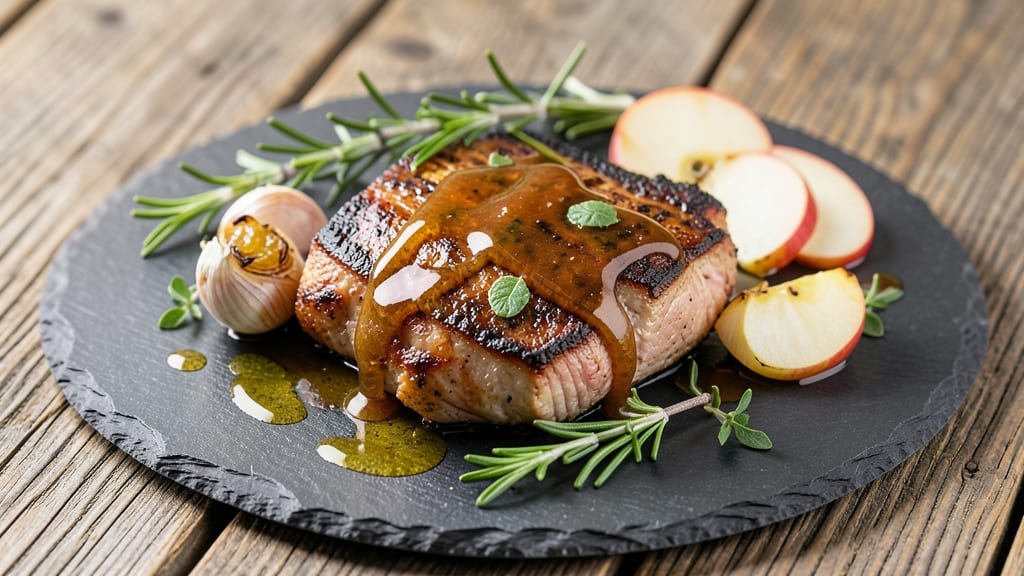
This pork loin apple cider vinegar recipe transforms tough cuts into melt-in-your-mouth perfection with minimal effort. 🔥 The secret lies in apple cider vinegar's magic—it tenderizes while adding a bright, tangy finish that cuts through the richness.
After years of perfecting this technique in my Atlanta kitchen, I can promise you'll never buy store-bought pork again.
The process is simpler than you'd think: a quick marinade with apple cider vinegar and aromatic spices, followed by a one-pan roast. No fancy equipment needed—just a good cast iron skillet and about 45 minutes of hands-off cooking.
The vinegar works its magic while you prep sides, making this the ultimate weeknight hero dish that still feels special.
What you end up with is restaurant-quality pork loin with a caramelized crust and tender interior, all balanced by that bright, tangy vinegar glaze. The flavor is complex—sweet from the caramelization, tangy from the vinegar, and savory from the herbs.
It's the kind of dish that makes people ask for seconds before they even take their first bite.
Pair it with roasted root vegetables or garlic mashed potatoes for a complete meal that feels like a Sunday supper. The leftovers reheat beautifully too, making this perfect for meal prep. Let's get started—your taste buds will thank you.
Ingredients for pork loin apple cider vinegar
Pantry staples plus a few fresh herbs. The apple cider vinegar does all the tenderizing work.
| Ingredient | Amount | Notes |
|---|---|---|
| Pork Loin 🥓 | 1 ½ lb | Center-cut, 1-inch thick |
| Apple Cider Vinegar 🍏 | ½ cup | Raw, unfiltered preferred |
| Olive Oil 🫒 | 2 tbsp | Extra-virgin for richness |
| Garlic Cloves 🧄 | 6 cloves | Minced, fresh preferred |
| Fresh Rosemary 🌿 | ¼ cup | Chopped, stems removed |
| Fresh Thyme 🌿 | ¼ cup | Leaves only, chopped |
| Salt 🧂 | 1 ½ tsp | Kosher or sea salt |
| Black Pepper 🌶️ | 1 tsp | Freshly ground preferred |
| Brown Sugar 🍯 | 2 tbsp | Light or dark variety |
| Honey 🍯 | 1 tbsp | Wildflower preferred |
| Carrots 🥕 | 2 medium | Peeled, sliced into batons |
| Russet Potatoes 🥔 | 2 medium | Cut into 1-inch chunks |
| Onion 🧅 | 1 medium | Yellow or red, sliced |
The pork loin is the star, so center-cut and 1-inch thick—anything thinner risks drying out. Grab the raw, unfiltered apple cider vinegar from the health food aisle (like Bragg or Texas Pete)—it's got more flavor than the pasteurized stuff. Fresh rosemary and thyme make a difference here, but dried will work in a pinch (use half the amount). Whole Foods or Trader Joe's usually have great fresh bundles. For the brown sugar, I always grab Domino brand—it's consistent and affordable.
No apple cider vinegar? White vinegar or balsamic vinegar works, but reduce to 3 tbsp. Short on brown sugar? Maple syrup or agave at 1:1 ratio. The honey can be swapped for maple syrup or agave too. For the veggies, baby carrots or pre-cut potatoes save time, but whole ones caramelize better. If you're prepping ahead, par-cook the potatoes for 5 minutes to speed up the roasting time later.
The pork marinade keeps 2 days in the fridge, but the veggies should be prepped the same day. Store any leftovers in an airtight container for 3-4 days. This reheats beautifully—just cover with foil and warm in the oven at 350°F for 10 minutes. I always double the recipe and freeze half for lazy weeknights. The flavors actually get better the next day as everything melds together.
Why You'll Love This Recipe
- One-Pan Magic: I swear by this for nights when I’d rather not wash a million dishes. Just sear the pork, toss in the vinegar and garlic, and let the oven do the work—no flipping, no fussing.
- Tangy Twist: That apple cider vinegar? It’s the secret weapon here. It cuts through the richness of the pork, leaving you with a bright, almost sweet-savory bite that makes every slice irresistible.
- Leftovers on Lock: Between us, this recipe makes way more than I can eat in one sitting. The leftovers? Perfect cold in sandwiches or reheated for a quick lunch—no one complains, I promise.
- Budget-Friendly Feast: Pork loin stretches farther than you’d think when paired with rosemary and vinegar. Honestly, it’s one of those dishes where the simple ingredients feel luxurious without breaking the bank.
Step-by-step instructions for pork loin apple cider vinegar recipe
Here's how to transform simple ingredients into fall-off-the-bone pork with a tangy-sweet glaze.
🍳 Step 1: Sear the Pork Loin for Maximum Flavor
Heat a large oven-safe skillet over medium-high heat until hot. Add the 2 tablespoons olive oil and swirl to coat the bottom. Place the 1.5 lb pork loin in the skillet, fat-side down, and sear for 4-5 minutes until a deep golden brown crust forms.
Flip the pork and sear the other side for another 3-4 minutes. You'll know it's ready when it releases easily from the pan—this ensures a perfect sear without overcooking. Remove the pork and set it aside on a plate, leaving all the rendered juices in the pan. Real talk: this step makes all the difference for flavor and texture.
👨🍳 Step 2: Build the Tangy-Sweet Marinade
In the same skillet (no need to wipe it clean—those browned bits are flavor gold), add the 6 cloves minced garlic and cook for 30 seconds until fragrant. Pour in the 0.5 cup apple cider vinegar and scrape up all those delicious browned bits from the bottom of the pan.
Add the 2 tablespoons brown sugar, 1 tablespoon honey, 0.25 cup chopped fresh rosemary, and 0.25 cup chopped fresh thyme. Stir well to combine, and let the mixture simmer for 2-3 minutes until slightly thickened. Here's the thing—this marinade needs to coat the pork evenly, so don't skip the simmering step.
🥘 Step 3: Add Vegetables and Deglaze
Add the sliced 1 medium onion, 2 medium carrots, and 2 medium russet potatoes to the skillet. Stir everything together, making sure the vegetables are well-coated with the marinade. Sprinkle the pork with the 1.5 teaspoons salt and 1 teaspoon black pepper.
Return the pork to the skillet, placing it on top of the vegetables. Pour any remaining marinade from the plate over the pork. The vegetables will soften as they cook, creating a flavorful bed for the pork. This is where the magic happens—the vegetables absorb the tangy-sweet flavors while keeping the pork moist.
🔥 Step 4: Roast to Tender Perfection
Transfer the skillet to a preheated 400°F oven and roast for 30-35 minutes, or until the pork reaches an internal temperature of 145°F (use a meat thermometer for accuracy). The vegetables should be tender and the pork should be juicy and tender.
Don't be tempted to open the oven door early—this can cause the temperature to drop and extend cooking time. The pork is done when it reaches 145°F and the juices run clear when pierced with a knife. Let it rest for 10 minutes before slicing—this ensures the juices redistribute throughout the meat, keeping every bite succulent.
🍽️ Step 5: Slice and Serve with Glazed Vegetables
Carefully remove the pork from the skillet and slice it into ½-inch thick pieces. Spoon the glazed vegetables onto serving plates and arrange the sliced pork on top. The vegetables should be tender and coated with that beautiful tangy-sweet glaze.
Serve immediately while the pork is still warm and juicy. The combination of tender pork and flavorful vegetables makes this dish a crowd-pleaser. Trust me, the apple cider vinegar and honey glaze adds a perfect balance of tangy and sweet that complements the savory pork beautifully.
Pro Tips For Making Pork Loin Apple Cider Vinegar
- Sear the Pork First: I used to skip this step, thinking the vinegar would handle all the browning—but it won’t. Hit the pork loin with a dry sear in olive oil over medium-high heat for 3-4 minutes per side first. That caramelized crust is what makes the vinegar marinade sing when it reduces later.
- Use Raw Vinegar, Not Cooked: The magic happens when the apple cider vinegar’s acidity works its way into the meat before it hits the heat. Pour it over the raw pork and let it sit for at least 15 minutes—30 if you’re patient. Dumping it in at the end just makes your pan smell like a science experiment.
- Don’t Overcrowd the Pan: If you’re cooking this in a skillet, resist the urge to pile everything in at once. Cook the pork in batches if needed, then add the garlic and rosemary to the same pan after removing the meat. Crowding steams the garlic instead of browning it, and you’ll end up with sad, pale cloves instead of nutty, crisp edges.
- Finish with a Splash of Cold Water: This one sounds counterintuitive, but trust me: After the pork is cooked and you’ve deglazed with vinegar, add 2 tablespoons of cold water to the pan. Let it simmer for 30 seconds—it’ll create a glossy, slightly tangy sauce that clings to the meat. (Yes, even if you’re impatient like me.)
Flavor customization for this pork loin apple cider vinegar
Sweet Heat Boost
Add 1 teaspoon cayenne pepper or 1 tablespoon hot honey to the marinade for a spicy kick. I love using Penzeys hot honey—it adds smoky depth while balancing the vinegar's tang.
For extra heat, sprinkle ½ teaspoon smoked paprika over the pork before roasting. This transforms the dish into a Carolina-style favorite that’ll have your guests reaching for seconds. 🌶️
Herb Variations
Swap rosemary and thyme for fresh sage and fennel fronds for an Italian-inspired twist. I grew up with sage in Georgia, so I often use ½ cup fresh sage instead of rosemary—it gives the pork a more earthy, slightly peppery note.
For a French touch, add 1 teaspoon Dijon mustard to the marinade and garnish with chopped parsley. The herbs should complement the vinegar without overpowering it.
Umami Depth
Boost the savory profile by adding 1 tablespoon soy sauce or 1 teaspoon fish sauce to the marinade. I keep a bottle of Red Boat fish sauce in my kitchen—just a splash adds incredible depth.
For a vegetarian-friendly option, use 1 tablespoon mushroom powder (like Better Than Bouillon) instead. This works especially well if you're serving this to guests with dietary restrictions.
Citrus Brightness
Zest of 1 lemon or 1 orange in the marinade adds a refreshing citrus note that cuts through the richness. I often use lemon zest because it pairs beautifully with apple cider vinegar.
For a Southern twist, add 1 tablespoon bourbon (like Maker's Mark) to the marinade—it caramelizes during roasting and adds a warm, smoky depth. The citrus also helps balance the sweetness of the brown sugar and honey.
Smoky Charcoal
For a smoky flavor without a grill, add 1 teaspoon liquid smoke (like Colt's) to the marinade. I developed this trick during my time in Charleston, where smoky flavors are king.
Alternatively, char a ½ cup apple cider vinegar in a skillet until it darkens slightly, then cool and use it in place of the regular vinegar. This adds a subtle campfire-like quality that pairs perfectly with the pork's natural richness. 🔥
Creamy Finish
After roasting, drizzle the pork with 2 tablespoons crème fraîche or Greek yogurt mixed with 1 teaspoon apple cider vinegar and a pinch of salt. This adds a silky, tangy finish that complements the crispy edges.
I also love serving it with a side of apple compote—simmer ½ cup diced apples with 1 tablespoon brown sugar and 1 teaspoon vinegar for 10 minutes. The compote ties the whole dish together with its sweet-tart balance.
Nutrition facts
Frequently asked questions
Can I use this recipe for thicker pork loin cuts?
For cuts over 1.5 inches thick, reduce your oven temperature to 375°F and increase cooking time by 5-10 minutes. The apple cider vinegar helps tenderize, but thicker cuts need gentler heat. Always check internal temp with a meat thermometer—it should reach 145°F for perfect doneness.
What if I don't have apple cider vinegar?
You can substitute with white vinegar (reduce to 3 tablespoons) or balsamic vinegar (use ¼ cup). For a sweeter balance, add 1 extra tablespoon of honey. The tangy acidity is key—without it, the glaze will be less vibrant. Lemon juice in a pinch works too (use ¼ cup plus 1 teaspoon sugar).
How do I prevent the pork from drying out?
Never skip the 10-minute rest after roasting—this lets juices redistribute. Also, avoid overcrowding the pan and use a meat thermometer to pull the pork at 145°F. The apple cider vinegar marinade helps retain moisture, but if you're nervous, brining the pork for 30 minutes in ¼ cup salt dissolved in 4 cups water adds extra insurance.
Can I make this recipe ahead of time?
Yes! The marinade keeps 2 days in the fridge, and cooked pork stores 3-4 days in an airtight container. For best results, reheat in the oven at 350°F for 10 minutes covered with foil. The flavors actually improve overnight as the vinegar and honey meld together. Freeze half the recipe for up to 3 months—just thaw overnight in the fridge before reheating.
What's the best way to serve this dish?
Pair with roasted root vegetables, garlic mashed potatoes, or crusty bread to soak up the glaze. For a complete meal, add a simple green salad with a red wine vinaigrette (use the leftover apple cider vinegar!). The tangy-sweet pork also works beautifully with apple slices or a side of sautéed apples. For a Southern touch, serve with cornbread or collard greens.