
Main Courses
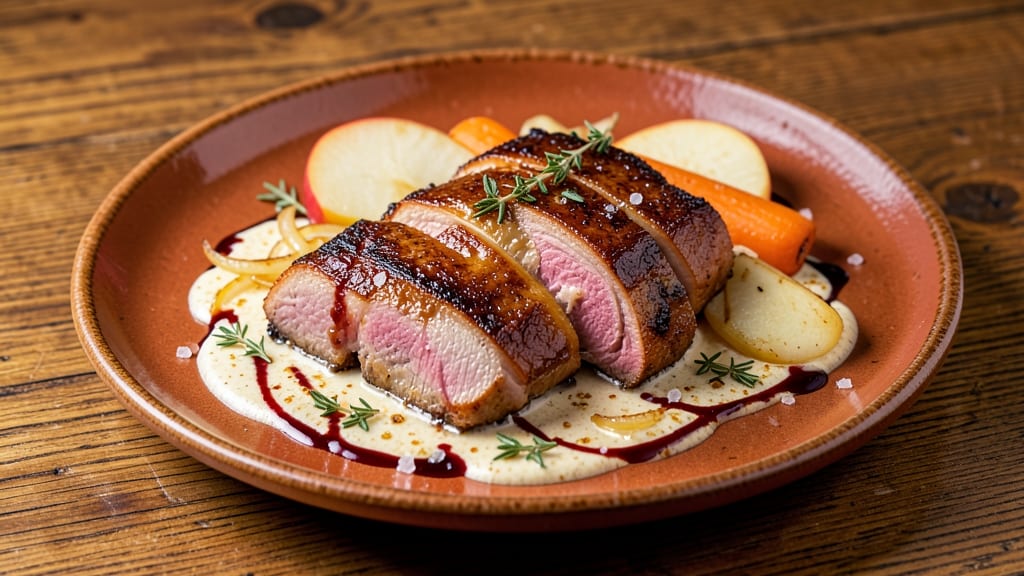
This creamy pork and apple recipe transforms humble ingredients into a restaurant-worthy dish that feels like a hug in a bowl. 💛 Growing up in Georgia, I learned pork and apples were a match made in heaven—sweet meets savory in perfect harmony.
The secret lies in slow-braising the pork until it's fork-tender, then finishing with a velvety sauce that incorporates caramelized apples and just the right amount of creaminess.
The technique is straightforward but yields professional results: sear the pork first to develop deep flavor, then simmer it low and slow with aromatic vegetables and spices. As the pork becomes tender, the apples soften and caramelize, their natural sweetness balancing the rich, savory pork.
What you end up with is a dish that's rich, comforting, and packed with layers of flavor—ideal for a cozy weeknight dinner or a special occasion.
This recipe delivers on that creamy promise through a simple but effective sauce technique: deglaze the pan with apple cider and wine, then reduce until thickened. The result is a sauce that coats every bite of tender pork and apple, creating a dish that's both elegant and satisfying.
The aroma alone will have everyone gathering around the table, eager for a taste.
Serve this dish with crusty bread or mashed potatoes to soak up every last bit of that luscious sauce. It's the kind of meal that feels like a celebration, no matter the occasion. Let's get cooking—your taste buds will thank you.
Ingredients for creamy pork and apple
Sweet apples and tender pork create a velvety, slow-braised masterpiece that's perfect for family dinners or special occasions.
| Ingredient | Amount | Notes |
|---|---|---|
| Boneless Pork Shoulder 🥩 | 3 lb | Cut into 1.5-inch cubes |
| Yellow Onion 🧅 | 1 whole | Chopped, medium size |
| Carrots 🥕 | 4 medium | Peeled, cut into chunks |
| Garlic Cloves 🧄 | 6 cloves | Minced, fresh preferred |
| Apples 🍎 | 4 medium | Honeycrisp or Fuji, peeled |
| Apple Cider 🍏 | 1 cup | Unfiltered for best flavor |
| Dry Red Wine 🍷 | 1 cup | Cabernet Sauvignon preferred |
| Chicken Broth 🥫 | 2 cups | Low-sodium preferred |
| Heavy Cream 🥛 | ½ cup | Full-fat for creaminess |
| All-Purpose Flour 🌾 | 1 tbsp | For thickening sauce |
| Fresh Thyme 🌿 | ¼ oz | Or 1 tbsp dried thyme |
| Ground Black Pepper 🌶️ | 1 tsp | Freshly ground preferred |
| Salt 🧂 | 1 ½ tsp | Kosher or sea salt |
| Olive Oil 🫒 | 2 tbsp | For searing pork |
The pork shoulder is the star—look for well-marbled cuts at Whole Foods or your local butcher. Costco often has great deals on pre-cut pork shoulder, saving you time. Apples should be firm but ripe; Honeycrisp or Fuji hold up best during slow cooking. Fresh thyme is ideal, but dried works in a pinch at one-third the amount. For the wine, any bold red will do—Cabernet Sauvignon or Merlot add depth without overpowering the dish.
No red wine? Substitute with extra apple cider or beef broth—just add an extra splash of balsamic vinegar for acidity. Heavy cream can be swapped for coconut milk if you're avoiding dairy, though the texture will be slightly lighter. The flour is just for thickening, so if you're gluten-free, use cornstarch instead. For a deeper flavor, toast the thyme leaves in the olive oil before adding them to the pot—it releases their essential oils for maximum aroma.
This dish tastes even better the next day as flavors meld. Store leftovers in an airtight container in the fridge for up to 5 days or freeze for 3 months. The sauce thickens as it cools, so you may need to thin it with a splash of broth or apple cider when reheating. Serve with crusty bread or mashed potatoes to soak up every last bit of that creamy sauce.
Why You'll Love This Recipe
- One-Pan Magic: I swear by this recipe when I’m too tired to wash pots. Toss the pork, onions, and carrots in one skillet, then let the apples caramelize right alongside—no extra dishes, just pure convenience. (Yes, even on a Tuesday night.)
- Sweet-Savory Balance: That first bite of tender pork with the apples melting into creamy perfection? It’s like autumn in a bowl. The caramelized onions and garlic make it rich, but the apples keep it bright—no heavy aftertaste here.
- Leftovers I Actually Love: Honestly, I make this on purpose just to eat it twice. The pork stays juicy when reheated, and the apples add a fresh twist to sandwiches or salads the next day. No sad, dry meat here—just flavor that sticks around.
- Budget-Friendly Feast: Pork shoulder is a steal, and apples stretch the meal without breaking the bank. Between us, this feeds four for under $15, and the leftovers turn into lunches that feel fancy. (My wallet thanks me every time.)
Step-by-step instructions for slow-braised pork with apple and cream
Here's how to transform tough pork into tender, creamy perfection with sweet apples and rich sauce.
🔥 Step 1: Sear the Pork for Deep Flavor
Heat the 2 tablespoons olive oil in a large Dutch oven over medium-high heat until shimmering. Working in batches to avoid crowding, add the 3 lb boneless pork shoulder cut into 1.5-inch cubes and sear for 3-4 minutes per side until deep golden brown. This step builds flavor through the Maillard reaction—don't rush it.
As you sear, you'll notice the pork releases juices and fat. Let these pool in the pan rather than pouring them out—they'll form the base of your sauce. Once all pork is browned, transfer it to a plate and set aside. Real talk: if your pan gets too crowded, the pork will steam instead of sear, and you'll lose that crucial crust.
🍳 Step 2: Sauté Aromatics Until Fragrant
In the same Dutch oven, reduce heat to medium and add the 1 whole chopped yellow onion and 4 medium peeled carrot chunks. Cook for 5-6 minutes until softened and lightly caramelized at the edges. Add the 6 minced garlic cloves and 0.25 oz fresh thyme, cooking for another 30 seconds until fragrant.
Here's where it gets fun—the aromatics should smell like a fall orchard. If they start to brown too quickly, reduce heat slightly. The thyme should release its piney aroma, and the garlic should sizzle without burning. This is the flavor foundation for your entire dish, so take your time.
🥘 Step 3: Deglaze and Simmer the Base
Pour in the 1 cup dry red wine and scrape up all those browned bits from the bottom of the pan with a wooden spoon. This deglazing step captures all that concentrated flavor. Let it simmer for 2-3 minutes until reduced by half, then add the 1 cup apple cider and 2 cups chicken broth. Stir well to combine.
Bring to a gentle boil, then reduce heat to low. Return the pork to the pot, along with any accumulated juices from the plate. The liquid should just barely cover the pork cubes. Cover and simmer for 1 hour—this is where the magic happens. You'll see the pork begin to soften and the liquid reduce slightly as it cooks.
🍎 Step 4: Add Apples and Braise Until Tender
Peel and core the 4 medium apples, then cut them into ½-inch chunks. Add them to the pot along with the 1.5 tsp salt and 1 tsp ground black pepper. Stir gently to distribute everything evenly. Cover and continue simmering on low heat for 1.5-2 hours until the pork is fork-tender and the apples have softened.
You'll know it's ready when the pork pulls apart easily with two forks and the apples break down into the sauce. The sauce should thicken slightly as it reduces, creating a velvety consistency. If it looks too thin at this stage, don't worry—we'll fix that in the next step. Here's the thing: patience is key. Rushing this braising step will leave you with tough meat.
🥄 Step 5: Finish with Cream for Richness
Remove the pork and apples to a serving platter, leaving the sauce in the pot. Increase heat to medium and sprinkle in the 1 tablespoon all-purpose flour, stirring constantly for 1-2 minutes until it forms a smooth paste. Gradually whisk in the 0.5 cup heavy cream to prevent lumps from forming.
Simmer for another 3-4 minutes until the sauce thickens to a creamy consistency that coats the back of a spoon. Taste and adjust seasoning if needed—you might need a touch more salt or pepper to balance the sweetness. Return the pork and apples to the pot, spooning the sauce over everything to coat. Let it sit for 5 minutes off heat to meld the flavors before serving.
Pro Tips For Making Creamy Pork And Apple
- SEAR THE PORK FIRST: Skip the slow start—get that pork shoulder browned in a hot pan with 2 tablespoons of oil before adding anything else. The crust locks in flavor and keeps the meat from drying out later, especially when braising with apples. (Yes, it’ll take 5 extra minutes, but it’s worth it.)
- PEEL AND CHOP APPLES LAST: Apples turn mushy fast when exposed to heat. Keep them whole or in large chunks until the very end, then toss them in just before serving. If you’re worried about texture, par-cook them for 3 minutes in the same pan you finish the pork—just don’t overdo it.
- SALT THE ONIONS LIKE YOU MEAN IT: Thinly sliced onions absorb liquid and lose flavor. Toss them with ½ teaspoon of salt and let them sit for 10 minutes before cooking. This draws out moisture, concentrates the sweetness, and guarantees they don’t turn to mush in the creamy sauce. (Trust me, your taste buds will notice.)
- USE COLD CREAM FOR SAUCE: If your recipe calls for heavy cream, chill it first and add it gradually at the end. Cold cream tempers the heat from the pork and prevents curdling when mixed with any acidic apples or garlic. Stir in slowly while off the heat—this isn’t a race, and you’ll regret rushing it.
Essential equipment for perfect results
Dutch Oven Essentials
Your Dutch oven is the workhorse of this recipe—it's what transforms tough pork into tender, saucy perfection. I swear by a Lodge 5.5-quart cast iron Dutch oven for its even heat distribution and durability, but any heavy, oven-safe Dutch oven will work.
Look for one with two sturdy handles and a tight-fitting lid to lock in moisture during braising. If you're tight on budget, the All-Clad Stainless Steel Dutch Oven offers great performance without the maintenance of cast iron. 🔥
Precision Thermometer
Never guess your cooking temperatures again. A meat thermometer is non-negotiable for this recipe—I use the ThermoWorks Smoke because it's accurate to ±1°F and has a remote probe. Insert it into the thickest part of a pork cube to monitor doneness.
The pork should reach 203°F for perfect tenderness. For the sauce, a basic instant-read thermometer (like the OXO Good Grips) helps track when the flour-cream mixture reaches 195°F for that perfect velvety consistency.
Wooden Spoon and Spatula
You'll need a wooden spoon for stirring the sauce—its heat resistance and gentle scraping action prevent scorching. I keep a Oxo Good Grips Wooden Spoon in my kitchen for this exact purpose.
For searing the pork, a heat-resistant silicone spatula (like the OXO Good Grips Silicone Spatula) helps flip those cubes without losing any of that precious browned crust. A tongs (preferably stainless steel) comes in handy for transferring pork in and out of the pot without piercing the meat.
Apple Peeler/Corer
Save your fingers and your patience with a Y-peeler or apple corer/slicer—I use the OXO Good Grips Apple Peeler/Corer because it's ergonomic and does the job quickly. Peeled apples cook more evenly and absorb flavors better, which is crucial for this dish.
If you're cutting by hand, invest in a sharp chef's knife (like the Wüsthof Classic) to make clean, even slices that caramelize beautifully during braising.
Fine-Mesh Strainer
For when you need to strain the sauce (if you prefer a smoother texture), a fine-mesh strainer works best. I like the OXO Good Grips Strainer because it's sturdy and easy to clean.
This comes in handy if you want to remove any apple chunks or if you accidentally burn a thyme leaf. Pro tip: Line it with a cheesecloth for even finer straining, though I usually skip this step—those little apple bits add texture that complements the creamy sauce.
Nutrition facts
Frequently asked questions
What makes this pork and apple dish creamy without being heavy?
The secret lies in the sauce technique: we use a flour slurry to thicken the reduced apple cider and wine base before adding just ½ cup heavy cream. This creates a velvety texture without overwhelming the dish. The apples caramelize during braising, adding natural sweetness that balances the richness.
Can I use pork chops instead of pork shoulder?
Not recommended for this recipe—the pork shoulder's fat and connective tissue break down beautifully during slow cooking, creating tender, fork-tender meat. Pork chops would dry out before becoming tender enough. If you must use chops, try a quick pan-sear with apples and a creamy sauce instead of braising.
How do I know when the pork is perfectly tender?
Use a meat thermometer to check the pork's internal temperature—it should reach 203°F for perfect tenderness. You'll also see the meat fibers pull apart easily when pierced with two forks. The apples should be soft but still hold their shape slightly. This usually takes 1.5-2 hours of braising time.
What's the best way to reheat leftovers?
Reheat gently in a skillet with a splash of apple cider or broth over low heat until warmed through. The sauce may thicken as it cools, so add liquid gradually. Microwaving can make the sauce watery—this method preserves the creamy texture. Leftovers taste even better the next day!
Can I make this dish ahead of time?
This recipe actually improves overnight. Store in an airtight container in the fridge for up to 5 days or freeze for 3 months. The flavors meld beautifully, and the sauce becomes even richer. Just reheat gently to maintain that creamy consistency.