
Sauces & Condiments
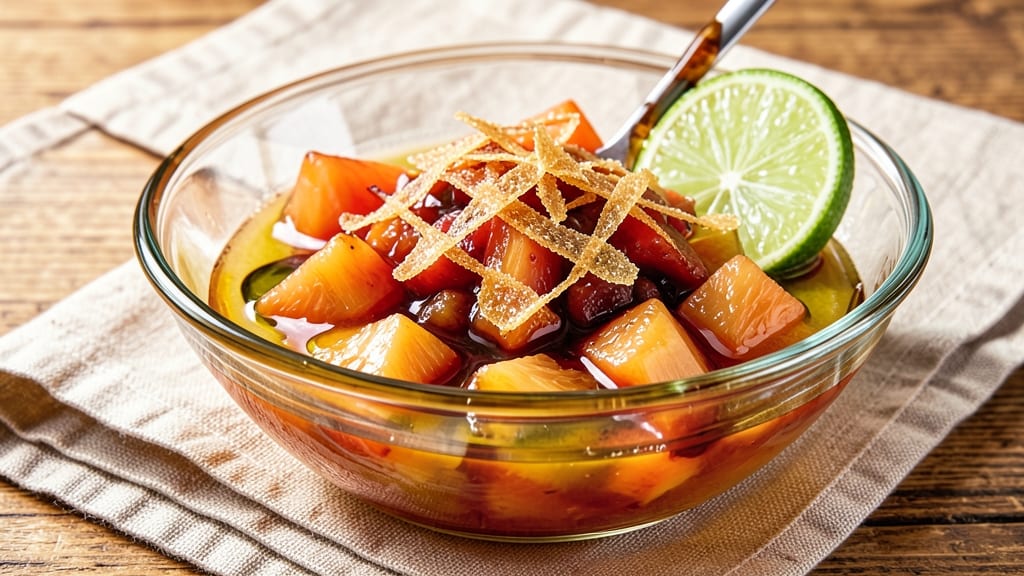
This sweet pineapple sauce recipe transforms simple grilled meats and desserts into tropical masterpieces with just a few ingredients and 15 minutes of simmering time.
The balance of caramelized sugar and tangy pineapple creates a glaze that's rich enough for pork chops but bright enough for fruit salads—it’s the kind of versatile sauce that belongs in your weekly rotation.
The secret lies in reducing the sauce until it reaches that perfect syrupy consistency—thick enough to cling to meat or drizzle over ice cream, but still light enough to enhance rather than overpower.
I use cornstarch as the thickening agent because it creates a smooth, glossy finish without graininess, and the addition of a splash of lime juice at the end brightens the flavors without overpowering the natural sweetness of the pineapple.
What you’ll end up with is a tropical tangy glaze that caramelizes beautifully on grilled chicken, transforms vanilla ice cream into a dessert fit for a luau, and even elevates simple pancakes or waffles.
The aroma alone will transport you to a beachside dinner, and the taste delivers that perfect balance of sweet, tart, and umami that makes every bite memorable.
This sauce keeps well in the refrigerator for up to one week, making it ideal for meal prep or gifting. Whether you're glazeing meats for a summer barbecue or drizzling it over fresh fruit for a refreshing dessert, this recipe delivers restaurant-quality results with minimal effort.
Let’s get started on creating your own batch.
Ingredients for sweet pineapple sauce
Six simple ingredients transform into a tropical glaze that elevates grilled meats and desserts.
| Ingredient | Amount | Notes |
|---|---|---|
| Fresh Pineapple Chunks 🍍 | 2 cups | Fresh or frozen, no sugar added |
| Granulated Sugar 🍚 | ½ cup | White or brown for depth |
| Cornstarch 🌾 | 2 tbsp | For smooth, glossy finish |
| Lemon Juice 🍋 | 2 tbsp | Freshly squeezed for brightness |
| Extra-Virgin Olive Oil 🫒 | 2 tbsp | High-quality for richness |
| Fresh Lime Juice 🍈 | 1 tbsp | Brightens the final flavor |
| Ground Cinnamon 🌿 | ¼ tsp | Optional, for warmth |
| Salt 🧂 | ¼ tsp | Diamond Crystal preferred |
The pineapple is the star here—fresh is ideal, but frozen works in a pinch (just thaw first). I always grab Costco's pre-cut pineapple for convenience, but a whole pineapple from the store's produce section gives you more juice. The sugar should be fine granulated—it dissolves better than coarse. If you're using brown sugar, reduce by 1 tbsp for the same sweetness. Cornstarch is non-negotiable for that silky texture—Bob's Red Mill is my go-to brand, but any quality brand works.
No fresh pineapple? Canned pineapple juice (unsweetened) works in a bind, but add 1 extra tbsp sugar. Swap the olive oil for avocado oil if you prefer a neutral flavor. The lime juice is crucial—Mexican limes, but regular limes work fine. Want more depth? Add 1/4 tsp of vanilla extract or a pinch of ground ginger. The cinnamon is optional but adds warmth that pairs beautifully with grilled pork. If you're using pre-made lime juice, check for added sugar—ReaLime is the cleanest option.
This sauce thickens as it cools, so reheat gently if it seems too stiff. Keeps in the fridge for 1 week in an airtight container, or freeze for 3 months. I portion mine into small jars for easy glaze application—perfect for meal prep. The aroma alone makes your kitchen smell like a tropical vacation, and it reheats beautifully for second-day use. For extra shine, brush with a tiny bit of olive oil before serving.
Why You'll Love This Recipe
- No Chopping Needed: I swear by this trick—just toss pre-cut pineapple chunks into a pot. No peeling, no dicing, no mess. The cornstarch thickens it perfectly without lumps if you whisk the sugar and oil first.
- Tropical Sweetness Fix: That balance of sugar and lemon juice? Chef’s kiss. The olive oil keeps it glossy, not cloying, while the pineapple’s natural tang shines through. Honestly, it’s the kind of sauce that makes plain yogurt or ice cream taste like a vacation.
- Party in a Jar: Make a big batch and store it in the fridge—it’s my go-to for grilled meats, pancake toppings, or even drizzled over store-bought pound cake. (Yes, even on a Tuesday night.) The cornstarch keeps it smooth for days.
- Budget Brightener: Fresh pineapple’s the star, but a single can of chunks works just as well. Sugar and cornstarch cost pennies, and olive oil stretches further than you’d think. Between us, this is the sauce I reach for when I’m broke but still want to impress.
Step-by-step instructions for sweet pineapple sauce
Here's how to transform fresh pineapple into a velvety glaze with perfect balance—bright, tangy, and just sweet enough.
Prepare the Pineapple Base
Place the 2 cups of fresh pineapple chunks in a medium saucepan over medium-high heat. Add the 2 tablespoons of extra-virgin olive oil and let the mixture simmer gently for 5 minutes, stirring occasionally. You'll notice the pineapple releases its natural juices, creating a fragrant base that's the foundation of your sauce.
I like to use a heavy-bottomed saucepan here because it distributes heat evenly and prevents scorching. If you're using frozen pineapple, thaw it first and drain any excess liquid—this keeps your sauce from becoming watery. The olive oil adds richness that balances the acidity later.
Add Sugar and Citrus for Depth
Stir in the 0.5 cup of granulated sugar and 2 tablespoons of lemon juice, mixing until the sugar dissolves completely. This step is where the magic happens—the sugar begins to caramelize slightly, intensifying the pineapple's natural sweetness while the lemon juice brightens the flavor profile.
Let the mixture simmer uncovered for 8-10 minutes, stirring frequently, until it thickens noticeably. You're looking for a consistency where the sauce coats the back of a spoon but still flows smoothly. If it starts to stick to the pan, add 1-2 tablespoons of water to loosen it—this prevents burning while maintaining the right texture.
Thicken the Sauce
In a small bowl, whisk together the 2 tablespoons of cornstarch with 2 tablespoons of cold water until smooth. This slurry is your secret weapon for achieving that glossy, restaurant-quality finish. Slowly pour it into the simmering pineapple mixture while stirring constantly to prevent lumps from forming.
Continue simmering for another 3-5 minutes until the sauce reaches a thick, syrupy consistency. It should coat the back of a spoon and leave a slight trail when you run your finger through it. Taste and adjust the seasoning—add the 0.25 teaspoon of salt and 0.25 teaspoon of ground cinnamon if desired, but only if you want that warm spice note. The sauce should be balanced between sweet and tangy, with just a hint of acidity.
Finish with Lime and Rest
Remove the sauce from heat and stir in the 1 tablespoon of fresh lime juice. This final acid hit brightens all the flavors and cuts through any remaining sweetness. Let the sauce cool slightly—this allows the flavors to meld and the texture to set properly. If you're using it immediately, you can proceed, but for best results, let it rest at room temperature for 15-20 minutes before serving.
The sauce will thicken further as it cools, so don't worry if it looks slightly looser when you take it off the heat. If it becomes too thick, simply whisk in 1 teaspoon of water to reach your desired consistency. This versatile glaze pairs beautifully with grilled chicken, pork, or even drizzled over vanilla ice cream for a tropical twist.
Pro Tips For Making Sweet Pineapple Sauce
- COOK THE PINEAPPLE FIRST: Fresh pineapple chunks need a head start—simmer them alone for 5 minutes before adding sugar. This softens the texture and keeps the sauce from turning grainy when the starch hits.
- SIFT THAT CORNSTARCH: Don’t just eyeball it: mix cornstarch with cold water first, then whisk it into the simmering sauce. I learned this the hard way—lumpy sauce is a nightmare to fix.
- USE REAL LEMON JUICE: Bottled lemon juice is fine, but if you’re using fresh, strain out the seeds and pulp—trust me, you don’t want stringy bits in your sauce. A fine-mesh sieve does the job.
- SWEAT THE SUGAR: Let the sugar dissolve fully in the warm pineapple liquid before adding the cornstarch slurry. Rushing it means you’ll end up with a thin, watery mess instead of a glossy, thick sauce.
Common mistakes when making perfect results
Overcooking the Pineapple
Pineapple breaks down quickly when heated, and once it turns mushy, you can't reverse it. I've ruined batches by letting them simmer too long—keep a close eye after the sugar dissolves.
The sauce should thicken in 8-10 minutes, not turn into a jam. If it starts looking watery after adding cornstarch, reduce heat to low and let it thicken gradually. 🍍
Skipping the Slurry Step
Cornstarch needs to be mixed with water first to create a smooth slurry—never just sprinkle it dry into the pan. I learned this the hard way when my sauce turned grainy.
Whisk the 2 tbsp cornstarch with 2 tbsp cold water until completely dissolved, then slowly pour it in while stirring constantly. This prevents clumping and ensures that glossy, restaurant-quality finish.
Ignoring the Resting Time
The sauce continues thickening as it cools, and if you serve it immediately, it might be too runny. Let it rest for 15-20 minutes at room temperature before using—this allows flavors to meld and the texture to set properly.
I've made the mistake of rushing it, only to have it pool on the plate instead of clinging beautifully to grilled meats or desserts.
Using Low-Quality Ingredients
Cheap sugar, store-bought pineapple juice, or low-grade olive oil will make your sauce taste flat. Invest in quality: use fine granulated sugar, fresh pineapple (or high-quality frozen), and extra-virgin olive oil.
The difference in flavor is night and day. I always grab Costco's pre-cut pineapple for convenience, but if you're using canned juice, add 1 extra tbsp sugar to compensate for the lack of freshness.
Not Adjusting Seasoning
Taste your sauce before adding the final lime juice—it might need more sugar, salt, or even a pinch of ground ginger for warmth. I've had batches where the pineapple was extra tart, so I added 1 extra tbsp sugar to balance it.
The key is to achieve that perfect sweet-tart balance—your sauce should make your taste buds dance, not wrinkle in disgust.
Forgetting to Strain
If you're using fresh pineapple chunks, strain out the solids before simmering to avoid a chunky sauce. I use a fine-mesh strainer to catch any fibrous bits, which keeps the texture silky smooth.
For a quicker method, blend the pineapple with its juice first, then strain. This step is especially important if you're using pre-cut pineapple with tougher fibers.
Nutrition facts
Frequently asked questions
Can I make this sauce without fresh pineapple?
Yes! Use 2 cups of unsweetened canned pineapple juice (add 1 extra tbsp sugar) or frozen pineapple chunks (thaw first and drain excess liquid). For extra richness, blend the pineapple with its juice before straining. The texture will be slightly smoother but equally delicious.
How do I adjust the sweetness for kids or diabetics?
For kids, reduce sugar to 0.35 cup and add 1 extra tbsp lime juice for balance. For diabetic-friendly versions, replace sugar with 0.3 cup erythritol or 0.25 cup monk fruit sweetener—simmer slightly longer as sugar substitutes thicken differently. Always taste as you go!
What's the best way to store leftovers?
Transfer to an airtight container and refrigerate for up to 1 week. For longer storage, freeze in 1-tbsp portions (great for meal prep!). Reheat gently in a saucepan over low heat or microwave in 15-second bursts, stirring between each. Add 1 tsp water if it thickens too much.
Can I use this sauce on non-tropical dishes?
Drizzle over vanilla ice cream, pancakes, or waffles for breakfast. It also pairs beautifully with grilled pork tenderloin, chicken satay, or even seared scallops. The acidity cuts through rich meats perfectly, while the sweetness balances savory flavors. Try it on roasted sweet potatoes too!
Why did my sauce turn grainy?
This usually happens when cornstarch isn't mixed properly with water first. Always whisk the 2 tbsp cornstarch with 2 tbsp cold water until smooth, then slowly pour into the sauce while stirring constantly. If it's already grainy, strain through a fine-mesh sieve or blend briefly to restore smoothness.