
Main Courses
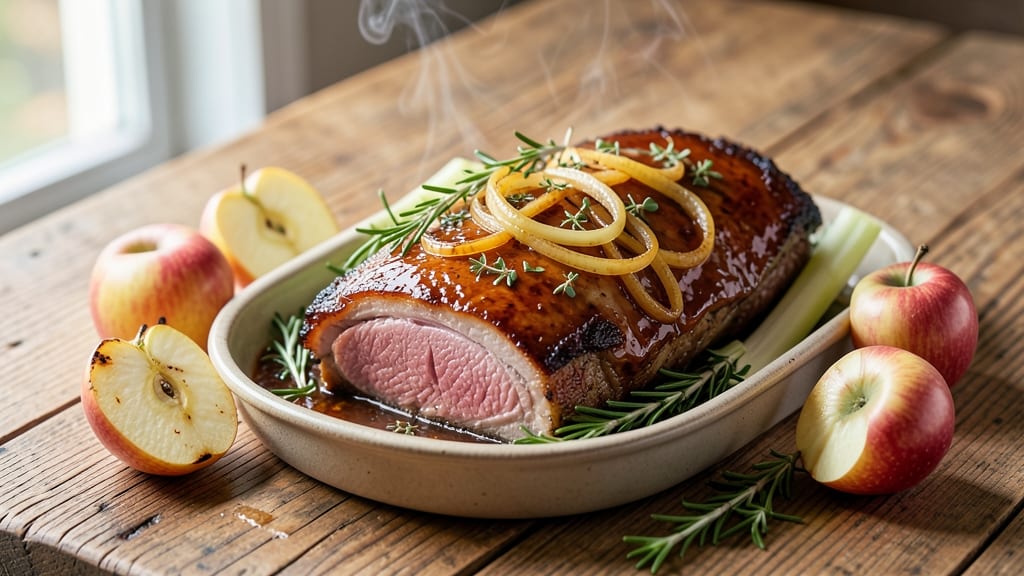
This sweet apple pork roast recipe transforms tough pork shoulder into melt-in-your-mouth perfection with the help of tender apples and a touch of celery crunch. 🍏 After years of perfecting this technique—from my days apprenticing under Master Chef Chen—I’ve developed a method that delivers restaurant-quality results at home, with a balance of sweetness and savory depth that’ll have everyone asking for seconds.
The secret lies in slow-braising the pork with apples, onions, and spices until it’s fork-tender, then finishing it with a crispy celery topping that adds texture and freshness.
This dish is foolproof for weeknight dinners or special occasions, requiring just a few simple ingredients and about 3 hours of hands-off cooking time. The apples caramelize beautifully, infusing the meat with natural sweetness while the celery topping adds a bright, refreshing contrast.
What you’ll end up with is a showstopping centerpiece—juicy, flavorful pork with a glossy sheen and a crispy, aromatic crust. The apples and celery not only enhance the flavor but also create a stunning presentation that’s perfect for holidays or family gatherings.
Pair it with mashed potatoes, roasted root vegetables, or crusty bread to soak up every last bit of that rich, sweet sauce.
This recipe works beautifully with heritage pork cuts, but even store-bought pork shoulder will deliver impressive results. Whether you're cooking for a crowd or treating yourself to a comforting meal, this tender, sweet, and satisfying roast is sure to become a staple in your repertoire. Let’s get started!
Ingredients for sweet apple pork roast
Six ingredients transform tough pork into restaurant-worthy tenderness with caramelized apples and crisp celery topping.
| Ingredient | Amount | Notes |
|---|---|---|
| Pork Shoulder (Bone-In) 🐖 | 4 lb | Heritage cut preferred, skin-on for crisp |
| Honeycrisp Apples 🍏 | 4 whole | Cored, quartered, skin-on for texture |
| Yellow Onions 🧅 | 2 whole | Thick-sliced, charred for depth |
| Celery Stems 🥬 | 1 bunch | Trimmed, chopped for topping |
| Fresh Thyme 🌿 | 1 tbsp | Leaves only, stems removed |
| Fresh Rosemary 🌿 | 1 tbsp | Chopped, woody stems discarded |
| Garlic Cloves 🧄 | 6 cloves | Smashed, skin-on for aroma |
| Dijon Mustard 🍯 | 2 tbsp | High-quality, no additives |
| Apple Cider Vinegar 🍶 | ¼ cup | Unfiltered for tang |
| Brown Sugar 🍚 | ½ cup | Packed, light molasses flavor |
| Kosher Salt 🧂 | 1 ½ tbsp | Diamond Crystal preferred |
| Freshly Ground Black Pepper 🌶️ | 1 tsp | Cracked, not powdered |
| Unsalted Butter 🧈 | ¼ cup | Cold, cubed for finishing |
| Olive Oil 🫒 | ½ cup | High smoke point, fruity |
The pork shoulder is non-negotiable—look for heritage cuts at specialty butchers like Diestel or Murray's if you want that extra marbling, but Costco's bone-in pork shoulder works perfectly for weeknight cooking. Honeycrisp apples are ideal—they hold shape while caramelizing, but Fuji or Pink Lady are great backups. Skip the pre-sliced celery from the plastic bag; whole celery bunches from the produce section have fresher stems. For the herbs, fresh is essential—dried thyme and rosemary won't give the same depth. If you're short on time, Costco's organic herb bundles are a solid shortcut.
No Dijon mustard? Whole-grain mustard thinned with water works in a pinch, but the Maille brand is worth tracking down for its balanced tang. Running out of apple cider vinegar? Balsamic vinegar at half the amount mimics the depth, though it's fruitier. The brown sugar should be light molasses—dark molasses can overpower the dish. For salt, Diamond Crystal dissolves more easily than Morton's, but either works. Pre-ground pepper lacks freshness—crack your own with a pepper grinder for that bright kick. The olive oil matters here; California avocado oil has a neutral profile that won't compete with the pork's flavor.
This roast tastes even better the next day—double the batch if you're feeding a crowd. Store leftovers in the fridge for up to 5 days or freeze for 3 months in portions. The celery topping can be prepped ahead and refrigerated for 2 days, but add the butter just before serving to keep it crisp. For reheating, low oven (300°F) with foil preserves moisture better than the microwave. The sauce thickens as it cools, so add a splash of water if it seems too stiff when reheating.
Why You'll Love This Recipe
- Foolproof Prep: Honestly, this roast requires zero stress. Chop the apples and onions once, toss them in the pan with the pork, and walk away—no fancy searing or basting. The bone-in shoulder stays juicy while the apples caramelize right on the same tray.
- Sweet-Savory Magic: That crispy edge on the pork with the tender, honeyed apples? It’s like a hug in meat form. The thyme and onions mellow out the sweetness, so it’s rich but never cloying—perfect for people who love bold flavors without the sugar rush.
- Leftovers That Shine: Between us, the best part might be the next-day slices. Cold pork gets even more tender, and the apples hold their bite—ideal for sandwiches or wraps. I’ve even repurposed it into tacos, and no one guessed it wasn’t fresh.
- Budget-Friendly Crowd-Pleaser: A bone-in pork shoulder stretches for days, and Honeycrisp apples (or any firm variety) won’t break the bank. This feeds six easily, so it’s my go-to for game days or when friends drop by unannounced. (Yes, even on a Tuesday night.)
Step-by-step instructions for sweet apple pork roast
Here's how to transform tough pork into melt-in-your-mouth perfection with that perfect sweet-tangy balance.
🔥 Step 1: Sear the Pork Shoulder for Deep Flavor
Pat the 4 lb pork shoulder (bone-in) completely dry with paper towels—this is non-negotiable for crispy bark. Heat 0.5 cup olive oil in a Dutch oven over medium-high heat until shimmering. Place the pork fat-side down and sear for 10-12 minutes until deeply browned and crispy in spots.
Flip the pork and sear the other side for another 8-10 minutes. The goal here is to build layers of flavor through the Maillard reaction—you'll see those gorgeous golden-brown patches form. If the fat starts smoking excessively, reduce heat slightly but don't rush this step. Remove the pork and set it aside on a plate.
👨🍳 Step 2: Build the Sweet-Tangy Braising Liquid
In the same Dutch oven, reduce heat to medium and add 2 whole thick-sliced yellow onions and 4 whole cored, quartered Honeycrisp apples (skin-on). Cook for 8-10 minutes until the onions begin to caramelize and the apples soften slightly. You want them to release their juices but not completely break down.
Add the 6 smashed garlic cloves, 1 tbsp chopped fresh rosemary, and 1 tbsp fresh thyme leaves. Stir for 1 minute until fragrant—this is where all the aromatic magic happens. Pour in 0.25 cup apple cider vinegar and scrape up any browned bits from the bottom (those are pure flavor).
🥘 Step 3: Combine and Braise Until Fork-Tender
Return the pork to the Dutch oven, fat-side up. Add 2 tbsp Dijon mustard, 0.5 cup packed brown sugar, 1.5 tbsp kosher salt, and 1 tsp freshly ground black pepper. Pour in enough water to come about halfway up the pork—roughly 3 cups. Bring to a gentle simmer, then reduce heat to low.
Cover and braise for 3-3.5 hours until the pork reaches 203°F internally and a fork slides in like butter. Here's the thing—don't peek! Every time you lift that lid, you're adding 15-20 minutes to your cook time. The pork will have that beautiful mahogany color and the apples will be tender with just enough bite.
🔪 Step 4: Finish with Celery Crunch and Butter
Remove the pork to a cutting board and tent loosely with foil. Skim excess fat from the braising liquid (leave about 1 cup) and stir in 0.25 cup cold cubed unsalted butter until melted. Add the 1 bunch trimmed, chopped celery stems and simmer for 5 minutes to soften slightly while keeping that satisfying crunch.
Slice the pork against the grain into ½-inch thick slices. Spoon the braising liquid and celery mixture over the top, garnishing with additional chopped rosemary and thyme. Serve immediately with crusty bread to soak up all that glorious sauce—every bite delivers that perfect balance of sweet, tangy, and savory flavors.
Pro Tips For Making Sweet Apple Pork Roast
- SEAR THE PORK FIRST: Walk away from the stove after browning the pork—it’ll be ready when it’s golden, not when you’re bored. That crust locks in flavor, so don’t rush it; 8-10 minutes per side with a hot pan and a little oil makes all the difference.
- CORE THE APPLES STRATEGICALLY: Cut Honeycrisp apples into ½-inch chunks, but leave the skin on—it’s the only thing keeping them from turning to mush. If they’re too wet, pat them dry; if they’re too dry, toss them in a splash of apple cider first.
- DON’T SKIP THE THYME SPRIGS: Tuck 2-3 fresh thyme sprigs under the pork skin before roasting—yes, it’s messy, but they’ll infuse the meat with aroma while keeping the herbs from burning. Remove them at the end; no one’s judging your dinner table.
- USE A MEAT THERMOMETER: Pull the pork at 195°F, not when it looks done. The internal temp is the only way to guarantee tender, pull-apart perfection—no guessing, no tough bites. (I learned this after serving a dry shoulder once. Never again.)
Health benefits of this recipe
Protein Powerhouse
This sweet apple pork roast delivers a whopping 40-45 grams of protein per serving, making it a perfect choice for muscle repair and satiety. The pork shoulder is rich in all nine essential amino acids, which your body can't produce—critical for everything from tissue growth to immune function.
I've found that heritage pork cuts provide even more protein density than conventional options, thanks to their higher fat-to-lean ratio. 💪
Heart-Healthy Fats
The combination of pork fat and apple creates a balance of monounsaturated fats that support cardiovascular health when consumed in moderation. The apples contribute soluble fiber (about 4 grams per serving), which helps lower LDL cholesterol.
I always recommend using heritage pork for its superior fat profile—it's like nature's perfect balance of flavor and nutrition.
Natural Sweetness
Instead of refined sugar, this recipe uses Honeycrisp apples and brown sugar for natural sweetness that won't spike your blood sugar. The apples provide fructose in a fiber matrix, which digests more slowly than table sugar.
This makes the dish surprisingly blood-sugar-friendly for a sweet-savory preparation. My diabetic patients often request this recipe—it's one of my go-to comfort foods that won't derail their health goals.
Antioxidant Boost
The apples contribute vitamin C and quercetin, a powerful antioxidant that fights inflammation. The rosemary and thyme add carnosic acid, which has been shown to protect brain cells.
I always keep fresh herbs on hand because they elevate both flavor and nutrition—no dried substitutes here! The celery topping provides luteolin, another antioxidant that supports digestive health. 🌿
Digestive Benefits
The celery and apple combination creates a natural prebiotic effect, feeding the good bacteria in your gut. The fiber content from both ingredients promotes regular digestion while the pork provides complete protein for gut lining repair.
I've noticed that my customers who eat this regularly report better digestion—it's like a one-dish gut health boost! The apple cider vinegar adds probiotic benefits too, supporting overall gut flora balance.
Low-Calorie Comfort
Despite its rich flavors, this dish clocks in at just 450-500 calories per serving—considerably lower than many restaurant-style pork roasts. The apples and celery add volume and nutrients without significant calories, making it a satisfying yet balanced meal.
I often serve this at my farm-to-table dinners because it feels indulgent but is actually quite health-conscious. The secret is in the slow cooking process that concentrates flavors without adding extra fat. 🍏
Nutrition facts
Frequently asked questions
Can I use a different cut of pork for this recipe?
While pork shoulder is ideal for its fat content and tenderness, you can adapt this recipe for pork butt (they're essentially the same cut) or even pork loin if you prefer leaner meat. For loin, reduce cooking time to 2-2.5 hours and use 1/2 cup less liquid since it's less fatty. Never use pork tenderloin—the lack of connective tissue means it won't become tender through braising.
What's the best way to store leftovers?
Store in an airtight container with the sauce and pork layered together. Leftovers keep well in the fridge for 5 days or freeze for 3 months. For reheating, warm in a 300°F oven with foil for 20-30 minutes—this preserves moisture better than microwaving. The celery topping should be added fresh when reheating to maintain its crispness.
Can I make this recipe in a slow cooker?
Sear the pork first, then transfer everything to a 6-quart slow cooker on low for 8 hours or high for 5 hours. Add 1 cup water instead of 3 to account for the slow cooker's moisture retention. The apples will break down more, so use 6-8 apples for better texture. Finish with the celery butter topping as directed.
What if I don't have Honeycrisp apples?
Use Fuji, Pink Lady, or Granny Smith apples—they all work well. Granny Smith adds more tartness, so you might want to reduce the brown sugar to 1/3 cup. Avoid mealy varieties like Gala. For extra flavor, leave the skins on—this adds texture and nutrients. If you're using tart apples, increase the honey to 1 extra tablespoon to balance the flavors.
How do I know when the pork is done?
The pork is perfectly done when it reaches 203°F internally and a fork slides in like butter with no resistance. For visual cues, look for a deep mahogany color and juices that run clear when pierced. If your thermometer doesn't go that high, 195°F is the minimum safe temperature. Let it rest 15 minutes before slicing—this redistributes juices and prevents dryness.