
Sauces & Condiments
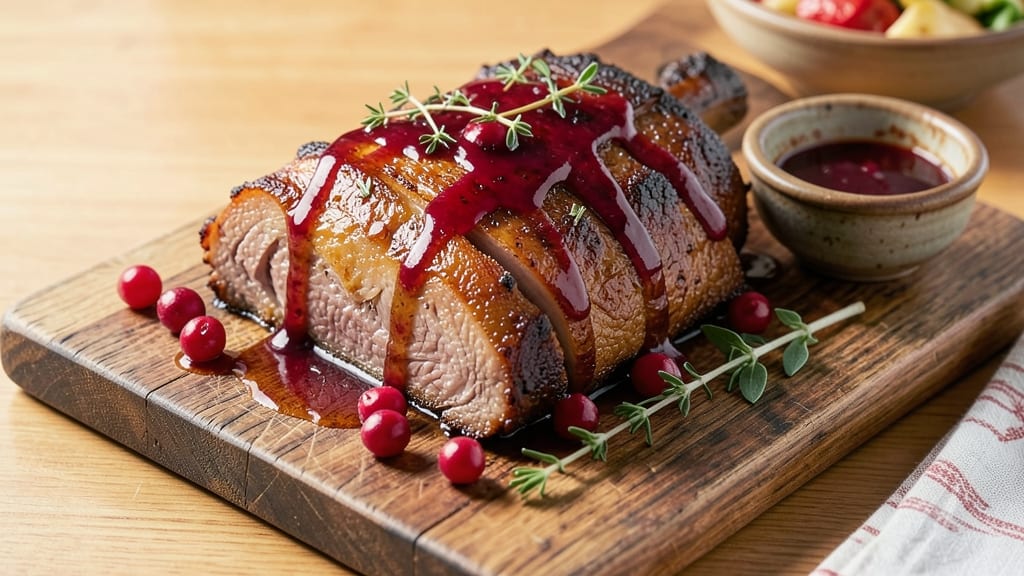
This cranberry Dijon pork loin roast with apple cider glaze recipe delivers restaurant-quality results with a sweet-tangy glaze that keeps the meat impossibly moist. I developed this recipe after years of perfecting pork roasts for holiday tables—where dryness is the ultimate betrayal. The key?
A balanced apple cider reduction that caramelizes into a glossy finish while locking in every ounce of pork's natural juices. The apple cider glaze is where the magic happens—simmered until thick and sticky, it coats the roast in layers of fruity depth and subtle spice.
Dijon mustard adds that signature tang, while fresh cranberries bring bursts of tartness that cut through the richness. I use bone-in pork loin for maximum flavor, but the technique works for boneless cuts too.
What you'll end up with is a golden-brown roast with crisp edges and tender, juicy meat that falls apart at the touch of a fork. The glaze clings beautifully, creating a visual masterpiece that tastes just as impressive.
Serve with roasted Brussels sprouts or garlic mashed potatoes to round out the meal. This recipe is perfect for holiday gatherings or when you want to impress dinner guests without spending hours in the kitchen.
The glaze can be made ahead, so all you need to do is sear the pork and let the oven work its magic. Trust me—once you try this, you'll never go back to plain roast pork again.
Ingredients for cranberry dijon pork loin roast with apple cider glaze
Sweet-tangy glaze and juicy pork—your holiday table just got an upgrade.
| Ingredient | Amount | Notes |
|---|---|---|
| Bone-In Pork Loin Roast 🐖 | 3 lb | Center-cut for even cooking |
| Apple Cider 🍎 | 1 ½ cups | Unfiltered for best flavor |
| Fresh Cranberries 🍇 | 1 cup | Whole, not sauce or jelly |
| Dijon Mustard 🍯 | 2 tbsp | High-quality, smooth variety |
| Brown Sugar 🍚 | ¼ cup | Light or dark preferred |
| Fresh Thyme 🌿 | ½ cup | Leaves only, stems removed |
| Garlic Cloves 🧄 | 4 cloves | Minced for glaze |
| Unsalted Butter 🧈 | 2 tbsp | Cold for searing |
| Olive Oil 🫒 | 2 tbsp | For searing pork |
| Kosher Salt 🧂 | 1 ½ tsp | Diamond Crystal preferred |
| Freshly Ground Black Pepper 🌶️ | 1 tsp | Cracked peppercorns |
| Balsamic Vinegar 🍷 | 1 tbsp | For glaze depth |
| Fresh Rosemary 🌿 | ¼ cup | Chopped, for garnish |
The pork loin is where this recipe shines. Bone-in cuts from Whole Foods or your local butcher deliver maximum flavor, but Costco's pre-cut roasts work perfectly for convenience. Look for even thickness—about 1.5 inches—so it cooks uniformly. Fresh cranberries? Trader Joe's has them year-round, but if you're making this in winter, frozen cranberries (thawed) work just fine. The Dijon mustard matters too—Maille or Grey Poupon are my go-tos, but any good-quality smooth Dijon will do. Pro tip: Taste the mustard first—some brands are sweeter than others, and you might need to adjust the brown sugar slightly.
No fresh cranberries? Cranberry sauce concentrate (the canned kind, not the jelly) works in a pinch—just reduce it with water to get the same consistency. Running low on apple cider? Unsweetened apple juice is a decent swap, but you'll lose some of that deep, tangy flavor. The glaze can handle a little extra sweetness if needed, so don't stress. Fresh thyme and rosemary are ideal, but dried at one-third the amount gets you close. For the butter, European-style (like Plugrá) has more flavor, but regular unsalted butter works perfectly fine. The key is keeping it cold when searing—don't let it melt in the pan, or you'll lose that crisp crust.
This glaze reheats beautifully—actually tastes better the second day as the flavors meld. Store leftovers in an airtight container in the fridge for up to 5 days, or freeze the glaze separately for 3 months. I always make extra glaze because it's perfect over pancakes or drizzled on roasted vegetables. The pork itself reheats well too, but it's best served fresh. If you're prepping ahead, sear the pork the day before, then roast it just before serving—this keeps it ultra-moist. The glaze can be made 2 days ahead and reheated gently on the stove.
Why You'll Love This Recipe
- One-Pan Magic: I swear by this—just sear the pork, toss in the cranberries and cider, and let the oven do the work. No chopping, no fussing, and honestly? The glaze practically makes itself.
- Sweet-Savory Balance: That tangy Dijon, bright cranberries, and caramelized brown sugar? It’s the kind of flavor combo that makes you go back for seconds without even trying. (Yes, even on a Tuesday night.)
- Weeknight Hero: Between us, this roast is my secret weapon for dinners when I’m running late. The glaze thickens beautifully, so you can serve it right out of the pan—no last-minute plating stress.
- Leftovers That Win: I make this for Sunday supper because the slices reheat like a dream. The glaze stays sticky and delicious, and the pork? So tender it falls apart. (My kids fight over the scraps.)
Step-by-step instructions for cranberry Dijon pork loin roast with apple cider glaze
Here's how to create a perfectly moist, flavorful roast with a glossy glaze that ties everything together.
Prepare the Pork Loin for Even Cooking
Remove the pork loin roast from the refrigerator and let it sit at room temperature for 30 minutes before cooking. This ensures even cooking throughout. While it's warming, preheat your oven to 325°F—this lower temperature prevents the outside from drying out while the center cooks.
Pat the roast dry with paper towels, then rub it generously with the 2 tablespoons olive oil and 1.5 teaspoons kosher salt. I like to press the salt into the meat so it adheres well. Next, sprinkle evenly with the 1 teaspoon freshly ground black pepper and the 0.5 cup fresh thyme. The thyme adds a subtle earthiness that pairs beautifully with the sweet-tangy glaze.
Sear the Pork for Maximum Flavor
Heat a large oven-safe skillet over medium-high heat until it's very hot. Add the 2 tablespoons unsalted butter and let it melt, then add the pork loin roast. Sear it on all sides for 3-4 minutes per side until it develops a deep golden-brown crust. This step is crucial—it locks in juices and creates that beautiful caramelized exterior.
Once the roast is well-browned, transfer the skillet to the preheated oven. Roast the pork for 45-50 minutes for a 3-pound roast, or until the internal temperature reaches 145°F when measured with a meat thermometer. The bone-in cut helps distribute heat evenly, ensuring the meat stays tender.
Prepare the Cranberry Apple Cider Glaze
While the pork is roasting, combine the 1.5 cups apple cider, 1 cup fresh cranberries, 0.25 cup brown sugar, 2 tablespoons Dijon mustard, 4 minced garlic cloves, and 1 tablespoon balsamic vinegar in a saucepan. Bring the mixture to a boil over medium-high heat, then reduce the heat to medium-low and let it simmer for 10-12 minutes until the cranberries burst and the liquid thickens slightly.
Strain the mixture through a fine-mesh sieve to remove the cranberries and garlic, pressing gently to extract all the flavor. Return the strained glaze to the saucepan and let it reduce further until it coats the back of a spoon. This concentrated glaze will cling beautifully to the pork and add a perfect balance of sweet, tangy, and herby notes.
Glaze and Finish the Roast
Remove the pork loin from the oven and let it rest for 10 minutes on a cutting board. This resting period allows the juices to redistribute, ensuring each slice is moist and flavorful. While it rests, pour the cranberry glaze into the skillet with the pork drippings and bring it to a gentle simmer over medium heat.
Carefully spoon the glaze over the roast, coating it evenly on all sides. Return the pork to the oven for 5-7 minutes to let the glaze caramelize slightly and stick to the meat. The glaze should be glossy and sticky, not runny—this ensures it clings to every bite. Garnish with the 0.25 cup chopped fresh rosemary just before serving for a pop of freshness.
Slice and Serve with Confidence
Slice the pork loin into ½-inch thick slices against the grain for maximum tenderness. The glaze will drip beautifully over each slice, adding a sweet-tangy contrast to the savory meat. Serve immediately with roasted vegetables or a simple green salad to balance the richness of the dish.
This roast is perfect for special occasions or a cozy family dinner. The combination of the moist pork, tangy glaze, and aromatic herbs makes it a standout centerpiece. Leftovers? Store them in the refrigerator for up to 3 days, and reheat gently in the oven to keep the meat tender.
Pro Tips For Making Cranberry Dijon Pork Loin Roast With Apple Cider Glaze
- Sear the Bone-In First: That bone-in pork loin needs a head start—sear it skin-side down in a cold pan for 10 minutes before roasting. I used to skip this, and the meat always ended up dry; the bone renders fat that keeps everything juicy. Let the pan get smoking hot before adding oil, then lay that roast flat so it doesn’t steam.
- Deglaze with Cider: Don’t just toss in apple cider after roasting—let the pan cool just enough to avoid burning, then pour in ½ cup of it while scraping up all those browned bits. That’s where the flavor lives, and skipping it means missing half the sweet-tangy depth. A splash of red wine vinegar here makes it even better, but cider alone works.
- Simmer Cranberries Low: Fresh cranberries need patience—simmer them with brown sugar and Dijon for 8–10 minutes until they burst, not 3. I learned this after making a glaze that tasted like sad, undercooked jelly. Keep heat at a gentle bubble, and stir occasionally so they soften evenly.
- Brush Glaze Early: Don’t wait until the end to glaze—brush the pork with half the mixture after the first hour of roasting. The acid in the cider and Dijon will tenderize the meat while it cooks, and you’ll get that sticky, caramelized finish without drying it out. Just don’t overdo it, or you’ll end up with a soggy crust.
Serving suggestions for leftovers
Classic Holiday Sides
This roast pairs perfectly with garlic mashed potatoes—their creamy texture balances the glaze's tang. I make mine with 2 lbs Yukon Gold potatoes, ½ cup heavy cream, and 4 tablespoons unsalted butter, then fold in 3 cloves roasted garlic and ½ teaspoon nutmeg.
The warmth of the nutmeg complements the cranberry's brightness beautifully. 🍽️
For a veggie lover's option, try roasted Brussels sprouts with ½ cup pancetta, 2 tbsp maple syrup, and a pinch of smoked paprika. Toss them in 2 tbsp olive oil, roast at 400°F for 20 minutes, then finish with a squeeze of lemon.
The crispy edges contrast wonderfully with the tender pork.
Bread Pairings
A crusty baguette is my go-to for soaking up extra glaze. I serve it warm, sliced into ½-inch pieces, brushed with garlic-infused olive oil, and sprinkled with flaky sea salt.
The French bread's sturdy texture holds up to the juicy pork while absorbing every last drop of that sweet-tangy sauce.
For something lighter, honey wheat dinner rolls from King Arthur Flour add a subtle sweetness. Warm them in the oven for 5 minutes at 350°F before serving. The honey notes echo the apple cider glaze, creating a harmonious bite.
I often add a herb butter (mixed with chopped chives and parsley) for extra flavor.
Unexpected Twists
Swap traditional sides for wild rice pilaf with dried cranberries, toasted almonds, and fresh sage. The nutty rice and dried fruit mirror the glaze's flavors while adding texture.
Cook 1 cup wild rice blend with 2 cups chicken broth, then stir in ½ cup dried cranberries and ¼ cup sliced almonds during the last 5 minutes of cooking.
For a modern touch, serve the roast over creamy polenta topped with caramelized onions and crumbled blue cheese. The rich, tangy cheese cuts through the pork's sweetness while the polenta's creaminess makes every bite decadent.
I use 1 cup polenta cooked in 4 cups milk with 1 tbsp butter and a pinch of salt.
Dessert Pairings
End the meal with apple cider caramel ice cream—its buttery-sweet notes echo the glaze's apple cider base. I make mine by reducing 2 cups heavy cream with 1 cup brown sugar and 1 cup apple cider, then churning with 1 cup vanilla ice cream base.
The warm spices in the ice cream complement the pork's thyme and rosemary beautifully. 🍎
A spiced pear and ginger crumble offers a lighter finish. Toss 4 ripe pears in 1 tbsp lemon juice, then bake with a topping of ½ cup oats, ¼ cup brown sugar, 2 tbsp melted butter, and 1 tsp ground ginger.
The pear's natural sweetness cleanses the palate after the rich pork.
Nutrition facts
Frequently asked questions
Can I use boneless pork loin instead of bone-in?
Yes, but adjust your cooking time slightly. Boneless pork loin cooks about 10-15 minutes faster than bone-in. For a 3-pound boneless roast, aim for 35-40 minutes at 325°F until it reaches 145°F internally. The bone helps distribute heat evenly, but boneless cuts still work beautifully with this glaze!
How far ahead can I make the glaze?
The glaze actually tastes better the next day! Make it 2 days ahead and store in an airtight container in the fridge. Reheat gently on the stove until warm and glossy. For extra depth, add 1 tsp balsamic vinegar when reheating. The flavors meld beautifully overnight.
What if my glaze is too thin?
Simmer it uncovered for 5-7 more minutes to thicken. If it's still too thin, mix 1 tsp cornstarch with 1 tbsp cold water, stir into the glaze, and simmer for 2 minutes until it reaches your desired consistency. The glaze should coat the back of a spoon smoothly.
Can I make this recipe without fresh cranberries?
Use ½ cup cranberry sauce concentrate (not jelly) mixed with 2 tbsp water to replace fresh cranberries. For extra tartness, add 1 tsp lemon juice to the glaze. Frozen cranberries (thawed) work too, though fresh gives the best texture and burst of flavor.
Why does my pork turn out dry?
Most likely, you didn't rest the pork long enough after roasting. Always let it rest for 10-15 minutes before slicing—this lets juices redistribute. Also, check your oven temperature (use an oven thermometer) and avoid overcooking. The pork should reach 145°F internally, not higher.