
Sauces & Condiments
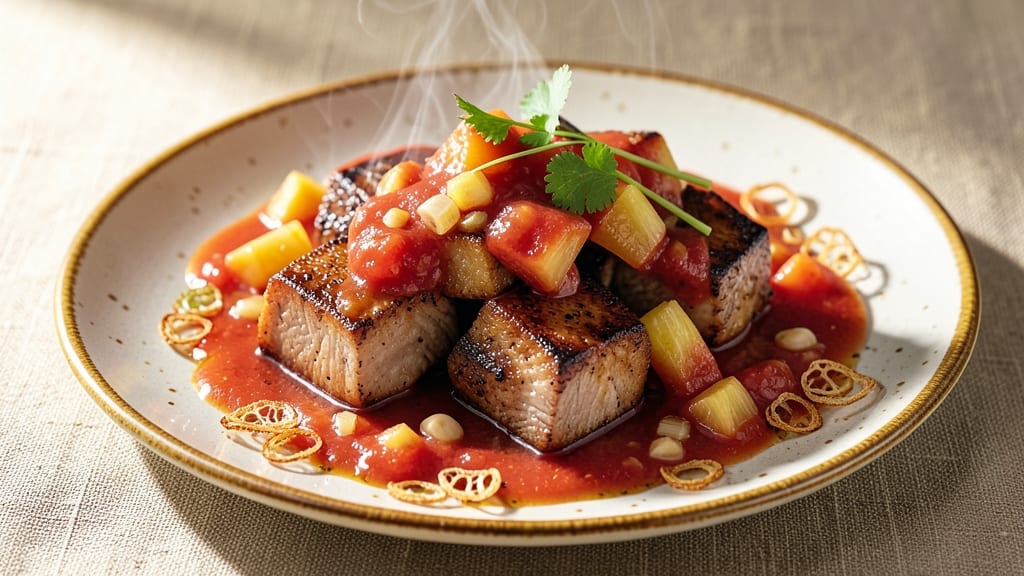
This pork with pineapple and tomato sauce recipe delivers juicy meat bites bathed in a tropical-sweet glaze that balances savory, tangy, and fruity flavors. The secret lies in searing the pork until golden, then simmering it in a vibrant sauce where pineapple’s sweetness and tomatoes’ acidity create perfect harmony.
This dish transforms simple ingredients into a restaurant-worthy meal that’s easy to master.
The process starts with tender pork cuts—like loin or shoulder—seared to lock in juices, then slow-cooked until fork-tender. Meanwhile, the sauce reduces into a glossy, slightly thickened glaze that clings beautifully to the meat.
The combination of caramelized onions, fresh tomatoes, and pineapple chunks creates layers of flavor that elevate every bite.
What you’ll end up with is a dish that’s rich yet refreshing, with tender pork pieces swimming in a glossy sauce that’s sweet, tangy, and just slightly spicy. The pineapple adds natural sweetness, while the tomatoes provide depth, making this perfect for weeknight dinners or special occasions.
Serve it over rice, with roasted vegetables, or even as a filling for tacos. The sauce keeps well, so you can make it ahead and reheat for an even more flavorful meal. Let’s get cooking!
Ingredients for pork with pineapple and tomato sauce
Juicy pork cubes meet tropical pineapple and tangy tomatoes in this vibrant, restaurant-inspired dish.
| Ingredient | Amount | Notes |
|---|---|---|
| Pork Loin 🥩 | 1 ½ lb | Cut into 1-inch cubes, boneless |
| Yellow Onion 🧅 | 1 whole | Thinly sliced for caramelization |
| Fresh Pineapple 🍍 | 1 cup | Chopped, fresh or canned (drained) |
| Roma Tomatoes 🍅 | 14 oz | Crushed by hand, fresh preferred |
| Garlic Cloves 🧄 | 4 cloves | Minced for aromatic base |
| Extra-Virgin Olive Oil 🫒 | ½ cup | For searing and deglazing |
| Dry Sherry 🍷 | ½ cup | Or substitute with apple cider vinegar |
| Tomato Paste 🍅 | 2 tbsp | For sauce thickness and depth |
| Brown Sugar 🍚 | 2 tbsp | Balances pineapple sweetness |
| Soy Sauce 🥢 | 2 tbsp | For umami depth |
| Ginger Root 🌿 | 1 tbsp | Freshly grated for zing |
| Diamond Crystal Kosher Salt 🧂 | 1 ½ tsp | Adjust to taste |
| Ground Black Pepper 🌶️ | ½ tsp | Freshly cracked for heat |
| Fresh Basil Leaves 🌿 | ¼ cup | Chopped for garnish |
| Red Wine Vinegar 🍋 | 1 tbsp | Brightens the sauce |
The pork loin is non-negotiable here—look for center-cut pieces with even marbling for consistent tenderness. Costco or high-end grocery stores carry excellent pre-cut options, but if buying whole, trim excess fat to avoid greasy sauce. For the pineapple, fresh is ideal but high-quality canned (like Dole) works in a pinch—just drain well. The Roma tomatoes should be firm and vibrant; avoid mealy ones. Whole Foods or local farmers' markets often carry superior quality. Garlic and ginger should be freshly grated or minced—pre-minced jars lack the aromatic punch needed for this dish's depth.
No sherry? Apple cider vinegar or dry white wine works equally well, though sherry adds a subtle complexity. Substituting canned pineapple? Drain thoroughly and pat dry to prevent a watery sauce. For extra richness, swap half the olive oil for unsalted butter (trust me on the full-fat version). The soy sauce can be reduced-sodium if preferred, but full-sodium enhances umami. Fresh basil is ideal, but dried oregano at one-third the amount suffices if short on time. The tomato paste should be smooth—not chunky—and San Marzano brand delivers superior flavor.
This sauce develops deeper flavor when made ahead—let it reduce for at least 30 minutes on low heat. Pork reheats beautifully; store in an airtight container for up to 4 days in the fridge or 3 months frozen. For make-ahead convenience, freeze the sauce separately and reheat with the pork. Garnish with extra basil or sesame seeds just before serving to maintain freshness. The dish pairs perfectly with jasmine rice or crusty bread to soak up the glaze.
Why You'll Love This Recipe
- One-Pan Magic: I swear by this—just slice the pork, dice the onion, and toss it all in one skillet. No fancy prep, no extra dishes. That pineapple caramelizes while the tomatoes break down into a glossy, tangy sauce, and the garlic? Oh, it infuses everything with that warm, aromatic punch.
- Sweet-Savory Balance: Between us, this combo is ridiculously good—the bright acidity of the pineapple cuts through the richness of the pork, while the Roma tomatoes add that deep, jammy sweetness. It’s not too sweet, not too tangy—just perfectly layered, like a flavor hug for your taste buds.
- Weeknight Workhorse: I make this when I’m too tired to think but still need dinner. It reheats beautifully for lunches, pairs with rice or crusty bread, and even impresses guests (even though it’s basically foolproof). Honestly, it’s my go-to when I don’t want to stress.
- Budget-Friendly Feast: Pork loin stretches further than you’d think, and pineapple in season is often cheaper than fancy cuts of meat. The onions and garlic bulk it up without breaking the bank, and leftovers? They taste just as good cold the next day—perfect for packed lunches or a lazy afternoon.
Step-by-step instructions for pork with pineapple and tomato sauce
Master this tropical-inspired dish with perfectly seared pork and a balanced sweet-tangy sauce.
Prepare and Sear the Pork Cubes
Cut the 1.5 lb pork loin into 1-inch cubes using a sharp chef's knife. Pat each piece dry with paper towels—this ensures a crispy sear later. In a large skillet, heat 0.25 cup of the extra-virgin olive oil over medium-high heat until shimmering. Working in batches to avoid crowding, add the pork cubes and sear for 3-4 minutes per side until golden brown and cooked to 160°F internally. Transfer the pork to a plate and set aside.
Here's the thing—don't skip the resting time. Let the pork rest for 5 minutes before adding it back to the sauce. This prevents the meat from releasing too much juice when it hits the warm sauce, keeping it tender and juicy. If the oil starts smoking before the pork browns, reduce the heat slightly—you want color, not char.
Caramelize the Onion and Build the Sauce Base
In the same skillet (no need to clean it—the browned bits add flavor), add the remaining 0.25 cup extra-virgin olive oil and the thinly sliced yellow onion. Cook over medium heat for 8-10 minutes, stirring occasionally, until the onions soften and turn a deep golden brown. This caramelization adds sweet depth to the sauce.
Add the minced garlic cloves and cook for 30 seconds until fragrant—don't let it burn, or it'll turn bitter. Stir in the 2 tbsp tomato paste and cook for 1 minute to deepen its flavor. Pour in the 0.5 cup dry sherry and scrape up any browned bits from the bottom of the pan. Let it simmer for 2 minutes until the alcohol smell dissipates.
Simmer the Pineapple-Tomato Sauce
Add the crushed Roma tomatoes, 2 tbsp brown sugar, 2 tbsp soy sauce, 1 tbsp freshly grated ginger root, 1.5 tsp Diamond Crystal kosher salt, and 0.5 tsp ground black pepper to the skillet. Stir well to combine, then bring the mixture to a gentle simmer. Reduce heat to medium-low and let it cook uncovered for 10-12 minutes, stirring occasionally, until the sauce thickens slightly.
Here's where the tropical flavors come together. Stir in the 1 cup chopped fresh pineapple and 1 tbsp red wine vinegar, then simmer for another 5 minutes. The vinegar brightens the sauce, cutting through the sweetness of the pineapple and brown sugar. Taste and adjust seasoning—you might need a pinch more salt or sugar depending on your pineapple's sweetness.
Finish with Pork and Basil
Return the seared pork cubes to the skillet and gently stir to coat them in the sauce. Simmer for 3-4 minutes until the pork is heated through and the sauce clings to the meat. The pork should reach 165°F internally at this point. Remove from heat and stir in the 0.25 cup chopped fresh basil leaves, letting them wilt slightly into the sauce.
Let the dish rest for 5 minutes off the heat—this allows the flavors to meld and the sauce to thicken slightly. Serve immediately over steamed rice or with crusty bread to soak up the luscious sauce. Each bite should deliver juicy pork, sweet pineapple, and a tangy-sweet tomato glaze that balances all the flavors perfectly.
Pro Tips For Making Pork With Pineapple And Tomato Sauce
- SEAR THE PORK HARD: Don’t treat pork loin like a shy guest—hit it with a screaming-hot pan for 3-4 minutes per side until deep golden brown forms. I used to skip this and ended up with pale, rubbery meat that tasted like it was steamed, not seared. The crust locks in flavor and keeps the inside juicy when it finishes in the sauce.
- COOK THE ONIONS LOW: Once you’ve browned the onions in the same pan (because you’re not washing that pan, are you?), drop the heat to medium-low. Onions burn faster than you think, and charred onions turn the sauce bitter. Keep them soft and translucent—this is where the sweetness builds, not the drama.
- PEEL AND GRATE THE GARLIC: Skip the minced garlic—peel and grate it fresh using the large holes of a box grater. It distributes evenly, toasts faster, and adds a nutty depth the jarred stuff can’t match. (Yes, even if you’re in a hurry—it takes 30 seconds.)
- SIMMER THE SAUCE UNTIL THICK: After adding pineapple and tomatoes, let the sauce bubble away uncovered for 10-12 minutes. The liquid will reduce dramatically, concentrating the sweetness and balancing the acidity. I learned this the hard way—watery sauce makes the pork taste like it’s swimming in juice, not caramelized goodness.
Troubleshooting perfect results
Pork Too Dry
If your pork ends up dry, the issue likely started with overcooking before adding sauce. Pork should reach 160°F when first seared, then finish at 165°F in the sauce—never let it sit uncovered on high heat.
For extra juiciness, sear the pork at medium-high heat for only 3-4 minutes per side, then immediately transfer to a plate. Also, avoid crowding the pan—cook in batches if needed. 💫
Sauce Too Thin
A watery sauce usually means the tomatoes weren’t crushed enough or the pineapple released too much liquid. To fix this, simmer the sauce uncovered for an extra 5-10 minutes to reduce it naturally.
For instant thickening, mix 1 tbsp cornstarch with 2 tbsp water, stir into the sauce, and simmer for 2 minutes until it glistens. If using canned pineapple, drain it thoroughly and pat dry with a paper towel before adding.
Pineapple Too Sweet
The natural sweetness of pineapple can overwhelm the dish if not balanced. To adjust, add ½ tsp ground ginger or 1 tsp red wine vinegar to brighten the flavors. For a more savory balance, increase the soy sauce to 3 tbsp or add ½ tsp smoked paprika for depth.
If the pineapple is overly ripe, reduce its amount to ½ cup and add 1 tbsp tomato paste to compensate.
Onions Burned
Burnt onions happen when cooking too hot or walking away from the pan. Keep the heat at medium-low and stir frequently—aim for a deep golden color, not browned bits. If they start to darken too quickly, reduce heat to low and add 1 tbsp water to deglaze.
For extra insurance, add a pinch of sugar to the onions as they cook—it helps caramelize them evenly without burning.
Flavor Too Mild
A lack of depth often comes from skipping the sear or underseasoning. For richer flavor, sear the pork until deeply browned, then deglaze the pan with 2 tbsp sherry or vinegar to capture the fond.
Boost umami by adding 1 tsp fish sauce or ½ tsp msg to the sauce. Fresh herbs like cilantro or Thai basil can also elevate the dish—add them at the end for brightness.
Pineapple Too Tart
If the pineapple’s acidity dominates, balance it with 1 tbsp brown sugar or ½ tsp honey to mellow the flavor. For a smoother texture, blend the pineapple with the sauce for 30 seconds**—this removes excess fiber.
If using canned pineapple, opt for crushed or diced over chunks, as they’re less acidic. A pinch of salt also helps round out the tartness.
Nutrition facts
Frequently asked questions
Can I substitute chicken for pork in this recipe?
Chicken works beautifully—use 1.5 lb boneless, skinless chicken thighs instead of pork for similar tenderness. Chicken breasts will dry out faster, so avoid them. Cook the chicken to 165°F before adding to the sauce, and reduce simmering time by 2-3 minutes once combined. The sauce flavors will adapt perfectly to the poultry.
How do I make this dish spicier?
For heat lovers, add 1 tbsp chopped fresh chili or 1 tsp cayenne pepper when building the sauce base. For smoky depth, swap ½ tsp smoked paprika for regular paprika. If you prefer subtle heat, stir in 1 tsp sriracha at the very end—this preserves the tropical flavors while adding a kick.
Can I prepare this sauce ahead of time?
Yes! The sauce keeps well for 3 days in the fridge or 3 months frozen. Make it a day ahead—the flavors deepen as it rests. Reheat gently on low heat, adding 1 tbsp water if it thickens too much. For best results, store the sauce and pork separately, then combine and reheat together before serving.
What are the best sides to serve with this dish?
This tropical pork pairs perfectly with jasmine rice or coconut rice to complement the pineapple's sweetness. For contrast, try garlic green beans or a mango avocado salad. The sauce also works as a filling for tortillas or lettuce wraps—great for a lighter meal.
Why does my sauce turn out too sweet?
Overly sweet sauce usually means the pineapple was too ripe or the sugar wasn't balanced. Next time, reduce pineapple to ½ cup and add 1 tsp red wine vinegar to brighten flavors. For extra tang, stir in 1 tbsp tomato paste or a pinch of ground ginger—both help balance sweetness while adding depth.