
Main Courses
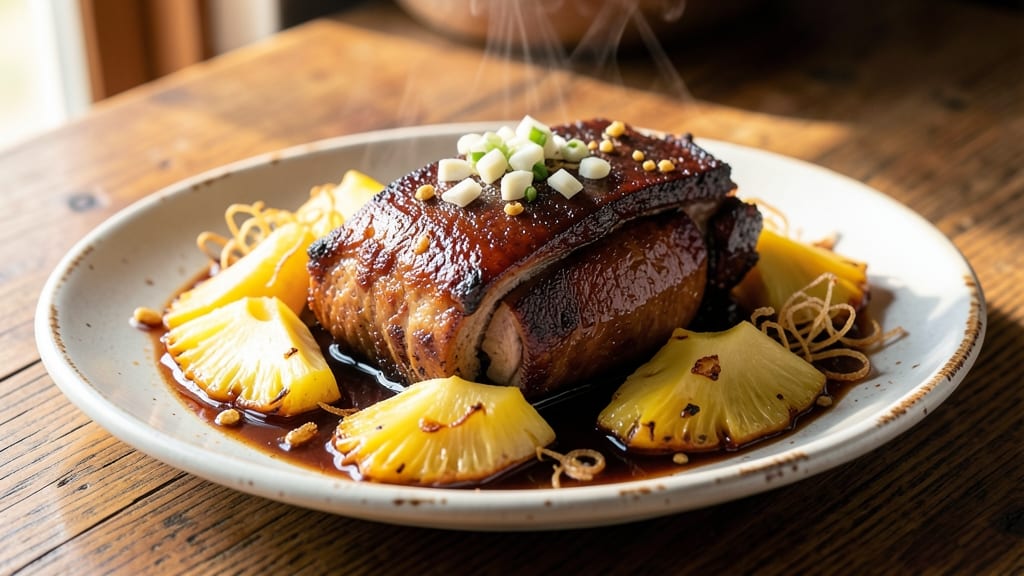
This Pinoy-style pork pata humba transforms tough pork into melt-in-your-mouth tenderness with a caramelized pineapple glaze—all in one pan. 🌟 I first tasted it at a Filipino family gathering where the aroma of soy, vinegar, and slow-cooked pork filled the air, and it's been my go-to comfort dish ever since.
The secret lies in marinating the pork overnight, then braising it until the meat practically falls apart while the pineapple caramelizes into a sticky, sweet-tart sauce.
The beauty of this dish is its simplicity: just a few pantry staples—soy sauce, vinegar, brown sugar, and garlic—work together to create deep, savory flavors.
The pork cooks low and slow for about 1.5 to 2 hours, ensuring every bite is tender, while the pineapple rings soften just enough to release their natural sweetness. This method delivers restaurant-quality results without requiring fancy techniques or equipment.
What you'll end up with is a rich, glossy pork dish where the meat is so tender it shreds easily, all coated in a glossy, caramelized pineapple sauce that balances sweet and tangy notes perfectly.
The aroma alone will have everyone gathering around the table, and the leftovers reheat beautifully for lunch the next day. Serve it over steamed rice for the full Filipino experience.
This recipe is perfect for family dinners, potlucks, or when you want to impress guests with authentic Filipino flavors. The combination of textures—tender pork, soft pineapple, and slightly crispy edges—makes every bite satisfying. Let's get cooking!
Ingredients for pork pata humba with pineapple recipe pinoy style
Pantry staples plus a few Filipino market finds—everything you need for tender, caramelized pork with sweet-tart pineapple.
| Ingredient | Amount | Notes |
|---|---|---|
| Pork Shoulder (Pata) 🥩 | 2 ½ lb | Cut into 1.5-inch chunks |
| Fresh Pineapple 🍍 | 1 whole | Cut into 1-inch rings |
| Soy Sauce 🥄 | ½ cup | Premium brand preferred |
| Cane Vinegar 🍶 | ¼ cup | White or apple cider |
| Dark Brown Sugar 🍚 | ½ cup | Packed lightly |
| Garlic Cloves 🧄 | 6 cloves | Minced finely |
| Fresh Ginger 🌿 | 2 tbsp | Grated finely |
| Olive Oil 🫒 | 2 tbsp | Extra-virgin preferred |
| Black Peppercorns 🌶️ | 1 tsp | Freshly cracked |
| Bay Leaves 🍃 | 2 whole | Dried, crisp |
| Salt 🧂 | 1 ½ tsp | Diamond Crystal preferred |
| White Pepper 🌶️ | ½ tsp | Freshly ground |
| Onion 🧅 | 1 whole | Large, sliced thin |
The pork shoulder is the star here—pata (foot) adds authentic Filipino flavor, but regular pork shoulder works too. Look for well-marbled cuts at Filipino markets or your local butcher section. If you can't find pata, pork shoulder with skin gives great texture. The pineapple should be ripe but firm—overripe gets mushy during cooking. I grab Dole brand when I need a quick option, but local farmers markets often have fresher, sweeter pineapples. The garlic and ginger? Freshly grated or minced—never dried powder for this dish.
No cane vinegar? Apple cider vinegar works in a pinch, but the flavor won't be quite as authentic. Running short on brown sugar? White sugar plus 1 tsp molasses gets you close. The soy sauce matters—premium brands like Silver Swan have deeper flavor than generic store versions. For the onion, yellow or red both work, but red adds a subtle sweetness that pairs beautifully with the pineapple. The bay leaves? Dried is fine, but fresh has a brighter aroma. If you're using pre-minced garlic or ginger, rinse it first to remove excess moisture that can make your dish watery.
This dish tastes even better the next day—leftovers reheat beautifully in a skillet with a splash of water. Store in an airtight container for up to 4 days in the fridge, or freeze for 3 months. The sauce thickens as it cools, so add a splash of water when reheating if it gets too stiff. For meal prep, double the recipe and portion into containers—pork and sauce separate so you can reheat just what you need. The pineapple rings can be prepped ahead and stored separately for up to 3 days before cooking.
Why You'll Love This Recipe
- One-Pot Magic: I swear by this recipe’s simplicity—just brown the pork, toss in the pineapple chunks and soy-vinegar mix, then let it simmer. No flipping pans, no fuss, and honestly? That’s my kind of cooking.
- Sweet-Savory Balance: The pineapple’s tang cuts through the pork’s richness while the cane vinegar and brown sugar caramelize into a glossy, addictive glaze. (Yes, even my kids—who usually turn up their noses at pork—ask for seconds.)
- Lunchbox Hero: Between us, this dish is chef’s kiss for meal prep. The pork stays tender for days, and the pineapple keeps it from getting boring. Pack it in rice bowls, serve it cold in wraps, or reheat it straight from the fridge—it’s always a win.
- Budget Stretch: Pork shoulder is cheap, and pineapple lasts forever if you cut it right. I’ve made this feed six people for under $15, and the leftovers? They disappear faster than I can say “second helping.” No waste, all flavor.
Step-by-step instructions for pork pata humba with pineapple
This Filipino crowd-pleaser delivers tender pork with caramelized pineapple in one pan.
🍳 Step 1: Sear the Pork for Maximum Flavor
Heat a large Dutch oven over medium-high heat and add the 2 tablespoons olive oil. Once shimmering, add the 2.5 lb pork shoulder cut into 1.5-inch chunks in a single layer, working in batches if needed. Let them sear undisturbed for 3-4 minutes per side until deeply browned—this builds the rich foundation for our sauce.
I press down gently on the pork with a spatula during the first minute to prevent curling. Once browned, transfer the pork to a plate and set aside. The goal is to develop that deep, caramelized crust that will melt into the sauce later. Don't rush this step—patience here means better flavor throughout.
👨🍳 Step 2: Build the Sweet-Tart Sauce Base
In the same Dutch oven, add the 1 whole onion sliced thin and cook for 3-4 minutes until softened and golden. Add the 6 cloves minced garlic and 2 tablespoons grated ginger, cooking for 30 seconds until fragrant—this prevents bitter garlic flavors.
Pour in the 0.5 cup soy sauce, 0.25 cup cane vinegar, and 0.5 cup dark brown sugar, stirring to combine. The mixture will bubble vigorously—this is normal. Let it simmer for 2-3 minutes until slightly thickened. Here's where the magic happens: the sugar begins caramelizing while the vinegar cuts through the richness.
🍳 Step 3: Braise the Pork with Aromatics
Return the browned pork to the Dutch oven along with the 1 whole pineapple cut into 1-inch rings. Add the 1.5 teaspoons salt, 1 teaspoon cracked black peppercorns, 0.5 teaspoon white pepper, and 2 whole bay leaves.
Bring everything to a gentle simmer, then reduce heat to low. Cover and let it cook for 1 hour, stirring occasionally. The pork should be tender enough to pull apart with a fork, and the pineapple should soften slightly but still hold its shape. This slow braising ensures the pork stays juicy while absorbing all those sweet-tart flavors.
🔥 Step 4: Caramelize and Thicken the Sauce
After 1 hour, increase heat to medium-high and uncover the pot. Let the liquid reduce for 10-15 minutes, stirring occasionally, until it thickens into a glossy sauce. You'll see the pineapple juices caramelizing around the edges—that's your signal it's ready.
Taste and adjust seasoning if needed. The sauce should balance sweet, tangy, and savory notes. If it's too thin, let it reduce another 5 minutes uncovered. The pork should be fork-tender with a rich, dark sauce clinging to every piece. This is where home cooks often rush—don't skip the reduction time or you'll miss that perfect texture.
⏰ Step 5: Rest and Serve with Pineapple Topping
Let the pork humba rest for 5 minutes off the heat. This allows the juices to redistribute throughout the meat. For serving, arrange the pork and pineapple rings on a platter, spooning the caramelized sauce over the top. Garnish with additional pineapple rings if desired.
Serve immediately with steamed rice to soak up that delicious sauce. The contrast of tender pork with sweet-tart pineapple makes this dish irresistible. Leftovers? Even better the next day as the flavors meld further. This one-pan wonder delivers restaurant-quality results with minimal effort—just don't skip those searing and reduction steps!
Pro Tips For Making Pork Pata Humba With Pineapple Recipe Pinoy Style
- CRANK THE HEAT FIRST: I learned this the hard way—starting with medium heat means your pork shoulder will stew instead of caramelize. Get that pan smoking hot (medium-high) before adding the pork cuts, then turn it down to medium after the initial sear. That first burst of color locks in flavor better than anything else.
- CHOP PINEAPPLE SMALLER THAN YOU THINK: Thick chunks? No thanks. Dice that pineapple into ½-inch pieces—it cooks faster and soaks up the soy-vinegar-sugar sauce like a sponge. (Yes, even if it looks messy.) Larger pieces stay undercooked or turn mushy while the pork finishes.
- DON’T DROWN THE PORK: This isn’t a braise—it’s a glaze bomb. After the initial sear, add just enough water (about ¼ cup) to deglaze, then immediately pour in the soy-vinegar-sugar mix. Too much liquid = pale, watery sauce. You want a thick, sticky reduction clinging to every bite.
- SAVE TIME WITH A PRE-MIX: Mix your soy sauce, cane vinegar, and brown sugar in a small bowl before cooking. This cuts down on mid-recipe scrambling and ensures even distribution. Pro move: Add a splash of water (1-2 tbsp) to the mix—it helps the sugar dissolve faster and prevents clumping in the pan.
Perfect pairings for this pork pata humba with pineapple recipe pinoy style
Filipino Rice Pairing
Steamed jasmine rice is the classic companion to pork pata humba, soaking up that caramelized pineapple sauce like a sponge. I use short-grain Japanese rice for extra stickiness—just cook it in a 1:1.25 rice-to-water ratio for perfect texture.
For a fun twist, try garlic fried rice with leftover pork chunks mixed in. Pro tip: Keep the rice warm in a rice cooker set to "keep warm" mode while you finish cooking the pork. 🍚
Pickled Papaya Slaw
Add a refreshing crunch with atchara (Filipino pickled papaya), available at Asian markets or made at home. Thinly slice 1 cup papaya, ½ cup red onion, and ½ cup carrot, then toss with 2 tbsp vinegar, 1 tbsp sugar, and ½ tsp salt.
The tangy contrast balances the dish beautifully. I like to serve it on the side or sprinkle it directly over the pork. For extra flavor, add 1 tbsp fish sauce to the pickling liquid. 🥒
Creamy Coconut Rice
For a richer side, make ginebra rice by cooking rice in 1 cup coconut milk instead of water, then topping with ½ cup toasted coconut flakes and a drizzle of ginera syrup (Filipino caramel).
The coconut's creaminess complements the pork's savory depth. I sometimes add ½ tsp turmeric to the rice for a golden hue. This pairing feels especially festive for special occasions. 🥥
Spicy Chili Sauce
Liven up the meal with a side of Filipino chili sauce (siling labuyo). Mix ½ cup vinegar, 2 tbsp sugar, 1 tbsp soy sauce, and 1 tbsp finely chopped siling labuyo peppers (or 1 tsp cayenne for milder heat).
Let it sit for 15 minutes before serving. The heat cuts through the sweetness, making every bite more dynamic. I serve it in small bowls for dipping or drizzling. 🌶️
Simple Green Salad
A light mixed greens salad balances the richness. Toss 4 cups butter lettuce and 2 cups baby spinach with 2 tbsp olive oil, 1 tbsp rice vinegar, and ½ tsp salt. Top with ¼ cup toasted sesame seeds and 2 tbsp chopped cilantro.
The crispness and freshness provide a refreshing contrast to the tender pork. I often add ½ cup shredded cucumber for extra crunch. 🥗
Nutrition facts
Frequently asked questions
Can I substitute regular pork shoulder for pata (pork foot)?
Yes! While pata adds authentic flavor, regular pork shoulder with skin works beautifully. Look for well-marbled cuts to ensure tenderness. If using skinless pork, add an extra 1 tablespoon soy sauce to compensate for lost richness. The dish will still be delicious—just slightly less traditional.
How do I know when the pork is fully tender?
The pork should easily pull apart with two forks when tested. After 1 hour of braising, pierce a piece—if juices run clear and the meat shreds, it's ready. If not, cook 15-20 more minutes covered. Overcooking can make it dry, so aim for that perfect "just tender" moment.
Can I make this dish in a slow cooker?
Sear the pork first, then transfer everything to a slow cooker. Cook on low for 6-7 hours or high for 3-4 hours. After cooking, increase heat to high for 15 minutes uncovered to thicken the sauce. The slow cooker method is perfect for busy days—just don't skip the initial searing for flavor.
What if my sauce is too thin?
Simmer uncovered on medium-high heat for 10-15 minutes, stirring occasionally, until it thickens. For extra help, mash 1-2 pineapple rings into the sauce to release more juice. If it's still too thin, mix 1 teaspoon cornstarch with 1 tablespoon water and stir in until glossy.
How do I store leftovers?
Store in an airtight container in the fridge for up to 4 days. Reheat in a skillet with 1 tablespoon water over medium heat until warmed through. For freezing, portion into meal-sized containers (pork and sauce separate) and freeze for up to 3 months. The sauce may thicken when cold—add a splash of water when reheating.