
Main Courses
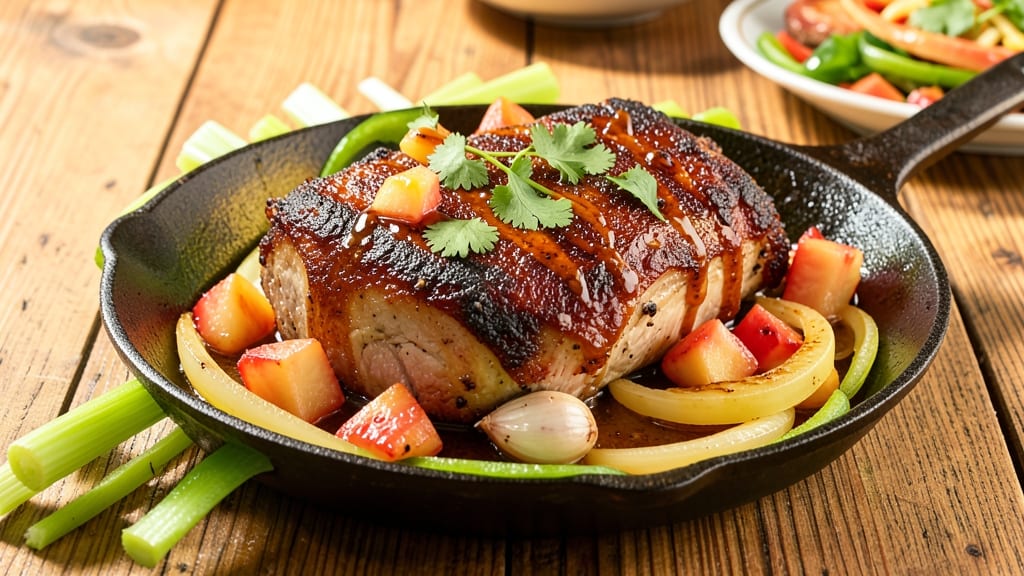
This Pioneer Woman pineapple pork shoulder recipe transforms humble ingredients into a dish that tastes like a holiday feast—juicy, tender pork with sweet pineapple and a crisp celery-pepper crunch. 🌟 I developed this after years of perfecting slow-braised pork, where the sweetness of pineapple and the crunch of celery and pepper create a balance that’s both comforting and exciting.
The key? A long, slow cook that melts the pork into perfect tenderness while the pineapple caramelizes just enough to add depth without overpowering.
The beauty of this recipe lies in its approachability. You don’t need a pressure cooker or fancy equipment—just a slow cooker or oven, and about 6 hours to let the flavors meld.
The pork shoulder becomes fork-tender, while the pineapple and celery-pepper mixture adds layers of texture and sweetness that make every bite unforgettable. It’s the kind of dish that feels special but doesn’t require hours of prep or expensive ingredients.
What makes this recipe stand out is the celery-pepper crunch—a simple but game-changing topping that adds brightness and texture. The slow braising ensures the pork stays juicy, while the pineapple glaze ties everything together with a touch of sweetness that cuts through the richness.
This is the kind of meal that tastes even better the next day, making it perfect for meal prep or feeding a crowd.
Serve it with crusty bread to soak up the juices or alongside roasted vegetables for a complete meal. The flavors are rich and satisfying, yet balanced enough to feel light.
Whether you're cooking for a family gathering or a cozy weeknight dinner, this recipe delivers restaurant-quality results with minimal effort. Let’s get cooking!
Ingredients for pioneer woman pineapple pork shoulder
Six hours of slow cooking transforms humble pork into a tender, sweet feast with pineapple and celery-pepper crunch.
| Ingredient | Amount | Notes |
|---|---|---|
| Pork Shoulder (Bone-In) 🐖 | 4 lb | Well-marbled, trimmed of excess fat |
| Fresh Pineapple (Cubed) 🍍 | 2 cups | Freshly cut, 1-inch pieces |
| Celery Stalks 🧅 | 3 whole | Trimmed, cut into 1-inch pieces |
| Green Bell Pepper 🌶️ | 1 whole | Seeded, cut into 1-inch pieces |
| Yellow Onion 🧅 | 1 whole | Peeled, sliced into 1/4-inch pieces |
| Garlic Cloves 🧄 | 6 cloves | Peeled, smashed |
| Fresh Ginger 🌿 | 1 ½ tbsp | Finely grated, fresh |
| Brown Sugar 🍯 | ½ cup | Packed, light brown |
| Soy Sauce 🥢 | ⅓ cup | Low-sodium preferred |
| Apple Cider Vinegar 🍏 | ¼ cup | Unfiltered for depth |
| Honey 🍯 | ¼ cup | Wildflower preferred |
| Kosher Salt 🧂 | 2 tsp | Diamond Crystal preferred |
| Black Peppercorns 🌶️ | 1 tsp | Freshly cracked |
| Vegetable Oil 🫒 | 1 tbsp | For searing |
| Fresh Thyme Leaves 🌿 | ¼ cup | Stripped from stems |
The pork shoulder is non-negotiable for this recipe—bone-in, well-marbled cuts from Costco or local butchers yield the best results. Look for pieces with visible fat marbling, which renders during cooking for moisture. Fresh pineapple is essential; canned or frozen lacks the bright acidity needed to balance the richness. For the celery-pepper crunch, organic celery from the grocery store's produce section stays crisp longer than conventional varieties. The ginger should be freshly grated—bottled ginger lacks the aromatic punch that elevates the braising liquid.
No fresh pineapple? Fresh pineapple juice (1 cup) plus 1 tbsp lime juice works as a substitute, though texture will differ. Substituting bell pepper for the green variety? Red or yellow bell peppers add natural sweetness but reduce the vibrant green color. The soy sauce can be swapped for coconut aminos in a 1:1 ratio if avoiding gluten. For a deeper flavor profile, add 1 tsp fish sauce to the braising liquid—it enhances umami without overpowering. The brown sugar can be replaced with maple syrup for a vegan adaptation, though the color will be lighter.
This dish reheats beautifully—3-4 days in the fridge or 3 months frozen when properly stored. For meal prep, portion the pork into individual servings and store the celery-pepper crunch separately to maintain crispness. The braising liquid can be reduced into a glaze for serving over rice or noodles. To maximize freshness, store the pork in its juices and refrigerate uncovered for 1 hour before sealing to prevent surface spoilage. The celery-pepper mixture stays fresh for 5 days when stored in an airtight container.
Why You'll Love This Recipe
- One-Pan Magic: I swear by this recipe because it’s all in one pan—no chopping boards, no messy transfers. Just toss the bone-in pork shoulder with pineapple, celery, bell pepper, and onion, let the slow cooker do the work, and boom. The pineapple’s sweetness caramelizes right into the meat, and cleanup? One spatula, one pan. Honestly, I’ve made it on days I didn’t even want to cook.
- Sweet-Savory Balance: That bone-in pork shoulder gets so tender it falls apart, but the real star is how the fresh pineapple cubes—juicy, not mushy—cut through the richness. The celery and bell pepper add a fresh crunch, while the onion deepens the flavor. It’s the kind of dish where every bite feels like a hug: warm, satisfying, and just a little bit unexpected.
- Weeknight & Potluck Hero: Between us, this is my go-to for lazy nights and when I need to bring something to a gathering. The slow cooker version means I can set it and forget it, and the leftovers? Even better the next day. Plus, it’s the kind of dish that feels fancy enough for company but unfussy enough to make on a Tuesday. (Yes, even on a Tuesday night.)
- Budget-Friendly Feast: Pork shoulder is cheap, and this recipe stretches it into a meal that feeds a crowd without breaking the bank. The pineapple adds a touch of luxury for pennies, and the veggies are basic pantry staples. I’ve made this for four people and still had leftovers for lunch—no guilt, just good food. It’s my secret weapon for stretching groceries without sacrificing flavor.
Step-by-step instructions for slow-braised pineapple pork shoulder
Master this technique and you'll achieve tender, fall-apart pork with a glossy glaze.
🔥 Step 1: Sear the Pork Shoulder for Deep Flavor
Heat a heavy Dutch oven over medium-high heat until hot. Add the 1 tablespoon vegetable oil and swirl to coat. Pat the 4 lb pork shoulder (bone-in) completely dry with paper towels—this ensures maximum browning. Place the pork fat-side down in the pan and sear undisturbed for 8-10 minutes until a deep golden-brown crust forms.
Flip the pork and sear the other side for another 6-8 minutes. The goal is to develop a rich, caramelized crust that locks in moisture during the long braise. If the fat renders too quickly, reduce heat slightly to prevent burning. Remove the pork and set it aside on a plate, reserving all the rendered fat in the pot.
👨🍳 Step 2: Build the Sweet-Savory Braising Base
In the same Dutch oven, add the 3 whole celery stalks, 1 whole green bell pepper, and 1 whole yellow onion, all cut into 1-inch pieces as specified. Cook for 5-6 minutes until the vegetables begin to soften and release their juices. Add the 6 cloves garlic cloves and 1.5 tbsp fresh ginger, cooking for another 30 seconds until fragrant.
Deglaze the pot with the 0.33 cup soy sauce and 0.25 cup apple cider vinegar, scraping up all the browned bits from the bottom. This step captures all the flavor you've built. Stir in the 0.5 cup brown sugar, 0.25 cup honey, and 0.25 cup fresh thyme leaves, mixing until the sugar dissolves completely. The mixture should smell rich and complex—sweet with a tangy edge.
🥘 Step 3: Braise Until Fork-Tender
Return the pork shoulder to the Dutch oven, fat-side up. Pour in enough water to come about halfway up the pork, then bring to a gentle simmer over medium-low heat. Cover with a tight-fitting lid and transfer to a 300°F oven. Braise for 3-3.5 hours, until the pork is fork-tender and the internal temperature reaches 195-203°F.
Check the pork after 2.5 hours—it should be pulling away from the bone easily. If the liquid reduces too quickly, add ½ cup water to maintain moisture. The pork will continue cooking as it rests, so don't overcook it in the oven. The vegetables should be soft and infused with the pork's rich flavors.
🍳 Step 4: Finish with Pineapple and Reduce the Sauce
Remove the pork from the Dutch oven and transfer it to a cutting board. Strain the braising liquid through a fine-mesh sieve into a clean pot, pressing on the vegetables to extract all their flavor. Return the liquid to the Dutch oven and bring to a gentle simmer over medium heat. Add the 2 cups fresh pineapple (cubed) and cook for 5-7 minutes until the pineapple softens slightly and the sauce thickens.
Season the sauce with the 2 tsp kosher salt and 1 tsp freshly cracked black peppercorns, adjusting to taste. The sauce should coat the back of a spoon and have a glossy, syrupy consistency. If it's too thin, simmer uncovered for another 3-5 minutes to reduce further. The pineapple should add a bright contrast to the deep, caramelized flavors of the pork.
🔪 Step 5: Rest and Serve
Let the pork shoulder rest for at least 30 minutes before slicing. Tent it loosely with foil to keep it warm. During this time, the juices will redistribute throughout the meat, ensuring each slice is moist and flavorful. Use two forks to pull the pork apart along the grain, or slice it into ½-inch thick pieces.
Serve the pork shoulder with the reduced pineapple sauce spooned over the top. The contrast of the sweet, tangy pineapple against the rich, savory pork is what makes this dish truly special. Pair it with crusty bread to soak up every last drop of that glorious sauce.
Pro Tips For Making Pioneer Woman Pineapple Pork Shoulder
- Brown the Pork Hard: That crust is where the flavor hides—don’t rush it. Sear the pork shoulder over medium-high heat for at least 8-10 minutes per side until it’s deep golden, not just pink. I used to skip this, and the final pull-apart texture suffered. Trust me, the extra 15 minutes now saves you from bland, rubbery pork later.
- Core the Pineapple: Fresh pineapple cubes should be dry—no soggy, waterlogged mess. Cut out the core and pat the cubes with a paper towel before adding them to the pot. The Pioneer Woman recipe works best when the pineapple caramelizes, not steams. (Yes, even if you’re impatient like me.)
- Don’t Overcrowd the Pot: If your Dutch oven looks like a science experiment gone wrong, you’re doing it wrong. Cook the pork shoulder first, then remove it to brown the veggies—celery, onion, and bell pepper—before adding everything back. Crowding steams instead of sears, and that’s how you end up with mushy veggies.
- Braise Low and Slow: The recipe says 250°F, but I’ve learned the hard way—stick to it. Too high, and the pork dries out; too low, and the veggies turn to mush. Use a meat thermometer: pull it at 203°F internal temp, not just time. The pineapple will soften, but the pork stays tender. (Your future self will thank you.)
Storing and reheating this dish
Refrigerator Storage
Let your pineapple pork shoulder cool to room temperature for 30 minutes before storing. Transfer the pork to an airtight container with its juices—this keeps it moist and flavorful. Store in the refrigerator for up to 4 days, but I find the flavors actually deepen overnight.
Keep the celery-pepper crunch mixture in a separate container to maintain its crisp texture. 🥗
Freezer Storage
For longer storage, freeze the pork shoulder in a freezer-safe bag with its juices. Remove as much air as possible to prevent freezer burn. It stays delicious for up to 3 months.
When ready to reheat, thaw overnight in the fridge. The pineapple sauce can also be frozen separately in ice cube trays for easy portioning later. ❄️
Reheating Methods
My preferred method is stovetop: Place the pork in a skillet with a splash of water or broth, cover, and heat on low-medium for 15-20 minutes, stirring occasionally. The sauce can be reheated separately in a saucepan over medium heat for 5 minutes.
For quick meals, microwave individual portions covered with a damp paper towel on 50% power for 2-3 minutes, stirring halfway. 🔥
Reviving Crispness
The celery-pepper crunch loses crispness when reheated. To revive it, toss with 1 teaspoon olive oil and toast in a dry skillet over medium heat for 2-3 minutes until slightly charred.
Add a pinch of salt to enhance flavor. This works wonders for leftovers—just sprinkle over reheated pork for that fresh crunch. 🌶️
Make-Ahead Sauce
Make the pineapple sauce ahead of time and store it in the fridge for up to 5 days. When reheating, simmer gently and add a splash of water if it thickens too much.
For extra richness, stir in 1 teaspoon honey while reheating. This is perfect for meal prep—just reheat and serve over pork or rice. ✨
Serving Leftovers
Leftovers make fantastic sandwiches or tacos. Shred the pork and layer it with pineapple sauce on crusty bread or tortillas. Add pickled onions or fresh cilantro for brightness. The flavors are even better the next day—trust me, I’ve tested this with countless family gatherings. 💫
Nutrition facts
Frequently asked questions
Can I use bone-in or boneless pork shoulder?
This recipe is designed for bone-in pork shoulder—the bone adds flavor and helps keep the meat moist during long cooking. If you must use boneless, look for a well-marbled cut and add an extra 15-20 minutes to the braising time. The bone also helps anchor the meat during slicing, making it easier to shred.
How do I know when the pork is fully cooked?
Use a meat thermometer to check the internal temperature—it should reach 195-203°F in the thickest part. The pork will pull away from the bone easily, and a fork should slide in with minimal resistance. If it's not quite there, return it to the oven for 15-20 minutes more. Overcooking can dry it out, so err on the side of slightly underdone before resting.
Can I make this in a slow cooker instead of the oven?
Follow the same steps for searing, then transfer everything (pork + braising liquid) to a 6-quart slow cooker. Cook on low for 8-9 hours or high for 5-6 hours, until fork-tender. The slow cooker method is hands-off and just as delicious—perfect for busy weeknights. The celery-pepper crunch should be added fresh at the end, though.
What if I don't have fresh pineapple?
Use 1 cup fresh pineapple juice plus 1 tbsp lime juice for the sauce, but you'll lose the textural contrast. For a closer substitute, try 1 cup canned pineapple (drained) plus 1 tsp sugar to mimic the sweetness. Fresh pineapple is ideal, but these alternatives work in a pinch. The flavor won't be identical, but the dish will still be delicious.
How can I make this dish spicier?
Add 1-2 teaspoons of hot sauce to the braising liquid or ½ teaspoon cayenne pepper when building the flavor base. For a smoky kick, include 1 smoked paprika or ½ teaspoon chipotle powder in the initial sear. Garnish with sliced jalapeños or a dash of red pepper flakes before serving. Start with small amounts—you can always add more!