
Main Courses
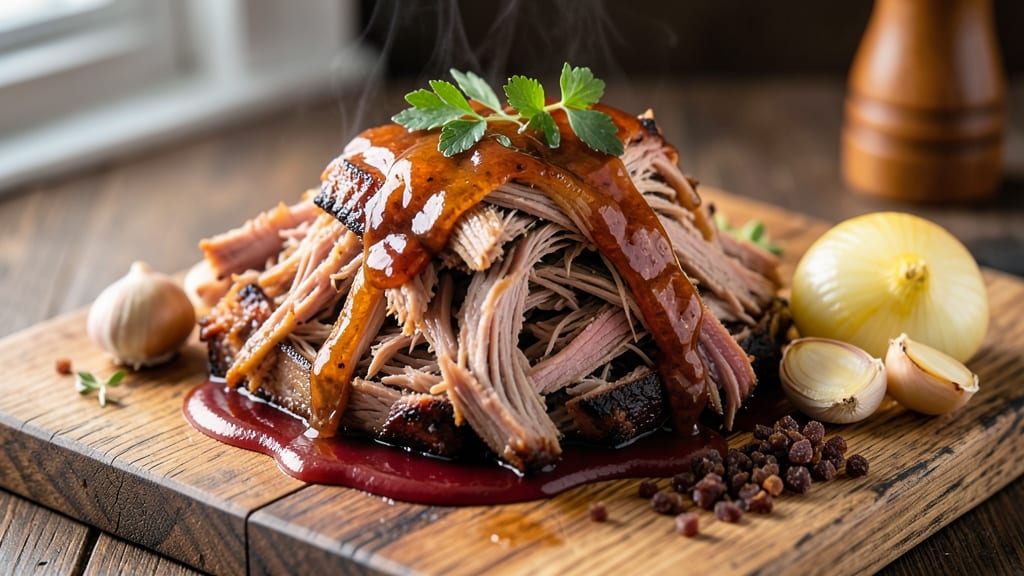
This crockpot pulled pork recipe with apple cider vinegar transforms tough pork shoulder into melt-in-your-mouth perfection. 💛 After years of perfecting slow-cooked techniques in my Atlanta diner days, I discovered how apple cider vinegar tenderizes the meat while adding depth that store-bought sauces can't match.
The acidity breaks down collagen, creating that signature fall-apart texture everyone loves.
The secret lies in the combination of time and acidity - low heat for 6-8 hours allows the vinegar to work its magic while developing rich, caramelized flavors.
I've tested this recipe countless times, adjusting the vinegar ratio until I achieved that perfect balance of tangy brightness and deep savory notes that make this dish unforgettable. The result is pulled pork that practically dissolves on your tongue, with a sauce that's sticky, sweet, and just slightly tangy.
What makes this recipe truly special is how versatile it is - serve it on buns for sandwiches, over mashed potatoes for a hearty dinner, or even in tacos for a Tex-Mex twist. The vinegar-braised method ensures every bite is tender while keeping the meat juicy and flavorful.
My family requests this version at least once a month, and I've never had a single complaint about the texture or taste.
For those who love Southern comfort food with a gourmet touch, this is the pulled pork recipe that delivers restaurant-quality results in your own kitchen. The apple cider vinegar not only tenderizes but adds complexity that transforms this into something truly special.
Let's get started on creating your new favorite slow-cooked masterpiece.
Ingredients for crockpot pulled pork recipe with apple cider vinegar
Four pounds of pork shoulder and a few pantry staples—this recipe delivers melt-in-your-mouth perfection.
| Ingredient | Amount | Notes |
|---|---|---|
| Pork Shoulder 🐖 | 4 lb | Bone-in for best flavor |
| Apple Cider Vinegar 🍏 | ½ cup | Raw, unfiltered preferred |
| Brown Sugar 🍚 | ½ cup | Packed, light or dark |
| Ketchup 🍅 | ½ cup | No sugar added preferred |
| Yellow Onion 🧅 | 1 whole | Cut into wedges |
| Garlic Cloves 🧄 | 6 cloves | Peeled, smashed |
| Ground Black Pepper 🌶️ | 1 tsp | Freshly cracked |
| Salt 🧂 | 1 ½ tsp | Kosher or sea salt |
| Smoked Paprika 🌶️ | 1 tsp | For smoky depth |
| Beef Broth 💧 | 1 cup | Low-sodium preferred |
| Honey 🍯 | 2 tbsp | For subtle sweetness |
| Cayenne Pepper 🔥 | ¼ tsp | Adjust for heat |
| Olive Oil 🫒 | 1 tbsp | For searing pork |
The pork shoulder is the star here, so grab the bone-in cut—it stays juicier and adds depth. Costco or local butchers often have the best prices, but the regular grocery store meat department works fine. Look for good marbling (white flecks in the meat) and avoid anything with a grayish tint. The apple cider vinegar? Raw, unfiltered brands like Braggs work best—they've got more flavor than the filtered stuff. And trust me, don't skip the bone-in. The collagen in the bone is what makes this sauce so rich and sticky.
No apple cider vinegar? White vinegar or balsamic vinegar in a pinch, but the flavor won't be quite the same. Brown sugar substitutes? Coconut sugar or maple syrup both work—just reduce the amount by 10% since they're sweeter. For the ketchup, Heinz no-sugar-added is my go-to, but any good-quality brand works. The beef broth can be swapped for vegetable broth if you're avoiding meat-based ingredients. And if you're worried about the pork shoulder being too fatty, trim off any thick layers of fat before searing—just leave a thin layer for flavor. The onions and garlic can be frozen if you're prepping ahead, but fresh is always better.
This sauce gets better with time, so make a double batch if you can. The pork keeps in the fridge for 4 days and freezes beautifully for 3 months—portion it into containers for easy lunches. The sauce thickens as it cools, so if it seems too thin when reheating, just warm it up for another 5-10 minutes. And if you're serving this at a party? Keep the crockpot on warm—it'll stay perfect for hours. The leftovers? Shred them up for tacos, sandwiches, or even loaded baked potatoes. You'll have this on repeat.
Why You'll Love This Recipe
- Sweet-Tangy Magic: That apple cider vinegar isn’t just for tang—it cuts through the richness of the pork and brown sugar, giving it this bright, almost smoky depth. The ketchup adds a subtle sweetness, but the real star? The way the vinegar’s sharpness makes every bite pop on your tongue.
- Budget Win, Big Flavor: Pork shoulder is one of the most affordable cuts, and a single roast stretches across meals for days. The vinegar and brown sugar cost pennies, yet they transform cheap meat into something that tastes like it belongs at a potluck. Here’s what sold me—it’s restaurant-quality without the markup.
Step-by-step instructions for vinegar-braised crockpot pulled pork
Here's how to transform tough pork shoulder into melt-in-your-mouth pulled pork with that perfect tangy-sweet balance.
🔥 Step 1: Sear the Pork for Maximum Flavor
Heat a large skillet over medium-high heat and add the 1 tablespoon olive oil. Pat the 4 lb pork shoulder completely dry with paper towels—this helps create that perfect crispy bark later. Place the pork in the skillet fat-side down and sear for 5-6 minutes until deeply browned on one side. Flip and sear the other side for another 5-6 minutes.
I don't move the pork around during searing—this creates those beautiful browned crusts that pack serious flavor. If you notice the fat starting to smoke too much, just reduce the heat slightly. The goal is to get that meat caramelized without burning it. Once both sides are golden brown, transfer the pork to your crockpot.
👨🍳 Step 2: Build the Tangy-Sweet Sauce Base
In the same skillet (no need to clean it—the browned bits are flavor gold), add the 1 whole yellow onion cut into wedges and cook for 3-4 minutes until softened. Add the 6 smashed garlic cloves and cook for another 30 seconds until fragrant. Pour in the 0.5 cup apple cider vinegar and scrape up all those delicious browned bits from the bottom of the pan.
Transfer this onion-garlic-vinegar mixture to the crockpot with the pork. Here's the thing—this vinegar isn't just for acidity. It helps tenderize the meat and creates that signature tang that makes this recipe special. The mixture should sizzle slightly when it hits the hot pork.
🥘 Step 3: Layer in Seasonings and Liquid
In a small bowl, whisk together the 0.5 cup brown sugar, 0.5 cup ketchup, 1 cup beef broth, 2 tablespoons honey, 1.5 teaspoons salt, 1 teaspoon smoked paprika, 1 teaspoon ground black pepper, and 0.25 teaspoon cayenne pepper. Pour this mixture evenly over the pork in the crockpot.
I like to give the crockpot a gentle shake after adding the liquid to distribute everything evenly. The brown sugar and honey will caramelize slightly during cooking, adding depth of flavor. The smoked paprika gives that subtle smokiness without needing a smoker, and the cayenne adds just a hint of heat that balances the sweetness.
⏰ Step 4: Cook Low and Slow to Perfection
Place the lid on the crockpot and cook on low heat for 8 hours. Here's where patience pays off—this long, slow cook time is what transforms tough pork shoulder into tender pulled pork. Every 2 hours, press down gently on the pork with a wooden spoon to help break down the connective tissue.
You'll know it's ready when the pork shreds easily with two forks and the internal temperature reaches 203°F (use a meat thermometer). The meat should look glossy and the juices should run clear. If you're short on time, you can cook it on high for 6 hours, but low and slow gives you the best texture.
🔪 Step 5: Shred and Serve with Tangy Sauce
Remove the pork from the crockpot and transfer it to a cutting board. Let it rest for 10 minutes before shredding—this resting time makes it even easier to pull apart. Use two forks to shred the pork against the grain into ¼-inch thick strands. Discard any large fat pieces or connective tissue.
Return the shredded pork to the crockpot and stir it into the cooking juices. Taste and adjust seasoning if needed—you might want to add a splash more of the apple cider vinegar if you prefer more tang. Serve immediately over buns with coleslaw or mashed potatoes. The pork should be so tender it practically melts in your mouth with each bite.
Pro Tips For Making Crockpot Pulled Pork Recipe With Apple Cider Vinegar
- Trim the Fat First: Cut off any thick fat cap on the pork shoulder before cooking—it doesn’t render well in the crockpot and can make the sauce greasy. I learned this the hard way after serving a batch where the vinegar-rich sauce separated like oil and water.
- Use Raw Onion: Toss a whole, unpeeled yellow onion into the crockpot with the pork—it softens perfectly and infuses flavor without needing chopping. Peeling it first is extra work, and the skin adds depth to the vinegar-ketchup mix.
- Check the Vinegar: If your apple cider vinegar smells sharp or has sediment, strain it first—cloudy vinegar can make the sauce taste harsh. A quick filter through a coffee filter (yes, really) makes a noticeable difference in the final pull.
- Skip the Crowding: Don’t overload the crockpot—pork shoulder should have room to breathe, or it’ll steam instead of slow-cook. I used to pack it tight, and the meat ended up soggy; now I leave at least 2 inches of space between cuts.
Troubleshooting great crockpot pulled pork recipe with apple cider vinegar
Pork Too Tough
If your pork shoulder isn't tender enough, the issue is usually cooking time or vinegar balance. First, check your internal temperature—it needs to reach 203°F for perfect tenderness.
If it's undercooked, return it to the crockpot on low for 1-2 more hours, pressing down gently with a spoon every 30 minutes. I've found that adding an extra 2 tablespoons of apple cider vinegar during the last hour can help break down fibers.
Also, make sure you're shredding against the grain, not with it—this makes a huge difference in texture. 💡
Sauce Too Thin
A watery sauce typically means too much liquid or insufficient caramelization. If your sauce is thin, try reducing it on the stovetop for 5-10 minutes over medium heat until it thickens slightly.
For future batches, reduce the beef broth by ¼ cup or add 1 tablespoon of cornstarch mixed with 2 tablespoons water to thicken it. I've also had success adding 1 extra tablespoon of brown sugar during cooking to help create a thicker, stickier sauce.
The vinegar helps balance the sweetness while keeping the sauce from becoming cloying.
Overpowering Vinegar
Too much tang can happen if you use too much vinegar or if the pork cooks too long. To fix this, add a touch of sweetness—1 extra tablespoon of honey or 1 teaspoon of brown sugar can help balance the acidity.
If the flavor is still too sharp, try adding a splash of beef broth or even a pinch of smoked paprika to add depth without overpowering. I've learned to taste the sauce as it cooks and adjust gradually rather than waiting until the end.
For future batches, start with ¼ cup apple cider vinegar and add more only if needed.
Meat Too Dry
Dry pulled pork usually means the cooking time was too long or the pork wasn't properly rested. First, check that you're cooking on low heat—high heat can dry out the meat. If it's slightly dry, try reheating it with 2 tablespoons of beef broth or apple cider vinegar to restore moisture. For future batches,
Fat Separation
Excess fat can make your pulled pork greasy, but it's easy to fix. After shredding, use a slotted spoon to remove as much fat as possible from the sauce before serving. For future batches, trim excess fat from the pork shoulder before cooking—leave about ¼ inch of fat for flavor but remove any thick layers. You can also chill the cooked pork in the fridge overnight, then skim off the hardened fat from the surface before reheating. The apple cider vinegar actually helps emulsify the fat slightly, so this issue is less common with this recipe than with others.
Uneven Cooking
If parts of your pork are undercooked while others are overdone, the issue is usually uneven heat distribution. Make sure your pork shoulder is cut into a single, even piece—thick or thin spots can cook at different rates.
If you're using a crockpot liner, remove it and cook directly on the pot for better heat circulation. I've also found that placing the pork fat-side up helps distribute heat more evenly.
For future batches, consider using a meat thermometer to check multiple spots—especially the thickest part—before removing the pork from the crockpot.
Nutrition facts
Frequently asked questions about vinegar-braised crockpot pulled pork
Why does apple cider vinegar make the pork so tender?
The acidity in apple cider vinegar helps break down collagen in the pork, creating that signature melt-in-your-mouth texture. Unlike other acids, it adds subtle sweetness and depth that balances the rich pork flavor. The longer it cooks, the more it tenderizes the meat while infusing flavor.
Can I use a different vinegar if I don't have apple cider vinegar?
White vinegar or balsamic vinegar work in a pinch, but apple cider vinegar gives the best flavor. For a similar tang, try ½ cup white vinegar plus 1 teaspoon honey to mimic the sweet-tart balance. Avoid apple juice—it lacks the acidity needed for tenderizing.
How do I know when the pork is fully cooked?
Check for two things: the internal temperature should reach 203°F and the meat should shred easily with two forks. If it's not quite there, cook it 1-2 more hours on low heat. The juices should run clear, not pink.
What's the best way to serve this pulled pork?
Classic sandwiches with coleslaw are always a hit, but try it over mashed potatoes for a hearty dinner or in tacos for a Tex-Mex twist. The tangy sauce pairs perfectly with crispy slaw or pickled jalapeños to cut through the richness.
Can I make this recipe ahead of time?
The pork keeps well in the fridge for 4 days and freezes beautifully for 3 months. For best results, store it in the cooking juices. Reheat gently on low in the crockpot with a splash of broth or vinegar to restore moisture.