
Sauces & Condiments
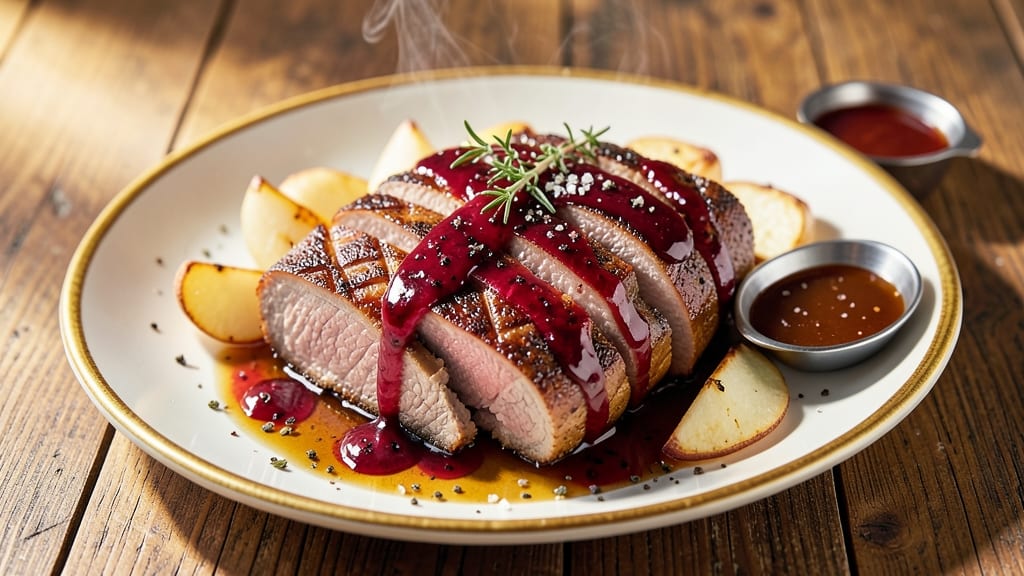
The cranberry Dijon pork loin with apple cider glaze recipe transforms simple pork loin into a showstopping centerpiece that balances sweet, tangy, and savory notes. This recipe delivers juicy, perfectly spiced meat that stays moist thanks to a marinade I've refined over years of cooking for crowds at Smoky Pig.
The key is patience—letting the glaze reduce slowly on the stovetop creates that signature glossy finish that locks in flavor.
We start with a Dijon-infused marinade that tenderizes the meat while building depth, then roast the pork until it hits that 145°F internal temperature for ideal doneness. The cranberry sauce adds bright acidity that cuts through the richness, while the apple cider glaze ties everything together with its caramelized sweetness.
This method works whether you're grilling outdoors or roasting in your oven—both yield restaurant-quality results.
What makes this dish special is how the flavors develop: the pork stays tender and moist despite the long cooking time, and the glaze caramelizes into a sticky-sweet coating that's impossible to resist.
The combination of cranberries and Dijon creates a complexity that elevates this from weeknight dinner to special occasion-worthy meal. Serve with roasted root vegetables or a crisp green salad to balance the richness.
Here's where it gets interesting—the glaze recipe doubles as a versatile sauce. Leftovers reheat beautifully for sandwiches or wraps, and you can adjust the sweetness by adding more cider or reducing longer.
This is the kind of recipe that improves with practice, but even first-timers will achieve impressive results. Let's get started with the full method.
Ingredients for cranberry dijon pork loin with apple cider glaze
Six ingredients transform ordinary pork into a restaurant-worthy centerpiece with velvety glaze.
| Ingredient | Amount | Notes |
|---|---|---|
| Pork Loin 🥩 | 2 ½ lb | Center-cut, boneless, 1.5-inch thick |
| Dijon Mustard 🍯 | ⅓ cup | High-quality, smooth variety |
| Fresh Cranberries 🍇 | 1 cup | Whole, fresh cranberries preferred |
| Apple Cider 🍎 | ½ cup | Unfiltered, cloudy preferred |
| Brown Sugar 🍚 | ¼ cup | Packed, light or dark |
| Balsamic Vinegar 🍷 | 2 tbsp | Aged, aged preferred |
| Fresh Thyme 🌿 | 1 tbsp | Leaves only, finely chopped |
| Garlic Cloves 🧄 | 4 cloves | Peeled, minced |
| Olive Oil 🫒 | ¼ cup | Extra-virgin, fruity |
| Kosher Salt 🧂 | 1 ½ tsp | Diamond Crystal preferred |
| Ground Black Pepper 🌶️ | 1 tsp | Freshly ground |
| Fresh Rosemary 🌿 | 1 tbsp | Leaves only, finely chopped |
| Orange Zest 🍊 | 1 tsp | Freshly grated |
The pork loin is non-negotiable—center-cut, boneless, and 1.5 inches thick ensures even cooking and maximum juiciness. Costco or Whole Foods carry excellent pre-trimmed cuts, but if buying whole, trim any silver skin for better texture. The Dijon mustard should be smooth and high-quality—Maille or Amoy are ideal for depth. Fresh cranberries add tartness, but unsweetened cranberry sauce in a pinch works too. Apple cider should be unfiltered and cloudy for authentic flavor—Woodchuck or Martinelli's are reliable brands.
No fresh cranberries? Unsweetened cranberry sauce at half the amount delivers similar acidity. Substitute balsamic vinegar with red wine vinegar, though the flavor profile shifts slightly. The brown sugar can be swapped for maple syrup or honey, but reduce to 2 tbsp to maintain balance. Fresh thyme and rosemary are ideal, but dried at one-third the amount works if needed. For garlic, jarred minced saves time, but fresh minced offers superior flavor. The orange zest brightens the dish—use a microplane for maximum aroma.
Marinate the pork for 4-6 hours in the fridge, flipping once. The glaze thickens beautifully when reduced—simmer uncovered for 10-12 minutes until syrupy. Store leftovers in an airtight container for 3-4 days; reheat gently to preserve moisture. The glaze freezes well for up to 3 months, making it perfect for batch cooking. Serve with roasted root vegetables or a crisp arugula salad to complement the richness.
Why You'll Love This Recipe
- I’ll be real: the first night might be the star, but the second? Even better. The pork stays juicy, and the glaze thickens into a sticky-sweet sauce that’s perfect for breakfast hash or a quick lunch wrap. Honestly, I make this on purpose just to have leftovers I won’t dread.
- Five-Ingredient Magic: I swear by this combo—pork loin, Dijon, cranberries, apple cider, and brown sugar. That’s it. No fancy prep, no hidden pantry staples. The mustard and cider alone make it taste like a restaurant dish, but the tart cranberries cut through the richness just enough to keep it light.
- Weeknight Hero: Between us, this is my go-to when I’m staring at the fridge at 6:30 PM wondering what to feed everyone. Roast the pork, simmer the glaze, and boom—dinner’s done. The glaze even reheats like a dream for sandwiches the next day (yes, I’ve done it).
- Holiday Ready: Here’s what sold me—it works for Thanksgiving leftovers and Christmas dinner. Serve it sliced over mashed potatoes for a cozy vibe, or plate it with roasted veggies for a fancy touch. My in-laws think I slaved over it for hours. They’re wrong, but they’ll never know.
Step-by-step instructions for cranberry glazed pork loin
This method delivers perfectly juicy pork loin with a velvety cranberry-apple glaze that seals in every bite of flavor.
Prepare the Pork Loin and Herb Rub
Pat the 2.5 lb pork loin completely dry with paper towels—this ensures maximum browning and crispness. Place it on a cutting board and make shallow slashes about ¼-inch deep across the surface in a diamond pattern. This creates channels for the marinade to penetrate deeply.
In a small bowl, combine 1.5 tsp kosher salt, 1 tsp ground black pepper, 1 tbsp finely chopped fresh rosemary, 1 tbsp finely chopped fresh thyme, and 1 tsp orange zest. Rub this mixture evenly over the pork, pressing gently to ensure it adheres. Let the pork sit at room temperature for 30 minutes while you prepare the glaze—this allows for even cooking and better flavor absorption.
Create the Cranberry Apple Glaze
In a medium saucepan, combine 1 cup fresh cranberries, 0.5 cup apple cider, 0.25 cup packed brown sugar, 2 tbsp balsamic vinegar, 4 minced garlic cloves, and 0.33 cup Dijon mustard. Bring to a gentle simmer over medium heat, then reduce heat to low and let it cook for 15-20 minutes until the cranberries soften and the mixture thickens slightly. Stir occasionally to prevent sticking.
While the glaze simmers, heat 0.25 cup olive oil in a large oven-safe skillet over medium-high heat. Add the pork loin and sear on all sides for 3-4 minutes per side until it develops a golden-brown crust. Remove the pork and set it aside on a plate, leaving the oil in the skillet.
Sear and Glaze the Pork Loin
Return the skillet to medium heat and pour the cranberry-apple mixture into the pan, scraping up any browned bits from the bottom. Let it simmer for 2-3 minutes to infuse the flavors. Place the pork loin back into the skillet, spooning the glaze evenly over the top and sides. The glaze should coat the pork completely and begin to caramelize lightly.
Transfer the skillet to a preheated 400°F oven and roast for 25-30 minutes or until the internal temperature reaches 145°F when measured with a meat thermometer. The glaze will bubble and thicken further in the oven, creating a glossy finish. For extra shine, broil for 1-2 minutes at the end, watching closely to prevent burning.
Rest and Serve
Remove the pork loin from the oven and let it rest on a cutting board for 10-15 minutes before slicing. This resting period allows the juices to redistribute, ensuring each slice remains succulent and flavorful. During this time, keep the glaze warm in the skillet over low heat to maintain its consistency.
Slice the pork loin into ½-inch thick medallions and serve immediately, drizzling the reduced glaze generously over the top. The combination of tart cranberries, sweet apple cider, and rich Dijon mustard creates a perfect balance of flavors that complements the tender pork. Pair with roasted root vegetables or a simple arugula salad for a complete meal.
Pro Tips For Making Cranberry Dijon Pork Loin With Apple Cider Glaze
- SEAR FIRST, THEN BASTE: I used to rush the pork into the oven right after slathering on the Dijon and cranberry mix, but that’s how you end up with a sad, underflavored center. Instead, hit the pork with a hot cast-iron skillet for 3-4 minutes per side until it’s deep golden—that’s where the crust forms. Then transfer to the oven and baste with the glaze halfway through. The contrast between the caramelized exterior and tender interior is what makes this dish sing.
- TRIM THE CRANBERRIES: Fresh cranberries are stubborn little devils. If you’re using them whole, don’t skip the rinse and dry—toss them in ice water for 10 minutes first to soften, then pat thoroughly with a towel. I learned this the hard way when my glaze turned into a watery mess instead of a rich, jammy sauce. (And for the love of all things savory, don’t use frozen cranberries here—they’ll turn to mush and ruin the texture.)
- SAVE THE CIDER REDUCTION: The apple cider glaze is where the magic happens, but I used to pour it all over the pork at once, only to watch it pool on the plate. Instead, reduce half the cider with the brown sugar and cranberries first—simmer it down to a thick, syrupy consistency (about 5 minutes) before brushing it on. That way, you’re not drowning the pork in liquid, and every bite gets that sticky, caramelized flavor.
- SALT THE PORK TWICE: I was skeptical until I tried it: salt the pork loin generously (about 1 teaspoon per pound) at least 30 minutes before cooking, then re-season it after searing with another pinch. The first salting gets the meat juicy, while the second ensures the crust isn’t bland under the glaze. (Yes, even if you’re impatient like me—just plan ahead.) The difference is noticeable, especially when paired with the tangy Dijon.
Pro cooking tips for cranberry dijon pork loin with apple cider glaze
Marinade Mastery
The key to tender pork loin starts with the marinade—don’t skip this step! I’ve found that scoring the meat in a diamond pattern with a sharp knife creates channels for the marinade to penetrate deeply.
Use a high-quality Dijon mustard like Maille for that signature depth, and let the pork marinate for at least 4 hours (overnight is even better). The acidity in the apple cider and balsamic vinegar tenderizes the meat while building flavor. 🍎
Searing Secrets
Searing isn’t just for looks—it’s about building layers of flavor through the Maillard reaction. Heat your oven-safe skillet until it’s smoking hot, then sear the pork for 3-4 minutes per side until deep golden brown.
Avoid overcrowding the pan, or the temperature will drop, and you’ll steam instead of sear. I use a cast iron skillet for even heat distribution, but a heavy stainless steel works too.
Glaze Reduction
The glaze is where the magic happens—simmer it uncovered over medium-low heat until it thickens to a syrupy consistency. This usually takes 10-12 minutes, but don’t rush it. The cranberries should burst and the mixture should coat the back of a spoon.
If it reduces too quickly, add 1 tbsp apple cider or water to balance the sweetness. The glaze should be glossy, not grainy. 💫
Oven Temperature Control
Roasting at 400°F ensures the pork cooks evenly while the glaze caramelizes beautifully. Use a meat thermometer to check the internal temperature—it should reach 145°F before removing it from the oven.
For extra shine, broil for 1-2 minutes at the end, but watch it closely to avoid burning. A ThermoWorks Smoke thermometer is my go-to for precision.
Resting for Juiciness
This is where many home cooks fail—never skip resting the pork! Let it rest for 10-15 minutes before slicing to allow the juices to redistribute. If you cut into it too soon, all that delicious moisture will escape.
During this time, keep the glaze warm in the skillet over low heat to maintain its consistency. Trust me, this step makes all the difference. 💪
Nutrition facts
Frequently asked questions
Can I substitute fresh cranberries with dried or frozen?
Fresh cranberries are ideal for their tartness, but you can use frozen in a pinch—just don't thaw them first. For dried cranberries, reduce the amount to ⅓ cup and add 1 tbsp extra apple cider to compensate for their concentrated sweetness. The texture will be slightly different, but the flavor balance remains similar.
How do I adjust the recipe for a larger crowd?
Double all ingredients for 8 servings, including the glaze. Use a larger oven-safe roasting pan or Dutch oven to maintain even cooking. For 12+ servings, increase the pork to 4-5 lbs and adjust oven time to 35-40 minutes at 400°F. Keep the glaze in a separate saucepan to reduce properly. The key is to maintain the same thickness ratio—1 cup glaze per 2 lbs pork.
Can I make the glaze ahead of time?
The glaze keeps well in an airtight container in the fridge for 5-7 days or frozen for 3 months. Reheat gently on the stovetop before using—add 1 tbsp water if it thickens too much. For the pork, marinate it up to 24 hours ahead and refrigerate uncovered (covered only after scoring). Bring to room temp before cooking.
What's the best way to reheat leftovers?
Slice the pork and store it separately from the glaze. Reheat pork slices in a skillet over medium-low heat with 1 tbsp butter or olive oil for 2-3 minutes per side until warmed through. Warm the glaze separately in a saucepan over low heat—never microwave, as it can make the glaze grainy. Combine just before serving for the best texture.
Why did my glaze turn out too sweet?
This usually happens when the cranberries didn't soften enough, leaving the sugar unbalanced. Next time, simmer the glaze 5-10 minutes longer to reduce more liquid. For immediate fixes, add 1 tbsp balsamic vinegar or 1 tsp lemon juice to cut the sweetness. Always taste as you go—adjust while cooking, not after!