
Sauces & Condiments
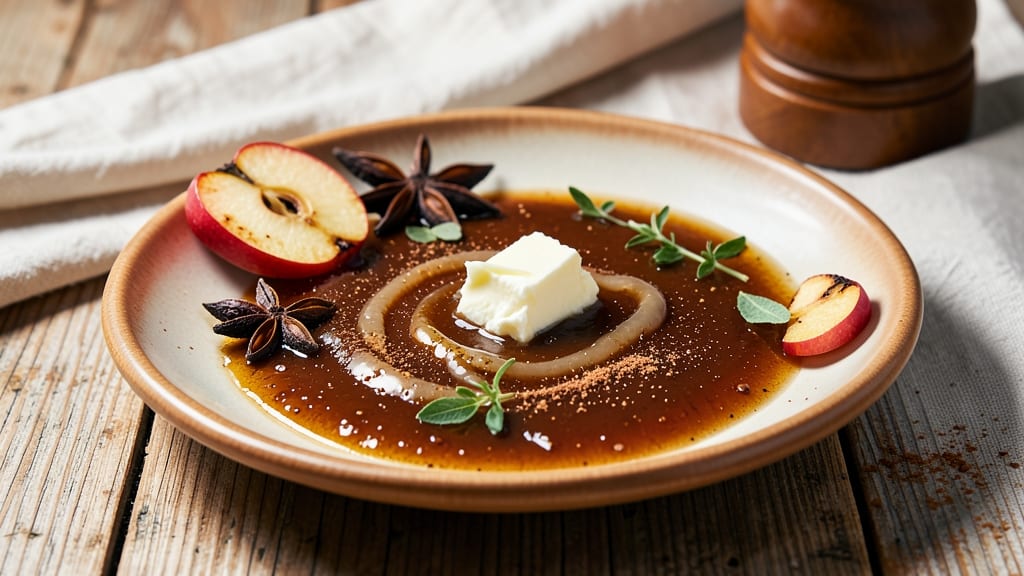
This apple cider reduction sauce transforms simple roasts and pork into showstopping centerpieces with its deep, caramelized richness. The process is simpler than you'd think—just simmering cider with sugar and spices until it thickens into a glossy, aromatic glaze that clings beautifully to meat.
I developed this recipe after realizing how much better store-bought sauces tasted when homemade, and it's become my go-to for fall menus.
The magic happens during the reduction phase where natural sugars concentrate into a velvety sauce with warm cinnamon and subtle clove notes. What makes it special is how versatile it is—poured over roasted pork, drizzled on stuffing, or even spooned over cheese boards for a sophisticated touch.
The sauce keeps its flavor for up to a week in the fridge, making it perfect for meal prep.
What you'll end up with is a sauce that's rich enough to stand alone but balanced enough to complement any dish. The caramelized edges add depth while maintaining that bright apple cider essence. It's the kind of sauce that elevates everyday meals to restaurant-quality without requiring advanced techniques.
Perfect for holiday feasts or weeknight dinners, this sauce comes together in about 30 minutes with just five ingredients. Let's make it—the flavor transformation is worth every minute of simmering time.
Ingredients for apple cider reduction sauce
Five ingredients transform simple cider into a restaurant-worthy reduction with caramelized depth and spiced richness.
| Ingredient | Amount | Notes |
|---|---|---|
| Apple Cider 🍎 | 4 cups | Unfiltered preferred for depth |
| Granulated Sugar 🍚 | 1 cup | Light brown sugar for caramel notes |
| Ground Cinnamon 🌿 | 1 ½ tsp | Freshly ground for warmth |
| Ground Cloves 🌶️ | ¼ tsp | Whole cloves crushed for intensity |
| Unsalted Butter 🧈 | ½ cup | Cold cubed for emulsification |
The cider makes or breaks this sauce. Unfiltered apple cider from local orchards or Mott's Premium has the best flavor—avoid the sweetened varieties. Sugar is key here: light brown adds subtle caramel undertones, but white works fine if that's what you have. For spices, Penzeys Spices sells pre-ground cinnamon and whole cloves that elevate this beyond basic pantry spices. If you're using whole cloves, crush them lightly with a mortar and pestle or the flat side of a knife—this releases their aromatic oils without turning bitter.
No unfiltered cider? Filtered cider with a splash of apple juice works in a pinch, but you'll lose some depth. Running short on sugar? Honey or maple syrup at a 1:1 ratio adds complexity, though the texture will be slightly different. The butter should be cold when added—this helps create that silky, velvety finish. If you're worried about lumps, whisk the butter into the warm reduction gradually. For extra richness, finish with a pinch of sea salt—it balances the sweetness beautifully.
This sauce keeps beautifully in the fridge for up to 1 week in an airtight container. For longer storage, freeze in ice cube trays—thaw and reheat gently for perfect consistency. I always make double batches because it's perfect for drizzling over roasted pork, spooning onto cheese boards, or even using as a glaze for brussels sprouts. The sauce thickens as it cools, so don't stress if it looks too thin right after making—just reheat gently until glossy again.
Why You'll Love This Recipe
- Five-Ingredient Magic: I swear, this sauce is the kind of recipe where you’ll wonder why you ever made anything else. Just apple cider, sugar, cinnamon, cloves, and butter—no fancy techniques, no last-minute grocery runs. The spices simmer down to a fragrant, syrupy depth that takes zero effort but feels like a hug in a bowl.
- Warmth in Every Bite: That first spoonful of caramelized cider with a whisper of clove? It’s the kind of flavor that sticks with you—sweet but not cloying, spiced just enough to make your kitchen smell like autumn. Honestly, I’ve drizzled it over everything from roasted chicken to vanilla ice cream, and it never lets me down.
- Holiday or Weeknight: Between us, this sauce is my secret weapon for Thanksgiving leftovers and Tuesday dinners. Toss it with cold roasted veggies for a last-minute side, or swirl it into oatmeal when you’re running late. It’s the kind of thing that makes you look like a star chef without trying.
- Make-Ahead Goldmine: Simmer a big batch on Sunday, and you’ve got sauce for the week. Store it in the fridge for up to 10 days—it only gets richer with time—and reheat it with a splash of water. I’ll be real: I’ve even frozen it in ice cube trays for quick drizzles later. Budget-friendly? More like flavor-on-a-budget.
Step-by-step instructions for apple cider reduction sauce
This caramelized sauce transforms simple ingredients into a rich, aromatic masterpiece perfect for drizzling over roasted pork or turkey.
Combine Apple Cider and Sugar
Pour the 4 cups apple cider and 1 cup granulated sugar into a heavy-bottomed saucepan. I always use a saucepan with thick sides—this prevents scorching as the sugar caramelizes. Stir gently over medium-high heat until the sugar fully dissolves, which takes about 3-4 minutes.
Watch for tiny bubbles forming at the edges—this signals the sugar has integrated completely. If you see undissolved sugar crystals, give it another minute of stirring. The mixture should look like a pale amber syrup with no graininess. This step is crucial for preventing a gritty texture in your final sauce.
Add Spices and Simmer
Reduce the heat to medium-low and stir in the 1.5 teaspoons ground cinnamon and 0.25 teaspoon ground cloves. Let the mixture simmer gently for 15-20 minutes, stirring occasionally to prevent sticking. You'll notice the liquid gradually darkening and reducing—this is where the deep caramelized flavor develops.
Here's the thing—don't rush this simmering time. The spices need to bloom fully, and the cider must reduce by about half before you add the butter. You'll see the sauce thicken noticeably and develop an intense apple aroma. If it starts to smell too strong, reduce the heat slightly—you want complex flavor, not burnt spices.
Finish with Cold Butter
Remove the saucepan from heat and let it cool slightly for 2-3 minutes. This cooling prevents the butter from seizing when added. Cut the 0.5 cup unsalted butter into small cubes and whisk them into the warm reduction using a wire whisk.
The butter should melt smoothly and emulsify with the sauce, creating a velvety texture. If you see the sauce separating, simply whisk vigorously for another 30 seconds—this ensures a silky consistency. The sauce should now have a glossy sheen and be thick enough to coat the back of a spoon. If it's too thin, return it to low heat for 1-2 minutes to reduce further.
Strain and Serve
Line a fine-mesh strainer with cheesecloth and strain the sauce into a clean bowl. This step removes any sediment from the spices, giving you a perfectly smooth sauce. Let it cool to room temperature or serve warm—both work beautifully, but warm sauce has that extra caramelized depth.
For best results, use the sauce within 3 days or refrigerate for up to 1 week. If it thickens too much in the fridge, simply whisk in a splash of warm water to loosen it. This sauce pairs perfectly with roasted pork, turkey, or even as a glaze for brussels sprouts—its versatility makes it a pantry essential.
Pro Tips For Making Apple Cider Reduction Sauce
- Start with Cold Cider: Pouring room-temperature cider into your pot guarantees even heating and prevents scorching—especially important when you’re working with sugar. I used to skip this and ended up with a sticky mess that needed scraping. Give it 10 minutes to sit out first, and your sauce will thicken smoothly.
- Use a Splatter Screen: Simmering cider is aggressive, and you’ll regret it if it jumps out of the pot. A cheap splatter screen ($3 at any kitchen store) catches the foam and lets you stir without a mess. I learned this after cleaning cider off my stove for the third time—now I swear by it.
- Whisk Constantly After Adding Sugar: Once you stir in sugar, the mixture will seize up if you stop stirring. Keep the pot moving over medium heat until the sugar fully dissolves, or you’ll end up with grainy bits. This is the moment most people rush, and it’s the easiest to mess up.
- Finish with Butter Off Heat: Adding butter while the sauce is still hot can turn it greasy. Let the reduction cool slightly (just until it’s warm, not room temp), then whisk in the butter for a silky finish. My grandmother called it “the gentle touch”—it makes all the difference.
Best sauces and condiments for this dish
Roasted Pork Perfection
This sauce is a game-changer for herb-crusted pork shoulder or apple-glazed pork chops. Brush it on during the last 10 minutes of roasting at 375°F—the high heat caramelizes the sauce beautifully.
For extra drama, finish with a sprinkle of toasted pecans and a drizzle of honey for a sweet-savory balance. 🍖
Stuffing Elevation
Mix 2 tablespoons of this reduction into your savory stuffing just before baking. The warm spices complement traditional herbs like sage and thyme, while the caramelized depth adds richness. For an unexpected twist, fold in crumbled goat cheese and dried cranberries—the tangy-sweet contrast is pure magic.
Cheese Board Magic
Drizzle generously over aged cheddar, brie, and sharp gouda for a fall-inspired cheese board. The sauce's acidity cuts through the fat, while the spices add warmth. Pair with crusty sourdough, walnuts, and dried apricots for a sophisticated spread that feels restaurant-worthy without the fuss. 🧀
Brussels Sprouts Glaze
Toss roasted Brussels sprouts with 1 tablespoon of sauce and a pinch of flaky sea salt before serving. The caramelized edges contrast perfectly with the sprouts' crisp-tender texture.
For extra flair, top with crispy pancetta and a sprinkle of fresh thyme. This glaze transforms a simple side into a showstopper.
Pancake or Waffle Syrup
Drizzle over buttermilk pancakes or Belgian waffles for a breakfast or brunch twist. The warm spices complement vanilla and maple beautifully, while the caramelized depth adds complexity. For a boozy upgrade, reduce the sauce with 2 tablespoons bourbon instead of plain butter—trust me, it's worth it. 🥞
Storage and Reuse
Keep leftovers in an airtight container for up to 1 week in the fridge. For longer storage, freeze in ice cube trays—thaw and reheat gently for perfect consistency.
I love using this sauce as a quick glaze for grilled chicken or sausages**—just warm it with a splash of water and brush on during the last minute of cooking. The versatility makes it a must-have in my fall kitchen. ❄️
Nutrition facts
Frequently asked questions
Can I use store-bought apple cider instead of fresh?
Store-bought unfiltered apple cider works perfectly—brands like Mott's Premium or Woodchuck are great choices. Just avoid sweetened varieties, as they'll make your sauce overly sugary. For extra depth, look for cider with sediment—this adds natural apple flavor and texture.
What if my sauce gets too thick while reducing?
Simply whisk in 1-2 tablespoons warm water or apple juice to loosen it. If you prefer a thicker consistency, return it to low heat for 1-2 minutes to reduce again. The sauce will thicken further as it cools, so don't worry if it looks too thin right after adding butter.
How can I make this sauce without butter?
For a dairy-free version, substitute the butter with 2 tablespoons olive oil or coconut oil. Whisk it in the same way after cooling the reduction slightly. The texture will be slightly lighter but still delicious—great for vegan dishes or those with dairy sensitivities.
Can I add other spices to this recipe? Yes! Try adding ½ teaspoon nutmeg or ¼ teaspoon cardamom for warmth, or a pinch of black pepper for depth. For a citrus twist, zest 1 orange and add it during simmering. Just
How do I reheat this sauce if it thickens in the fridge?
Gently warm it in a saucepan over low heat while stirring constantly. If it's too thick, add 1 teaspoon water or apple juice at a time until it reaches your desired consistency. Never microwave it directly—this can cause separation. A quick 30-second whisk after heating will restore its silky texture.