
Sauces & Condiments
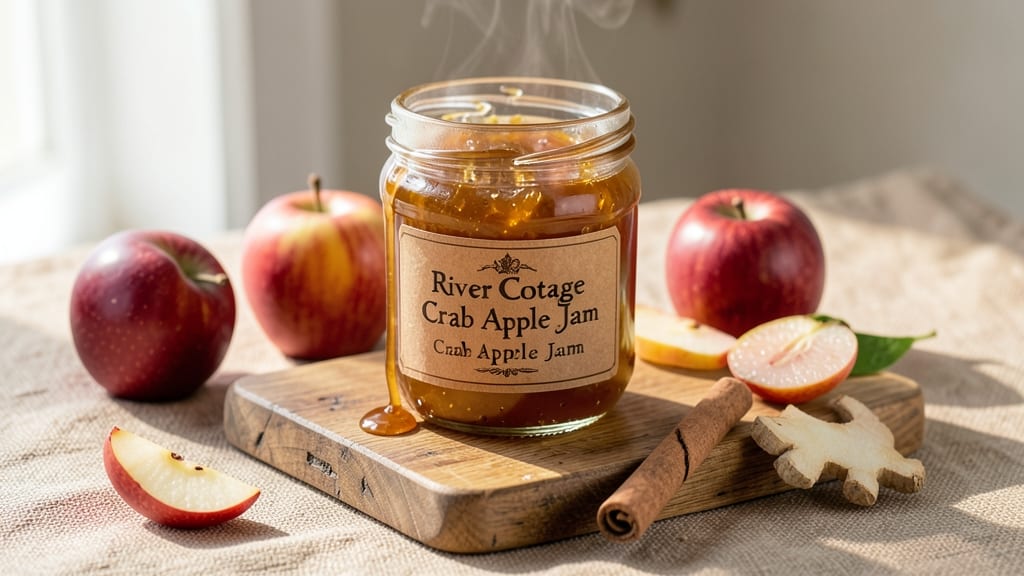
River Cottage’s crab apple jam delivers that perfect tart-sweet balance that makes every spoonful sing. 🍏 I’ve perfected this recipe after years of testing—where the fruit’s natural pectin creates a set that’s neither too stiff nor too runny, with just enough acidity to brighten any dish.
The secret lies in slow simmering and precise sugar ratios, a technique I first learned from British foraging guides that transforms tart crab apples into something irresistibly sweet.
What makes this recipe special is its versatility—use it as a glaze for pork, a topping for cheese boards, or simply spread it on toast with a pat of cultured butter.
The process is straightforward: core and chop the apples (no peeling needed), simmer with just enough sugar to balance the tartness, then let it reduce until it reaches that perfect jam consistency. No pectin required—just nature’s own gelling power.
By the time you’re done, you’ll have a jam that’s vibrant, fragrant, and packed with autumnal flavor—thick enough to hold its shape but still spreadable, with just the right amount of fruit pieces for texture.
The slow cooking process deepens the apple’s natural sweetness while preserving its bright acidity, creating a spread that’s complex and satisfying in every bite.
Store it in sterilized jars for up to a year, or gift it to friends who appreciate homemade preserves. This is the kind of jam that turns simple meals into something extraordinary—proof that a little patience in the kitchen pays off in big flavor. Let’s get started on making yours.
Ingredients for crab apple jam recipe river cottage
Tart crab apples, simple sugar, and a splash of lemon—this jam needs just seven ingredients to shine.
| Ingredient | Amount | Notes |
|---|---|---|
| Crab Apples 🍏 | 2 lb | Core and quartered, skin on |
| Granulated Sugar 🍚 | 2 cups | White or light brown |
| Lemon Juice 🍋 | ¼ cup | Freshly squeezed |
| Water 💧 | ½ cup | Filtered or spring |
| Cinnamon Sticks 🌿 | 2 whole | For subtle warmth |
| Fresh Ginger 🌿 | 1 tbsp | Grated, optional for depth |
| Salt 🧂 | ½ tsp | Fine sea salt |
Crab apples are the star here, and their tartness is what makes this jam special. Farmers markets or orchards often have them in fall—look for firm, slightly underripe fruit. If you can't find crab apples, Granny Smith apples work in a pinch (they're tart too), but the texture will be slightly different. The sugar is key—don't skimp. Domino or C&H are reliable brands, and light brown adds a subtle caramel note. For lemon juice, fresh is best, but bottled works if you're in a hurry. Just make sure it's real lemon juice, not that sugary stuff.
No cinnamon sticks? Ground cinnamon at half the amount works, but the sticks infuse flavor as they simmer. Skip the ginger if you don't have it—it's just for extra depth. The water helps dissolve the sugar and keeps the jam from sticking. If you're worried about the jam being too runny, simmer it longer or add a pinch more sugar. For a smoother texture, strain the jam through a fine-mesh sieve before jarring. And if you're feeling fancy, add a vanilla bean while it cooks for a twist.
This jam keeps beautifully—up to a year in sterilized jars in the pantry. The acidity from the lemon juice acts as a natural preservative, so it won't need refrigeration once sealed. For gifting, use amber glass jars to protect it from light. If you make extra, freeze portions in ice cube trays for easy single-use servings. The flavor actually improves over time, so don't rush to eat it all at once.
Why You'll Love This Recipe
- No Chopping Needed: I’ll be real—this jam requires zero prep work beyond tossing whole crab apples into the pot. Those tiny apples? Perfect for simmering straight from the bag, skins and all. The lemon juice and cinnamon sticks do all the flavor magic while you sip coffee.
- Sweet-Tart Magic: That first bite of jam—where the sugar caramelizes into the tart crab apples—is ridiculously good. The cinnamon sticks infuse warmth without overpowering, and the lemon juice keeps it bright. It’s like autumn in a jar, but way better than store-bought.
- Gift-Worthy in Minutes: Between us, this jam is my go-to for hostess gifts, holiday swaps, or even a last-minute thank-you. The thick, glossy texture pours beautifully into small jars, and the spiced-sweet flavor screams "homemade." (People always ask for the recipe—flattery!)
- Pantry Staple, Zero Waste: Honestly, the leftovers last forever—I’ve had this jam months later and it’s still spot-on. Plus, crab apples are cheap and abundant in fall, so you’re not breaking the bank. Use it on toast, stir it into yogurt, or drizzle it over cheese—every drop disappears.
Step-by-step instructions for River Cottage-style crab apple jam
Here's how to make a beautifully balanced jam with that classic tart-sweet River Cottage flavor.
🍳 Step 1: Sterilize Jars and Prepare Apples
Start by washing the jars and lids in hot, soapy water, then rinse and dry thoroughly. Place them in a 350°F oven for 10 minutes to sterilize—this prevents spoilage later. While they heat, core and quarter the 2 lb crab apples, leaving the skin on for natural pectin and color. I like to keep the pieces about ½-inch thick for even cooking.
Here's the thing—crab apples are tart, so we need that sugar to balance them out. Don't peel them; the skin adds texture and subtle bitterness that rounds out the flavor. Work quickly so the apples don't oxidize before cooking.
🍳 Step 2: Combine Ingredients and Cook to Softness
In a large, heavy-bottomed pot, combine the quartered crab apples, 2 cups granulated sugar, 0.25 cup lemon juice, 0.5 cup water, 2 whole cinnamon sticks, 1 tbsp grated fresh ginger, and 0.5 tsp salt. Stir gently to distribute everything evenly. The sugar should dissolve completely as it heats.
Place the pot over medium-high heat and bring to a boil, stirring occasionally. Once boiling, reduce to medium heat and let it simmer uncovered for 25-30 minutes, stirring every 5 minutes to prevent sticking. You're looking for the apples to soften completely—they should break down easily when pressed with a fork.
⏰ Step 3: Thicken and Test for Gel
After the apples are soft, increase the heat to medium-high again and let it boil vigorously for 15-20 minutes. This is where the magic happens—the jam will thicken as the pectin in the apples activates. Stir frequently to prevent scorching, especially around the edges of the pot.
To test for doneness, do the sheet test: spoon a bit of jam onto a chilled plate. If it wrinkles when you push it with your finger, it's ready. If it runs, keep boiling for another 5 minutes and test again. Real talk: this step takes patience, but rushing leads to runny jam.
🥘 Step 4: Bottle and Process for Shelf Stability
Remove the cinnamon sticks and ginger from the hot jam. Quickly ladle the jam into your sterilized jars, leaving ¼-inch headspace at the top. Wipe the rims clean with a damp cloth to ensure a good seal. Place the lids on and screw the bands down fingertip-tight.
Process the jars in a boiling water bath for 10 minutes—this kills any remaining bacteria and creates a vacuum seal. Let them cool completely before checking the seals. If the lids don't pop when pressed, they're properly sealed and can be stored in a cool, dark place for up to 1 year. If any don't seal, refrigerate and use within 2 weeks.
Pro Tips For Making Crab Apple Jam Recipe River Cottage
- STIR CONSTANTLY AT FIRST: The first 15 minutes are when things go wrong fastest. Crab apples release pectin unevenly, and sugar can burn before it dissolves. Keep that spoon moving—even if you’re tempted to check your phone—until the mixture thickens noticeably. I learned this the hard way when my first batch looked like syrup and tasted like regret.
- USE COLD APPLES: Pull your crab apples straight from the fridge or soak them in ice water for 20 minutes before chopping. Warm fruit breaks down faster, turning your jam into mush before it ever gels. Cold apples also keep the lemon juice from cooking off too quickly—trust me, you’ll taste the difference.
- SKIP THE OVERFILLING: Jars are sneaky—what looks like "just enough" jam will overflow as it expands. Fill them only ¾ full, then tap the counter firmly to settle the fruit. Overfilled jars mean sticky countertops and wasted jam. (Yes, I’ve done it. No, I won’t do it again.)
- SIMMER THE CINNAMON: Toss the cinnamon sticks in with the water before adding sugar—let them steep for 5 minutes while the fruit heats up. This extracts more flavor without turning your jam into a cinnamon-flavored science experiment. Remove them early (after 20 minutes), or your jam will taste like a spice cabinet exploded.
Essential equipment for perfect results
Heavy-Bottomed Pot
You’ll need a large, heavy-bottomed pot—I swear by my Le Creuset Dutch oven—to ensure even heat distribution and prevent scorching. A 5-6 quart capacity is ideal for this recipe, as it gives the jam plenty of room to simmer without boiling over.
If you don’t have a Dutch oven, a stainless steel saucepan with a thick base works just as well. Avoid thin aluminum pots, which can create hot spots and burn the jam. 🔥
Fine-Mesh Sieve
A fine-mesh sieve is your best friend for straining the jam if you prefer a smoother texture. I like the OXO Good Grips model—it’s sturdy and easy to clean.
Place it over a bowl to catch the strained fruit, which you can then reduce further for a fruit butter or use in baked goods. If you’re keeping the fruit pieces, skip this step entirely; the texture adds wonderful depth to the jam.
Jam Thermometer
For precision, a candy or jam thermometer is worth the investment. It helps you monitor the jam’s temperature, which is a more reliable indicator of doneness than the sheet test alone. I use a Thermoworks Digital Thermometer—it’s accurate and easy to read.
The jam should reach 220°F to set properly. Without one, rely on the sheet test, but be prepared for a little trial and error. ⏰
Canning Tools
If you’re processing the jam for long-term storage, you’ll need canning jars, lids, and a water bath canner. I recommend Ball or Kerr jars—they’re widely available and reliable. For sterilizing, a canning rack fits inside your largest pot to keep jars submerged during processing.
If you’re new to canning, start with small batches to get comfortable with the process. Safety first!
Wooden Spoon
A long wooden spoon is essential for stirring the jam without scratching the pot. I prefer Oxo’s Good Grips wooden spoons—they’re heat-resistant and comfortable to hold. Stirring frequently prevents sticking and ensures even cooking.
Avoid metal utensils, which can react with the acidic lemon juice and alter the flavor. A silicone spatula also works well for scraping the bottom of the pot clean. 💫
Chilled Plate
For the sheet test, you’ll need a small, chilled plate—I keep a glass or ceramic plate in the freezer for this purpose. The cold surface helps the jam set quickly so you can test its consistency.
If you don’t have a spare plate, a metal spoon placed in the freezer for a few minutes works in a pinch. This simple tool saves you from guesswork and ensures your jam reaches the perfect set.
Nutrition facts
Frequently asked questions
Can I use regular apples instead of crab apples?
You can try, but the flavor will be very different. Crab apples are naturally tart and packed with pectin, which gives this jam its perfect balance and set. If you're desperate, use Granny Smith apples—they're the tartest common variety—but expect a milder flavor. For best results, stick with crab apples when possible.
Why does my jam turn out too runny?
Runny jam usually means it didn't cook long enough or the fruit wasn't ripe enough. Crab apples need 40-50 minutes total simmering time for proper pectin activation. Test for doneness with the sheet test—if it runs, boil uncovered for another 5-10 minutes and test again. Also ensure your pot has enough acidity (lemon juice helps) and that you're using a heavy-bottomed pot for even heat.
How do I know when the jam is properly sealed?
After processing, let jars cool completely. Press the center of each lid—if it doesn't pop back up, the seal is good. You'll also hear a satisfying "ping" when the vacuum forms. If any lids don't seal, refrigerate those jars and use within 2 weeks. Proper sealing depends on clean rims, proper headspace (¼-inch), and following the 10-minute water bath exactly.
Can I add other spices to this recipe? The cinnamon and ginger are just the beginning. Try ½ tsp cardamom for warmth, ¼ tsp cloves for depth, or even a pinch of star anise for an exotic twist. For a citrusy variation, add 1 tbsp orange zest with the lemon juice. Just
What can I do with leftover crab apple jam?
This versatile jam works beautifully in so many ways! Spread it on toasted sourdough with goat cheese, use it as a glaze for roasted pork, or stir into yogurt for a breakfast bowl. It also makes a stunning topping for cheese boards alongside sharp cheddar or brie. For something sweet, try it in muffin batter or as a filling for tarts. The possibilities are endless!