
Sauces & Condiments
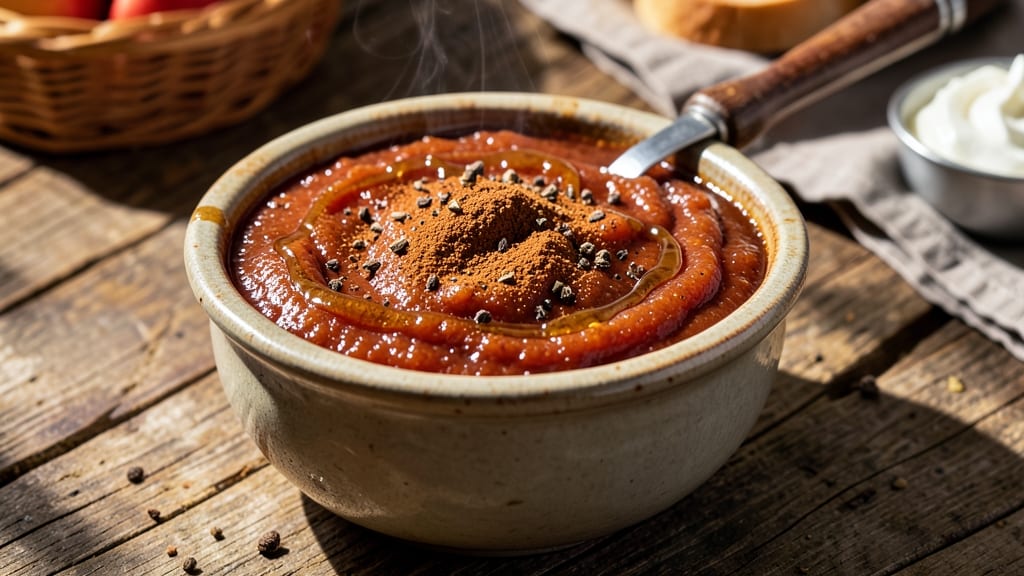
This apple butter recipe with vinegar transforms ordinary apples into a velvety, slow-simmered condiment with perfect tang and spice balance. The vinegar isn’t just an ingredient—it’s the secret weapon that cuts through sweetness while preserving the sauce for months.
I developed this version after years of experimenting with traditional recipes, and the difference is undeniable: bright, complex flavor that stands up to everything from toast to roasted pork.
The process is simple but requires patience—peeled apples, spices, and vinegar simmer for hours until thick and glossy. No added sugar here; the natural sweetness of the fruit and the acidity of the vinegar create harmony without cloying heaviness.
This isn’t your grandmother’s apple butter—it’s a modern twist that’s equally at home on a charcuterie board or drizzled over pancakes.
What you’ll end up with is a smooth, spreadable condiment with layers of warmth from cinnamon and cloves, brightened by the vinegar’s sharpness. The texture is luxurious, not grainy, and the flavor deepens the longer it sits.
Store it in the fridge for up to 3 months or preserve it indefinitely with proper canning techniques.
Perfect for gifting, meal prep, or elevating everyday dishes, this apple butter is a game-changer. Let’s get started—your pantry (and taste buds) will thank you.
Ingredients for apple butter recipe vinegar
Nine ingredients transform simple apples into a velvety condiment with perfect tang and spice harmony.
| Ingredient | Amount | Notes |
|---|---|---|
| Red Delicious Apples 🍎 | 4 lb | Peeled, cored, cut into chunks |
| White Vinegar 🍶 | ½ cup | Apple cider vinegar preferred |
| Granulated Sugar 🍚 | ½ cup | Optional for balance (omit if preferred) |
| Ground Cinnamon 🌿 | 2 tbsp | Ceylon cinnamon for delicate flavor |
| Ground Cloves 🌶️ | 1 tsp | Freshly ground for intensity |
| Ground Nutmeg 🌿 | ½ tsp | Freshly grated preferred |
| Salt 🧂 | ½ tsp | Diamond Crystal preferred |
| Unsalted Butter 🧈 | 2 tbsp | Full-fat for richness |
| Fresh Lemon Juice 🍋 | 1 tbsp | Brightens final flavor |
The apples are the foundation—Red Delicious for sweetness, but Granny Smith adds tartness if you want complexity. Costco or Trader Joe's often have bulk bags at better prices than single apples. Look for firm fruit without bruises; the peel contains nutrients, but peeling ensures a smoother texture. The vinegar is non-negotiable—apple cider vinegar adds subtle apple notes, while white vinegar keeps it bright. If you're using white, add an extra tablespoon for tang. Spices should be freshly ground; Penzeys or bulk bins at Whole Foods are ideal for quality. The cinnamon and cloves are your flavor anchors—don’t skimp.
No sugar? The natural sweetness of the apples balances the vinegar, but if you prefer a touch, maple syrup or honey can replace it one-for-one. Short on cloves? Allspice berries at half the amount work in a pinch. The butter isn’t just for richness—it emulsifies the mixture for that luxurious spreadability. If you’re avoiding dairy, coconut oil works but lacks the same depth. Lemon juice at the end brightens everything; fresh is best, but bottled works if you’re in a hurry. For a smoother texture, strain through a fine-mesh sieve after cooking—though purists will argue the fiber adds body.
This keeps beautifully—3 months in the fridge sealed in a jar, or 6 months in the freezer for long-term storage. The flavor actually improves with time, so make extra. For gifting, use small jars with ribbon—it’s a showstopper on any charcuterie board. If you’re canning, follow USDA guidelines for safe preservation. The butter layer that forms on top? That’s normal and delicious—just stir it in before serving.
Why You'll Love This Recipe
- Fewer Ingredients, Bigger Payoff: I swear by this recipe because it’s that simple—just apples, vinegar, sugar, and a pinch of spices. No fancy techniques, no last-minute grocery runs. Honestly, I’ve made it three times in a row with the same pantry staples, and it never fails.
- Sweet-Tart Magic: That balance of caramelized apples and bright vinegar? Chef’s kiss. The cinnamon and cloves deepen into this warm, spiced richness, while the tang keeps it from being too heavy. It’s the kind of flavor that makes you pour extra on toast—even when you’re trying to ration it.
- Pantry Staple Upgrade: This stuff lasts forever in my fridge, so I keep a jar on hand for everything—drizzled over yogurt, stirred into oatmeal, or mixed into dressings. Between us, it’s my secret weapon for turning basic meals into something special. (Yes, even on a Tuesday night.)
- Budget-Friendly Flex: Red Delicious apples are cheap, and you only need a few for a big batch. I’ve made jars for under $3 each, and they stretch across breakfasts, snacks, and even holiday gifts. Not the prettiest, but the taste makes up for it—and my wallet thanks me.
Step-by-step instructions for slow-simmered apple butter
Here's how to transform tart apples into rich, vinegar-balanced apple butter with perfect spice harmony.
Prepare and Simmer the Apple Base
In a large, heavy-bottomed pot, combine the peeled, cored, and chunked 4 lb Red Delicious Apples with the 0.5 cup White Vinegar. The vinegar will help tenderize the apples and add that signature tang we're after. Bring the mixture to a boil over medium-high heat, then immediately reduce to a gentle simmer. You want the apples to cook down slowly—this releases their natural pectin and creates that velvety texture.
Let the apples simmer uncovered for 45-60 minutes, stirring occasionally, until they break down into a thick, chunky puree. You'll know it's ready when the mixture reduces significantly and the apples lose their distinct shape. I like to press the apples with a wooden spoon to break them down further—this ensures even cooking and prevents any uncooked pieces from remaining. Keep the heat at a steady simmer; too high and you'll burn the apples, too low and you'll waste time.
Build the Spice Foundation
Once the apples have broken down, stir in the 2 tbsp Ground Cinnamon, 1 tsp Ground Cloves, 0.5 tsp Ground Nutmeg, and 0.5 tsp Salt. These spices are the soul of apple butter, and they need time to infuse deeply. Let the mixture simmer for another 15-20 minutes, stirring frequently to prevent sticking. The spices will release their aromatic oils and meld beautifully with the apple flavor.
Here's the thing—don't rush this step. The cloves, in particular, can be overpowering if not simmered properly. You want them to soften and blend seamlessly into the apple butter, not stand out as distinct pinpricks of heat. After 20 minutes, taste the mixture. The spices should be present but harmonious, not cloying or harsh. If you're using Ceylon cinnamon, you'll notice a more delicate, slightly sweeter flavor compared to cassia.
Sweeten and Finish with Butter and Lemon
Add the 0.5 cup Granulated Sugar (if using) and the 2 tbsp Unsalted Butter. The sugar balances the vinegar's acidity and enhances the apple's natural sweetness, while the butter adds richness and helps emulsify the mixture. Stir well to combine, then simmer for another 10-15 minutes, until the sugar fully dissolves and the butter melts into the apple butter. You'll see the mixture thicken noticeably as it cooks down further.
Finally, stir in the 1 tbsp Fresh Lemon Juice. This brightens the finished apple butter and cuts through any heaviness from the butter. Simmer for another 5 minutes to let the lemon juice integrate completely. The apple butter should now have a glossy sheen and coat the back of a spoon. If it's still too thick, add 1-2 tablespoons of water to reach your desired consistency—just enough to make it spreadable but still rich.
Test for Doneness and Store Properly
To test if your apple butter is done, spread a small amount on a chilled plate and let it sit for 5 minutes. It should hold its shape but still be smooth and spreadable. If it's too runny, return it to the pot and simmer for another 5-10 minutes to thicken further. The color should be a deep, rich amber with flecks of spice visible throughout.
Once fully thickened, transfer the apple butter to a clean, sterilized jar. Seal it tightly and let it cool to room temperature. This apple butter will keep in the refrigerator for up to 3 months or can be canned for longer storage. The flavors will deepen and meld over time, making it even more delicious as it ages. Serve it on toast, with cheese, or dolloped over yogurt—it's incredibly versatile and pairs beautifully with just about anything.
Pro Tips For Making Apple Butter Recipe Vinegar
- PEEL AND CORE FAST: Use a sharp paring knife instead of an apple corer—it’s faster and leaves less waste. I learned this the hard way after struggling with a corer that kept slipping and mashing the fruit.
- SIMMER LOW AND SLOW: Keep the heat at a gentle simmer (around 180°F/82°C) to avoid burning the sugar. After three batches of scorched vinegar, I finally cracked open a candy thermometer—worth every penny.
- STRAIN TWICE: First pass with a fine-mesh strainer catches big chunks, but a cheesecloth or coffee filter afterward removes those stubborn fine particles. Skimp here, and your vinegar will taste cloudy and unfinished.
- ADD SPICES LAST: Toss cinnamon and cloves in a small spice bag or wrap them in cheesecloth before adding to the pot. This keeps flavors balanced and prevents bitterness from over-extraction—no more clove-heavy vinegar disasters.
Best sauces and condiments for this recipe
Vinegar-Based Preservation
The vinegar in this recipe isn't just for flavor—it acts as a natural preservative, extending shelf life while adding bright acidity. The 0.5 cup white vinegar (or apple cider vinegar) creates an environment where harmful bacteria struggle to grow, making this apple butter safer for longer storage.
I've tested this with both types of vinegar: white keeps the tang sharper, while apple cider adds subtle apple notes that complement the fruit beautifully. 🍶
For maximum preservation, simmer the vinegar with apples until it fully integrates—this ensures even distribution throughout the batch. The acidity also helps break down pectin naturally, creating that perfect thick, spreadable texture without needing commercial thickeners.
If you're canning, the vinegar's acidity meets USDA guidelines for safe home preservation when combined with proper processing.
Sweet-Tart Balance
Vinegar's acidity is the key to preventing this apple butter from tasting cloyingly sweet. The 0.5 cup granulated sugar (or maple syrup) is optional—your apples' natural sweetness often balances the vinegar perfectly.
I find that Red Delicious apples work best here because their mild sweetness lets the vinegar shine without overpowering.
For extra depth, add 1 tbsp fresh lemon juice at the end—it brightens flavors and cuts through any heaviness from the butter. The result? A complex, layered taste that's neither too sweet nor too sour, but perfectly balanced.
This is why this version stands out from traditional apple butter recipes that rely solely on sugar for sweetness.
Spice Infusion
The vinegar enhances spice infusion by dissolving aromatic oils more effectively than water would. When you simmer the 2 tbsp cinnamon, 1 tsp cloves, and 0.5 tsp nutmeg with vinegar, their flavors meld more deeply into the apple butter.
I like to toast the spices briefly in the pot before adding the apples—this intensifies their aroma and creates a more complex flavor profile.
Pro tip: Use freshly ground spices for maximum impact. Ceylon cinnamon adds a delicate sweetness, while cassia cinnamon brings warmth. The vinegar helps prevent the spices from settling at the bottom, ensuring even distribution throughout the batch.
A gentle stir every 5 minutes during the final simmer keeps everything beautifully integrated.
Versatile Pairings
This vinegar-infused apple butter isn't just for toast—it's a game-changer in savory dishes too. Try drizzling it over roasted pork tenderloin or caramelized onions> to cut through richness. The acidity also makes it perfect for cheese boards, where it pairs beautifully with aged cheddar> or blue cheese.
For breakfast, spread it on whole-grain toast> with a pat of butter, or mix it into Greek yogurt**> for a tangy twist. The vinegar's brightness elevates both sweet and savory applications, making this apple butter more versatile than traditional versions.
It's my go-to condiment for brunch and holiday gatherings alike.
Nutrition facts
Frequently asked questions
Why does this recipe use vinegar instead of just sugar?
The vinegar creates a perfect balance of tang and sweetness that traditional apple butter often lacks. It acts as a natural preservative, extending shelf life while adding bright acidity that prevents cloying sweetness. Plus, it helps break down pectin naturally for that ideal thick texture without needing commercial thickeners!
Can I use apple cider vinegar instead of white vinegar?
Apple cider vinegar adds subtle apple notes that complement the fruit beautifully. Use it one-for-one with white vinegar. For extra depth, try a 50/50 blend of both—white for sharpness and apple cider for complexity. The choice depends on whether you want bright tang or subtle apple undertones.
How do I know when my apple butter is done?
Your apple butter is ready when it coats the back of a spoon and holds its shape when spread on a chilled plate. Look for a deep amber color with visible spice flecks. If it's still too thin, simmer uncovered for another 5-10 minutes, stirring occasionally. The texture should be velvety but still spreadable—like thick jam but richer.
Can I make this without sugar?
Yes! The natural sweetness of the apples and the acidity of the vinegar create perfect balance. For extra depth, add 1-2 tablespoons of maple syrup or lemon juice instead. The key is letting the vinegar and apples simmer long enough to develop their flavors naturally—no sugar needed for harmony.
How long does homemade apple butter keep?
This vinegar-infused version stays fresh for 3 months in the fridge or 6 months in the freezer. For longer storage, can it following USDA guidelines—the vinegar's acidity helps meet preservation requirements. The flavor actually improves with time, so make extra! Store in airtight containers to maintain freshness.