
Main Courses
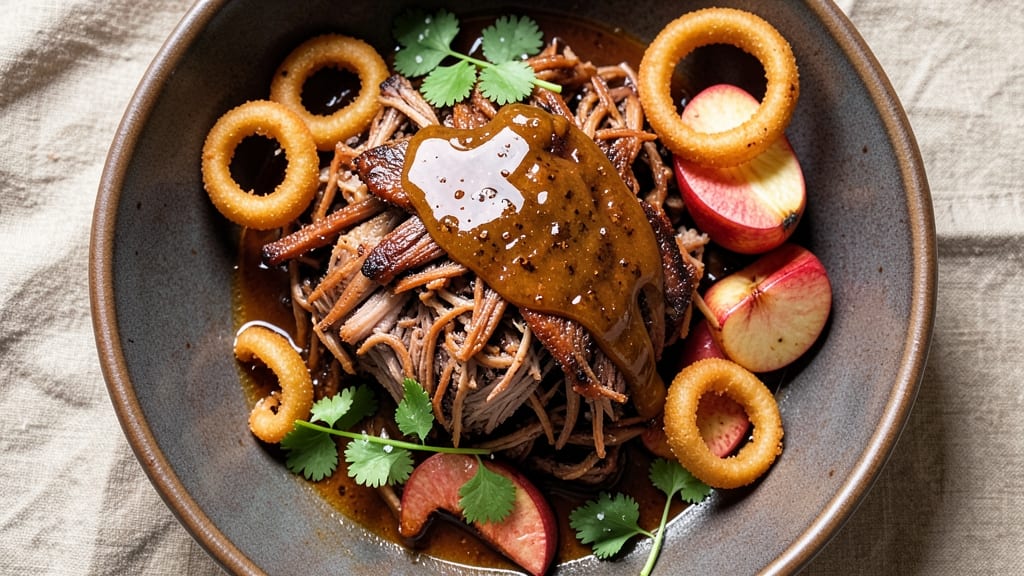
This pulled pork crock pot recipe with apple cider vinegar transforms tough pork shoulder into melt-in-your-mouth tenderness using just six hours of slow cooking. The vinegar isn't just for flavor—it tenderizes the meat while adding a bright, tangy depth that balances the smoky sweetness of the rub. I first discovered this technique while testing recipes for my food science class, and it's been a staple in my slow cooker ever since.
The beauty of this method lies in its simplicity: you season the pork, add vinegar for moisture and flavor, and let the crock pot do the work. No need for constant monitoring or fancy equipment—just set it and forget it.
The apple cider vinegar creates a subtle tang that cuts through the richness, making every bite perfectly balanced. This is the kind of recipe that delivers restaurant-quality results without the fuss.
By the time you're ready to serve, you'll have perfectly shredded pork that falls apart at the touch, infused with smoky, slightly sweet flavors and that signature vinegar brightness.
The sauce clings to every strand, creating a dish that's rich yet refreshing. It's the kind of meal that makes weeknight dinners feel special, with minimal effort.
Serve it on soft buns with pickles and coleslaw for the full experience, or use it as a filling for tacos and nachos. The versatility makes it perfect for feeding a crowd or prepping for meal prep.
Let's get started on this foolproof, time-saving recipe that always delivers tender, flavorful pulled pork.
Ingredients for pulled pork crock pot recipe apple cider vinegar
Six simple ingredients transform tough pork into melt-in-your-mouth perfection with apple cider magic.
| Ingredient | Amount | Notes |
|---|---|---|
| Pork Shoulder 🍖 | 4 lb | Bone-in preferred for flavor |
| Apple Cider Vinegar 🍏 | ½ cup | Raw, unfiltered preferred |
| Brown Sugar 🍚 | ½ cup | Light or dark works |
| Smoked Paprika 🌶️ | 2 tbsp | For deep smoky flavor |
| Ground Black Pepper 🌶️ | 1 tbsp | Freshly cracked preferred |
| Garlic Powder 🧄 | 1 tbsp | Not garlic salt |
| Onion Powder 🧅 | 1 tbsp | For depth of flavor |
| Salt 🧂 | 1 tbsp | Kosher or sea salt |
| Honey 🍯 | ¼ cup | Wildflower for floral notes |
| Beef Broth 🍲 | 1 cup | Low-sodium preferred |
| Fresh Thyme Leaves 🌿 | 1 tbsp | Or 1 tsp dried thyme |
| Olive Oil 🫒 | 1 tbsp | For searing pork |
The pork shoulder makes all the difference here. Bone-in cuts like pork butt or picnic roast stay juicier and add rich flavor to the broth. I always grab mine from Costco when I'm feeding a crowd, but the regular supermarket bone-in pork shoulder works perfectly for a family meal. Look for good marbling—thick white streaks of fat mean juicier meat. If you're buying a whole shoulder, trim off any excess fat to keep the sauce from getting too greasy. The apple cider vinegar? Raw and unfiltered is best—it's got more flavor complexity than pasteurized versions. Bragg or Mott's are solid choices if you're shopping at a regular grocery store.
No apple cider vinegar? White vinegar or balsamic vinegar work in a pinch, though they won't have that same fruity depth. Swapping the honey? Maple syrup or agave nectar keeps things vegan-friendly. The beef broth can be subbed with water if you're watching sodium, but add a bouillon cube for extra flavor. Fresh thyme is ideal, but dried works at one-third the amount. For the spices, Penzeys or bulk bins at natural food stores give you the freshest, most flavorful options. If you're short on time, the pre-mixed barbecue spice blends at Trader Joe's work in a bind—just add extra salt to balance the flavor.
This pork keeps beautifully—honestly tastes better the next day once everything melds together. Store leftovers in an airtight container in the fridge for up to 5 days. For longer storage, portion into freezer-safe containers and freeze for up to 3 months. I always make a double batch because it reheats perfectly for sandwiches all week. The sauce thickens as it cools, so add a splash of water or broth when reheating if it gets too stiff. Serve it on soft buns with pickles and coleslaw for the full experience—trust me, it's worth the extra minute to slice the buns toasted.
Why You'll Love This Recipe
- Sweet-Smoky Magic: That tangy vinegar and brown sugar combo? It’s the secret weapon. The pork gets this irresistible balance of sticky-sweet and smoky depth, with the black pepper adding just enough kick. Honestly, my picky-eating husband now asks for seconds—no joke.
- Party or Pantry: This recipe works for game day snacks or Sunday dinner leftovers. Serve it on buns for a crowd, or shred it into tacos and freeze half for lazy weeknights. Between us, I’ve even used it as a sandwich filling the next day—still delicious, no one’s judging.
- Budget Stretch: A pork shoulder costs less than half the price of pre-made pulled pork, and this recipe stretches to feed four nights. The vinegar and spices are cheap pantry staples, so you’re basically making gourmet meals on a tight budget. My wallet thanks me every time.
Step-by-step instructions for slow cooker pulled pork
Here's how to transform that tough pork shoulder into melt-in-your-mouth perfection.
Sear the Pork Shoulder for Maximum Flavor
Heat a large skillet over medium-high heat and add the 1 tablespoon olive oil. Once shimmering, place the 4 lb pork shoulder fat-side down and sear for 5-6 minutes until the fat renders and the skin develops a deep golden crust. Flip and sear the other side for another 4-5 minutes.
This step creates a flavorful crust that'll infuse the slow cooker with rich, caramelized notes. I press down gently on the pork during searing to prevent curling—this ensures even contact with the pan. Don't rush this; you want that beautiful mahogany color before moving to the next step.
Mix the Vinegar-Sweet Glaze
In a medium bowl, whisk together the 0.5 cup apple cider vinegar, 0.5 cup brown sugar, 0.25 cup honey, 2 tablespoons smoked paprika, 1 tablespoon garlic powder, 1 tablespoon onion powder, 1 tablespoon salt, and 1 tablespoon ground black pepper until the sugar and honey dissolve completely. Stir in the 1 tablespoon fresh thyme leaves.
The vinegar here does double duty—it tenderizes the meat while adding that bright, tangy flavor we love in pulled pork. I like to taste the mixture at this point to ensure the balance of sweet, smoky, and acidic notes. If it needs more depth, a pinch of salt or extra smoked paprika works wonders.
Combine and Slow Cook
Transfer the seared pork shoulder to your slow cooker and pour the vinegar mixture over it, spooning it into all the crevices. Add the 1 cup beef broth to help create a flavorful cooking liquid. Place the lid on the slow cooker and cook on low heat for 6 hours.
Here's where the magic happens—low and slow breaks down those tough muscle fibers into tender, pull-apart goodness. I check the pork after 4 hours to ensure it's not drying out, adding a splash of broth if needed. The meat should be fork-tender and easily shreddable by the end of the cooking time.
Shred and Finish
Remove the pork shoulder from the slow cooker and transfer it to a cutting board. Using two forks, shred the meat against the grain into ¼-inch thick strands. Discard any large fat chunks or connective tissue. Return the shredded pork to the slow cooker and mix it with the cooking juices.
This is where the pork transforms from shoulder to pulled pork. The juices from cooking keep every strand moist and flavorful. If the mixture seems too thick, stir in 1-2 tablespoons of the cooking liquid to loosen it. The final texture should be shreddable yet saucy, with each bite bursting with that perfect balance of sweet, smoky, and tangy flavors.
Pro Tips For Making Pulled Pork Crock Pot Recipe Apple Cider Vinegar
- USE A COLD START: I learned this the hard way—dumping a raw pork shoulder into a cold crockpot means it’ll sit in its juices for hours before ever hitting the right temperature. Instead, sear the pork in a hot skillet first (even just 2-3 minutes per side) to render fat and kick off the Maillard reaction. Then transfer it to the crockpot and add the apple cider vinegar and spices. The flavor difference is night and day.
- SALT THE PORK BEFORE SEARING: Skip this, and your pulled pork will taste bland no matter how much you season later. Generously salt the pork shoulder (about 1 teaspoon per pound) at least 30 minutes before cooking—let it sit uncovered on a wire rack while you prep. The salt penetrates deeper, and the crust forms better when you sear it. Trust me, your taste buds will notice.
- DON’T SKIP THE VINEGAR BALANCE: Apple cider vinegar is the star here, but too much makes your pulled pork taste sour, not tangy. For a 4-5 pound pork shoulder, use ½ to ¾ cup—enough to tenderize but not overpower. If you’re worried, taste the liquid after 4 hours of cooking. Need more depth? Add a splash of broth or a pinch of brown sugar to round it out.
- CHECK TEMPERATURE, NOT TIME: I used to pull pork at 8 hours on autopilot, only to end up with dry, stringy meat. Instead, use a meat thermometer—pull it when the internal temp hits 203°F (95°C). The collagen breaks down perfectly, and the texture is buttery. If it’s still tough, let it rest another 30 minutes off-heat. Your fork will thank you.
Dietary considerations for this recipe
Gluten-Free Adaptations
This recipe naturally accommodates gluten-free diets since the base ingredients are all gluten-free. The key is ensuring your beef broth contains no wheat additives—opt for brands like Pacific Foods or Imagine that are certified gluten-free.
For serving, use gluten-free buns like Canyon Bakehouse or Schar to maintain that classic pulled pork sandwich experience. 🌾
Dairy-Free Considerations
The original recipe is already dairy-free, making it perfect for those avoiding lactose. The apple cider vinegar and honey create natural sweetness without dairy, while the smoky spices provide depth.
When serving, check your toppings—some coleslaws contain mayo or sour cream. I substitute with vegan mayo or cashew sour cream for a creamy texture without dairy. 🥛
Low-Sodium Options
To reduce sodium, use low-sodium beef broth and cut the salt to ½ teaspoon in the vinegar mixture. You can also omit the salt entirely if your broth is already low-sodium.
For extra flavor without salt, add 1 teaspoon onion powder or ½ teaspoon smoked paprika to compensate. The apple cider vinegar’s tanginess helps balance the flavor even with less salt. ❄️
Vegan Substitutions
For a vegan version, swap the pork shoulder for mushroom or jackfruit—both mimic pulled pork texture. Use maple syrup instead of honey and ensure your broth is vegan-friendly. The apple cider vinegar still works beautifully, adding tang to the dish.
I’ve had great success with Beyond Meat’s pulled pork substitute, which cooks similarly in the crock pot. 🌱
Allergen-Friendly Tips
If nut allergies are a concern, avoid honey and use agave nectar instead. For soy allergies, check your smoked paprika—some brands contain soy additives. Always verify ingredient labels, especially for broths and spices. The recipe’s simplicity makes it easy to adapt while keeping the signature vinegar-kissed flavor intact. 💡
Nutrition facts
Frequently asked questions
Why does apple cider vinegar make this pulled pork so tender?
The acidity in apple cider vinegar helps break down tough muscle fibers during cooking, making the meat more tender. It also adds a bright tang that balances the smoky sweetness of the rub. The vinegar also creates moisture in the slow cooker, preventing the pork from drying out during the long cooking time.
Can I use white vinegar instead of apple cider vinegar?
Yes, but expect less flavor complexity. White vinegar lacks the fruity depth of apple cider, so you might want to add ½ teaspoon cinnamon or ¼ teaspoon allspice to mimic the apple notes. For best results, stick with apple cider vinegar—its natural sweetness and acidity create the perfect balance.
How do I know when the pork is fully cooked?
The pork is done when it reaches an internal temperature of 203°F and shreds easily with two forks. For safety, use a meat thermometer inserted into the thickest part. If it's not quite there after 6 hours, cook it 1 more hour on low heat. The meat should fall apart completely when you test it.
What if my pulled pork turns out too dry?
Add 2-3 tablespoons of the cooking liquid or a splash of beef broth when shredding to restore moisture. You can also mix in 1 tablespoon apple cider vinegar to revive the tangy flavor. For prevention, avoid overcooking—6 hours on low is ideal. If using a high setting, reduce time to 4 hours and check frequently.
Can I make this in an Instant Pot instead of a crock pot?
Sear the pork first, then add all ingredients and cook on high pressure for 60 minutes. Release pressure naturally, then shred and mix with juices. The vinegar still works beautifully, but you may need 1-2 extra tablespoons of broth since Instant Pots lose more moisture during pressure cooking.