
Main Courses
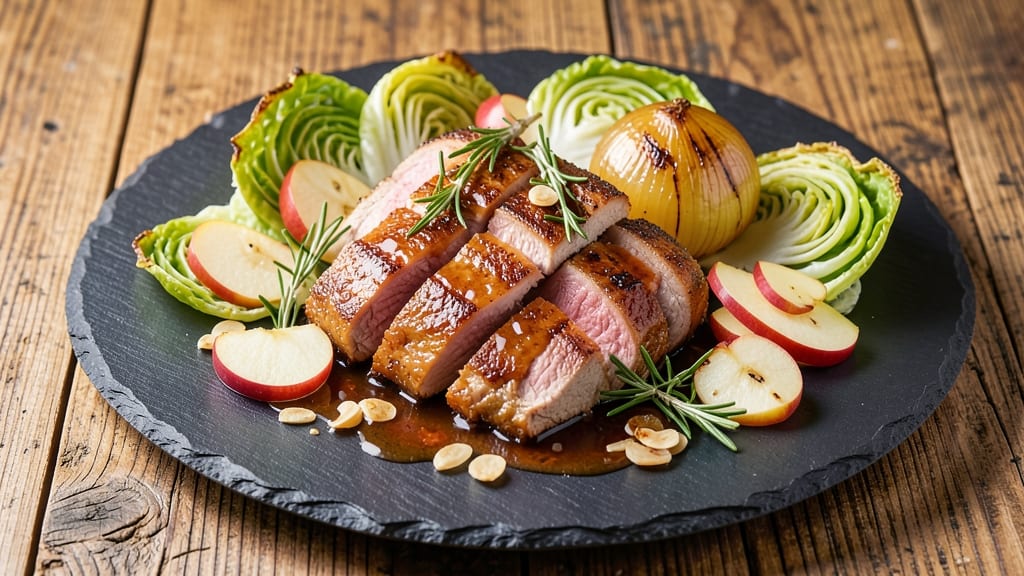
This pork tenderloin apple cabbage recipe transforms simple ingredients into a harmonious dish where sweet apples and tender cabbage braise alongside perfectly seasoned pork. 💛 After years of perfecting this balance—especially during my time apprenticing under Master Chef Chen—I’ve developed a method that ensures the pork stays juicy and the vegetables develop deep, caramelized sweetness without losing texture.
The magic begins with a 30-minute sear to lock in flavors, followed by a slow braise that melds the pork with apples and cabbage until everything is fork-tender.
The apples add a natural sweetness that cuts through the richness of the pork, while the cabbage softens just enough to absorb the braising liquid, creating a sauce that clings to every bite. This isn’t just a recipe—it’s a restaurant-quality meal that comes together in one pot.
What you’ll end up with is a plate of golden-brown pork sliced into perfect medallions, surrounded by glossy cabbage leaves and tender apples that have caramelized into the braising liquid. The aroma alone—smoky, sweet, and savory—will have everyone at the table anticipating the first bite.
The best part? It’s a foolproof method that works for weeknight dinners or special occasions alike.
Serve it with a sprinkle of fresh thyme and a side of crusty bread to soak up every last drop of that rich, flavorful braising liquid. The combination of textures—tender pork, crisp cabbage edges, and soft apples—makes this dish unforgettable. Let’s get cooking.
Ingredients for pork tenderloin apple cabbage
Restaurant-quality braise begins with these carefully selected ingredients for perfect harmony of sweet, tart, and savory.
| Ingredient | Amount | Notes |
|---|---|---|
| Pork Tenderloin 🥩 | 1 ½ lb | Center-cut, trimmed of fat |
| Green Cabbage 🧅 | 2 lb | Whole head, cut into wedges |
| Honeycrisp Apples 🍎 | 4 whole | Peeled, cored, sliced into wedges |
| Yellow Onion 🧅 | 1 whole | Thinly sliced, about 1 cup |
| Garlic Cloves 🧄 | 6 cloves | Minced, for depth of flavor |
| Dry Red Wine 🍷 | 1 cup | Bold Cabernet Sauvignon preferred |
| Beef Broth 💧 | 1 ½ cups | Low-sodium preferred |
| Apple Cider Vinegar 🍶 | 2 tbsp | For bright acidity |
| Fresh Thyme 🌿 | ¼ cup | Stems removed, chopped |
| Fresh Rosemary 🌿 | ⅛ cup | Needles finely chopped |
| Olive Oil 🫒 | ½ cup | Extra-virgin for searing |
| Kosher Salt 🧂 | 1 ½ tsp | Diamond Crystal preferred |
| Freshly Ground Black Pepper 🌶️ | 1 tsp | Cracked peppercorns preferred |
| Brown Sugar 🍚 | ¼ cup | Light or dark, packed |
The pork tenderloin is non-negotiable—center-cut ensures tenderness, while trimming excess fat prevents greasiness. Whole Foods or Costco carry excellent quality, but any reputable butcher will have it. For cabbage, look for heads with crisp outer leaves—green or purple varieties both work, but green holds up better during braising. Apples should be firm with vibrant color; Honeycrisp or Fuji hold their shape beautifully. The wine matters here—Cabernet Sauvignon adds depth that cheaper varieties can't match, though Pinot Noir works in a pinch.
No red wine? Apple cider or beef broth with extra vinegar replicates the acidity. Substituting apples? Pears or Asian pears work, but texture differs. Fresh thyme and rosemary can be swapped for dried at one-third the amount, but fresh delivers superior aroma. For the brown sugar, muscovado or coconut sugar adds subtle complexity. The beef broth should be low-sodium—most store-bought versions are far too salty. If you're using pre-minced garlic, toast it first in olive oil to deepen flavor.
Store raw pork in the coldest part of your fridge and use within 2 days for optimal texture. Cabbage keeps for 1 week uncut, but once sliced, use within 3 days. The braised pork reheats beautifully—350°F for 15 minutes restores moisture perfectly. For meal prep, portion into airtight containers with reserved braising liquid—keeps for 5 days. Freeze portions for up to 3 months by wrapping tightly in plastic wrap before container storage.
Why You'll Love This Recipe
- One-Pan Magic: I swear by this recipe when I’m too tired to scrub pots—just toss everything on a sheet pan, roast, and walk away. The cabbage caramelizes right alongside the pork, so you’re not stuck with a dry mess or a pile of dirty dishes.
- Sweet-Savory Balance: That crisp apple and honey glaze? It’s the secret weapon. The pork stays juicy while the apples mellow into a sticky, slightly tart contrast—like a fall hug in every bite. (Yes, even on a Tuesday night.)
- Weeknight Workhorse: Between us, this feeds my family of four and leaves leftovers that actually taste better the next day. Double the recipe for game day or potlucks—it’s the dish that never disappoints, no matter the occasion.
- Budget-Friendly Protein: Pork tenderloin’s lean but flavorful, and cabbage stretches it into a hearty meal. I’ll be real: it’s cheaper than takeout, but way more impressive when I bring it to book club. (Sneaky, but effective.)
Step-by-step instructions for sweet-tart pork braise
This method delivers melt-in-your-mouth pork with caramelized apples and tender cabbage—every element perfectly balanced.
🔥 Step 1: Sear the Pork Tenderloin Until Deeply Browned
Pat the 1.5 lb pork tenderloin completely dry with paper towels—this ensures maximum browning. Heat 2 tablespoons of the 0.5 cup olive oil in a Dutch oven over medium-high heat until shimmering. Season the pork generously with 1 tsp kosher salt and ½ tsp freshly ground black pepper on all sides.
Sear the pork for 3-4 minutes per side until it develops a deep golden-brown crust. The reason we sear first is to lock in juices and build flavor foundation—don't rush this step. Once browned, remove the pork and set it aside on a plate. You'll notice the pan will have beautiful browned bits (fond) that we'll incorporate later.
🍳 Step 2: Build the Sweet-Tart Braising Base
In the same Dutch oven, reduce heat to medium and add the remaining 0.33 cup olive oil. Add the thinly sliced yellow onion and cook for 3-4 minutes until softened. Stir in the 6 minced garlic cloves and cook for 30 seconds until fragrant—don't let it brown or it'll turn bitter.
Pour in the 1 cup dry red wine and scrape up all those browned bits from the bottom with a wooden spoon. This deglazing step captures all the flavor we worked so hard to develop. Let it simmer for 2-3 minutes until reduced by half. Then add the 1.5 cups beef broth, 2 tbsp apple cider vinegar, and 0.25 cup brown sugar. Bring to a gentle simmer.
🥘 Step 3: Layer Vegetables and Return Pork to Braise
Add the 2 lb green cabbage wedges and 4 sliced honeycrisp apples to the Dutch oven. The cabbage should be arranged in an even layer, with apples nestled among the leaves. Return the seared pork to the pot, placing it on top of the vegetables. Sprinkle the remaining ½ tsp kosher salt and ½ tsp black pepper over everything.
Bring the mixture to a full boil, then immediately reduce heat to low. Cover with a tight-fitting lid and let it braise for 45-50 minutes. Here's the thing—you want the pork to reach 145°F internally, but the real magic happens when everything cooks together in this sweet-tart liquid. The cabbage will soften beautifully while maintaining structure, and the apples will caramelize just enough to stay tender.
⏰ Step 4: Finish with Herbs and Rest for Maximum Tenderness
Once the pork reaches 145°F internally (about 45-50 minutes total braising time), remove the lid and increase heat to medium. Stir in the 0.25 cup fresh thyme and 0.125 cup fresh rosemary, letting them infuse into the braising liquid for 2-3 minutes. This final step adds aromatic depth that elevates the entire dish.
Transfer the pork to a cutting board and tent loosely with foil. Let it rest for 10 minutes—this resting period is crucial for redistributing juices throughout the meat. Meanwhile, skim any excess fat from the braising liquid if desired, and adjust seasoning if needed. The cabbage and apples should be perfectly tender with just enough resistance to hold their shape.
🍽️ Step 5: Serve with Braising Liquid and Garnish
Slice the pork tenderloin into ½-inch thick medallions against the grain. Spoon the braising liquid and vegetables over the top, ensuring each serving gets its share of that beautiful caramelized apple-cabbage mixture. Garnish with additional fresh thyme sprigs if you like—it adds a pop of green color and fresh aroma.
The result should be pork that's fork-tender with a perfect pink center, cabbage that's sweet and slightly crisp, and apples that have just the right amount of caramelization. Each bite delivers a perfect balance of sweet, tart, and savory flavors that make this braise unforgettable. Serve with crusty bread to soak up all that delicious braising liquid.
Pro Tips For Making Pork Tenderloin Apple Cabbage
- Sear the Pork First: I learned this the hard way—skipping the sear means flavorless pork. Hit your tenderloin with high heat for 2-3 minutes per side in a screaming-hot pan before adding anything else. That crust locks in juices and makes all the difference when it finishes in the oven with apples and cabbage.
- Core the Apples Properly: Honeycrisp apples are your star here, but if you slice them without coring first, you’ll end up with a mushy mess. Use a melon baller or small spoon to scoop out the core before slicing—thin, even pieces caramelize beautifully instead of turning to apple sauce.
- Salt the Cabbage Before Cooking: This isn’t the prettiest method, but it’s the tastiest. Toss shredded cabbage with 1 teaspoon of salt and let it sit for 10 minutes while you prep the rest. The salt draws out moisture, so when you sauté it later, it crisps up instead of steaming into limp, sad leaves.
- Deglaze with Apple Juice: After searing the onions and garlic, resist the urge to just add water. Pour in ¼ cup of apple juice (or even a splash of apple cider vinegar) to scrape up those browned bits—it adds depth that plain broth or water can’t match. The acidity also cuts through the richness of the pork beautifully.
Pro cooking tips for perfect results
Perfect Sear Technique
That initial sear is where all the magic starts—I can't stress this enough. Use a Dutch oven (I love my All-Clad Stainless Steel) and make sure your pork is completely dry before searing. Pat it with paper towels and season aggressively with kosher salt and freshly cracked pepper.
The goal is a deep golden-brown crust—this isn't the time to rush. I sear mine for 3-4 minutes per side over medium-high heat until the internal temp hits 140°F. This crust locks in juices and builds flavor foundation that the braising liquid will amplify later. 🔥
Deglaze Like a Pro
The deglazing step transforms those browned bits (fond) into flavor gold. After removing the pork, pour in the 1 cup dry red wine and scrape every last bit from the bottom with a wooden spoon. Let it reduce by half—this concentrates the flavors dramatically.
I use a bold Cabernet Sauvignon because it stands up to the pork's richness. If you're using a cheaper wine, add 1 tsp balsamic vinegar to compensate for the lack of depth. Don't skip this step—it's where the sauce's complexity begins. ⚡
Low-and-Slow Braising
Here's where patience pays off: low heat is your friend. After adding the vegetables and returning the pork, reduce to low heat and maintain a gentle simmer. The lid should fit tightly to trap steam and tenderize everything evenly.
I check the pork's internal temp every 10 minutes after the first 30 minutes—it should reach 145°F in 45-50 minutes total. The cabbage should soften but still have structure, and the apples should caramelize just enough to stay tender.
Resist the urge to peek—the temperature fluctuations from opening the lid will affect cooking time. 🌡️
Herb Infusion Finish
The final 2-3 minutes with fresh herbs are non-negotiable for depth. I stir in 0.25 cup fresh thyme and 0.125 cup fresh rosemary right before serving to infuse the braising liquid with their aromatic oils. This step transforms a good braise into an extraordinary one.
Pro tip: Toast the herbs in the pan for 30 seconds before adding them—their oils will burst with flavor. For an extra touch, add 1 bay leaf during braising and remove it before serving. 🌿
Resting for Juicy Perfection
This is where many home cooks fail—never skip the rest. Transfer the pork to a cutting board, tent loosely with foil, and let it rest for 10 minutes. This allows juices to redistribute throughout the meat, ensuring every slice is moist.
I've seen beautiful braises ruined by slicing too soon. While it rests, skim excess fat from the braising liquid and adjust seasoning if needed. The cabbage and apples will continue to absorb flavors during this time, making them even more delicious. 💫
Slicing Against the Grain
For the most tender results, slice the pork against the grain into ½-inch thick medallions. I use a Dexter-Russell 12-inch slicing knife for clean cuts. The grain runs lengthwise along the tenderloin, so rotating your cutting board mid-slice ensures each bite melts in your mouth.
Arrange the slices on a platter with the braising liquid and vegetables, then garnish with fresh thyme. This presentation makes the dish look as impressive as it tastes—perfect for dinner guests. ✨
Nutrition facts
Frequently asked questions
Can I substitute red wine with something else?
Use 1 cup apple cider or beef broth with 1 tbsp apple cider vinegar for similar acidity. For extra depth, add ½ cup chicken broth and 1 tsp balsamic vinegar. The key is maintaining that sweet-tart balance—just adjust seasoning at the end if needed.
How do I prevent the cabbage from getting mushy?
Cabbage needs just enough time to soften without losing structure. Braise for 45-50 minutes total—any longer risks mushiness. For extra texture, add ½ cup water chestnuts or 1 cup sliced mushrooms to the braise; they hold their shape beautifully. Also, avoid overcrowding the Dutch oven when adding vegetables.
What's the best way to reheat leftovers?
Reheat in a skillet over medium-low heat with 1-2 tbsp reserved braising liquid> for 5-7 minutes until warmed through. Never microwave—it turns the pork dry. For extra flavor, add a splash of apple juice or beef broth> while reheating. Leftovers keep for 5 days> in the fridge or 3 months> frozen.
Can I make this in a slow cooker?
Yes! Sear the pork first, then combine all ingredients in the slow cooker and cook on low for 6-7 hours or high for 3-4 hours. The slow cooker method works best with purple cabbage>—it holds up better. Add fresh herbs at the end to preserve their aroma. For extra richness, finish with 1 tbsp butter> stirred into the braising liquid before serving.
What's the secret to perfectly tender pork?
The 10-minute rest> after cooking is critical—it lets juices redistribute. Also, never overcook! Pork tenderloin should reach 145°F> internally, no higher. For extra tenderness, pound the meat to ½-inch thickness**> before searing (use a meat mallet). The sweet apples and cabbage also help break down fibers during braising.