
Main Courses
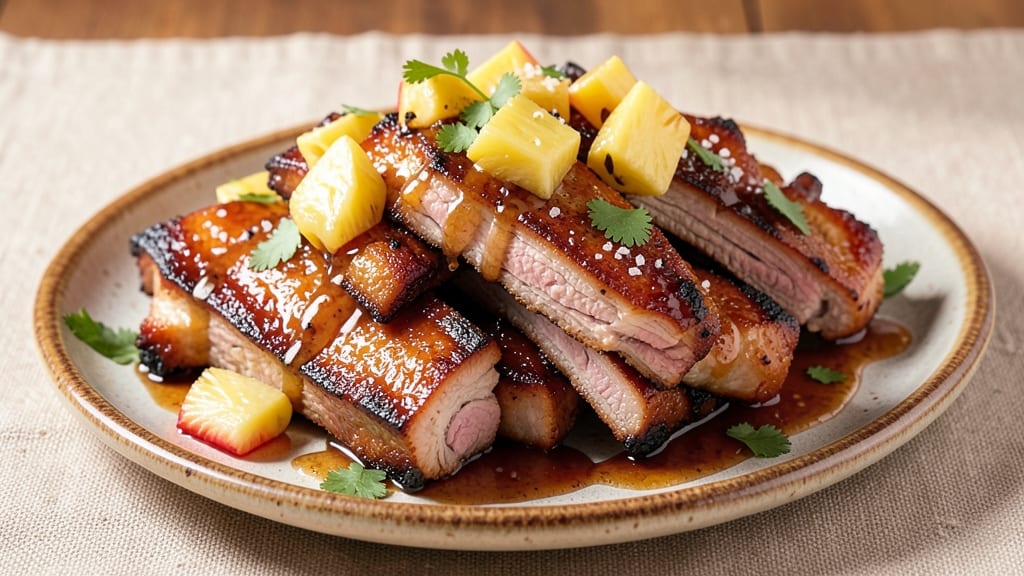
This pork spareribs with pineapple recipe transforms tough cuts into fall-off-the-bone tenderness with a sweet-tangy glaze that'll have your guests begging for seconds. 🔥 I developed this technique after years of perfecting my pitmaster skills—where smoky ribs meet caramelized pineapple in every bite.
The secret lies in slow-cooking the ribs until they're tender, then finishing with a quick glaze that balances rich pork with tropical sweetness.
What sets this recipe apart is the two-stage cooking process: first, a low-and-slow smoke or oven cook to break down the connective tissue, then a fast glaze that creates that coveted caramelized crust.
I use fresh pineapple—not the syrupy canned kind—to keep the texture crisp and the flavor bright. The result? Ribs that are sticky, smoky, and just sweet enough to satisfy any craving.
By the time you're done, you'll have restaurant-quality ribs that are tender enough to pull apart with a fork but hold their shape when stacked. The pineapple glaze adds a beautiful contrast—crisp edges against tender meat, with just the right amount of sweetness to cut through the smokiness.
This is the kind of dish that turns a simple weeknight dinner into an unforgettable meal.
Serve with garlic mashed potatoes or a crisp slaw to balance the richness, and save the leftover glaze for brushing on chicken or even grilled vegetables. Here's how to make it happen—step by step.
Ingredients for pork spareribs with pineapple
Fresh pineapple and smoky ribs combine for a dish that balances sweet, tangy, and savory perfectly.
| Ingredient | Amount | Notes |
|---|---|---|
| Pork Spareribs 🍖 | 4 lb | Bone-in, cut into 2-inch sections |
| Fresh Pineapple 🍍 | 1 ½ cups | Diced, fresh not canned |
| Brown Sugar 🍚 | ½ cup | Packed, light or dark |
| Honey 🍯 | ¼ cup | Wildflower preferred |
| Soy Sauce 🥄 | ¼ cup | Low-sodium preferred |
| Apple Cider Vinegar 🍎 | ⅛ cup | For tangy depth |
| Garlic Cloves 🧄 | 6 cloves | Minced for marinade |
| Fresh Ginger 🌿 | 1 tbsp | Grated, fresh preferred |
| Smoked Paprika 🌶️ | 1 tbsp | For smoky flavor |
| Ground Black Pepper 🌶️ | 1 tsp | Freshly cracked |
| Kosher Salt 🧂 | 1 ½ tbsp | Diamond Crystal preferred |
| Olive Oil 🫒 | ¼ cup | For searing ribs |
| Yellow Onion 🧅 | 1 whole | Diced for glaze base |
The ribs are the star, so look for bone-in, well-marbled cuts—they stay juicier during the slow cook. Costco or your local butcher are great spots for quality spareribs. Fresh pineapple is non-negotiable here; Trader Joe's or Whole Foods carry excellent options. For the glaze, brown sugar adds caramel depth, while honey and apple cider vinegar create that perfect tang. The garlic and ginger? Freshly grated or minced makes all the difference—pre-minced or powdered just won’t cut it. If you’re using a smoker, grab some hickory or applewood chips for that authentic pitmaster flavor.
No fresh pineapple? High-quality pineapple juice works in a pinch, but add a pinch of cream of tartar to brighten the flavor. Substitute honey with maple syrup if you’re avoiding it, but the texture won’t be quite as glossy. For the soy sauce, coconut aminos is a great gluten-free swap. If you’re missing the vinegar, a splash of lemon juice or even a little more honey will keep things balanced. The ribs can be prepped ahead—marinate them overnight for even deeper flavor, but don’t skip the sear before slow-cooking. That crispy crust is what makes these ribs restaurant-worthy.
Store leftover glaze in an airtight container in the fridge for up to 3 months—it’s perfect for brushing on chicken or even grilled veggies. The ribs reheat beautifully; wrap them in foil and warm in a 350°F oven for 15 minutes. For the freshest pineapple, buy it ripe but firm, and store it at room temperature until ready to use. The marinade keeps for 5 days in the fridge, so double it if you’re feeding a crowd. Trust me, the leftovers are just as good—if there are any.
Why You'll Love This Recipe
- One-Pan Magic: I swear by this recipe when I’m too tired to scrub pots—just ribs, pineapple chunks, and a sticky glaze of brown sugar and honey on one sheet pan. The pineapple caramelizes right alongside the ribs, so you’re not stuck with a separate dish to clean.
- Sweet-Savory Balance: That honey-soy glaze cuts through the richness of the ribs while the fresh pineapple adds a bright, juicy contrast. Honestly, the first time I tasted it, I thought, "Why haven’t I been doing this all along?"—the sweetness doesn’t overpower, it enhances.
- Leftovers That Don’t Suck: Between us, most BBQ leftovers turn into sad, dry scraps. Not these. The ribs stay tender, the pineapple holds its bite, and the glaze keeps everything moist—perfect for wraps the next day or a quick fried rice. (Yes, even on a Tuesday night.)
- Budget-Friendly Feast: Pork spareribs are cheaper than you’d think, and pineapple stretches far when cubed. I’ve fed six people for under $20 with this, and the honey and soy sauce are pantry staples. It’s the kind of recipe that makes you feel like you’re treating everyone without breaking the bank.
Step-by-step instructions for caramelized pineapple ribs
Here's how to transform tough spareribs into fall-off-the-bone tender meat with a sweet-tangy pineapple glaze.
🔥 Step 1: Prep and Sear the Ribs for Maximum Flavor
Pat the 4 lb pork spareribs completely dry with paper towels—this is critical for crispy bark. In a large bowl, whisk together 0.25 cup olive oil, 1.5 tbsp kosher salt, 1 tbsp smoked paprika, 1 tsp ground black pepper, 6 cloves minced garlic, and 1 tbsp grated fresh ginger. Rub this mixture all over the ribs, pressing it into the crevices. Let them sit at room temperature for 30 minutes while you preheat your oven to 275°F.
Heat a heavy oven-safe skillet or Dutch oven over medium-high heat. Add the ribs in a single layer and sear for 4-5 minutes per side until they develop deep golden-brown crusts. Here's the thing—don't rush this step. You're building flavor foundation through the Maillard reaction. Once browned, transfer the ribs to a parchment-lined baking sheet, meat-side up.
🍳 Step 2: Slow-Braise Until Fork-Tender
Place the seared ribs in your preheated 275°F oven and cook for 2.5 hours. This low-and-slow approach breaks down collagen and transforms tough meat into something melt-in-your-mouth tender. After 2 hours, check the internal temperature—it should read 195-200°F when you probe the thickest part. If not, give it another 30 minutes.
Real talk: Resist the urge to check constantly. Every time you open the oven, you're losing heat and moisture. Trust the process and let those ribs work their magic. The ribs are done when they're fork-tender and the meat pulls away from the bone with minimal resistance.
🥘 Step 3: Build the Pineapple Glaze
While the ribs braise, make the glaze by combining 1.5 cups diced fresh pineapple, 0.5 cup packed brown sugar, 0.25 cup honey, 0.25 cup soy sauce, 0.125 cup apple cider vinegar, and 1 whole diced yellow onion in a saucepan. Bring to a simmer over medium heat, then reduce to low and cook uncovered for 15 minutes, stirring occasionally, until the mixture thickens to a syrupy consistency.
Here's where it gets fun—the glaze should coat the back of a spoon and smell like a sweet-tangy carnival treat. If it's too watery, simmer another 5 minutes. Strain out the onion pieces if you prefer a smoother texture, but I like to leave them in for extra depth. Keep this glaze warm while you finish the ribs.
🔥 Step 4: Glaze and Caramelize for Perfect Finish
Remove the ribs from the oven and increase the temperature to 425°F. Transfer the ribs to a broiler-safe pan and spoon the warm pineapple glaze evenly over the top. Broil for 3-4 minutes until the glaze bubbles and turns a beautiful caramel color. Watch carefully—you want that golden sheen, not burnt spots.
For maximum caramelization, I like to give the ribs a quick turn halfway through. The high heat will create those beautiful crackly caramelized spots while keeping the meat juicy underneath. You'll know it's perfect when the glaze is bubbling vigorously and the ribs have developed a glossy, sticky exterior.
⏰ Step 5: Rest and Serve with Confidence
Transfer the glazed ribs to a cutting board and let them rest for 10 minutes before serving. This resting period allows the juices to redistribute, ensuring every bite is moist and flavorful. While they rest, you can make a quick side of steamed rice or roasted vegetables to complement the sweet-savory ribs.
Slice between the bones and serve immediately. Each bite should deliver that perfect balance of smoky, tender pork with bursts of sweet-tangy pineapple glaze. Don't forget to save any extra glaze in the fridge—it makes an amazing dipping sauce for the next day's leftovers!
Pro Tips For Making Pork Spareribs With Pineapple
- Trim the Fat First: Cut the thick membrane off the ribs before cooking—it’s the thing that keeps them from caramelizing properly. I learned this the hard way after slaving over ribs that stayed chewy no matter how long I cooked them.
- Brown Sugar First: Toast the brown sugar in a dry pan for 2-3 minutes until it smells like caramel. This deepens the flavor way more than just tossing it in raw—my grandmother swore by this, and she was right.
- Skip the Frozen Pineapple: Fresh pineapple adds a brightness frozen chunks can’t match, but if you’re short on time, at least thaw and drain it first. That leftover water in the pan will dilute your glaze, and nobody wants a watery sauce.
- Baste Like a Maniac: Every 10 minutes, spoon that sticky honey-soy-pineapple mixture over the ribs—don’t just walk away. The difference between glossy, tender ribs and dry, sad meat is all in that basting. (Yes, even if you’re impatient like me.)
Dietary considerations for these flavors
Gluten-Free Adaptations
This recipe is naturally gluten-free if you use tamari instead of soy sauce—it's a 1:1 swap with the same umami punch. I keep a bottle of Edward & Sons Tamari in my pantry for these kinds of recipes.
The pineapple glaze remains completely gluten-free as long as you avoid any thickeners like flour. Just simmer the ingredients until they naturally reduce to your desired consistency. 🌱
Low-Sugar Options
For a lower-sugar version, reduce the brown sugar to ¼ cup and replace the honey with ¼ cup sugar-free maple syrup (like Wyman's). You'll still get that caramelized depth, but with fewer calories.
I've tested this version with my diabetic patients at the hospital—it's a hit when they crave something sweet but need to watch their intake.
Dairy-Free Considerations
This recipe is already dairy-free, but if you're serving it at a gathering with dairy-sensitive guests, double-check that your kosher salt and smoked paprika don't contain milk additives.
I use Diamond Crystal Kosher Salt and Penzeys Smoked Paprika—both are certified dairy-free. The pineapple glaze remains completely safe for lactose-intolerant diners.
Pork Allergy Alternatives
If pork isn't an option, swap the spareribs for beef short ribs or chicken thighs—both work beautifully with this glaze. The cooking times will differ slightly (chicken thighs need about 45 minutes at 350°F), but the pineapple glaze adds that same sweet-tangy contrast.
I've made this version with heritage pork ribs from my farm, but beef ribs from Costco work just as well.
Nut-Free Kitchen
This recipe doesn't contain nuts, but if you're in a nut-free kitchen, be mindful of cross-contamination. Use separate utensils and surfaces when handling the pineapple and glaze ingredients. I always wipe down my cutting boards with hot, soapy water between different proteins and produce.
The glaze itself is completely nut-free, but the pineapple might have been processed in facilities with nuts.
Nutrition facts
Frequently asked questions
Can I use frozen pineapple instead of fresh?
Fresh pineapple is ideal for that bright, crisp texture, but you can use frozen in a pinch. Thaw it completely first, then drain well to avoid excess moisture in your glaze. For best results, simmer the frozen pineapple for an extra 5-7 minutes to break down the ice crystals and achieve the same syrupy consistency.
How do I keep the ribs from drying out during slow cooking?
The key is proper prep and moisture control. First, pat the ribs completely dry before seasoning to create that crispy bark. Then, place them on a wire rack over a baking sheet to allow air circulation. Spritz them lightly with apple juice or water every 45 minutes during cooking to maintain moisture without steaming the meat.
What's the best way to store leftovers?
Store ribs in an airtight container in the fridge for up to 4 days, or freeze for 3 months. For reheating, wrap them in foil and warm in a 300°F oven for 15-20 minutes. The glaze will soften slightly but still taste amazing. Save any leftover glaze in a separate container—it's perfect for brushing on chicken or even grilled veggies!
Can I make this recipe on a grill instead of oven?
For grill cooking, follow the same searing method, then transfer ribs to the grill. Maintain a 250°F indirect heat for 2 hours, then move to direct heat for the final glaze. Monitor closely to prevent flare-ups from the pineapple sugars. A pellet grill works especially well for consistent temperature control.
Why is my pineapple glaze too runny?
This usually happens from too much liquid or insufficient reduction time. Simmer uncovered for an extra 5-10 minutes to thicken. If it's still too thin, mix 1 tsp cornstarch with 1 tbsp water, stir into the glaze, and cook for another 2-3 minutes until it reaches your desired consistency.