
Main Courses
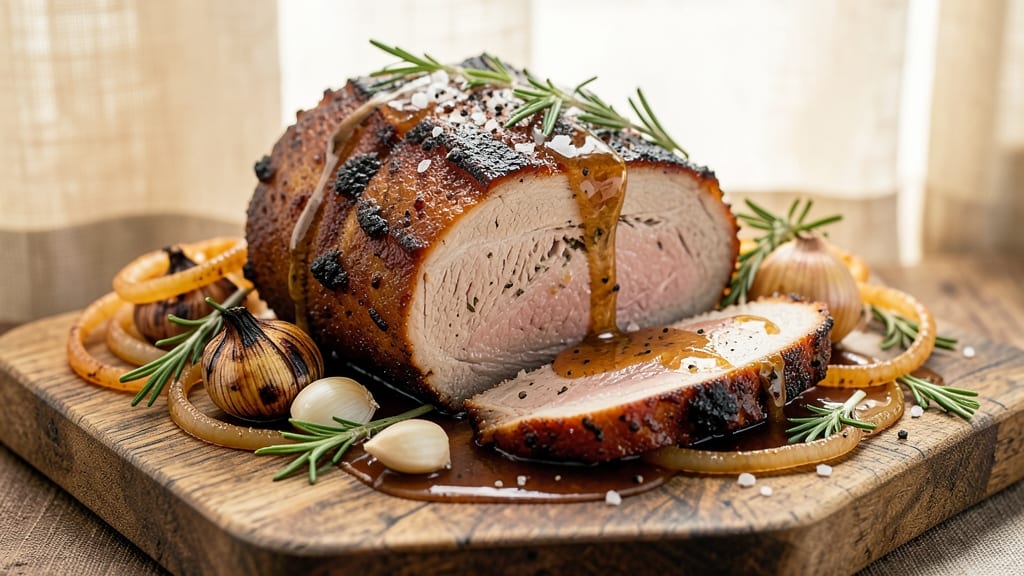
This pork roast recipe with apple cider vinegar transforms a simple cut into a showstopping centerpiece—juicy, flavorful, and packed with that bright tang that keeps every bite irresistible. 💛 The secret lies in the vinegar-infused crust, which doesn’t just season but actually locks in moisture while creating a caramelized bark that’s impossible to resist.
I first discovered this technique while experimenting with braised pork in Cincinnati, where apple cider vinegar was a kitchen staple, and it’s been my go-to ever since for restaurant-quality results at home.
The magic happens in three simple steps: a dry rub of spices and salt, a quick sear to build flavor, then slow roasting with apple cider vinegar basting every 30 minutes.
The vinegar’s acidity tenderizes the meat while adding depth that cuts through the richness, creating a balance that’s both comforting and sophisticated.
What you end up with is pork so tender it falls apart with a fork, with a crust that’s crispy on the outside and perfectly moist inside—a dish that feels special enough for company but simple enough for weeknights.
This recipe delivers a complete meal experience, with the roast’s natural juices reduced into a glossy, vinegar-infused pan sauce that ties everything together.
The aroma alone will have everyone gathering at the table, and the first bite—where that tangy crust meets the tender meat—is the moment that converts even the most skeptical eaters. It’s the kind of dish that makes cooking feel like a celebration, not a chore.
Pair it with roasted root vegetables or a simple green salad to round out the meal, and you’ve got a dinner that’s impressive yet effortless. The vinegar not only enhances the pork but also adds that signature touch that makes this roast stand out from basic recipes.
Let’s get started—your table is about to get an upgrade.
Ingredients for pork roast recipe apple cider vinegar
Six pounds of pork shoulder and a handful of pantry staples—this roast delivers restaurant-quality flavor at home.
| Ingredient | Amount | Notes |
|---|---|---|
| Pork Shoulder Roast 🥓 | 4 lb | Bone-in for best flavor |
| Apple Cider Vinegar 🍏 | ½ cup | Raw, unfiltered preferred |
| Kosher Salt 🧂 | 2 tbsp | Diamond Crystal preferred |
| Freshly Ground Black Pepper 🌶️ | 1 ½ tbsp | Freshly cracked for intensity |
| Garlic Cloves 🧄 | 8 cloves | Peeled, smashed lightly |
| Fresh Rosemary 🌿 | ¼ cup | Chopped, stems removed |
| Fresh Thyme 🌿 | ¼ cup | Leaves only, chopped |
| Olive Oil 🫒 | ¼ cup | Extra-virgin for richness |
| Brown Sugar 🍯 | 2 tbsp | Light or dark preferred |
| Onion Powder 🧅 | 1 tbsp | Freshly ground preferred |
| Dried Mustard 🌶️ | 1 tsp | For depth of flavor |
| Honey 🍯 | 1 tbsp | For glaze finish |
| Carrots 🥕 | 4 whole | Baby or regular, peeled |
| Celery Stalks 🥬 | 3 whole | Chopped for aromatics |
The pork shoulder is your star here—look for a cut with good marbling and a vibrant color. Costco or Whole Foods usually have excellent options, but any well-stocked grocery store will carry it. Bone-in is ideal (it adds flavor), but boneless works too. The apple cider vinegar should be raw and unfiltered—Bragg is my go-to, but any good-quality brand works. Fresh herbs make a difference: grab rosemary and thyme from the grocery store's produce section, or better yet, Trader Joe's bulk herbs for the freshest flavor. The garlic? Smash those cloves lightly with the flat side of your knife—it releases more flavor during cooking.
No bone-in pork? No problem—just adjust your roasting time. Swapping apple cider vinegar? White wine vinegar or red wine vinegar work in a pinch, but the apple notes are key for that signature tang. Fresh herbs wilt fast, so use them within a week. Dried thyme and rosemary work at one-third the amount, but fresh is worth it if you've got it. The brown sugar adds caramelization—light brown sugar for a subtle sweetness, dark if you want more depth. No honey? Maple syrup does the trick, though it changes the flavor slightly. For the aromatics, baby carrots and celery are perfect, but frozen chopped veggies work in a bind.
This roast reheats beautifully—350°F for 20 minutes brings it back to perfection. The pan sauce freezes well for up to 3 months, so make extra. Store the roast in the fridge for 4-5 days or freeze for 6 months (wrapped tightly in foil). I always carve it the day after roasting—it's even more tender. The vinegar-infused crust? That's the magic—don't skip basting the roast every 30 minutes. It's worth the extra 10 minutes of effort.
Why You'll Love This Recipe
- Just Four Ingredients: I swear, this is one of those recipes where you actually use what’s already in your pantry. Pork shoulder, vinegar, salt, pepper, and garlic—no fancy rubs or last-minute shopping. Honestly, I’ve made it three times in a row with zero prep stress.
- Tangy Crispy Magic: That apple cider vinegar isn’t just for salads—it caramelizes into a sticky, slightly sweet glaze while the pork stays juicy inside. The garlic cloves? They turn golden and fragrant, adding a depth that makes every bite feel like a hug.
- Leftovers That Beg for More: Between us, this roast tastes better the second day. I slice the leftovers for sandwiches, toss chunks into fried rice, or even shred it for tacos. My kids fight over the scraps, and that’s saying something.
- Weeknight Hero: No brining, no basting, no stress. Toss the pork in vinegar and spices, pop it in the oven, and walk away. By the time dinner’s ready, you’ve got 20 minutes to spare—and a meal that’ll have everyone asking for seconds. (Yes, even on a Tuesday night.)
Step-by-step instructions for vinegar-infused pork roast
This method delivers melt-in-your-mouth pork with a vinegar-brined crust that locks in every juicy bite.
👨🍳 Step 1: Create the Vinegar Brine Mixture
In a small bowl, whisk together the 0.5 cup apple cider vinegar, 2 tbsp kosher salt, 1.5 tbsp freshly ground black pepper, 2 tbsp brown sugar, 1 tbsp onion powder, and 1 tsp dried mustard. This tangy brine will tenderize the meat and create that signature crust. I like to use a whisk for even distribution - you want the salt to dissolve completely.
Here's the thing - the vinegar does more than just flavor. It breaks down muscle fibers, allowing the pork to absorb moisture and stay juicy. Don't skip this step, even if you're in a hurry. Let the mixture sit for 5 minutes to allow the flavors to meld together before using.
🥘 Step 2: Coat and Rest the Pork
Place the 4 lb pork shoulder roast in a large resealable plastic bag. Pour the brine mixture over the pork, making sure it's completely coated. Gently massage the bag to ensure even distribution, especially in the crevices. Seal the bag and place it in the refrigerator for 12-24 hours.
This resting period is crucial. The acid in the vinegar needs time to work its magic, while the salt penetrates the meat. I usually do this overnight - it's hands-off and gives you perfectly tender pork. If you're short on time, at least 4 hours will help, but don't rush it.
🔥 Step 3: Preheat and Prepare the Roast
Remove the pork from the refrigerator 1 hour before cooking to bring it to room temperature. Preheat your oven to 300°F. In a small bowl, mix together the 0.25 cup chopped fresh rosemary, 0.25 cup chopped fresh thyme, 8 smashed garlic cloves, and 0.25 cup olive oil.
Here's where the magic happens: rub this herbed oil mixture all over the pork, pressing it into the surface. The herbs will infuse flavor while the oil helps create that beautiful crust. Don't be shy - get into all the nooks and crannies. Place the pork on a rack in a roasting pan.
🥘 Step 4: Roast with Vegetables for Flavor
Arrange the 4 whole peeled carrots and 3 whole chopped celery stalks around the pork in the roasting pan. These vegetables will add aromatic flavors to the cooking juices. Roast uncovered for 3 hours, until the internal temperature reaches 160°F.
About 1 hour before the pork is done, brush it with a mixture of 1 tbsp honey and 2 tbsp apple cider vinegar. This glaze will caramelize, creating a sticky, flavorful crust. Watch for the pork to develop a deep golden-brown color - that's your signal it's nearly ready.
⏰ Step 5: Rest and Slice for Maximum Juiciness
Transfer the pork to a cutting board and tent loosely with foil. Let it rest for 30-45 minutes before slicing. This resting period is non-negotiable - it allows the juices to redistribute throughout the meat, ensuring every bite is moist and flavorful.
When ready to serve, slice the pork against the grain into ¼-inch thick slices. The result should be tender enough to pull apart with a fork, with a beautiful crust that's crispy on the outside and juicy within. Serve with the pan juices spooned over the top for extra flavor.
Pro Tips For Making Pork Roast Recipe Apple Cider Vinegar
- USE A COLD START: Pork shoulder plays better when it’s cold—trust me, I’ve tried room temp, and it’s a race to dryness. Pat it dry, then pop it in the fridge for 30 minutes before searing, even if you’re eager to cook. The cold fat renders cleaner, and your crust won’t turn to sad, greasy mush.
- SALT THE GARLIC: Crush those garlic cloves with the flat side of your knife before mincing—it releases more flavor. Then, toss them in a bowl with a pinch of kosher salt and let them sit for 10 minutes. The salt draws out moisture, making the garlic more aromatic when it hits the hot pork. (Yes, it’s weird, but your roast will taste like it came from a butcher who actually cares.)
- BRINE THE PORK: Skip the dry rub for this one—submerge the pork shoulder in a mix of 1 cup apple cider vinegar, 2 tablespoons salt, and 4 cups cold water for 1–2 hours before cooking. The vinegar tenderizes the meat and keeps it juicy, while the salt penetrates deeper than a surface rub ever could. Drain and pat very dry before searing—wet pork won’t brown worth a damn.
- BASTE WITH THE DRIPPINGS: Don’t waste that acidic, garlic-infused pan juice. After the initial sear, pull the pork out and let the drippings pool in the pan. Use a spoon to slather that golden, tangy liquid all over the meat every 20 minutes while it roasts. It caramelizes into a glossy, sticky crust that’ll make your guests think you slaved for hours. (Spoiler: You didn’t.)
Make-ahead tips for this pork roast recipe apple cider vinegar
Overnight Prep Advantage
The real secret to stress-free pork roasting? Prep the night before. After making your vinegar brine, place the pork in a resealable bag and refrigerate overnight. This hands-off method lets the acid and salt work their magic while you sleep.
I always prep my roast after dinner so it's ready to go in the morning—no last-minute scrambling. The overnight rest also means you can skip the 4-hour minimum if you're short on time. 💫
Freezer-Friendly Prep
Make this roast 3 days ahead and freeze it completely before roasting. Wrap the brined pork tightly in plastic wrap, then foil, and store for up to 3 months. When ready to cook, thaw in the fridge overnight (about 12 hours), then proceed with the recipe.
The freezing process actually enhances tenderness by breaking down more muscle fibers. I've done this for holiday dinners when I know I'll be busy—it's a game-changer! ❄️
Pan Sauce Prep Ahead
Save time by prepping the pan sauce ingredients while the pork rests. After removing the pork from the oven, pour the pan juices into a saucepan and reduce them by half over medium heat.
Strain out the vegetables, then whisk in 1 tbsp apple cider vinegar and 1 tbsp honey for extra tang and sweetness. Store the finished sauce in an airtight container in the fridge for up to 5 days—it keeps beautifully and adds instant flavor to any dish. 🍯
Vegetable Prep Shortcut
Skip chopping carrots and celery by using frozen chopped vegetables instead. Thaw them overnight in the fridge, then arrange them around the pork as directed. The frozen veggies release their flavors just as effectively, and you save 10 minutes of prep time.
I keep a bag of frozen carrots and celery in the freezer specifically for roasts—it's my go-to when I'm in a hurry. 🥕
Glaze Pre-Mix
Combine the honey and apple cider vinegar glaze in a small jar with a tight lid up to 2 weeks ahead. Store it in the fridge, and when ready to use, simply shake to recombine.
This pre-mixed glaze ensures you never forget this crucial step, and it's perfect for brushing onto the pork during the last hour of roasting. I keep a jar of this glaze in my fridge at all times—it's my secret weapon for quick flavor boosts. 🍏
Leftovers Strategy
Carve the pork completely after resting, then store it in an airtight container with the pan sauce. Reheat portions in the oven at 325°F for 15 minutes—this keeps everything moist. The pork actually gets more flavorful as it sits, so leftovers are just as delicious as day-one slices.
I often make a double batch because this roast reheats so well, and I always have pork for sandwiches or salads later in the week. 🥪
Nutrition facts
Frequently asked questions
Why does apple cider vinegar make pork roast more tender?
The acid in apple cider vinegar breaks down muscle fibers in the pork, creating microscopic tears that allow moisture to penetrate deeper. This process tenderizes the meat while the vinegar's tang cuts through richness, balancing flavors beautifully. The longer the pork marinates (even overnight), the more dramatic this effect becomes.
Can I use this recipe with boneless pork loin instead?
Yes, but adjust your cooking time and temperature. Boneless pork loin cooks faster—roast at 325°F for 1.5-2 hours until internal temp reaches 145°F. Reduce the apple cider vinegar to 0.25 cup since boneless cuts need less acid for tenderization. The crust will still form, but expect a slightly shorter cook time.
What if I don't have fresh rosemary or thyme?
Use 1 tbsp dried rosemary and 1 tbsp dried thyme instead, but toast them in a dry pan for 30 seconds first to wake up their flavors. For extra depth, add 1 tsp smoked paprika or ½ tsp ground ginger to the herbed oil mixture. The vinegar's tang will still shine through even without fresh herbs.
How do I fix pork that's dried out?
If your roast tests dry, it likely didn't rest long enough or cooked too hot. For immediate fixes, slice thinly against the grain and serve with the pan sauce. To prevent this next time, always rest the pork for 30-45 minutes before slicing, and use a meat thermometer—pork shoulder is perfect at 160-165°F. The vinegar helps retain moisture, but slow cooking is key.
Can I make this in a slow cooker?
Follow the same brine process, then transfer the pork to a slow cooker with 0.5 cup apple cider vinegar, 1 cup chicken broth, and the herbs. Cook on low for 8-10 hours, adding the honey glaze in the last 1 hour. The slow cooker's gentle heat enhances the vinegar's tenderizing power while keeping the meat incredibly moist.