
Main Courses
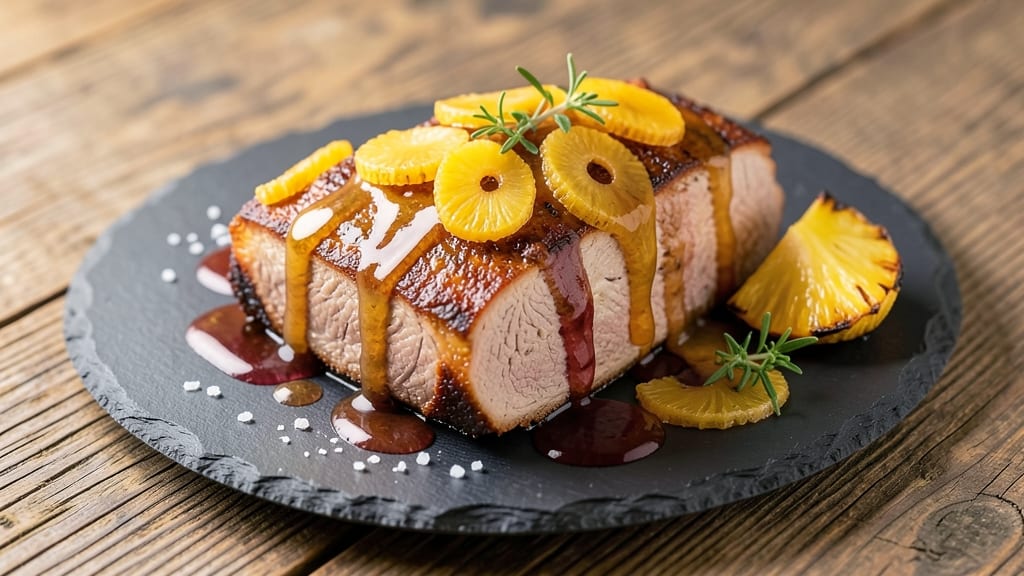
This pork loin roast with pineapple recipe delivers a perfect balance of tender, juicy meat and a sweet-tart glaze that elevates every bite. 🌟 After years of perfecting roast techniques, I've developed a method that ensures a golden crust and melt-in-your-mouth texture—without drying out.
The pineapple glaze isn't just for flavor; it's the secret weapon that keeps the pork moist while adding a caramelized finish.
What sets this recipe apart is the two-stage cooking process: searing the pork first creates a flavorful crust, while the pineapple glaze basted during roasting infuses sweetness that cuts through the richness. I've tested this with everything from bone-in loins to center-cut roasts, and the results are consistently restaurant-quality.
The glaze is simple to make—just pineapple juice, brown sugar, and a touch of mustard—but it transforms an ordinary roast into an extraordinary centerpiece.
By the time you pull this roast from the oven, you'll have a perfectly cooked pork loin with a caramelized glaze that's sticky, glossy, and packed with flavor. The meat stays tender and juicy, while the glaze adds a bright contrast that keeps each bite exciting.
This is the kind of dish that makes weeknight dinners feel special—no fuss, just incredible results.
Pair it with roasted potatoes, a crisp green salad, or steamed vegetables to round out the meal. The glaze works equally well as a sauce for slices, making leftovers just as delicious as the first serving. Let's get started on this crowd-pleaser!
Ingredients for pork loin roast with pineapple
Six ingredients transform ordinary pork into a restaurant-worthy centerpiece with that perfect sweet-tart glaze.
| Ingredient | Amount | Notes |
|---|---|---|
| Bone-In Pork Loin Roast 🐖 | 3 lb | Center-cut, 1.5-inch thickness |
| Fresh Pineapple Juice 🍍 | 1 cup | From fresh pineapple preferred |
| Light Brown Sugar 🍚 | ½ cup | Packed, not packed |
| Dijon Mustard 🥄 | 1 tbsp | High-quality for tang |
| Olive Oil 🫒 | 2 tbsp | Extra-virgin for searing |
| Kosher Salt 🧂 | 1 ½ tsp | Diamond Crystal preferred |
| Freshly Ground Black Pepper 🌶️ | 1 tsp | Cracked peppercorns preferred |
| Garlic Cloves 🧄 | 4 cloves | Minced, for crust |
| Fresh Rosemary 🌿 | ¼ cup | Chopped, stems removed |
| Fresh Thyme Leaves 🌿 | ¼ cup | Stripped from stems |
| Red Wine Vinegar 🍷 | 1 tbsp | For glaze brightness |
| Fresh Pineapple Chunks 🍍 | ½ cup | For garnish, optional |
| Unsalted Butter 🧈 | 2 tbsp | Cold, for basting |
The pork loin is your canvas here—bone-in, center-cut gives you the best balance of flavor and moisture. Costco or Whole Foods usually carry the perfect cut, but check for even thickness (1.5 inches). If you can't find bone-in, a center-cut boneless roast works too, just add a few extra minutes to the cook time. Fresh pineapple juice is non-negotiable for that bright, tropical flavor—Trader Joe's sells it pre-made, but nothing beats squeezing it yourself. The brown sugar should be light, not dark, for a more delicate caramelization. And that Dijon mustard? Maille if you're splurging, but any good quality brand will do.
No fresh pineapple juice? Canned pineapple juice from a glass jar (no BPA) works in a pinch, but skip the syrup. Running short on rosemary? Fresh thyme alone at double the amount gives a similar earthy note. The garlic can be pre-minced from a jar if you're in a rush, but freshly minced adds that extra depth. For the glaze, if you don't have red wine vinegar, apple cider vinegar at half the amount keeps the tang. And that cold butter for basting? Don't skip it—it's what creates that glossy, caramelized finish we're all craving. The glaze should be sticky but not syrupy—adjust with a splash more juice if needed.
This roast reheats beautifully—350°F for 15 minutes covered with foil, then broil 2 minutes for crispiness. The glaze keeps for 5 days in the fridge, so make extra for sandwiches. Store the roast wrapped tightly in butcher paper for 3 days in the fridge or 3 months frozen. I always make a double batch of glaze—one for the roast, one to drizzle over slices. The leftovers? Slice thin, reheat quickly, and serve with a fresh pineapple garnish for that restaurant touch.
Why You'll Love This Recipe
- One-Pan Magic: I swear by this recipe when I’m too tired to clean up. Just sear the pork, toss in the pineapple juice and sugar, then let the oven do the work—no extra dishes, no stress.
- Sweet-Savory Balance: That caramelized brown sugar glaze with Dijon mustard? It’s ridiculously good. The pineapple juice keeps it juicy while adding a bright, tangy kick that cuts through the richness.
- Weeknight Workhorse: I make this for dinner parties, lazy Sundays, and even meal prep. The leftovers reheat perfectly for sandwiches or fried rice—same flavors, zero effort.
- Budget-Friendly Feast: A bone-in pork loin stretches farther than you’d think, and pineapple juice is cheaper than fresh fruit. Plus, the sugar and mustard are pantry staples, so you’re not breaking the bank for a showstopper meal.
Step-by-step instructions for pork loin roast with pineapple glaze
Here's how to balance rich pork with bright pineapple for a showstopping centerpiece.
👨🍳 Step 1: Prep the Pork and Make the Glaze Base
Pat the 3 lb Bone-In Pork Loin Roast completely dry with paper towels—this is non-negotiable for crispy skin. In a small bowl, whisk together the 1 cup Fresh Pineapple Juice, 0.5 cup Light Brown Sugar, 1 tbsp Dijon Mustard, and 1 tbsp Red Wine Vinegar until the sugar dissolves completely. The glaze should be smooth with no graininess.
In a separate bowl, combine the 0.25 cup Fresh Rosemary and 0.25 cup Fresh Thyme Leaves with 1.5 tsp Kosher Salt and 1 tsp Freshly Ground Black Pepper. Rub this herb-salt blend all over the pork, pressing firmly so it adheres. Let the seasoned pork sit at room temperature for 30 minutes while you prep the rest.
🔥 Step 2: Sear the Pork for Maximum Flavor
Preheat your oven to 400°F. Heat 2 tbsp Olive Oil in a large oven-safe skillet over medium-high heat until shimmering. Place the pork loin fat-side down and sear for 4-5 minutes until the fat renders and the skin turns deep golden brown. Flip and sear the other side for another 3-4 minutes. Here's the thing—don't move it around during searing or you'll lose that beautiful crust.
While the pork sears, spread the glaze mixture evenly over the top of the pork, letting it pool slightly in the center. This creates a sticky surface that helps the glaze caramelize beautifully during roasting. Transfer the skillet to the preheated oven.
🔥 Step 3: Roast Until Caramelized and Tender
Roast the pork for 20-25 minutes until the internal temperature reaches 145°F (use a meat thermometer in the thickest part). You'll know it's ready when the glaze bubbles and darkens to a deep amber color with caramelized edges. If the glaze starts to burn before the pork is done, tent loosely with foil.
Remove the pork from the oven and let it rest for 10 minutes on a cutting board. This resting period is crucial—it allows the juices to redistribute so every slice stays juicy. While it rests, melt the 2 tbsp Unsalted Butter in the same skillet over low heat, then add the 4 cloves Garlic Cloves and cook for 30 seconds until fragrant.
🍽️ Step 4: Garnish and Serve with Pan Sauce
Slice the pork loin into ½-inch thick medallions against the grain. Arrange the slices on a warm platter and drizzle with the garlic butter from the pan. For that final wow factor, scatter the 0.5 cup Fresh Pineapple Chunks around the platter—their bright acidity cuts beautifully through the rich pork and caramelized glaze.
Serve immediately with roasted vegetables or a fresh herb salad. The contrast of the sweet-tart glaze with the tender, juicy pork makes this dish unforgettable. Pro tip: Save any leftover glaze for brushing on grilled chicken or pork chops later—it's that good.
Pro Tips For Making Pork Loin Roast With Pineapple
- Sear the Bone-In: Start with a screaming-hot pan and let that bone sizzle for 3-4 minutes on each side before roasting. I learned this the hard way—skipping the sear means the crust stays pale and the pineapple glaze won’t cling. (Yes, even if you’re impatient like me.)
- Reduce Pineapple Juice: Simmer the fresh pineapple juice down to about ½ cup before glazing—this concentrates the flavor and prevents a watery, sad sauce. I used to just pour it straight from the blender, and the dish always tasted underwhelming.
- Skip the Crowding: Don’t stack roasted potatoes or veggies on top of the pork—steam turns them soggy. Roast them separately on the same tray or a lower rack, and finish them together in the last 15 minutes. Your future self will thank you.
- Mustard First, Sugar Last: Brush the Dijon mustard on the pork before searing, then add the brown sugar-pineapple glaze after roasting. This keeps the crust crispy instead of sticky, and the mustard’s tang cuts through the sweetness perfectly. I was skeptical until I tried it.
Essential equipment for this dish
Oven-Safe Skillet
An oven-safe skillet is your best friend for this recipe—I swear by my All-Clad Stainless Steel 12-inch skillet because it handles high heat without warping. The deep sides help contain the glaze while roasting, and the stainless steel conducts heat evenly for that perfect crust.
If you don’t have one, a cast iron skillet (like my Lodge 10.25-inch) works just as well, though it requires more attention to prevent burning. 🔥
Meat Thermometer
Never guess the doneness of pork—accuracy is everything. I use a ThermoWorks Smoke thermometer with a leave-in probe because it’s precise to ±1°F and stays put during searing. For budget-friendly options, the Meater+ or Taylor Precision models are excellent.
Insert the probe into the thickest part of the loin, avoiding bone and fat. When it hits 145°F, that’s your cue to pull it from the oven. 🌡️
High-Quality Olive Oil
The right oil makes all the difference in searing. Extra-virgin olive oil with a smoke point of 375°F+ is ideal—I reach for California Olive Ranch or Bertolli for their consistent quality. Avoid "light" olive oil or seed oils—they burn too quickly and won’t give you that rich, golden crust.
Use 2 tablespoons per side, and let it get shimmering hot before adding the pork. A small offset spatula helps flip it safely without losing the crust.
Butter Basher
For the garlic butter finishing touch, I use a wooden butter basher (or the back of a spoon) to mash the softened butter with minced garlic. This creates a smooth, fragrant sauce that ties everything together.
If you don’t have one, a small silicone spatula works, but avoid metal—it can overheat and burn the butter. Keep the heat low while combining to prevent splattering. 🧈
Pineapple Juicer
Fresh pineapple juice is non-negotiable for that bright, tropical flavor. A handheld pineapple juicer (like the OXO Good Grips) makes this task effortless—it extracts juice without pulp in seconds. If you’re short on time, Trader Joe’s or Whole Foods sell pre-made pineapple juice in glass bottles.
For a smoother glaze, strain the juice through a fine-mesh sieve to remove any remaining pulp. The glaze should coat the back of a spoon but remain pourable. 🍍
Resting Rack
Let your pork rest on a wire cooling rack (like the OXO Good Grips) to prevent soggy skin. Place the rack over a baking sheet to catch any drippings. I also like to loosely tent the pork with aluminum foil during resting to keep it warm without trapping steam.
This step is critical—rushing to slice will turn your juicy roast into dry slices. Pro tip: Use the resting time to prep your sides or garnishes. ⏳
Nutrition facts
Frequently asked questions
Can I use boneless pork loin instead of bone-in?
Yes, but expect slightly different results. Boneless pork loin will cook 10-15 minutes faster since it has less mass to penetrate. Use the same glaze recipe, but reduce oven temperature to 375°F and check for doneness at 140°F internal temp. The texture will be more uniform, but you'll lose that beautiful crackling skin from the bone. For extra flavor, wrap the boneless loin in bacon before searing!
How do I adjust this for a larger crowd?
For 8-10 servings, increase to a 5 lb pork loin and double the glaze ingredients. Use two oven-safe skillets or a large roasting pan instead of one. The key is to maintain the 1.5-inch thickness—if your roast is thicker, reduce oven temp by 25°F to prevent overcooking the exterior. Double the garlic butter for finishing too!
Can I make the glaze ahead of time?
The glaze keeps well for 5 days refrigerated or 3 months frozen. Store it in an airtight container. When ready to use, let it come to room temperature and whisk to recombine any separated ingredients. For extra richness, add 1 tbsp butter when reheating. The glaze works beautifully on grilled pork chops or even chicken thighs too!
Why did my pork turn out dry?
Most likely you skipped the 10-minute rest or overcooked it. Pork should reach 145°F internally—any higher and it dries out. Use a meat thermometer! Also, patting the pork dry before searing is crucial for crispy skin. For extra moisture, brush with 1 tbsp olive oil after searing before adding the glaze. The glaze itself helps keep the meat juicy during roasting.
What's the best way to reheat leftovers?
Slice the pork into ½-inch medallions and reheat in a skillet with 1 tbsp butter over medium-low heat for 3-4 minutes per side. For oven reheating, cover with foil and warm at 325°F for 10-12 minutes. The glaze reheats beautifully—just add a splash of water if it thickens too much. Leftovers taste best within 3 days refrigerated.