
Main Courses
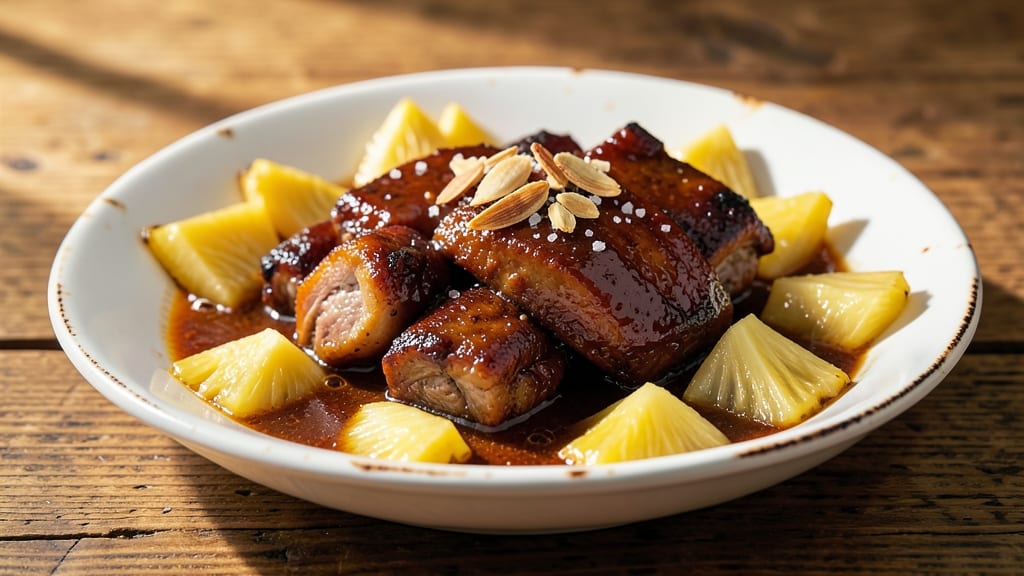
This pork adobo with pineapple recipe brings the bold flavors of Panlasang Pinoy to your kitchen, where tangy soy-vinegar sauce meets caramelized pineapple sweetness. 🌟 The secret lies in balancing the classic adobo base—soy sauce, vinegar, and a touch of baking soda—with fresh pineapple chunks that develop a beautiful crunch when simmered just right.
I first tasted this dish at a Filipino friend's home and knew it would become a staple in my cooking repertoire.
The magic happens in the slow simmer, where the pork becomes fork-tender while absorbing the rich, savory-sweet sauce. Fresh pineapple adds a bright contrast, and caramelizing it in the pan before adding it to the pot ensures that perfect balance of texture and flavor.
This dish is perfect for weeknight dinners or special gatherings, as it's hearty enough to satisfy a crowd but simple enough to prepare in one pot.
By the time you're done, you'll have a dish that's deeply flavorful, with tender pork, caramelized pineapple, and a sauce that's both tangy and sweet. The aroma alone will have everyone gathering around the table, and the taste—well, it's a true taste of home.
Serve it with steamed rice and a side of atchara for that authentic Panlasang Pinoy experience.
This recipe is foolproof, with clear steps to ensure you achieve that perfect balance of flavors every time. Whether you're a seasoned cook or just starting out, this dish will become a favorite in your rotation. Let's get cooking!
Ingredients for pork adobo with pineapple recipe panlasang pinoy
Sweet-tangy adobo magic with caramelized pineapple—just 12 ingredients for bold Filipino flavors.
| Ingredient | Amount | Notes |
|---|---|---|
| Pork Shoulder 🥩 | 2 lb | Cut into 1.5-inch chunks, bone-in preferred |
| Fresh Pineapple 🍍 | 2 cups | Cubed, caramelized in pan first |
| Soy Sauce 🍶 | ½ cup | High-quality, like Kikkoman or Silver Swan |
| White Vinegar 💧 | ½ cup | White or cane vinegar |
| Brown Sugar 🍚 | ¼ cup | Packed, light or dark |
| Baking Soda 🧪 | ½ tsp | For tenderizing the pork |
| Garlic Cloves 🧄 | 6 cloves | Minced, fresh preferred |
| Onion 🧅 | 1 whole | Medium, sliced |
| Bay Leaves 🌿 | 2 whole | For aromatic depth |
| Black Peppercorns 🌶️ | ½ tsp | Crushed, for heat |
| Olive Oil 🫒 | 2 tbsp | For caramelizing pineapple |
| Salt 🧂 | 1 ½ tsp | Adjust to taste |
The pork shoulder is non-negotiable here—it stays tender while absorbing the sauce. Grab the bone-in cut from Filipino markets or your butcher's counter, where they often have it pre-cut. If you're using a whole shoulder, ask for it cut into 1.5-inch chunks. For the pineapple, fresh is a must—canned won't caramelize the same way. Look for ripe pineapple with golden-yellow skin at Trader Joe's or Costco for the best deals. The soy sauce should be high-quality—Kikkoman or Silver Swan are my go-tos, but any good brand works. And that baking soda? Tiny amount, but it's what makes the pork fork-tender.
No soy sauce? Coconut aminos in a pinch, though it'll be lighter. Short on vinegar? Lemon juice at double the amount works, but the tang won't be quite the same. The garlic and onion can be swapped for garlic powder and onion powder at half the amount, but fresh is worth it. Pineapple too sweet? Add 1 tbsp more vinegar to balance. The brown sugar can be swapped for white sugar or coconut sugar—just use the same amount. And if you're feeling lazy, skip the caramelizing step, but trust me on this, it's worth the extra 5 minutes for that perfect crunch.
This sauce gets better the next day—make extra and store it in the fridge for up to 5 days. The pork and pineapple keep well too, so portion it out into containers for easy lunches. Freezes beautifully for 3 months if you want to prep ahead. For serving, I always pair it with steamed jasmine rice and a side of atchara (pickled papaya) for that authentic Panlasang Pinoy experience. The sauce thickens as it cools, so add a splash of water if it's too thick when reheating.
Why You'll Love This Recipe
- One-Pan Magic: I swear by this recipe—just dump the pork shoulder, pineapple chunks, and sauce into one pot, and let it simmer. No chopping, no fuss, just hands-off flavor while you handle the rest of dinner.
- Sweet-Savory Balance: That tangy vinegar and soy sauce combo with caramelized brown sugar? It’s the perfect hug for tender pork, and the fresh pineapple cuts through the richness like a bright, juicy sigh.
- Lunchbox Hero: Between us, this reheats like a dream. Pack it in containers for work or school lunches—still delicious hours later, and the pineapple keeps it from tasting like yesterday’s leftovers.
- Budget Stretch: Pork shoulder is cheap, and a single pineapple feeds the whole family. Honestly, I’ve made this for $12 and still had enough for seconds, which, let’s be real, is basically a win every time.
Step-by-step instructions for pork adobo with pineapple
This Filipino classic gets a sweet-tangy twist with caramelized pineapple—crisp edges and tender pork in one pan!
🔥 Step 1: Caramelize the Pineapple for Sweet Crunch
Heat the 2 tablespoons olive oil in a large Dutch oven over medium-high heat. Add the 2 cups fresh pineapple (cut into even cubes) and cook for 8-10 minutes, stirring occasionally, until the edges turn deep golden brown and the pineapple releases its juices. This caramelization creates that perfect sweet crunch we love in Pinoy dishes.
Here's the thing—don't rush this step. You'll know it's ready when the pineapple smells intensely sweet and the cubes start sticking slightly to the pan. Remove the pineapple and set it aside, leaving all that beautiful caramelized fond in the pot. This is flavor gold that'll infuse our adobo sauce later.
🍳 Step 2: Sear the Pork Shoulder for Deep Flavor
In the same Dutch oven (no need to wipe it clean—those pineapple bits are flavor bombs), add the 2 lb pork shoulder cut into 1.5-inch chunks. Sprinkle with 1.5 teaspoons salt and 0.5 teaspoon black peppercorns (crushed between your palms for maximum aroma). Sear the pork in batches over medium-high heat for 3-4 minutes per side until deep golden brown all over.
Real talk: If your pork is crowded, don't panic—just work in batches. The goal is that crispy maillard reaction on every piece. Once all pork is browned, remove it and set aside with the pineapple. You're building layers of flavor here, and each component matters.
👨🍳 Step 3: Build the Tangy-Sweet Adobo Base
In the same pot, add 1 whole onion (sliced) and 6 cloves garlic (minced). Cook for 2-3 minutes until the onions soften and garlic becomes fragrant (not browned). Pour in 0.5 cup soy sauce, 0.5 cup white vinegar, and 0.25 cup brown sugar. Sprinkle in 0.5 teaspoon baking soda—this might bubble up like a volcano, but it's magic for tenderizing the pork.
Stir everything together and bring to a gentle simmer. Add the 2 whole bay leaves and let it bubble away for 5 minutes to meld all those flavors. You'll notice the sauce reducing slightly—this is when the magic happens. The vinegar will mellow out, the soy sauce will deepen, and that caramelized pineapple fond will become part of the sauce.
⏰ Step 4: Simmer Until Fork-Tender Perfection
Return the pork to the pot along with the pineapple. Bring everything to a gentle boil, then reduce heat to low and cover partially. Let it simmer for 1 hour 15 minutes, stirring occasionally. Here's where patience pays off—you want the pork to become fork-tender (it should pull apart easily) while absorbing all that sweet-tangy sauce.
After about 45 minutes, check the sauce consistency. If it's too thin, uncover and simmer for another 10 minutes to reduce it. The sauce should coat the back of a spoon but still be saucy enough to cling to the pork. Taste and adjust seasoning—you might want to add a splash more soy sauce or a pinch of salt if needed.
🍽️ Step 5: Finish with Pineapple and Serve
Return the pineapple to the pot and simmer uncovered for another 5-7 minutes until the sauce thickens slightly and the pineapple becomes plump and glossy. The pineapple should be heated through but still hold its shape—we want that sweet crunch in every bite.
Ladle the pork and pineapple into a serving dish, spooning plenty of that gorgeous sauce over the top. Garnish with extra pineapple cubes if you're feeling fancy. Serve immediately with steamed rice—each bite delivers perfectly tender pork, sweet-tangy sauce, and that irresistible pineapple crunch that makes this dish truly special.
Pro Tips For Making Pork Adobo With Pineapple Recipe Panlasang Pinoy
- Brown the Pork First: Slather that pork shoulder in a little oil—just enough to coat—and sear it hard over medium-high heat until it turns golden brown in spots. I used to skip this, thinking the adobo sauce would handle it, but those caramelized edges make all the difference when the tangy-sweet sauce clings to them later.
- Dice Pineapple Small: Cut the pineapple into ½-inch cubes, not those big chunks you might grab in a hurry. Smaller pieces soften faster and soak up the adobo sauce better, so you don’t end up with undercooked fruit that tastes like it’s still fighting the vinegar.
- Simmer Slow and Low: After the initial boil, drop the heat to the lowest setting you can tolerate—this isn’t a race. Pork shoulder needs time to break down, and a fast simmer turns the sauce into a thin, watery mess instead of a rich, glossy glaze. I learned this the hard way when I rushed it and ended up with dry meat.
- Balance the Vinegar: Start with half the vinegar called for, taste, then add the rest gradually. Too much upfront and the pineapple turns mushy while the pork stays tough. My grandmother swore by this, and she was right: patience here keeps the flavors sharp without overpowering the dish.
Creative variations of this pork adobo with pineapple recipe panlasang pinoy
Filipino-American Fusion
This recipe blends classic Filipino adobo with a Pacific Northwest twist by using local honey instead of brown sugar—about 3 tablespoons to replace the ¼ cup. The honey adds floral notes that complement the pineapple beautifully, especially when paired with Portland-grown garlic.
I first tried this at a Filipino food truck here and it became an instant favorite. 🍯
Spicy Pineapple Twist
Add 1 tablespoon of chili flakes or 1 sliced Thai chili> to the caramelized pineapple for a sweet-spicy kick. For extra heat, stir in 1 teaspoon of sambal oelek> with the soy sauce.
This version reminds me of the bold flavors I love from Cincinnati's spicy chicken wings—just with tropical flair. 🌶️
Coconut Milk Creaminess
For a richer sauce, stir in ½ cup coconut milk> during the final 5 minutes> of simmering. This works especially well if you're serving it over rice—it creates a creamy, velvety texture that contrasts perfectly with the caramelized pineapple.
I keep a can of Thai Kitchen coconut milk on hand for this exact purpose. 🥥
Vegetable-Packed Version
Add 1 cup bell peppers> (any color) and 1 cup green beans> with the pork during the final 30 minutes> of cooking. These veggies absorb the adobo flavors beautifully while adding texture.
I like using heirloom tomatoes from my garden for extra freshness—just toss them in during the last 10 minutes> so they don't turn to mush. 🥦
Slow Cooker Adaptation
For a hands-off version, brown the pork and caramelize the pineapple as directed, then transfer everything to a 6-quart slow cooker. Add all remaining ingredients and cook on LOW for 6-7 hours or HIGH for 4 hours.
The slow cooker method actually makes the pork even more tender, and the flavors meld perfectly. Perfect for busy weeknights! ⏰
Pineapple-Glazed Topping
For a restaurant-style finish, blend ½ cup of the cooked sauce> with 1 tablespoon of honey> and brush it over the pork and pineapple before serving.
This creates a beautiful glossy sheen and intensifies all the flavors. I like to do this right before plating so the sauce stays vibrant. 🌟
Nutrition facts
Frequently asked questions
Why does the recipe call for baking soda in pork adobo?
The ½ teaspoon baking soda is a traditional Filipino trick to tenderize the pork quickly. It breaks down the proteins, making the meat fork-tender in just 1 hour 15 minutes of simmering. Just be sure to add it with the vinegar—it'll bubble up like a volcano, but that's normal! The flavor impact is minimal because the acidity of the vinegar neutralizes it.
Can I use canned pineapple instead of fresh?
Fresh pineapple is ideal because it caramelizes beautifully and holds its shape, but you can use 1 (20 oz) can of pineapple chunks in a pinch. Drain it well and pat dry before adding to the pot. For extra sweetness, reduce the brown sugar to 2 tablespoons since canned pineapple is often sweeter. The texture won't be quite as crisp, but it'll still taste delicious!
What's the best way to store leftovers?
Store the pork adobo in an airtight container in the fridge for up to 5 days. The flavors actually improve overnight as the sauce continues to meld! For longer storage, freeze portions for up to 3 months. When reheating, warm over low heat on the stove or microwave until bubbly, then add a splash of water if the sauce seems too thick.
How do I adjust the sweetness if my pineapple is very tart?
If your pineapple tastes too tart, reduce the vinegar to ¼ cup and add 1 extra tablespoon of brown sugar. For a more balanced sweetness, you can also stir in 1 teaspoon of honey during the final 5 minutes of cooking. Taste as you go—the sauce should have a harmonious balance of sweet, tangy, and savory notes.
Can I make this in an Instant Pot?
Follow the same steps for caramelizing the pineapple and searing the pork. Then, add all remaining ingredients to your Instant Pot, seal the lid, and cook on HIGH pressure for 35 minutes. Let the pressure release naturally for 10 minutes, then quick-release. The pork will be tender, and the sauce will have that perfect adobo consistency. Just check for doneness after 35 minutes—some cuts may finish faster!