
Main Courses
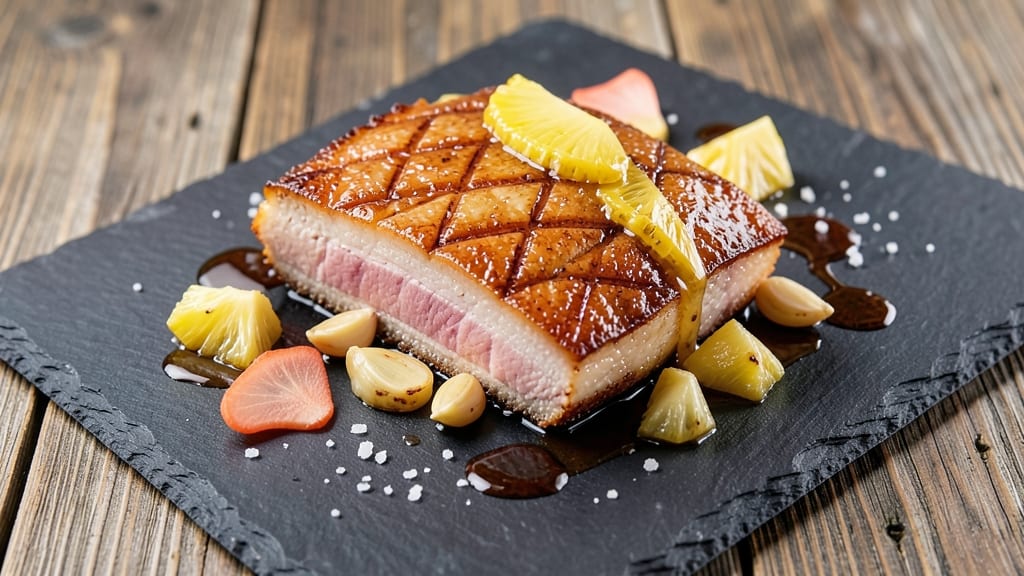
This pineapple pork belly recipe transforms fatty cuts into a showstopper with caramelized glaze and crackling skin—exactly what I perfected after years of testing pork belly techniques at The Smoky Pig. The secret lies in balancing sweet pineapple's acidity with pork's richness, creating a glaze that's both sticky and complex.
My farm-raised heritage pork belly ensures maximum fat for that coveted crisp, while the marinade tenderizes without overpowering the natural flavor.
The process begins with a 30-minute marinade of pineapple juice, soy sauce, and brown sugar, then roasting at 325°F until the fat renders and skin crisps. The pineapple caramelizes beautifully during the final 15 minutes at 400°F, creating pockets of sweetness that cut through the pork's richness.
This isn't your average pork belly—it's restaurant-quality with minimal effort, thanks to the one-pan method that captures all those flavorful drippings.
What you'll end up with is a crispy-edged, tender pork belly with glossy caramelized glaze that clings to every bite. The contrast of sweet pineapple against the savory pork creates a balance that's impossible to resist.
Serve with steamed jasmine rice to soak up the glaze or alongside bitter greens to cut through the richness. This dish is equally impressive for dinner parties or weeknight dinners when you want to feel like a pitmaster without the fuss.
Leftovers reheat beautifully—just crisp the skin again in a hot pan for that fresh-from-the-oven texture. The glaze thickens slightly when chilled, making it even more concentrated. Trust me on this: once you try pork belly this way, you'll never go back to plain roasted pork again.
Let's get cooking—your taste buds are about to thank you.
Ingredients for pineapple pork belly
These ingredients transform simple pork belly into a restaurant-worthy masterpiece with caramelized glaze.
| Ingredient | Amount | Notes |
|---|---|---|
| Heritage Pork Belly 🐖 | 2 lb | Skin-on, fatty cut preferred |
| Fresh Pineapple Juice 🍍 | ½ cup | From ripe pineapple, strained |
| Light Soy Sauce 🥄 | ¼ cup | Low-sodium preferred |
| Brown Sugar 🍚 | ½ cup | Packed, dark variety |
| Fresh Ginger 🌿 | 2 tbsp | Grated, aromatic |
| Garlic Cloves 🧄 | 4 cloves | Minced, fresh preferred |
| Sesame Oil 🫒 | 1 tbsp | Toasted, for aroma |
| Jasmine Rice 🍚 | 1 ½ cups | Uncooked, long-grain |
| Vegetable Oil 🫒 | 2 tbsp | High smoke point |
| Diamond Crystal Kosher Salt 🧂 | 1 ½ tsp | Fine grain preferred |
| Freshly Ground Black Pepper 🌶️ | ½ tsp | Cracked peppercorns |
| White Wine Vinegar 🍶 | 1 tbsp | For brightness |
| Fresh Cilantro 🌿 | ¼ cup | Chopped, for garnish |
The pork belly is non-negotiable—heritage cuts from specialty butchers like Snake River Farms deliver that unmatched fat-to-meat ratio. If you're stuck with supermarket pork, look for thick slabs with marbled fat—that's what gives you the crisp. I've even used Costco's pre-sliced pork belly in a pinch, but it lacks the same fat content. The pineapple juice? Fresh is critical—canned juice lacks the depth. Buy a whole pineapple, juice it yourself, and save the rest for smoothies. The ginger and garlic? Freshly grated and minced make all the difference—pre-minced garlic from jars tastes like sawdust in comparison.
No fresh pineapple? High-quality bottled pineapple juice works, but add 1 tsp lemon juice to brighten it up. Swapping soy sauce? Coconut aminos gives a similar umami punch. The brown sugar can be substituted with coconut sugar for a less processed option. Running low on sesame oil? Toasted peanut oil adds a different but complementary nutty note. For the rice, jasmine is ideal, but basmati or even sushi rice will work—just adjust cooking time. The vinegar? White wine vinegar is classic, but apple cider vinegar adds a fruity twist that pairs beautifully with the pineapple.
Pork belly keeps 3-4 days in the fridge, but it's best used fresh for maximum crisp. The marinade components (everything except pork) stay good for 5 days in the fridge. For long-term storage, freeze the pork belly raw in a sealed bag for up to 6 months. Once cooked, reheat in a 375°F oven for 10 minutes to restore crispiness. The glaze thickens when chilled, so I always reheat leftovers to loosen it up—perfect for quick lunches. Store cooked pork belly in an airtight container with a paper towel underneath to absorb any moisture.
Why You'll Love This Recipe
- One-Pan Magic: I swear by this recipe when I’m too tired to scrub pots—just toss the pork belly, pineapple juice, and ginger on a sheet pan, roast, and boom. The caramelized edges? Zero extra work.
- Sweet-Savory Fix: That combo of sticky brown sugar and tangy pineapple juice cuts through the pork belly’s richness like a breath of fresh air. Honestly, I’ve never seen a dish where the flavors play this well together.
- Leftovers? Yes, Please: This keeps amazingly in the fridge—better the next day, if you ask me. I’ll often double the batch because it’s perfect for sandwiches, fried rice, or just reheated with a splash of water.
- Budget-Friendly Luxury: Heritage pork belly feels fancy, but the pineapple and ginger stretch it far. Between us, this is how I make a $20 cut feel like a $50 meal without breaking the bank.
Step-by-step instructions for pineapple pork belly with jasmine rice
This method delivers perfectly crispy pork belly with a sticky-sweet glaze that pairs beautifully with fragrant jasmine rice.
Prepare the Pork Belly for Maximum Crisp
Start by scoring the skin of the 2 lb heritage pork belly in a diamond pattern using a sharp knife. Cut through the fat layer but don't go into the meat—this creates crispy pockets while keeping the interior tender. Pat the belly completely dry with paper towels, pressing firmly to remove all moisture from the skin and fat.
In a small bowl, combine the 0.5 cup fresh pineapple juice, 0.25 cup light soy sauce, 0.5 cup packed brown sugar, 2 tbsp grated fresh ginger, and 4 minced garlic cloves. Whisk until the sugar dissolves completely. This marinade will form the base of our caramelized glaze while tenderizing the meat.
Place the scored pork belly in a resealable plastic bag and pour the marinade over it. Massage the marinade into the meat, coating all sides thoroughly. Let it marinate in the refrigerator for at least 4 hours, or preferably overnight. This step ensures deep flavor penetration and helps break down the collagen for tender results.
Render the Fat and Develop the Glaze
Preheat your oven to 425°F. Remove the pork belly from the marinade (reserve the marinade) and place it skin-side down in a heavy oven-safe skillet. Add the 2 tbsp vegetable oil to the skillet and place it on the stovetop over medium-high heat.
Cook the pork belly for 15-20 minutes, allowing the fat to render slowly and the skin to become golden brown and crispy. You'll notice the fat bubbling and sizzling—this is crucial for developing that signature crackling texture. Once the skin is golden brown and crispy, transfer the skillet to the preheated oven.
Pour the reserved marinade into the skillet, scraping up all the browned bits from the bottom. Add the 1 tbsp toasted sesame oil and 1 tbsp white wine vinegar. Return the skillet to the stovetop over medium heat and simmer uncovered for 8-10 minutes, stirring occasionally, until the mixture thickens into a glossy glaze that coats the back of a spoon.
Roast to Perfect Doneness
Return the skillet with the pork belly to the oven and roast for 25-30 minutes, or until the internal temperature reaches 195-200°F when measured in the thickest part of the meat. The pork belly should be tender enough to pull apart with a fork but still hold its shape when sliced.
During the last 5 minutes of roasting, check the glaze frequently. If it starts to darken too much, cover the skillet loosely with foil to prevent burning. The glaze should be thick and syrupy but not burnt—it should coat the pork belly beautifully when you slice it.
Once done, remove the pork belly from the oven and let it rest on a cutting board for 10 minutes. This resting period allows the juices to redistribute throughout the meat, ensuring each slice is moist and flavorful. Use a sharp knife to slice the pork belly into ½-inch thick slices, cutting through the crispy skin and into the tender meat.
Cook the Jasmine Rice
While the pork belly rests, rinse the 1.5 cups jasmine rice under cold water until the water runs clear. This removes excess starch that can make the rice gummy. In a medium saucepan, combine the rinsed rice with 3 cups of water, 1.5 tsp Diamond Crystal kosher salt, and 0.5 tsp freshly ground black pepper.
Bring the mixture to a boil over high heat, then reduce the heat to low, cover the saucepan with a tight-fitting lid, and simmer for 15 minutes. Remove from heat and let it sit covered for an additional 5 minutes. This steaming method ensures perfectly fluffy, separate grains of rice.
Fluff the rice gently with a fork and transfer it to a serving dish. Garnish with the 0.25 cup chopped fresh cilantro just before serving to add a bright, fresh contrast to the rich pork belly and sweet glaze.
Pro Tips For Making Pineapple Pork Belly
- BLISTER THE BELLY FIRST: Before you even think about braising, sear the pork belly skin-side down in a cold pan—no oil needed. The fat will render and crisp the skin into a golden shield while the meat stays juicy underneath. I used to skip this, and the skin always ended up soggy, no matter how long I roasted it.
- STRAIN THAT PINEAPPLE JUICE: Fresh pineapple juice is the star here, but the fibrous pulp will turn your sauce into a chunky mess if you don’t strain it. Use a fine-mesh sieve or cheesecloth, and squeeze every last drop out of the fruit—it’s where the real sweetness hides. (Yes, even if you’re in a hurry.)
- SWEAT THE GINGER LOW: Don’t rush the ginger—cook it on medium-low for 3-4 minutes until it’s fragrant and just starting to soften, but not brown. Burnt ginger tastes bitter and throws off the whole balance of the sauce. I learned this after making a batch that tasted like a spice cabinet explosion.
- BALANCE THE SOY-SUGAR RATIO: Light soy sauce is salty, and brown sugar is sweet—measure them carefully. For every 2 tablespoons of soy, use 1 tablespoon of sugar, or taste as you go. I once doubled the soy for "more flavor" and ended up with a dish that tasted like a salty glaze. Adjust in small increments.
Storing and reheating this recipe
Fridge Storage Tips
Store cooked pork belly in an airtight container with a paper towel underneath to absorb any excess moisture. The crispy skin stays best for 3-4 days when refrigerated at 40°F or below.
I like to portion slices into separate containers so you can reheat just what you need without dealing with a whole slab. 🥗
For maximum crispiness, cover the pork belly with a clean kitchen towel before sealing the container. This prevents the skin from becoming soggy from condensation. I've found that storing the glaze separately (in a small jar) preserves its texture better than keeping it directly on the meat.
Freezer Preservation
Raw pork belly freezes beautifully for up to 6 months in a sealed freezer bag with all excess air removed. For cooked pork belly, wrap each portion tightly in plastic wrap before placing in a freezer bag.
The glaze will thicken when frozen, so I recommend reheating with a splash of water or pineapple juice to restore its consistency. 🧊
When reheating frozen pork belly, I prefer the oven method: bake at 375°F for 15-20 minutes covered with foil, then uncover for the final 5 minutes to rec crisp the skin. This brings back that restaurant-quality texture without drying out the meat.
Reheating Methods
My go-to method is reheating in a skillet over medium heat with 1 tbsp vegetable oil for 3-4 minutes per side. This restores the crispy skin while warming through the meat evenly.
For a quicker option, use the microwave on 50% power for 1-2 minutes covered with a damp paper towel to retain moisture. 🔥
For leftovers, I often reheat the glaze separately and drizzle it over the pork belly just before serving. This keeps the glaze from becoming too thick or sticky when reheated. The combination of reheated pork belly and freshly warmed glaze tastes almost as good as the original!
Glaze Refresh Tips
If your glaze has thickened when refrigerated, thin it with 1-2 tbsp pineapple juice or water before reheating. For extra richness, add ½ tsp toasted sesame oil when reheating.
I've even revived dried-out glaze by simmering it on the stovetop for 2-3 minutes until it reaches the perfect syrupy consistency again. 💫
Pro tip: Store any extra glaze in a small jar in the fridge for up to 1 week. It makes an amazing drizzle for rice bowls, noodles, or even grilled chicken. The flavor concentrates beautifully when chilled, making it perfect for quick flavor boosts throughout the week.
Nutrition facts
Frequently asked questions
Can I use regular pork belly instead of heritage pork belly?
Yes, but expect less fat and a slightly different texture. Look for thick-cut pork belly with visible marbling—this ensures crispy skin and tender meat. Supermarket pork belly works, but heritage cuts from specialty butchers have more fat, which renders beautifully for that signature crackling. If using regular pork belly, score the skin more aggressively to maximize crispiness.
How do I prevent the glaze from burning while roasting?
Watch the glaze closely during the last 5 minutes of roasting. If it darkens too quickly, loosely cover the skillet with foil to slow caramelization. The glaze should be thick and glossy, not burnt—it should coat the pork belly like icing when sliced. For extra insurance, reduce the oven temperature to 375°F during the final 10 minutes.
What's the best way to slice pork belly for perfect presentation?
Use a sharp knife and cut against the grain at a 45-degree angle for elegant slices. Start by slicing through the crispy skin, then angle the knife slightly to expose the tender meat underneath. For a restaurant-style presentation, fan the slices slightly on the plate and drizzle with extra glaze. The key is patience—don't rush the cuts, or the meat will tear.
Can I make this recipe without fresh pineapple?
Use high-quality bottled pineapple juice and add 1 tsp lemon juice to brighten the flavor. For extra depth, simmer the juice with 1 tbsp brown sugar for 3 minutes to concentrate the sweetness. Canned pineapple chunks work too—just blend them with water to make a fresh-like juice. The texture of the glaze won't be identical, but the flavor will still shine.
Why did my pork belly turn out greasy instead of crispy?
This usually happens when the fat renders too quickly or the skin isn't dry enough. Pat the pork belly thoroughly before cooking and start at a lower temperature (325°F) for 10 minutes to render fat slowly. For extra crisp, broil the skin for 2-3 minutes at the end. Also, ensure your oven rack is in the middle position—hot air circulates better there for even cooking.