
Sauces & Condiments
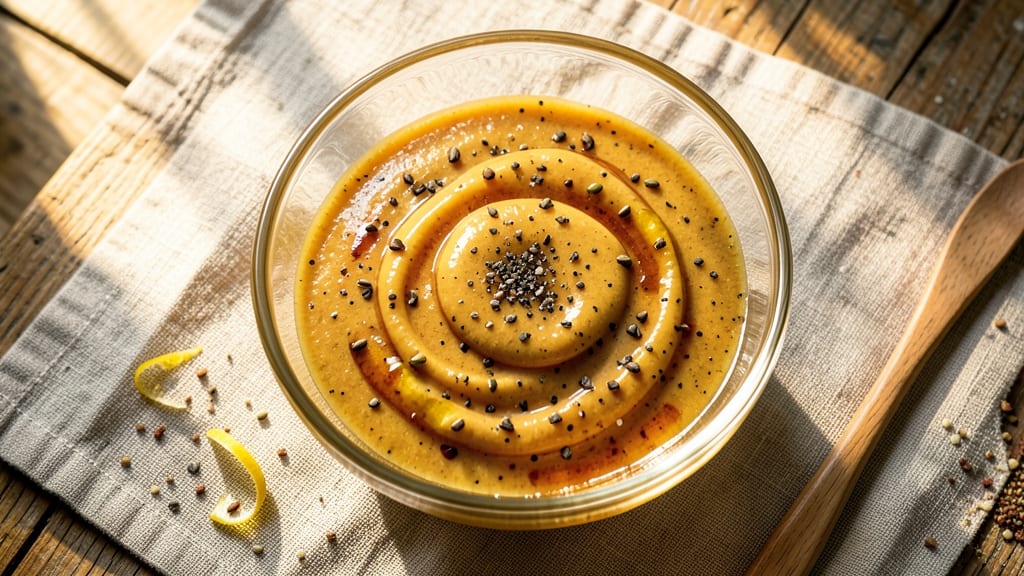
This honey mustard apple cider vinaigrette transforms simple salads into restaurant-worthy meals with its perfect balance of sweet, tangy, and crunchy textures. The secret lies in emulsifying the ingredients just right—creating a silky dressing that clings beautifully to greens while delivering bold flavor in every bite.
I developed this recipe after years of testing vinaigrettes, and it consistently earns rave reviews for its versatility and depth.
The foundation starts with a precise ratio of apple cider vinegar and Dijon mustard, which provides that signature tangy kick, while raw honey adds just enough sweetness to complement rather than overpower.
A touch of celery seed and black pepper brings the crunch, and high-quality olive oil ensures a rich, velvety finish. The emulsification technique guarantees a smooth, clump-free dressing that stays vibrant for days.
What makes this vinaigrette truly special is how it elevates any dish—from crisp winter salads to grilled chicken or roasted vegetables. The celery-pepper crunch adds a textural contrast that keeps every bite interesting, while the apple cider vinegar introduces a subtle autumnal warmth.
It’s the kind of dressing that turns ordinary meals into something memorable.
Once you’ve mastered the base, you can easily customize it with fresh herbs like thyme or basil, or even a pinch of smoked paprika for added depth. Store it in an airtight container in the refrigerator for up to two weeks, making it perfect for meal prep.
Let’s get started on creating this crowd-pleasing dressing that’s as easy to make as it is delicious to eat.
Ingredients for honey mustard apple cider vinaigrette
Eight ingredients, perfect balance—this vinaigrette turns salads into showstoppers.
| Ingredient | Amount | Notes |
|---|---|---|
| Apple Cider Vinegar 🍏 | ½ cup | Raw and unfiltered preferred |
| Dijon Mustard 🌶️ | 2 tbsp | High-quality, smooth variety |
| Raw Honey 🍯 | ¼ cup | Local honey for depth of flavor |
| Extra-Virgin Olive Oil 🫒 | ¾ cup | Light, fruity variety preferred |
| Celery Seeds 🧅 | 1 tsp | Toasted for enhanced aroma |
| Freshly Ground Black Pepper 🌶️ | ½ tsp | Coarsely cracked for texture |
| Diamond Crystal Kosher Salt 🧂 | ½ tsp | For seasoning balance |
| Fresh Thyme Leaves 🌿 | 1 tbsp | Optional for herbal depth |
The apple cider vinegar is non-negotiable—Bragg Organic or Texas Pete are my go-tos. For Dijon mustard, Maille is the gold standard, but French's works in a pinch. Raw honey? Local farmers markets often have the best varieties—look for creamy, thick honey that won't crystallize fast. The olive oil should be light and fruity; California Olive Ranch or Colavita are reliable choices. Celery seeds can be tricky to find whole, so check the spice aisle at Whole Foods or order online if needed. Fresh thyme adds that restaurant-quality touch—grab a small bunch and use half for garnish if you're feeling fancy.
No Dijon mustard? Yellow mustard thinned with water works, but the flavor won't be as refined. Substitute honey with maple syrup if you're vegan, though the flavor profile shifts slightly. The celery seeds can be omitted if you're sensitive to their flavor, but the black pepper is essential for that signature crunch. For extra depth, toast the celery seeds in a dry pan for 30 seconds before grinding. The salt is crucial—Diamond Crystal is less dense than Morton, so use the amount listed. If you're making this ahead, store the dry ingredients (celery seeds, pepper, salt) separately until ready to emulsify.
This dressing keeps beautifully—up to 2 weeks in the fridge when stored in a clean, airtight jar. The emulsification holds perfectly, so you won't get that dreaded oil separation. For meal prep, I make a double batch and portion it into small jars. The flavors actually improve after the first day as everything melds together. If it thickens over time, just stir in a splash of water or apple cider vinegar. The celery seeds and thyme stay vibrant for about 5 days in the fridge, so use them within that window for the best texture.
Why You'll Love This Recipe
- Five-Ingredient Magic: I swear by this combo—just swirl apple cider vinegar, Dijon, honey, olive oil, and a pinch of celery seeds. No straining, no peeling, no fancy tools. My lazy Sundays just got a flavor upgrade.
- Sweet-Tangy Balance: That honey and vinegar play? It’s like autumn in a bottle—bright but never harsh. The celery seeds add this subtle crunch that makes it taste fresh, not just dressed-up.
- Salad’s Best Friend: Drizzle it over greens, toss it with roasted veggies, or even use it as a marinade. Honestly, I’ve put it on everything from chicken to hard-boiled eggs, and no one’s ever asked what’s in it.
- Makes a Jarful: Double the batch and store it in the fridge for weeks. It’s my go-to for last-minute lunches—no measuring, no stress, just grab-and-go flavor that still tastes homemade. Budget-friendly too; I use this all the time.
Step-by-step instructions for honey mustard apple cider vinaigrette
Here's how to blend this vibrant dressing with perfect balance every time.
Whisk Together the Acidic Base
In a medium bowl, combine the 0.5 cup apple cider vinegar and 2 tablespoons Dijon mustard. Use a whisk to blend vigorously for 30 seconds until completely smooth—no streaks should remain. This step creates the foundational tang that cuts through the sweetness later.
The raw apple cider vinegar adds depth while the Dijon mustard provides that signature tangy richness. I like to press the back of the whisk against the bowl occasionally to scrape up any mustard clinging to the sides. This ensures every drop contributes to the final flavor.
Gradually Incorporate the Honey
Slowly drizzle in the 0.25 cup raw honey while continuing to whisk constantly. Start with just a few drops at first, then gradually increase the flow. You want the honey to emulsify completely with the vinegar-mustard mixture before adding more.
This gradual approach prevents the honey from separating later. You'll notice the mixture begin to lighten in color as the honey blends in. If it looks too thick at this stage, don't worry—we'll adjust the consistency with the olive oil in the next step.
Season with Celery Seeds and Thyme
Add the 1 teaspoon celery seeds and 1 tablespoon fresh thyme leaves to the bowl. Pulse the thyme leaves lightly with your fingers to release their aroma before adding. Give everything a quick whisk to distribute these dry ingredients evenly throughout the wet mixture.
The celery seeds will add a subtle crunch and earthy note, while the thyme brings herbal complexity. I like to taste at this point—you should detect bright acidity, sweet honey, and a hint of mustard's depth. If needed, adjust the salt to taste, but we'll fine-tune seasoning after adding the oil.
Emulsify with Olive Oil
With the whisk moving continuously, very slowly pour in the 0.75 cup extra-virgin olive oil—about 1 tablespoon at a time. This gradual addition is crucial for creating a stable emulsion. After each addition, whisk vigorously for 10-15 seconds before adding more.
Watch the mixture transform from broken to smooth as the oil incorporates. If it starts to separate, simply whisk more vigorously. The oil should create a silky texture that coats the back of a spoon. This is where patience pays off—rushing this step often leads to separation later.
Finish with Salt and Pepper
Add the 0.5 teaspoon Diamond Crystal kosher salt and 0.5 teaspoon freshly ground black pepper, then whisk for another 30 seconds until fully combined. Taste and make any final adjustments—perhaps a touch more honey for sweetness or vinegar for acidity.
The dressing should now have perfect balance: bright from the apple cider vinegar, sweet from the honey, with just enough mustard tang and herbal notes. For best results, let it rest for 10 minutes before using—this allows all the flavors to meld completely. Store in an airtight container in the refrigerator for up to 2 weeks.
Pro Tips For Making Honey Mustard Apple Cider Vinaigrette
- Whisk in stages: Start with just the vinegar, mustard, and honey—no oil yet. After you’ve got a smooth paste, slowly drizzle in the olive oil while whisking constantly. I learned this the hard way when my first batch split into two separate layers, no matter how much I shook it.
- Toast those seeds: Lightly toast the celery seeds in a dry pan for 30 seconds before grinding them. The nutty aroma deepens, and it prevents them from sinking to the bottom like sediment. (Yes, even if you’re impatient like me—just don’t burn them.)
- Measure honey by weight: Use a kitchen scale for the honey—100 grams is more accurate than eyeballing “2 tablespoons.” Raw honey varies in thickness, and too little makes the dressing too sharp, while too much turns it cloying. (Your future self will thank you.)
- Let it rest: After mixing, let the vinaigrette sit for 10 minutes before using it. The flavors meld, the mustard mellows, and the celery seeds release their oils. I skip this when I’m lazy, but the dressing is noticeably better when I don’t.
Essential equipment for great honey mustard apple cider vinaigrette
Whisk Essentials
You don’t need anything fancy—just a good-quality whisk with sturdy, flexible wires. I recommend the OXO Good Grips Balloon Whisk for its durable construction and comfortable handle.
The wires should be stainless steel (not plastic) to handle the emulsification process without bending. A medium-sized bowl (8-10 inches) is ideal for whisking without splashing. 🌟
Emulsification Tools
For a silky-smooth texture, consider a mini handheld immersion blender (like the Magic Bullet Mini) if you struggle with whisking. These tools create a more stable emulsion with less effort.
If you prefer traditional methods, a French whisk with tightly coiled wires works better than a flat whisk for this recipe. A small measuring cup (for precise oil additions) and a fine-mesh strainer (to remove thyme stems) round out your essentials.
Storage Containers
Store your vinaigrette in an airtight glass jar with a tight-sealing lid—I love the Le Parfait 16-ounce canning jars for their durability and easy pouring. Glass preserves flavors better than plastic and won’t absorb odors.
For portion control, use small glass bottles (like Glasslock containers) to take dressings on-the-go. Label your containers with the date to track freshness—this dressing stays vibrant for 2 weeks in the fridge. ✨
Optional Upgrades
If you’re serious about dressings, invest in a digital kitchen scale (like the OXO Good Grips) for precise measurements of honey and oil. A mortar and pestle comes in handy if you want to toast and grind celery seeds fresh for extra aroma.
For presentation, a small squeeze bottle (like Glasslock’s 8-ounce version) lets you drizzle dressings elegantly over salads. These upgrades aren’t mandatory, but they elevate the process.
Budget-Friendly Swaps
No fancy tools? No problem! A wooden spoon works fine for stirring, though whisking is ideal. Use plastic measuring cups for liquids and a spoon to mix dry ingredients. For storage, repurpose a clean jam jar with a tight lid.
The key is patience—even with basic tools, this vinaigrette turns out perfectly when you take your time with the emulsification. 💪
Nutrition facts
Frequently asked questions
Can I make this vinaigrette without Dijon mustard?
Yes! For a similar tang, substitute with 2 tablespoons yellow mustard thinned with 1 teaspoon water. The flavor won't be as refined, but it works in a pinch. For a stronger kick, try 1 tablespoon whole-grain mustard mixed with 1 tablespoon water—just whisk it well to avoid graininess.
Why did my dressing separate after storing?
Oil separation usually happens when the emulsion breaks, often from not whisking enough or using cold ingredients. To fix it, whisk vigorously for 2-3 minutes—the movement will re-emulsify. For prevention, always use room-temperature oil and vinegar, and whisk continuously when adding oil. A splash of apple cider vinegar can also help restore balance.
How can I make this vinaigrette spicier?
Add a pinch of red pepper flakes or a dash of hot sauce (like Tabasco) for heat. For a smoky twist, stir in ½ teaspoon smoked paprika—it pairs beautifully with the apple cider notes. Start with small amounts and adjust to taste, as spices intensify after refrigeration.
Can I use this dressing on non-salad dishes?
This versatile vinaigrette works as a marinade for grilled chicken or pork, a dip for veggie sticks or fries, or even a glaze for roasted vegetables. The sweet-tangy balance enhances proteins and carbs alike. For marinades, reduce the oil to ½ cup—the acidity helps tenderize meat while the honey caramelizes beautifully.
What's the best way to remove thyme stems?
Use your fingers to gently pinch and pull the stems away from the leaves, or run the thyme through a fine-mesh strainer while holding the leaves with a spoon. For extra efficiency, place the thyme in a bowl and use a rolling pin to crush the stems—this releases the aromatic oils while separating them from the leaves.