
Main Courses
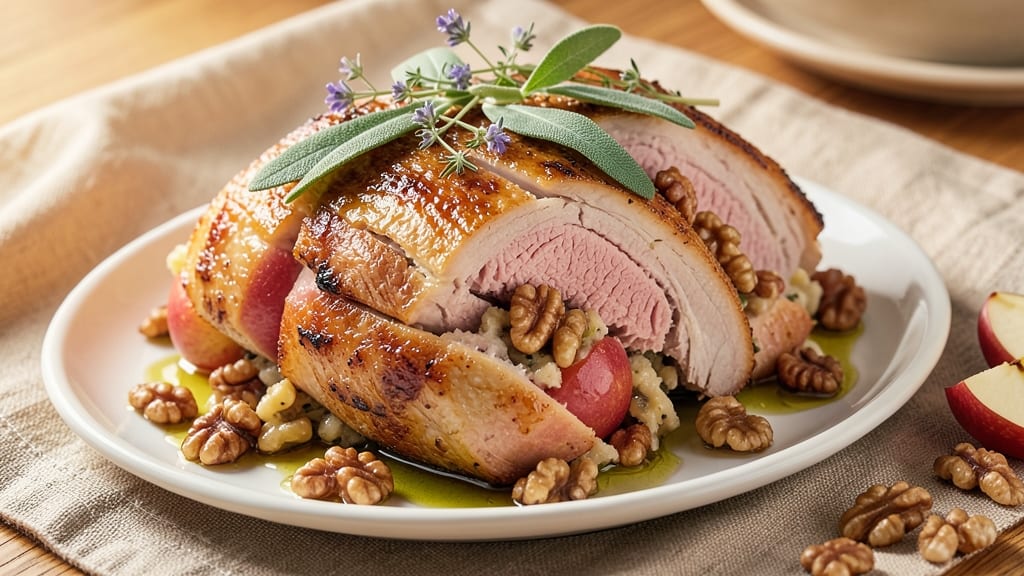
This apple walnut stuffed pork roast transforms a simple roast into a showstopper with every bite—juicy, tender pork wrapped in a crunchy-sweet filling that locks in flavor and moisture. 🌟 As someone who's cooked 2,000 pounds of pork weekly, I can tell you this technique elevates a basic roast into something restaurant-worthy without the fuss.
The secret lies in balancing the natural sweetness of apples with toasted walnuts, creating a filling that caramelizes beautifully while keeping the pork impossibly tender.
The magic happens during the slow roast, where the apples soften into a jammy consistency while the walnuts maintain their satisfying crunch. I developed this recipe after years of perfecting heritage pork roasts, ensuring the filling stays cohesive yet allows the pork to cook evenly.
What makes this recipe foolproof is the one-pan approach—no complicated stuffing techniques, just a simple mix of sautéed apples, toasted walnuts, and aromatic herbs that infuse the pork as it roasts.
By the time it emerges from the oven, you'll have a golden, aromatic roast with a filling that's sticky, sweet, and packed with texture—each bite delivering perfectly seasoned pork wrapped in that irresistible apple-walnut crunch.
The best part? This method works equally well for special occasions or weeknight dinners, making it versatile enough for any table.
Pair it with a simple green salad and roasted root vegetables for a complete meal that feels both elegant and comforting. The flavors develop beautifully as it rests, so let it sit for 10 minutes before slicing—trust me, it's worth the wait. Let's get started on this crowd-pleasing roast!
Ingredients for apple walnut stuffed pork roast
Six pounds of pork plus a crunchy-sweet filling that'll make your kitchen smell like fall forever.
| Ingredient | Amount | Notes |
|---|---|---|
| Heritage Pork Roast 🥩 | 4 lb | Bone-in for juiciness, center-cut preferred |
| Honeycrisp Apples 🍎 | 4 medium | Peeled, cored, sliced into 1/4-inch wedges |
| Walnuts 🥜 | 1 ½ cups | Toasted until golden, roughly chopped |
| Fresh Sage Leaves 🌿 | ½ cup | Finely chopped, stems removed |
| Fresh Thyme Leaves 🌿 | 1 tbsp | From 2 sprigs, finely chopped |
| Extra-Virgin Olive Oil 🫒 | ¼ cup | For sautéing apples and walnuts |
| Brown Sugar 🍚 | ¼ cup | Packed, light variety preferred |
| Apple Cider Vinegar 🍎 | 1 tbsp | For bright acidity |
| Diamond Crystal Kosher Salt 🧂 | 1 ½ tsp | For seasoning pork and filling |
| Freshly Ground Black Pepper 🌶️ | 1 tsp | Cracked peppercorns preferred |
| Fresh Rosemary 🌿 | 1 sprig | For stuffing cavity, stems removed |
| Unsalted Butter 🧈 | 2 tbsp | Softened, for sealing roast |
The pork is everything here. Heritage pork roast from Whole Foods or your local butcher delivers the best flavor—look for good marbling and a fresh cut date. If you can't find heritage, bone-in pork shoulder works too, but trim excess fat to avoid flare-ups. The apples? Honeycrisp or Fuji stay crisp during roasting. I buy mine in bulk at Trader Joe's—they're pre-washed and last weeks in the fridge. Toast the walnuts until they're just golden (about 8 minutes at 350°F)—burnt walnuts taste bitter, trust me. Fresh herbs make all the difference: sage and thyme from the grocery store's produce section are fine, but if you've got a garden, snip your own for maximum aroma.
No Honeycrisp apples? Granny Smith or Braeburn hold up well too. Walnuts too expensive? Pecans or hazelnuts work in a pinch—just toast them longer. Short on fresh herbs? Dried sage at one-third the amount gets you close, but fresh is ideal. The apple cider vinegar can be swapped for lemon juice if needed, though it adds a different brightness. For the filling, I like to sauté the apples until they're just tender—not mushy, or the texture falls apart. If you're prepping ahead, make the filling a day in advance and store it in the fridge (it actually tastes better after flavors meld). The butter? Don't skip the unsalted kind—you're already adding salt separately.
This roast is a make-ahead dream. Prep the filling the night before and let it sit at room temp for 30 minutes before stuffing—it makes the flavors pop. The pork keeps beautifully for 3-4 days in the fridge, wrapped tightly in foil. For leftovers, reheat slices in a skillet with a splash of apple cider until warmed through. The filling reheats well too—just microwave it with a damp paper towel for 20 seconds. Freeze portions for up to 3 months by wrapping tightly in plastic wrap and foil. I always make double batches—this roast disappears fast at gatherings, and the leftovers make incredible sandwiches the next day.
Why You'll Love This Recipe
- One-Bowl Magic: I swear by this recipe because it’s basically hands-off after the initial stuffing. Slice the apples, toast the walnuts, and tuck everything into that gorgeous heritage pork—no fancy prep, just layering flavors. The roast does all the work while you sip wine and pretend you’re not cooking.
- Sweet-Savory Crunch: That first bite? Honeycrisp apples stay juicy, walnuts add buttery crunch, and the sage-thyme crust seals in all the goodness. It’s like autumn in your mouth—rich, bright, and just a little indulgent without being heavy.
- Weeknight Hero: Between us, this roast is my secret weapon for busy nights. It feeds six with leftovers that actually taste better the next day (yes, really). Serve it with mashed potatoes or crusty bread, and suddenly you’re hosting a dinner party without the stress.
- Budget-Friendly Luxury: Heritage pork might sound fancy, but it stretches further than you’d think. The apples and walnuts bulk it up, so you’re not breaking the bank for a restaurant-worthy meal. Plus, the leftovers reheat like a dream—no sad, dry pork here.
Step-by-step instructions for apple walnut stuffed pork roast
This stuffed roast delivers melt-in-your-mouth pork with a crunchy-sweet filling that keeps juices locked inside.
👨🍳 Step 1: Prepare the Apple-Walnut Filling
Heat the 0.25 cup extra-virgin olive oil in a large skillet over medium heat. Add the 4 medium Honeycrisp apples (already sliced) and cook for 5-6 minutes until they begin to soften and release their fragrant juices. You'll see them turn translucent at the edges—that's your cue they're ready.
In a separate bowl, combine the 1.5 cups walnuts, 0.5 cup fresh sage leaves, 1 tbsp fresh thyme leaves, 0.25 cup brown sugar, 1 tbsp apple cider vinegar, 1.5 tsp Diamond Crystal kosher salt, and 1 tsp freshly ground black pepper. Stir until the walnuts are evenly coated with the sweet-savory mixture. Add this to the skillet with the apples and cook for another 3-4 minutes until everything is heated through and the filling has a thick, jammy consistency.
Remove from heat and let cool slightly while you prepare the pork. This filling needs to be warm but not scorching when stuffed—you want it to stay crunchy yet tender, not mushy. Here's the thing—don't rush this step. The flavors need time to meld, and the walnuts should remain slightly crisp for that perfect textural contrast.
🔥 Step 2: Season and Stuff the Pork Roast
Preheat your oven to 325°F. Pat the 4 lb heritage pork roast completely dry with paper towels—this is non-negotiable for crispy skin. Place it fat-side up on a cutting board and make a pocket by carefully slicing into the thickest part of the roast (about halfway through) without cutting all the way through. Be gentle here—you don't want to tear the meat.
Stuff the cooled apple-walnut mixture into the pocket, pressing it down firmly. The filling should stay contained but not bulge out. Place the 1 sprig fresh rosemary in the center of the roast, then tie the roast together with kitchen twine, securing it every 2 inches to help maintain its shape during cooking. This is where the magic happens—the stuffing will baste the pork as it roasts, infusing it with flavor while keeping those juices locked inside.
🍳 Step 3: Sear the Roast for Maximum Flavor
Heat a large oven-safe skillet over medium-high heat. Add the 2 tbsp softened unsalted butter and let it melt and foam. Once the butter stops foaming, carefully place the stuffed roast in the skillet, fat-side down. Let it sear undisturbed for 4-5 minutes until the butter has rendered and the roast develops a deep golden-brown crust. This isn't just about looks—searing creates a flavorful crust that locks in moisture.
Flip the roast and sear the other side for another 3-4 minutes. If you notice the butter burning, reduce the heat slightly—you want a rich, nutty aroma, not smoke. Once both sides are beautifully browned, transfer the skillet to your preheated oven. The residual heat from the sear will help carry the roast through the initial cooking phase.
⏰ Step 4: Roast Until Fork-Tender
Roast the pork for 2 hours and 15 minutes (for medium-rare) or 2 hours and 45 minutes (for medium). Here's the key—use a meat thermometer inserted into the thickest part of the roast (avoiding the filling). The internal temperature should reach 140°F for medium-rare or 150°F for medium. The stuffing will continue cooking and softening during this time, but the pork itself needs to reach this temperature to be safe and tender.
About 30 minutes before the roast is done, tent it loosely with aluminum foil to prevent the top from drying out. The filling should be warm through and the pork should pull apart easily with two forks. If you're worried about drying out, don't be—this cut of pork is forgiving, and the stuffing acts as a natural basting agent. The real talk? Don't cut into it until it's rested. Patience here ensures juicy, perfect slices.
🍽️ Step 5: Rest and Serve with Crispy Perfection
Remove the roast from the oven and transfer it to a cutting board. Let it rest for 15-20 minutes before carving. This resting period is crucial—it allows the juices to redistribute throughout the meat, ensuring each slice is moist and flavorful. During this time, you can tent the roast loosely with foil to keep it warm.
Once rested, carefully remove the twine and slice the roast against the grain into ½-inch thick slices. The filling should be warm and slightly caramelized, with the walnuts still offering that delightful crunch. Serve immediately with pan juices spooned over the top and any extra filling on the side for those who want seconds. Each bite should deliver tender pork with bursts of sweet apple, nutty walnuts, and herbal sage—all perfectly balanced.
Pro Tips For Making Apple Walnut Stuffed Pork Roast
- Prep Apples Last: Honeycrisp apples oxidize fast—chop them just before stuffing the roast or soak slices in cold water with a splash of lemon juice if prepping ahead. I learned this the hard way when my filling turned grayish halfway through cooking.
- Toast Walnuts Lightly: Skip the dark brown stage—warm walnuts in a dry pan for 3-4 minutes until fragrant but still pale. Over-toasting kills their buttery flavor, and you’ll taste the difference when they’re tucked inside the pork.
- Sear the Roast First: Hit the pork with a hot pan for 3-4 minutes per side before roasting. That crust locks in juices and caramelizes the stuffing flavors, so you’re not left with a dry, flavorless center.
- Stuff Loosely: Pack the apple-walnut mix too tight, and it’ll steam out juices instead of absorbing them. Leave gaps—it’s messy, but the roast stays moist and the filling stays flavorful. (Yes, it’ll look uneven.)
Perfect pairings for apple walnut stuffed pork roast
Classic Side Pairings
A simple apple cider glaze drizzled over the roast takes this dish to the next level. Simmer ½ cup apple cider with 1 tbsp brown sugar and 1 tsp cinnamon until reduced by half, then brush over sliced pork.
The acidity cuts through the richness while echoing the filling's sweetness. 🍎
Herbal Contrast Salad
Balance the richness with a savory arugula salad tossed with 2 tbsp olive oil, 1 tbsp apple cider vinegar, 1 tsp Dijon mustard, and 1 tbsp chopped walnuts (same as the filling).
Add thinly sliced radishes and shaved fennel for crunch. The peppery greens and bright acidity cleanse the palate between bites.
Roasted Root Vegetables
Toss carrots, parsnips, and sweet potatoes (cut into 1-inch chunks) with 2 tbsp olive oil, 1 tsp thyme, ½ tsp salt, and roast at 400°F for 30 minutes until caramelized.
The earthy sweetness complements the pork's savory depth while adding seasonal texture. I always double this batch—leftovers reheat beautifully.
Creamy Mashed Potatoes
For a comforting contrast, make garlic mashed potatoes with 2 lbs Yukon Gold potatoes, 4 tbsp butter, ½ cup whole milk, 1 tsp roasted garlic, and ½ tsp salt.
Mash until silky, then fold in 2 tbsp crème fraîche for a velvety finish. The cool creaminess balances the warm, spiced pork.
Beverage Pairings
A dry Riesling from Germany or Washington State cuts through the dish's richness with its crisp acidity and hints of apple and honey. For beer lovers, a Belgian witbier like Stella Artois Cidre offers citrusy brightness that mirrors the apple filling. Avoid heavy reds—they'll overpower the delicate herbal notes. 🍷
Make-Ahead Garnishes
Prep these ahead for a polished presentation: toasted walnut halves (toss ½ cup walnuts with 1 tsp maple syrup and toast at 350°F for 5 minutes), sage confetti (finely chop ¼ cup fresh sage and toast in a dry pan for 1 minute), and crispy fried shallots.
Sprinkle over slices just before serving for instant restaurant flair.
Nutrition facts
Frequently asked questions
Can I use boneless pork loin instead of bone-in pork roast?
While you can use boneless pork loin, it won't yield the same juicy results. Bone-in cuts like pork shoulder retain moisture better during roasting, and the bone adds flavor. If you must use loin, look for a thick-cut center piece (at least 2 inches thick) and reduce the oven temperature to 300°F to prevent drying out. The cooking time will also be shorter—about 1 hour and 30 minutes for medium doneness.
How do I keep the filling from falling out during roasting?
Tying the roast securely with kitchen twine every 2 inches is key, but also press the filling firmly into the pocket. For extra insurance, sear the roast in the skillet before transferring to the oven—this helps the filling set slightly. If you're worried, you can also use butcher's twine to tie the roast more tightly, but don't overdo it or you'll crush the meat.
What if I don't have fresh sage or thyme?
No problem! Use dried herbs at one-third the amount (e.g., 1 tbsp dried sage instead of 0.5 cup fresh). For thyme, 1 tsp dried works. If you're missing both, boost the flavor with 1 extra tbsp apple cider vinegar or ½ tsp cinnamon—both add depth. Just remember, fresh herbs give the best aroma, but dried herbs still deliver great flavor.
Can I make this ahead of time for a holiday meal?
Prep the filling 1-2 days ahead and store it in the fridge. Stuff the pork the morning of cooking and let it sit at room temperature for 30 minutes before roasting. The roast itself keeps well for 3-4 days in the fridge, wrapped tightly in foil. For leftovers, reheat slices in a skillet with a splash of apple cider until warmed through—it reheats beautifully.
Why did my filling turn mushy instead of staying crunchy?
Overcooking the apples is the most common cause. They should be tender but still slightly firm when mixed with the walnuts—about 5-6 minutes of sautéing. Also, ensure the filling isn't too wet before stuffing. If it's too liquidy, spread it on a baking sheet and chill for 10 minutes to firm up slightly. Finally, don't overstuff the pocket—press it down firmly but leave room for the pork to expand.