
Sauces & Condiments
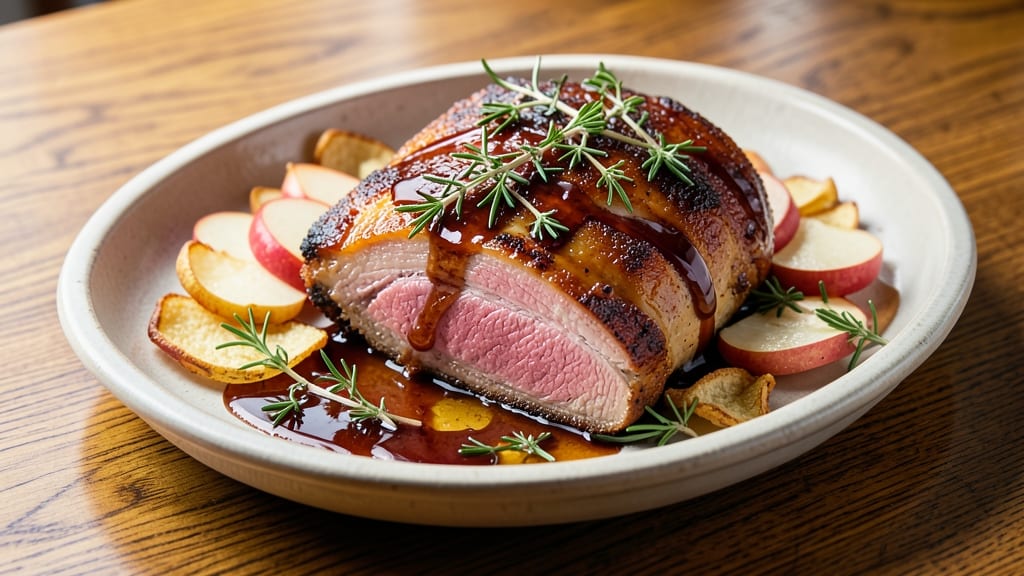
This apple glazed pork roast recipe transforms a simple cut into a showstopper with a slow-braised apple cider crust that seals in every ounce of moisture. 💛 I developed it after years of perfecting the balance between tender meat and caramelized sweetness—this isn't just pork, it's an experience.
The key lies in the glaze: simmered apple cider, brown sugar, and spices that create a sticky, aromatic crust while keeping the meat impossibly juicy inside.
What sets this recipe apart is the two-stage cooking process that ensures foolproof results. First, we sear the pork to lock in flavors, then slow-roast it until fork-tender before finishing with that signature glaze.
The apple cider reduces to a thick, glossy sauce that caramelizes beautifully, while the spices add depth that makes every bite memorable. This method works equally well for bone-in roasts or boneless cuts—just adjust your cooking time accordingly.
By the time you serve this, you'll have a golden-brown roast with crisp edges and tender meat that practically melts in your mouth, all topped with that glossy apple glaze that smells like autumn in a skillet.
The aroma alone will have everyone gathering at the table, and the first bite delivers on that promise of restaurant-quality pork without the fuss. It's the kind of dish that turns weeknight dinners into special occasions.
Pair it with roasted root vegetables or creamy mashed potatoes to complete the meal—this roast is hearty enough to stand alone but works beautifully as the centerpiece of a full spread.
The glaze even reheats wonderfully, making leftovers just as delicious as the first serving. Let's get cooking—your taste buds will thank you.
Ingredients for apple glazed pork roast
Six ingredients make this apple-cider glaze unforgettable—juicy pork meets caramelized sweetness.
| Ingredient | Amount | Notes |
|---|---|---|
| Pork Shoulder Roast 🥩 | 4 lb | Bone-in for best flavor, trimmed of excess fat |
| Apple Cider 🍎 | 2 cups | Unfiltered for best flavor, chilled |
| Brown Sugar 🍚 | ½ cup | Light or dark, packed tightly |
| Dijon Mustard 🍯 | 2 tbsp | For depth of flavor, not spicy |
| Fresh Thyme Leaves 🌿 | ¼ cup | Stems removed, loosely packed |
| Fresh Rosemary Sprigs 🌿 | 4 whole | Freshly chopped, not dried |
| Garlic Cloves 🧄 | 6 cloves | Peeled, smashed but not minced |
| Unsalted Butter 🧈 | ½ cup | Cold, cubed for searing |
| Apple Cider Vinegar 🍶 | 1 tbsp | For tangy balance, not balsamic |
| Ground Black Pepper 🌶️ | 1 tsp | Freshly cracked for best flavor |
| Kosher Salt 🧂 | 1 ½ tbsp | Diamond Crystal preferred |
| Granulated Sugar 🍚 | 2 tbsp | For finishing glaze, not brown sugar |
| Fresh Cinnamon Stick 🌿 | 1 whole | For aroma, removed before serving |
The pork shoulder is the star here. Bone-in cuts stay juicier longer, and the fat cap renders into pure flavor. I always grab mine from Costco or the butcher counter at Whole Foods—look for good marbling. Trim the fat to about 1/4-inch thick so it renders cleanly but still adds richness. For the apple cider, unfiltered brands like Woodchuck or Angry Orchard give that authentic autumn taste. If you can't find fresh thyme, dried at half the amount works, but fresh is worth the extra minute to snip the stems.
No Dijon mustard? Yellow mustard at double the amount gets you close, though it'll be less complex. The spices can be adjusted—add a pinch of cinnamon if you love spice, or swap rosemary for sage. For the glaze, I always make a double batch—it reheats beautifully for sandwiches or even pancakes. The butter is non-negotiable though—full-fat, cold cubes create that perfect sear. If you're short on time, microwave the butter 40 seconds to just melt it before adding to the pan. The apple cider vinegar might sound odd, but it cuts through the sweetness and makes the glaze shine.
This roast tastes even better the next day—3-4 days in the fridge, 3 months frozen. I always slice it thin against the grain for sandwiches. The glaze thickens as it cools, so add a splash of water when reheating. Store the roast wrapped tightly in foil, and keep the glaze in a separate jar. Leftovers make amazing tacos or fried rice. The cinnamon stick? Toss it in the glaze while simmering for extra aroma, then remove before serving.
Why You'll Love This Recipe
- One-Pan Wonder: I swear by this for lazy Sundays—just sear the pork, toss in the apple cider and brown sugar, and let the oven do the work. No chopping, no fussing, just hands-off perfection.
- Sweet-Savory Magic: That Dijon mustard cut through the richness while the caramelized apples and thyme add layers of warmth. It’s the kind of balance that makes you go back for seconds without even trying.
- Weeknight to Holiday: Same recipe feeds my family on a Tuesday or guests at Thanksgiving. The glaze thickens beautifully, so you can serve it as a centerpiece or slice it thin for sandwiches—no extra effort.
- Budget-Friendly Feast: Pork shoulder stretches across meals: roast it once, shred it for tacos, or reheat slices in sandwiches. Honestly, it’s my go-to for stretching groceries without sacrificing flavor.
Step-by-step instructions for apple glazed pork roast
Here's how to create a perfectly tender roast with that signature caramelized apple glaze.
🔥 Step 1: Sear the Pork Shoulder for Deep Flavor
Preheat your oven to 325°F. Pat the 4 lb pork shoulder roast dry with paper towels—this is crucial for that crispy crust. Place it fat-side up in a Dutch oven and let it sit at room temperature for 30 minutes while you prep.
Heat 2 tablespoons olive oil in the Dutch oven over medium-high heat until shimmering. Add the pork shoulder and sear for 4-5 minutes per side until deeply golden brown. You'll see the fat render out and sizzle—this builds incredible flavor. Transfer the pork to a plate and set aside.
👨🍳 Step 2: Build the Apple Cider Glaze Base
In the same Dutch oven, reduce heat to medium and add the 0.5 cup unsalted butter, letting it melt completely. Add the 6 smashed garlic cloves and cook for 30 seconds until fragrant—don't let them brown or they'll turn bitter.
Pour in the 2 cups apple cider and scrape up any browned bits from the bottom (this is where all the flavor hides). Add the 0.5 cup brown sugar, 1 tbsp apple cider vinegar, 1 whole fresh cinnamon stick, 1.5 tbsp kosher salt, and 1 tsp ground black pepper. Stir well to combine all ingredients.
🥘 Step 3: Braise the Pork Until Fork-Tender
Return the pork shoulder to the Dutch oven, fat-side up. Cover tightly with a lid and transfer to the preheated 325°F oven. Here's where the magic happens—braise for 3-3.5 hours until the internal temperature reaches 195-203°F and the meat pulls apart easily with two forks.
About 1 hour into cooking, remove the lid and spoon the braising liquid over the pork to keep it moist. The pork should be falling off the bone by the end—this is your signal it's perfectly tender. If the liquid reduces too much before then, add ¼ cup water to maintain moisture.
🍳 Step 4: Create the Caramelized Apple Glaze
Once the pork is tender, carefully remove it from the Dutch oven and tent loosely with foil. Place the pot on the stovetop over medium-high heat and let the braising liquid reduce by half, about 8-10 minutes. You want it thick enough to coat the back of a spoon.
Stir in the 2 tbsp Dijon mustard and 2 tbsp granulated sugar, then add the 0.25 cup fresh thyme leaves and 4 chopped fresh rosemary sprigs. Let it simmer for another 3-4 minutes until the glaze thickens and becomes glossy. The aroma should be rich and sweet with herbal notes—this is your finished sauce.
🍽️ Step 5: Glaze and Rest the Pork
Return the pork to the Dutch oven and spoon the glaze generously over the top. Cover and return to the oven for 15-20 minutes to let the glaze caramelize and stick to the meat. The pork should be beautifully glazed with a deep amber color.
Remove from the oven and let the pork rest for 15 minutes before slicing. This resting time is crucial—it allows the juices to redistribute so every bite is moist and flavorful. Remove and discard the cinnamon stick before serving. Slice against the grain for tender, pull-apart perfection.
Pro Tips For Making Apple Glazed Pork Roast
- SEAR THE ROAST FIRST: I used to skip this step, thinking the glaze would handle it—but a quick 3-minute sear in a screaming-hot pan (450°F) locks in flavor and gives the crust that caramelized edge. Just don’t overcrowd the pan, or you’ll steam the meat instead of browning it.
- REDUCED CIDER IS YOUR FRIEND: After the roast is in the oven, simmer the apple cider down to about 1/3 of its original volume before adding brown sugar and mustard. This thickens the glaze naturally, so it doesn’t turn into a watery syrup clinging to the pork. (Yes, even if you’re impatient like me.)
- SKIP THE PRE-CUT THYME: Whole sprigs of thyme (2-3) tucked into the roast’s fat cap during the last 30 minutes of cooking infuse flavor better than chopped leaves. They’re easy to fish out later, and you avoid the sad, mushy herb sludge that happens when you chop them too early.
- USE A DARKER BROWN SUGAR: Light brown sugar dissolves too fast, turning the glaze into a sticky mess. Go for dark brown sugar—it’s got more molasses, which caramelizes deeper and adds that rich, almost buttery depth. Trust me, the difference is noticeable.
Serving suggestions for this dish
Classic Southern Sides
This roast pairs perfectly with creamy mashed potatoes—I make mine with buttermilk and sharp cheddar for tangy depth. The richness balances the sweet glaze beautifully.
For a lighter option, try apple cider roasted Brussels sprouts with crispy bacon—toss them with 1 tbsp apple cider vinegar and 1 tsp brown sugar before roasting at 400°F for 20 minutes. 🥔
Crusty Bread Pairings
Nothing beats crusty sourdough or brioche rolls for soaking up that glossy apple glaze. I love serving warm dinner rolls with a side of honey butter for dipping.
For a heartier option, try cornbread with a hint of jalapeño—the slight heat cuts through the sweetness. Toast the bread right before serving to keep it crisp.
Seasonal Vegetable Sides
Fall vegetables shine here. Roasted butternut squash with rosemary and sage complements the pork beautifully. Cut squash into ½-inch cubes, toss with 1 tbsp olive oil, ½ tsp cinnamon, and roast at 400°F for 25 minutes.
Another favorite is sautéed green beans with garlic and slivered almonds—quick and elegant. 🍂
Cheesy Comfort Additions
For a cozy meal, add mac and cheese with a brown butter and thyme twist. I use sharp cheddar and Gruyère for depth, and fold in 2 tbsp brown butter at the end.
Another crowd-pleaser is baked apples—core Honeycrisp apples, fill with walnuts and brown sugar, and bake at 375°F for 20 minutes. The caramelized apples echo the glaze's sweetness.
Garnish for Presentation
Elevate your plate with fresh thyme sprigs and rosemary leaves scattered on top. A drizzle of extra glaze right before serving adds shine and depth. For a pop of color, add sliced apples (like Braeburn or Fuji) arranged around the plate.
The contrast of crisp apples against tender pork makes every bite feel special. 🌟
Nutrition facts
Frequently asked questions
Can I use regular apple juice instead of apple cider for the glaze?
While you can substitute, apple cider adds depth with its natural spices and slight tang. For best results, use 2 cups unsweetened apple juice plus 1 tbsp apple cider vinegar to replicate the balance. The texture will be slightly thinner, so reduce it longer to achieve that glossy finish.
How do I adjust cooking time for a smaller/larger pork roast?
Calculate 20-25 minutes per pound for a bone-in roast at 325°F. For example, a 3 lb roast needs 1.5-2 hours, while a 6 lb roast requires 3-3.5 hours. Always check internal temp—it should reach 195-203°F for perfect tenderness. The glaze time remains the same.
What's the best way to reheat leftovers without drying out the pork?
Slice the pork and reheat in a skillet with 1 tbsp apple cider and 1 tbsp butter over low heat for 5-7 minutes. For the glaze, warm it separately in a saucepan over medium-low heat, adding 1 tbsp water if needed to loosen. Microwaving works too—just cover with a damp paper towel for 20-30 seconds.
Can I make this recipe in a slow cooker instead of the oven?
Sear the pork as directed, then transfer it to a slow cooker with all glaze ingredients. Cook on low for 8 hours or high for 4-5 hours until tender. Finish by transferring to a skillet to caramelize the glaze over medium-high heat for 5-7 minutes. The texture will be slightly more saucy but equally flavorful.
Why did my glaze turn out too thin or too thick?
Too thin? You likely didn't reduce it enough—simmer uncovered for 5-10 more minutes to thicken. Too thick? Add 1-2 tbsp water or apple cider while warming. The glaze should coat the back of a spoon but remain pourable. For next time, stir occasionally during reduction to prevent burning.