
Main Courses
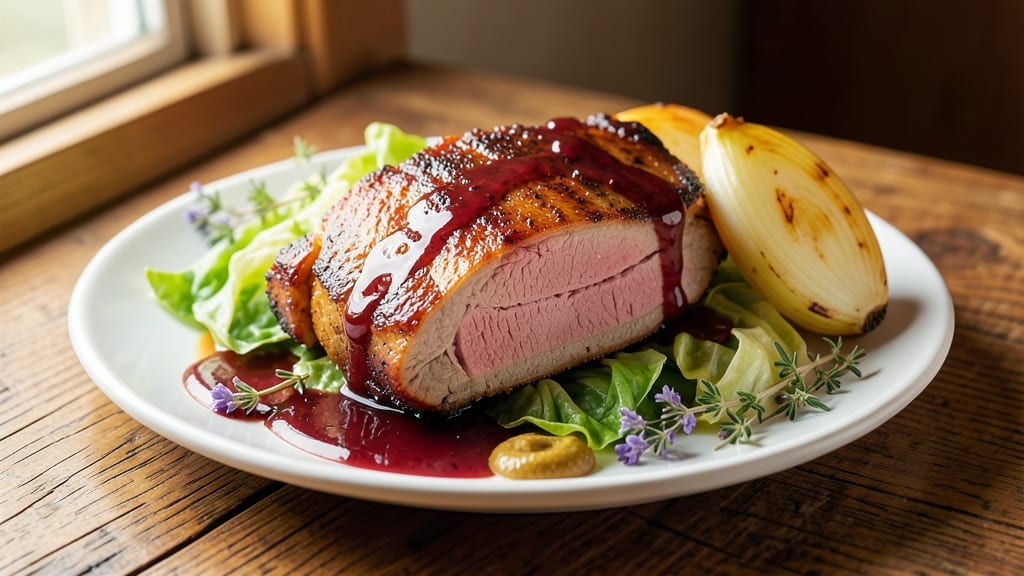
This apple cider pork roast with cabbage recipe brings autumn flavors to life in one showstopping dish—tender pork infused with apple cider's sweet-tart depth, paired with cabbage that transforms into crisp-tender perfection. 🍂 I developed this during a Georgia harvest weekend when I wanted a dish that felt like a hug: rich, comforting, and packed with seasonal character.
The secret lies in slow-braising the pork with apple cider until it's fork-tender, while the cabbage cooks down into a caramelized side that steals every bite.
What sets this recipe apart is the balance: the pork stays juicy thanks to a simple marinade of apple cider, mustard, and herbs, while the cabbage gets just enough time to soften without turning mushy.
I've perfected this method over years of cooking for crowds—it's foolproof for weeknight dinners but impressive enough for holiday tables. The apple cider doesn't just flavor the pork; it creates a glossy, aromatic sauce that ties everything together, with just a touch of thyme and onion for depth.
By the time you're serving, you'll have perfectly moist pork with a caramelized crust, paired with cabbage that's tender yet still holds its shape. The aroma alone—warm spices, sweet apples, and smoky pork—will have everyone gathering around the table.
This is the kind of dish that tastes even better the next day, making it perfect for meal prep or leftovers. The flavors develop and deepen, proving that good food only gets better with time.
Serve with crusty bread to soak up every last bit of that apple cider sauce, or pair it with roasted potatoes for a complete autumn feast. The technique is simple, but the result is restaurant-quality comfort food that feels like home. Let's get cooking—your taste buds will thank you.
Ingredients for apple cider pork roast with cabbage
Six ingredients bring autumn's cozy flavors to life in this showstopping pork roast.
| Ingredient | Amount | Notes |
|---|---|---|
| Boneless Pork Loin Roast 🥩 | 3 lb | Center-cut for even cooking |
| Green Cabbage 🥬 | 1 whole | Heads cut into wedges |
| Unsweetened Apple Cider 🍎 | 2 cups | 100% juice, no additives |
| Yellow Onion 🧅 | 1 whole | Medium, sliced into wedges |
| Fresh Thyme 🌿 | ¼ cup | Stems removed, loosely packed |
| Dijon Mustard 🍯 | 2 tbsp | High-quality, not prepared |
| Olive Oil 🫒 | 2 tbsp | Extra-virgin for richness |
| Garlic Cloves 🧄 | 4 cloves | Peeled, lightly smashed |
| Salt 🧂 | 1 ½ tsp | Diamond Crystal preferred |
| Black Peppercorns 🌶️ | 1 tsp | Freshly cracked |
| Fresh Rosemary 🌿 | ⅛ cup | Chopped sprigs, loosely packed |
| Brown Sugar 🍚 | 1 tbsp | Lightly packed |
| Apple Cider Vinegar 🍶 | 1 tbsp | For tangy depth |
The pork is the star here, so center-cut loin makes all the difference—it stays juicy while the edges caramelize. Costco or local butcher shops usually carry the best cuts, and if you can't find boneless, trim it yourself. For the apple cider, Mott's or Woodchuck are my go-tos—they've got that perfect sweet-tart balance. Fresh herbs are non-negotiable here: the thyme and rosemary should smell vibrant, not dusty. If you're using dried, cut the amount in half. The cabbage? Green is best—it holds up better than red when braising.
No apple cider vinegar? Lemon juice works in a pinch, but it won't have that same depth. Short on brown sugar? Maple syrup at half the amount gives similar richness. The mustard can be swapped for Dijon-style yellow mustard if you're avoiding gluten, but traditional Dijon adds that perfect tang. For the cabbage, if you can't find whole heads, pre-cut wedges from the store save time—just rinse them well. The onions should be yellow or red for sweetness, but white works too. And if you're feeling fancy, add a splash of bourbon to the braising liquid for extra depth.
This dish tastes even better the next day, so make extra if you can. The pork keeps 3-4 days in the fridge, and the cabbage reheats beautifully with a splash of apple cider. For leftovers, slice the pork thin and serve on toasted sourdough with the cabbage on the side. The sauce freezes well too—just thaw and reheat gently. Store the pork and cabbage separately if you're prepping ahead, and reheat the cabbage covered to keep it tender.
Why You'll Love This Recipe
- One-Pot Magic: I swear by this recipe because it’s basically hands-off after the initial chop. Toss the pork, cabbage, and onions in a Dutch oven with apple cider, add thyme sprigs, and let the oven do the work. No flipping, no fussing—just pure, melty satisfaction when you pull it out.
- Sweet-Savory Balance: That apple cider isn’t just for show—it caramelizes into a glossy, tangy-sweet glaze that clings to the pork like it’s been kissed by autumn. The cabbage softens into tender, barely-there bites, and the thyme? It’s the quiet hero that makes every forkful feel special.
- Weeknight to Holiday: Between us, this is my go-to for busy nights and when Aunt Martha shows up unannounced. The same flavors work for a quick family dinner or a potluck spread—just adjust the roast size. (Honestly, I’ve served it cold in sandwiches the next day, and no one complained.)
- Leftovers That Don’t Suck: The pork stays juicy for days, and the cabbage? It actually tastes better reheated—soggy is not the enemy here. I freeze portions too, because why buy takeout when I can pull this together in 10 minutes later? Budget-friendly, reliable, and zero guilt.
Step-by-step instructions for apple cider pork roast with cabbage
Here's how to create a showstopping roast with tender pork and caramelized cabbage—no shortcuts, just pure flavor.
👨🍳 Step 1: Prep the Pork and Preheat the Oven
Pat the 3 lb boneless pork loin roast completely dry with paper towels—this is non-negotiable for crispy edges. Rub it generously with 1 tbsp olive oil, then sprinkle evenly with 1.5 tsp salt, 1 tsp black peppercorns, and 0.125 cup fresh rosemary. Press the seasoning firmly so it adheres. Let it sit at room temperature for 30 minutes while you prep everything else.
Preheat your oven to 325°F—this low-and-slow temperature ensures tender meat without drying it out. While waiting, cut the 1 whole green cabbage into 6-8 wedges, leaving the core intact so they hold their shape. Slice the 1 whole yellow onion into 8 wedges and separate the 4 cloves garlic cloves but leave them whole for now.
🍳 Step 2: Sear the Pork for Maximum Flavor
Heat a large Dutch oven over medium-high heat until it's smoking hot. Add the pork roast and sear on all sides for 3-4 minutes per side until deeply golden brown. This step creates the Maillard reaction that builds deep flavor—don't rush it. Remove the pork and set it aside on a plate.
In the same Dutch oven, add 2 tbsp olive oil and swirl to coat. Add the cabbage wedges and onion slices, tossing to coat in the oil. Sear for 5-6 minutes until the edges start to soften and turn golden. Add the 4 cloves garlic cloves and 0.25 cup fresh thyme, stirring for 30 seconds until fragrant.
🥘 Step 3: Build the Apple Cider Braising Liquid
Pour in the 2 cups unsweetened apple cider, scraping up any browned bits from the bottom of the pot—this is where the flavor lives. Add 2 tbsp Dijon mustard, 1 tbsp brown sugar, and 1 tbsp apple cider vinegar, stirring to combine. The liquid should smell rich and tangy with hints of caramel.
Return the pork roast to the Dutch oven, placing it on top of the cabbage and onion. The juices from the pork will infuse the braising liquid, creating an irresistible aroma. Cover the pot tightly with a lid and transfer it to the preheated oven.
⏰ Step 4: Slow-Braise to Tender Perfection
Braise the pork for 2 hours at 325°F. The cabbage should be tender when pierced with a fork, and the pork should register 145°F internally. If the liquid reduces too quickly, add ¼ cup water to maintain moisture—this keeps everything juicy.
After 2 hours, carefully remove the pork and place it on a cutting board. Tent it loosely with foil and let it rest for 15 minutes. This resting period is crucial—it allows the juices to redistribute so every slice stays moist. While it rests, skim any excess fat from the braising liquid in the Dutch oven.
🔥 Step 5: Finish and Serve with Caramelized Cabbage
Return the Dutch oven with cabbage and onions to the stove over medium heat. Simmer uncovered for 5-7 minutes until the liquid reduces to a glossy, syrupy consistency. The cabbage should be fork-tender with caramelized edges—this is what makes this dish special.
Slice the pork roast into ½-inch thick slices and arrange it on a platter. Spoon the caramelized cabbage and onions over the top, then ladle the reduced apple cider sauce around the edges. Garnish with additional fresh thyme and serve immediately with crusty bread to soak up every last drop of that rich, tangy sauce.
Pro Tips For Making Apple Cider Pork Roast With Cabbage
- SEAR THE PORK FIRST: High heat for 3-4 minutes per side—this isn’t just for looks. The Maillard reaction with apple cider later makes the crust stick like glue, so don’t skimp. (I used to rush this and ended up with bland, dry pork.)
- SAVE THE CIDER DRIPPINGS: After simmering, strain the cider into a measuring cup—you’ll need about ½ cup of the reduced liquid for basting. Discard the rest? No way. That’s where the depth of flavor hides.
- CHOP CABBAGE SMALLER THAN YOU THINK: Quarter the head, then slice into ½-inch-wide shreds. Thick pieces steam instead of caramelize, and you’ll be left with sad, mushy greens. (Yes, even if it looks like overkill.)
- USE THYME STEMS TOO: Strip the leaves from the stems, but toss the woody bits into the pot—they infuse flavor without bitterness. It’s the lazy cook’s shortcut to restaurant-quality aroma. (Your guests won’t even notice you cheated.)
Essential equipment for this recipe
Dutch Oven Essentials
This recipe demands a 5-6 quart Dutch oven—it's the only pot that can handle the sear, braise, and caramelization all in one. I swear by my Le Creuset Signature Dutch Oven (it's heavy, but worth every pound for heat retention), but All-Clad Stainless Steel is a fantastic budget alternative.
The deep sides prevent spills during braising, and the tight lid traps moisture for perfectly tender pork. 🔥
Meat Thermometer Must-Have
Never guess your pork's doneness again—get a thermometer with a probe like the ThermoWorks Smoke or Meater+. These bad boys give you instant internal temperature readings, so you avoid overcooking.
I check the pork every 30 minutes after the first hour to ensure it hits 145°F without drying out. Pro tip: Calibrate your thermometer before use—most run about 2°F hot.
Cast Iron Skillet Backup
If your Dutch oven is occupied, a 10-inch cast iron skillet (like my vintage Lodge) works for searing the cabbage and onions. Cast iron retains heat like a champ and develops a natural nonstick surface over time.
Just preheat it on the stove until it's smoking hot before adding the cabbage—this ensures those beautiful caramelized edges. I keep mine seasoned with flaxseed oil for extra durability. 💪
Tongs and Tongs Only
Forget forks or spoons—they'll pierce your pork and let juices escape. Use long-handled tongs (I prefer OXO Good Grips) to handle the roast during searing. The 18-inch length keeps your hands safe from the hot Dutch oven, and the silicon tips grip the pork securely without crushing it.
Keep a pair nearby for flipping the cabbage wedges too—they stay intact and caramelize beautifully. 🌟
Apple Cider Measuring Tools
Precision matters with apple cider—use a liquid measuring cup (not a dry one) for the 2 cups of cider. I like Pyrex glass because it's heat-resistant and easy to read.
For the 1 tbsp apple cider vinegar, a stainless steel measuring spoon works best—it won't react with the acid like plastic might. And trust me, Mott's or Woodchuck cider makes all the difference in flavor. The slight sweetness balances the mustard perfectly. ✨
Resting Rack Upgrade
For the 15-minute rest, I use a wire cooling rack placed over a baking sheet. This lets hot air circulate around the pork, keeping it warm while the juices redistribute. A stainless steel rack (like Nordic Ware) is my go-to—it's durable and easy to clean.
If you're short on time, a clean kitchen towel draped over the pork works too, but the rack gives you that restaurant-quality finish. 💡
Nutrition facts
Frequently asked questions
Can I substitute apple cider vinegar with something else?
Yes! Apple cider vinegar adds that perfect tang, but you can use lemon juice or white wine vinegar in a 1:1 ratio. For a sweeter touch, try 1 tbsp honey instead—it'll caramelize beautifully during cooking. Just remember, vinegar helps balance the sweetness of the apple cider and pork, so adjust to taste.
How do I keep the pork from drying out?
Slow cooking is key—braising at 325°F for 2 hours keeps the pork juicy. Always pat the meat dry before seasoning (this helps the crust form), and never skip the 15-minute rest after cooking. The internal temperature should reach 145°F, not higher. If your oven runs hot, tent the pork loosely with foil after the first hour.
What if I don’t have a Dutch oven?
A heavy pot with a tight-fitting lid works—think 6-quart stockpot or even a cast iron skillet (though it may require extra attention). For best results, sear the pork in a skillet first, then transfer it to the pot with the cabbage and braising liquid. The lid must be airtight to trap steam and cook the pork evenly. A slow cooker on Low for 6-8 hours is another option!
Can I make this ahead of time?
This dish tastes even better the next day. Cook the pork and cabbage as directed, then refrigerate the pork separately from the cabbage and sauce. Reheat the pork in a 350°F oven for 20 minutes (covered), and warm the cabbage and sauce on the stovetop over medium-low heat. The flavors deepen overnight—perfect for meal prep!
What’s the best way to serve the leftovers?
Slice the pork thin and serve on toasted sourdough with extra cabbage on the side. For a hearty sandwich, layer the pork with caramelized onions, a smear of Dijon mustard, and a sprinkle of fresh thyme. The cabbage reheats beautifully—just add a splash of apple cider to keep it tender. Leftovers keep for 3-4 days in the fridge.