
Sauces & Condiments
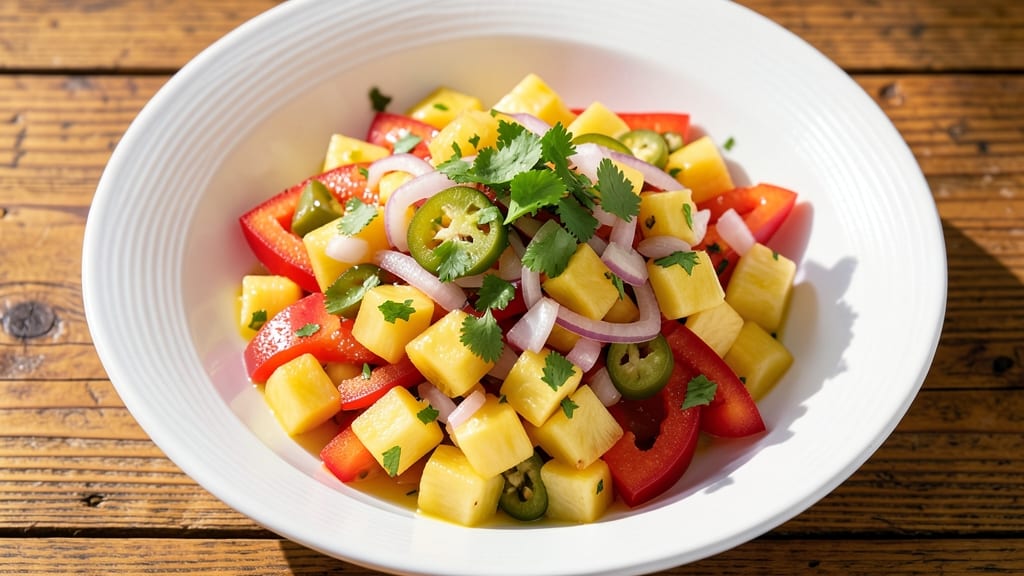
This sweet pineapple salsa recipe transforms fresh tropical flavors into a vibrant, no-cook dish that brings bright sweetness and zesty acidity to every bite. The secret lies in balancing ripe pineapple, crisp vegetables, and fresh herbs—creating a texture contrast of juicy fruit against crunchy bell peppers and onions.
I developed this recipe after craving something refreshing yet substantial, and it quickly became a staple for appetizers, tacos, or even as a topping for grilled proteins.
The beauty of this salsa is its simplicity: just chop, mix, and let the flavors meld for 15 minutes before serving. You’ll need ripe pineapple (the sweeter, the better), red onion, bell pepper, cilantro, and lime juice to tie everything together.
The key is cutting the pineapple into small, even pieces so it blends seamlessly with the other ingredients without overpowering them.
What makes this dish special is its versatility—serve it as a standalone appetizer with tortilla chips, spoon it over grilled fish or chicken, or use it as a topping for tacos and bowls.
The sweetness of the pineapple pairs perfectly with the sharpness of lime and the freshness of cilantro, creating a balance that’s both refreshing and satisfying.
This salsa stays fresh in the refrigerator for up to 5 days, making it ideal for meal prep. For extra crunch, add jalapeño or red onion just before serving. Let’s get started on this bright, tropical creation!
Ingredients for sweet pineapple salsa
Bright tropical flavors meet crisp vegetables in this refreshing, no-cook pineapple salsa creation.
| Ingredient | Amount | Notes |
|---|---|---|
| Fresh Pineapple 🍍 | 2 cups | Diced, ripe and sweet |
| Red Bell Pepper 🌶️ | 1 whole | Diced, seeds removed |
| Red Onion 🧅 | ½ cup | Finely diced, white part only |
| Fresh Cilantro 🌿 | ½ cup | Chopped, stems removed |
| Lime Juice 🍋 | ¼ cup | Freshly squeezed |
| Jalapeño Pepper 🌶️ | 1 whole | Seeded, finely chopped (optional) |
| Extra-Virgin Olive Oil 🫒 | 2 tbsp | For drizzling |
| Kosher Salt 🧂 | ½ tsp | Diamond Crystal preferred |
| Ground Black Pepper 🌶️ | ¼ tsp | Freshly ground |
| Fresh Lime Zest 🍋 | 1 tsp | For garnish |
| Tortilla Chips 🍟 | 2 cups | For serving (optional) |
The pineapple is the heart of this dish—select fully ripe fruit with sweet, golden flesh, not green or hard spots. Whole pineapple from Costco gives the best yield, but pre-cut at Trader Joe's works in a pinch. Dice into even 1/4-inch pieces for consistent texture. Red bell peppers should be firm with vibrant color; organic varieties from the produce section avoid wax coatings. Cilantro is non-negotiable here—fresh, bright green stems indicate quality, while wilted leaves mean it's past its prime. For lime juice, Key West limes deliver the most intense flavor, but any fresh lime works if you've got them.
No jalapeño? Substitute with 1/2 tsp red pepper flakes for heat, though the fresh pepper adds pleasant complexity. Swapping red bell pepper for yellow or orange changes the flavor profile slightly but maintains sweetness. For cilantro haters, substitute with 1/4 cup chopped parsley—it won't be identical, but keeps the fresh herb element. The lime juice can be zested instead of juiced for a more aromatic presentation, though fresh juice is ideal. Mexican oregano at 1/4 tsp can replace cilantro entirely if needed. For the olive oil, avoid light or refined varieties—look for extra-virgin with fruity notes that complement the tropical flavors.
This salsa shines best when made fresh but stays vibrant in the fridge for up to 5 days when stored in an airtight container. For longer storage, freeze in ice cube trays—perfect for portion control. The texture will soften slightly after refrigeration, so add extra jalapeño or red onion just before serving for that initial crunch. Garnish with lime zest and a drizzle of olive oil right before serving to elevate presentation. The tortilla chips? Blue corn chips from Mission or Tostitos add authentic flavor, but any sturdy chip works.
Why You'll Love This Recipe
- No Dice Required: I swear, this salsa comes together faster than I can finish a podcast episode. Just dice those ingredients—no fancy techniques—toss them in a bowl, and boom. The pineapple’s natural sweetness does half the work for you.
- Tropical Brightness: That first bite? It’s like sunshine in a bowl. The bell pepper adds a gentle crunch, the onion brings sharpness, but the pineapple and lime juice? Absolute magic. It’s sweet, tangy, and fresh without tasting like a salad.
- Party-Ready Side: Between us, this is my go-to for game day, BBQs, or when friends drop by unexpectedly. It pairs perfectly with chips, tacos, or even grilled fish. Honestly, I’ve served it at everything from backyard cookouts to lazy Sunday brunches.
- Budget-Friendly Staple: Pineapple’s often overlooked as a cheap fruit, but here it’s the star. A single fresh pineapple lasts me weeks, and the other ingredients? Basic pantry staples. Plus, leftovers keep for days in the fridge—no waste, all flavor.
Step-by-step instructions for sweet pineapple salsa
Here's how to assemble this vibrant tropical salsa with perfect balance and texture.
Prepare the Fresh Vegetable Base
Begin by finely dicing the 1 whole red bell pepper and 0.5 cup red onion, removing seeds from the pepper first. I like to use a sharp chef's knife for this step—cutting through the onion's layers cleanly gives you those perfect, even dices. Place both in a medium mixing bowl as you work.
Next, seed and finely chop the 1 whole jalapeño pepper if using—this ensures heat distribution without overwhelming chunks. The seeds contain most of the pepper's heat, so removing them gives you a milder but still flavorful kick. Add this to the bowl with the bell pepper and onion. You're building the foundational texture here: bright, crisp vegetables that will carry the tropical flavors.
Dice the Pineapple Evenly
Cut the 2 cups fresh pineapple into small, even dice—about ¼-inch pieces. The key here is consistency; uniform salsa texture means every bite delivers the same perfect balance of sweetness and crunch. I use a mandoline for precision, but a sharp knife works just as well if you take your time.
As you work, taste a piece of pineapple. It should be sweet and juicy—this is your flavor baseline. If it's overly tart, you'll need to adjust with more lime later. Add the diced pineapple to your vegetable mixture and gently stir to combine. The pineapple's natural juices will begin to release immediately, creating a light marinade for the other ingredients.
Add Herbs and Citrus
Chop the 0.5 cup fresh cilantro stems removed, giving it a rough chop rather than a fine mince. This creates visual texture while keeping the herb's bright flavor intact. Add it to the bowl along with the 0.25 cup lime juice and 1 tsp fresh lime zest. The zest adds aromatic depth that fresh juice alone can't match.
At this stage, give everything a thorough mix. The lime juice will begin to soften the vegetables slightly while brightening the pineapple's sweetness. Taste the mixture now—you should detect a balance of sweet, tart, and herbal notes. If it needs more acidity, add a splash more lime juice; if it's too tart, a pinch of salt will help round the flavors.
Finish with Oil and Seasoning
Drizzle in the 2 tbsp extra-virgin olive oil while gently tossing the mixture. The oil coats each ingredient, helping the flavors meld while adding a silky texture. Sprinkle with 0.5 tsp kosher salt and 0.25 tsp ground black pepper, then mix one final time. Let the salsa sit for 10-15 minutes before serving—this resting period allows all the flavors to truly marry.
For serving, I recommend pairing with the 2 cups tortilla chips mentioned in the ingredients. The chips' slight saltiness contrasts beautifully with the salsa's sweet-tart profile. If you're using this as a topping, let it come to room temperature first—cold salsa can mute the flavors slightly.
Pro Tips For Making Sweet Pineapple Salsa
- CHAR THE PINEAPPLE: Cut the pineapple into ½-inch chunks and toss them with 1 tablespoon of lime juice immediately after dicing—this stops browning and keeps the texture crisp. I learned this the hard way when my first batch turned mushy from oxidation before even hitting the bowl.
- SWEAT THE ONIONS: Cook the diced red onion in a dry skillet over medium heat for 3-4 minutes until just translucent, not browned. This softens the bite without making the salsa taste cooked—trust me, raw onion in sweet salsa is a flavor crime.
- SKIP THE MUSHY PEPPER: Seed and dice the red bell pepper, then blanch it in boiling water for 30 seconds before draining and shocking in ice water. The heat softens the texture just enough to make it creamy without turning to mush—your salsa will thank you.
- SALT THE CILANTRO: Toss the chopped cilantro with a pinch of salt (about ¼ teaspoon) before mixing it into the salsa. This draws out the moisture slightly, making the leaves brighter and less likely to wilt into a sad, watery pulp by the time you serve it.
Pro cooking tips for perfect results
Pineapple Prep Pro Tips
Always use ripe pineapple—look for golden flesh, not green or hard spots. The sweetness is key to balancing the salsa's acidity. I cut the core first with a sharp chef's knife, then slice into rings before dicing into ¼-inch cubes.
For extra efficiency, use a mandoline slicer with a ¼-inch blade—it gives perfectly uniform pieces every time. 🍍
Onion & Pepper Technique
When dicing the red onion, cut through the root end first to prevent tearing. For the bell pepper, remove seeds and membranes before chopping—they add bitterness. I like to use a Japanese santoku knife for clean cuts, but a sharp chef's knife works too.
The goal is even ⅛-inch dice that won't overpower the pineapple's sweetness.
Lime Juice Balance
Fresh lime juice is non-negotiable—bottled versions lack brightness. I juice 2-3 limes (about ¼ cup) and taste as you go. If the salsa tastes too sweet after mixing, add 1 extra tablespoon of lime juice at a time.
For extra zing, add 1 teaspoon of lime zest—it adds aromatic depth without extra moisture. 🍋
Herb Texture Matters
Chop cilantro stems removed into rough ½-inch pieces—this keeps it bright and visible. If you hate cilantro, substitute with ¼ cup chopped parsley or 1 tablespoon of Mexican oregano.
For heat lovers, add ½ teaspoon red pepper flakes along with the jalapeño. The herbs should complement, not dominate, the pineapple's sweetness.
Resting for Flavor
Let the salsa sit for 10-15 minutes before serving—this lets flavors meld. The lime juice softens the vegetables slightly, and the pineapple juices distribute evenly. Taste again after resting: you may need a pinch more salt or another squeeze of lime to perfect the balance.
Patience here makes all the difference! ⏳
Serving Temperature
Serve this salsa at room temperature—cold salsa dulls the flavors. If using as a topping, let it sit for 5 minutes before serving. For extra crunch, add diced red onion or jalapeño just before serving. The contrast of warm tortilla chips with room-temperature salsa is unbeatable! 🌶️
Nutrition facts
Frequently asked questions
Can I use canned pineapple instead of fresh?
Fresh pineapple gives the best texture and sweetness, but you can use canned in a pinch! Drain the pineapple well and pat it dry to remove excess moisture, which can make your salsa watery. Look for canned pineapple packed in juice (not syrup) for the best flavor. The texture will be slightly softer, but it still works well for dipping or topping.
How do I adjust the sweetness or spice level?
If your salsa tastes too sweet, add 1 extra tablespoon of lime juice or a pinch of salt to balance it. For more heat, add finely chopped jalapeño seeds or a pinch of red pepper flakes. If it's too spicy, mix in more diced pineapple or bell pepper to mellow the flavor. Always taste as you go!
Can I make this salsa ahead of time?
Yes! This salsa keeps well in an airtight container in the fridge for up to 5 days. For best texture, add fresh jalapeño or red onion just before serving. The flavors actually improve as they meld, so it's perfect for meal prep. If freezing, portion into ice cube trays for easy use later.
What are the best ways to serve this tropical salsa?
This vibrant salsa pairs perfectly with tortilla chips for dipping, or use it as a topping for tacos, grilled chicken, and fish. Try it on fish tacos with cabbage slaw or as a side for burgers and sandwiches. The sweet-tart flavor also works beautifully with shrimp skewers or as a marinade base for grilled meats.
Why does my salsa turn watery after mixing?
Excess moisture usually comes from overripe pineapple or not draining canned pineapple well. To fix it, let the salsa sit for 10-15 minutes in the fridge before serving—this helps the juices settle. For immediate results, drain any excess liquid by gently pressing the mixture through a fine-mesh strainer or paper towels.