
Sauces & Condiments
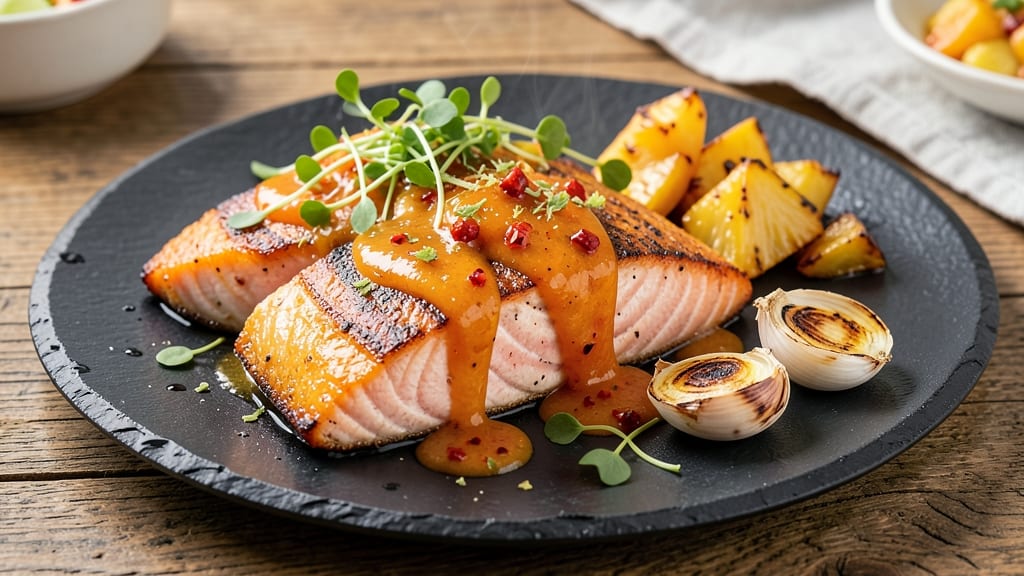
This roasted pineapple habanero sauce salmon recipe delivers a perfect balance of sweet heat that transforms simple weeknight dinner into a restaurant-worthy meal. The caramelized skin on the salmon pairs beautifully with the vibrant, tangy-sweet sauce made from roasted pineapple and habanero peppers—creating a dish that's bold yet refined.
I've perfected this technique over countless test batches, ensuring the sauce enhances the natural richness of the fish without overpowering it.
The magic happens in the sauce, where roasted pineapple adds natural sweetness that perfectly complements the fiery kick of habanero peppers. This isn't just another spicy sauce—it's a carefully balanced blend that caramelizes the salmon's skin while keeping the inside tender and moist.
The process is straightforward but requires attention to timing, especially when roasting the pineapple to develop its sweetness before blending.
What you'll end up with is salmon that's crispy on the outside with a tender, flaky interior, all coated in a glossy, sweet-spicy sauce that makes every bite unforgettable. The sauce's depth of flavor comes from slow reduction, creating a silky texture that clings beautifully to the fish.
This dish works equally well for a special occasion or a casual dinner, and the sauce can be made ahead for even more convenience.
Pair it with steamed jasmine rice or a fresh citrus salad to round out the meal, and you've got a complete dining experience that's both impressive and satisfying. The combination of textures and flavors—crispy salmon, velvety sauce, and bright accompaniments—makes this recipe a standout for any seafood lover.
Ingredients for roasted pineapple habanero sauce salmon
Fourteen ingredients transform simple salmon into a restaurant-worthy masterpiece with caramelized skin and sweet-spicy sauce.
| Ingredient | Amount | Notes |
|---|---|---|
| Center-Cut Salmon Fillets 🐟 | 1 ½ lb | Skin-on, even thickness preferred |
| Fresh Pineapple Chunks 🍍 | 2 cups | Cored, peeled, 1-inch pieces |
| Habanero Peppers 🌶️ | 2 whole | Seeds removed for milder heat |
| Extra-Virgin Olive Oil 🫒 | ½ cup | High-quality, fruity variety |
| Fresh Lime Juice 🍋 | ¼ cup | Freshly squeezed, no pulp |
| Garlic Cloves 🧄 | 4 cloves | Minced, fresh preferred |
| Shallots 🧅 | 2 whole | Minced, or sub with onions |
| Coconut Milk 🥥 | ½ cup | Full-fat for creaminess |
| Fish Sauce 🍶 | 1 tbsp | Red Boat preferred |
| Brown Sugar 🍚 | 2 tbsp | Light or dark variety |
| Fresh Ginger 🌿 | 1 tbsp | Grated, fresh preferred |
| Diamond Crystal Kosher Salt 🧂 | 1 ½ tsp | For seasoning, not iodized |
| Fresh Cilantro 🌱 | ¼ cup | Chopped, for garnish |
| Jasmine Rice 🍚 | 1 cup | Uncooked, for pairing |
The salmon's quality makes or breaks this dish—look for center-cut fillets with even thickness to ensure perfect caramelization. Whole Foods Market or your local fishmonger usually carry the best cuts, often vacuum-sealed for freshness. Pineapple should be ripe but firm, with vibrant yellow flesh—Costco or Trader Joe's often have pre-cut chunks that save time. Habanero peppers are the secret weapon here; Penzeys Spices sells them fresh in the summer, but frozen works year-round. The key is removing seeds to control the heat level—start with two whole peppers and adjust to taste.
No habanero peppers? Serrano or jalapeño peppers at half the amount will give you a milder kick, though the flavor profile shifts slightly. Substituting coconut milk with Greek yogurt or cashew cream adds protein but changes the sauce's texture—stick with coconut for authentic richness. Fresh lime juice is non-negotiable; bottled versions lack the bright acidity needed to balance the sweetness. For the rice pairing, jasmine rice from a bulk bin stays fragrant longer than pre-packaged bags. The fish sauce adds umami depth—Red Boat brand is the gold standard, but any reputable brand works in a pinch.
Salmon should be used within 2 days of purchase, stored in the coldest part of your fridge. Pineapple chunks keep 5 days in the fridge or 6 months frozen—roast them fresh for the sauce, but frozen works for the salmon marinade. The sauce can be made 3 days ahead and reheated gently; it actually develops more depth over time. Portion the rice into individual containers to prevent sogginess when reheating. Garnish with cilantro just before serving—it wilts quickly when exposed to heat.
Why You'll Love This Recipe
- Sweet Heat Magic: The habanero and pineapple caramelize together into a sticky, fiery-sweet glaze that clings to the salmon like it’s been kissed by the tropics. Honestly, I’ve never had salmon taste so alive—that smoky char from the oven plus the bright lime finish? It’s the kind of flavor that makes you pause mid-bite.
- One-Pan Wonder: Throw everything on a sheet pan—salmon, pineapple, habanero—and let the oven do the work. No chopping boards, no messy saucepans, just 20 minutes of hands-off roasting. (Yes, even on a Tuesday night when you’d rather be scrolling than cooking.)
- Leftovers That Shine: The sauce thickens beautifully when reheated, turning this into a weeknight lifesaver. Toss it over rice, slather it on toast, or serve it cold in tacos—it’s the kind of leftovers that actually get eaten, not ignored.
- Budget-Friendly Luxury: Fresh pineapple and habanero feel fancy, but they stretch this recipe into multiple meals without breaking the bank. A single fillet and a few chunks go a long way, and the lime juice cuts the heat so you can use less pepper if needed. Frugal? Yes. Delicious? Absolutely.
Step-by-step instructions for roasted pineapple habanero sauce salmon
Here's how to balance sweet tropical flavors with fiery habanero heat for perfectly caramelized salmon.
Roast Pineapple and Habanero for Depth of Flavor
Preheat your oven to 425°F. On a parchment-lined baking sheet, arrange the 2 cups fresh pineapple chunks in a single layer. Drizzle with 2 tablespoons of the 0.5 cup extra-virgin olive oil and sprinkle with 1 tablespoon of the 2 tablespoons brown sugar. Toss gently to coat evenly.
Cut the 2 whole habanero peppers in half lengthwise, remove seeds and membranes, then place cut-side down on the baking sheet with the pineapple. Roast for 15-18 minutes until the pineapple softens slightly and the habanero skins begin to blacken in spots—this deepens their flavor without burning. The aroma should be intensely sweet with a hint of smoky heat when you open the oven.
Build the Sauce Base with Aromatics
While the pineapple roasts, heat 2 tablespoons of the remaining 0.5 cup extra-virgin olive oil in a large skillet over medium heat. Add the 2 whole shallots and 4 cloves garlic cloves, cooking for 4-5 minutes until softened and golden. Stir in the 1 tablespoon grated fresh ginger and cook for another 30 seconds until fragrant.
This aromatic foundation forms the backbone of your sauce. The shallots should caramelize just slightly—if they brown too quickly, reduce the heat to medium-low. Here's where the magic happens: the ginger releases its bright, citrusy notes that will complement both the sweet pineapple and the habanero's heat.
Blend Roasted Components into Sauce
Remove the roasted pineapple and habanero from the oven and let cool slightly. Transfer everything to a high-powered blender along with the 0.5 cup coconut milk, 1 tablespoon fish sauce, 0.25 cup fresh lime juice, and remaining 1 tablespoon brown sugar. Blend until completely smooth, scraping down the sides as needed.
Taste the sauce and adjust seasoning—you may need an additional 0.25 teaspoon of the 1.5 teaspoons diamond crystal kosher salt or a splash more lime juice to balance the sweetness and heat. The sauce should be vibrant orange with a velvety texture. If it's too thick, add 1-2 tablespoons water to reach your desired consistency.
Season and Roast the Salmon
Pat the 1.5 lb center-cut salmon fillets thoroughly dry with paper towels—this is critical for crispy skin. Place them skin-side down on a separate parchment-lined baking sheet. In a small bowl, whisk together 1 tablespoon of the remaining olive oil with 0.5 teaspoon of the kosher salt. Brush this lightly over the salmon skin.
Roast the salmon in the preheated 425°F oven for 12-14 minutes until the skin is deeply golden and crispy, and the internal temperature reaches 135°F. The edges should lift easily from the pan when you test with a spatula. Be careful not to overcook—the salmon will continue cooking slightly as it rests.
Finish and Serve with Garnish
Carefully transfer the salmon to serving plates and immediately spoon the warm pineapple habanero sauce over the top. The sauce should coat the salmon generously, with visible pockets of color from the roasted pineapple and habanero. Garnish with 0.25 cup chopped fresh cilantro and serve with 1 cup cooked jasmine rice on the side.
Each bite delivers perfectly caramelized skin that gives way to tender salmon, balanced by the sweet-tangy sauce. The habanero provides a subtle heat that lingers without overpowering, while the pineapple adds a refreshing tropical brightness. For best results, serve immediately while the salmon is still warm and the sauce is vibrant.
Pro Tips For Making Roasted Pineapple Habanero Sauce Salmon
- CHAR THE PINEAPPLE FIRST: Roast the pineapple chunks alone at 400°F (200°C) for 10-12 minutes before adding them to the salmon—this caramelizes the sugars and makes the sauce richer. I used to toss them in with the salmon, and the sauce always tasted underdeveloped. The extra step’s worth it.
- SALMON SKIN DOWN, FACE UP: Place the salmon skin-side down on the pan or baking sheet first, then flip it skin-side up before adding the sauce. The skin crisps beautifully this way, and the flesh stays moist. I learned this after flipping too early and ending up with rubbery salmon—don’t rush it.
- DESEED AND MUDDLE HABANEROS: Remove the seeds and membranes from the habaneros (they’re bitter), then muddle them with a pinch of salt and lime juice before cooking. This softens the peppers and mellows their heat, so the sauce doesn’t overpower the salmon. Skipping this step means a sharp, searing burn instead of balanced flavor.
- USE A SPLASH OF WATER: Add 1-2 tablespoons of water or pineapple juice to the roasting pan when making the sauce—it keeps the habaneros from sticking and helps them release their oils evenly. I was skeptical until I tried it; now I never roast them dry. The sauce stays glossy and cohesive.
Storing and reheating your leftovers
Sauce Storage Secrets
The roasted pineapple habanero sauce keeps beautifully in an airtight container in the refrigerator for up to 5 days. I like to store it in a glass jar because it preserves the vibrant color and prevents absorption of fridge odors.
When reheating, warm it gently on the stovetop over low heat for 3-4 minutes, stirring occasionally. Avoid microwaving as it can break down the sauce's delicate texture and intensify the habanero heat. 🥫
Salmon Prep Ahead
Pat your salmon dry and store it in an airtight container with a paper towel underneath to absorb any moisture. Keep it in the coldest part of your fridge for up to 2 days before roasting.
For extra flavor, marinate the salmon in 1 tablespoon lime juice and 1 teaspoon fish sauce for up to 4 hours before cooking—this adds another layer of depth without overpowering the dish. 🐟
Reheating Leftovers
If you have leftover salmon, reheat it gently in a skillet over medium-low heat for 2-3 minutes per side until warmed through. The sauce will cling beautifully, but add a splash of water if it looks dry.
For a quick option, microwave individual portions covered for 20-30 seconds on 50% power, but be careful—the heat can make the sauce watery. Always serve with fresh jasmine rice to soak up any extra sauce. 🍚
Freezing for Later
This dish freezes surprisingly well! Portion the sauce into ice cube trays or small containers, leaving ½ inch headspace for expansion. Freeze for up to 3 months. When ready to use, thaw overnight in the fridge and reheat gently.
The salmon doesn't freeze as well but can be cooked fresh and paired with thawed sauce—just roast it straight from the fridge for a slightly longer cook time (16-18 minutes). ❄️
Rice Revival Tips
Store cooked jasmine rice in an airtight container for up to 4 days. To reheat, spread it on a baking sheet and warm in the oven at 300°F for 5-7 minutes to prevent sogginess.
For microwave reheating, sprinkle 1 teaspoon water over the rice and cover with a damp paper towel for 1-2 minutes on high power. The rice should be warm but still fluffy—never mushy! 🌾
Garnish Freshness
Fresh cilantro wilts quickly when reheated, so always add it just before serving. Store any unused cilantro in a sealed plastic bag with a paper towel wrapped around the stems.
Keep it in the fridge for up to 5 days or freeze it in an ice cube tray with water for up to 3 months. A pinch of salt and lime juice can revive wilted cilantro in seconds—perfect for garnishing reheated dishes. 🌱
Nutrition facts
Frequently asked questions
Can I adjust the heat level in this habanero sauce?
For milder heat, remove all seeds and membranes from the habanero peppers before roasting. For extra spice, leave some seeds in or add ½ teaspoon red pepper flakes to the sauce. Remember that habanero heat builds—start with less and taste as you go.
What's the best way to serve this dish for guests?
Plate the salmon with sauce drizzled artistically over the top, and serve with jasmine rice on the side. Add a simple side salad with lime vinaigrette or steamed bok choy to balance the richness. Garnish each plate with fresh cilantro and lime wedges for serving.
My salmon skin isn't crispy—what went wrong?
Most likely, the salmon wasn't dry enough before roasting. Pat it thoroughly with paper towels and let it sit uncovered for 10 minutes before seasoning. Also ensure you're roasting at 425°F with the skin-side down on a clean, dry baking sheet.
Can I make this sauce without coconut milk?
Yes, but the texture will change. Substitute with ½ cup Greek yogurt for tanginess or ½ cup cashew cream for richness. The sauce will be thicker—thin with water if needed—but the flavor will still be delicious.
How do I store leftovers without losing flavor?
Keep the sauce and salmon in separate airtight containers in the fridge for up to 3 days. Reheat sauce gently on the stovetop and salmon in a skillet—never microwave both together as it can make the sauce watery.