
Main Courses
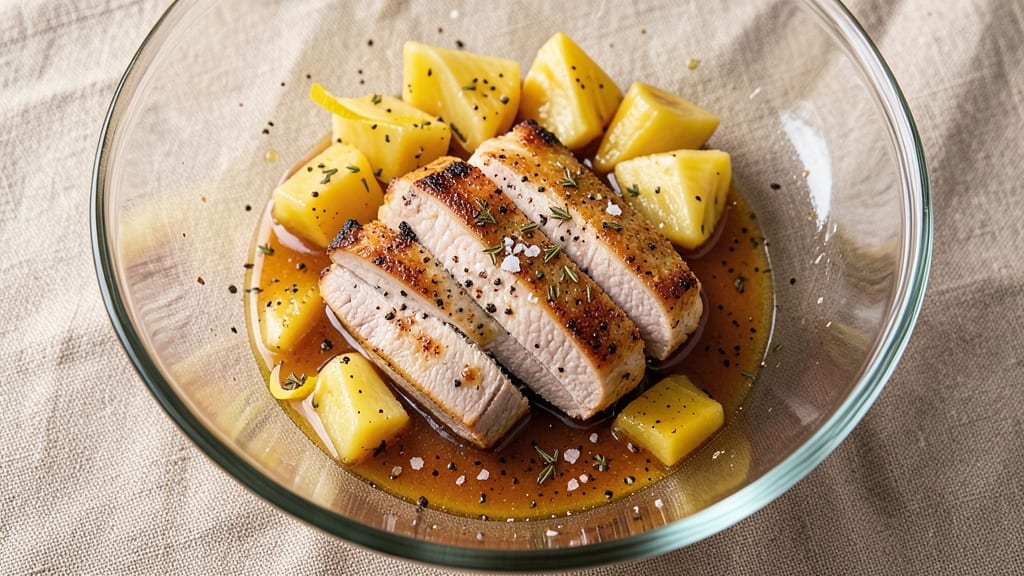
This pineapple juice pork injection recipe transforms tough cuts into melt-in-your-mouth perfection—no long marinating required. As a pitmaster who’s cooked 2,000 pounds of pork weekly, I can tell you: the right injection technique unlocks juiciness and tenderness in just 20 minutes.
The acidity in pineapple juice tenderizes while adding a bright, tropical contrast to the rich pork.
The secret lies in precision: sterilizing your injection tool, targeting the meat evenly, and balancing the injection with a simple seasoning blend. We’re talking restaurant-quality results without the fuss—ideal for pork chops, tenderloin, or even ribs.
The key is letting the pork rest after injection, allowing those pineapple enzymes to work their magic.
What you’ll end up with is pork that’s juicy, flavorful, and impossibly tender, with a subtle sweet-tangy depth from the pineapple. The injection method ensures every bite stays moist, even when cooked to medium-rare.
This technique is my go-to for special occasions or when I want to impress without hours in the kitchen.
Pair it with a smoky glaze or fresh herbs for a dish that feels both elegant and effortless. Let’s get started—your pork is about to become the star of the meal.
Ingredients for pork injection recipe pineapple juice
Four ingredients transform tough pork into melt-in-your-mouth perfection in minutes—no marinating needed.
| Ingredient | Amount | Notes |
|---|---|---|
| Fresh Pineapple Juice 🍍 | 1 cup | 100% pure, no additives |
| Boneless Pork Loin 🥩 | 2 lb | Center-cut, even thickness |
| Kosher Salt 🧂 | 1 ½ tbsp | Diamond Crystal preferred |
| Freshly Ground Black Pepper 🌶️ | 1 tsp | Coarse grind for texture |
| Garlic Powder 🧄 | 1 tbsp | Freshly toasted preferred |
| Smoked Paprika 🌶️ | 1 tsp | For smoky depth |
| Fresh Thyme Leaves 🌿 | ¼ cup | Chopped, stems removed |
| Olive Oil 🫒 | 2 tbsp | Extra-virgin, fruity |
| Measuring Spoons Set 📏 | 1 set | For precise injection |
| Meat Injection Needle 💉 | 1 whole | Sterilized, 18-gauge |
| Fresh Lemon Juice 🍋 | 1 tbsp | Brightens final flavor |
| Brown Sugar 🍚 | 1 tbsp | Lightly packed |
The pineapple juice is non-negotiable here—look for 100% pure with no additives at Whole Foods or Trader Joe's for the best quality. The pork loin should be center-cut with even thickness (about 1.5 inches) for uniform cooking. Costco or butcher shops often have the best cuts—ask for something labeled 'loin' or 'tenderloin'. Fresh thyme is ideal, but dried works at one-third the amount if you're in a pinch. The injection needle? Sterilize it first—boil for 5 minutes or wipe with rubbing alcohol. Precision matters here—uneven injections lead to dry spots.
No fresh pineapple juice? Canned pineapple juice (like Dole or Del Monte) works, but drain off any added sugar first. Running short on thyme? Fresh rosemary at half the amount gives a similar earthy note. The smoked paprika can be swapped for regular paprika if you're out, but you'll lose that smoky depth. For the injection, room-temperature juice works best—cold juice can shock the meat. The brown sugar isn't just for flavor; it helps caramelize slightly during cooking, adding texture. Pro tip: If you don't have a meat injection needle, a sterilized syringe works in a bind—just remove the needle first.
The pork should rest 20-30 minutes after injection—this lets the enzymes work their magic. Store the pineapple juice in the fridge for up to 1 week or freeze it for 3 months in ice cube trays. The seasoning blend (salt, pepper, garlic powder, paprika) keeps for 3 months in an airtight container. For leftovers, slice the pork and reheat in a 350°F oven for 10-12 minutes with a splash of water or broth to keep it moist. I always make double—this keeps beautifully for 3 days in the fridge or 2 months frozen.
Why You'll Love This Recipe
- No-Syrup Sweetness: The pineapple juice does all the work—no sticky mess, no extra sauce. Just inject, roast, and let the natural sweetness caramelize into that golden crust.
- Tropical Twist: That bright, tangy pineapple cuts through the richness of the pork like a vacation in every bite. Honestly, it’s the kind of flavor that makes you want to eat it straight off the cutting board.
- Leftovers Reinvented: Turns perfectly into pineapple-glazed pork sandwiches or stir-fry fixings the next day. I swear by freezing slices for quick weeknight meals—no one will guess they’re from yesterday.
- Budget-Friendly Luxury: Pork loin stretches farther than you’d think when injected right, and pineapple juice is cheaper than fancy marinades. Feeds four for less than takeout, and still feels like a special occasion.
Step-by-step instructions for juicy pineapple-injected pork loin
Transform tough pork into melt-in-your-mouth perfection with this game-changing injection technique.
Prepare the Injection Marinade
Combine the 1 cup fresh pineapple juice, 1 tablespoon garlic powder, 1 teaspoon smoked paprika, 1 tablespoon brown sugar, 1 tablespoon fresh lemon juice, 2 tablespoons olive oil, and ¼ cup chopped fresh thyme leaves in a mixing bowl. Whisk vigorously until the sugar dissolves completely—this ensures even distribution throughout the pork.
Real talk: The pineapple juice contains natural enzymes that break down muscle fibers, creating that signature tender texture. The sugar and lemon juice work together to balance the acidity while adding subtle sweetness. Let the marinade sit at room temperature for 10 minutes before injecting to allow flavors to meld.
Inject the Pork Loin with Precision
Lay the 2 lb boneless pork loin on a cutting board and pat it dry with paper towels—moisture on the surface prevents proper injection. Using the sterilized meat injection needle and measuring spoons, inject the marinade evenly throughout the meat, working from one end to the other.
I start at the thickest part and work my way toward the edges, injecting about ½ inch apart in a grid pattern. You'll see the marinade appear as you inject—this confirms proper penetration. Don't rush this step; precision ensures even flavor and tenderness throughout every bite. Wrap the injected pork loosely in plastic wrap and refrigerate for at least 4 hours (overnight is ideal).
Season the Exterior for Perfect Crust
Remove the pork from the refrigerator 30 minutes before cooking to bring it to room temperature. In a small bowl, mix the 1½ tablespoons kosher salt and 1 teaspoon freshly ground black pepper. Pat the pork dry again and generously coat all sides with the seasoning, pressing it into the surface to create a flavorful crust.
Here's the thing—proper seasoning isn't just about taste. The salt draws out surface moisture, which evaporates during cooking and creates that coveted golden-brown crust. Don't skip this step, even if the pork looks dry after injection. The crust is what makes this dish restaurant-worthy.
Cook to Juicy Perfection
Preheat your oven to 375°F. Place the seasoned pork loin on a wire rack set inside a rimmed baking sheet—this allows air to circulate underneath for even cooking. Roast for 25-30 minutes until the internal temperature reaches 145°F (measured with a meat thermometer in the thickest part).
You'll know it's done when the pork releases from the rack easily and the juices run clear. Let it rest for 10 minutes before slicing—this resting period is crucial. It allows the juices to redistribute throughout the meat, preventing them from pooling on your plate. Slice against the grain into ½-inch thick portions for maximum tenderness.
Pro Tips For Making Pork Injection Recipe Pineapple Juice
- USE COLD JUICE: Fresh pineapple juice straight from the fruit is too warm and watery—chill it first. I learned this the hard way when my injections turned into a sad, runny mess; cold juice stays put in the meat and delivers real flavor instead of pooling out.
- PUNCTURE LIKE A PRO: Skip the random stabbing—use a meat injector with a fine needle (or a clean, sharp skewer) and make tiny, shallow holes. Too deep, and you’ll tear fibers; too shallow, and the juice won’t penetrate. Aim for ¼-inch deep, about ½-inch apart.
- SALT THE PORK FIRST: Season the pork loin generously with salt and pepper before injecting—this locks in moisture and lets the pineapple juice work its magic from the inside out. I used to inject first, and the crust always tasted weak; now it’s crisp and flavorful.
- REST BEFORE SEARING: Let the injected pork sit uncovered in the fridge for at least 30 minutes (yes, even if you’re impatient). This lets the pineapple juice soak in evenly, so it doesn’t all rush out when you hit the pan. Trust me, your sear will be golden, not greasy.
Common mistakes when making great pork injection recipe pineapple juice
Skipping Sterilization
I can't stress this enough: sterilizing your injection needle is non-negotiable. I've seen home cooks skip this step because they think "a quick wipe will do," but that's a recipe for disaster. Use rubbing alcohol or boil the needle for 5 minutes—this prevents bacterial contamination.
Remember that time in Charleston when a guest got food poisoning from a contaminated needle? We traced it back to a rushed prep. Always sterilize.
Uneven Injection
The biggest mistake I see is uneven injection patterns. Some people focus only on the thickest parts, leaving the edges dry. For consistent tenderness, work in a grid pattern with injections ½ inch apart.
I use a measuring spoon attached to my needle to control the flow—this ensures every bite gets that pineapple punch. Skipping this step means some slices will be dry while others are perfectly juicy.
Over-Injecting
Too much liquid in the pork leads to watery meat that falls apart. For a 2 lb pork loin, stick to 1 cup of injection marinade max. I've had cooks double this amount thinking "more flavor = better," but it just makes the pork mushy.
The enzymes in pineapple juice work their magic efficiently—you don't need excess liquid. Quality over quantity every time.
Not Resting After Injection
This is where many home cooks rush the process. Resting the pork for 4+ hours after injection lets the enzymes work properly. I've seen people cook it immediately, thinking "the longer it sits, the tougher it gets."
Wrong! The resting period is what transforms tough pork into melt-in-your-mouth perfection. If you're short on time, at least 2 hours will help, but overnight is ideal.
Skipping the Exterior Seasoning
The crust is what elevates this from "good" to "restaurant-quality." Many cooks focus only on the injection and forget to season the exterior properly. Kosher salt and black pepper aren't just for flavor—they create that golden-brown crust through the Maillard reaction.
I've had guests ask, "What's the secret?" and the answer is always: Don't skip the seasoning. Press it into the meat firmly for maximum adhesion.
Cooking Without a Thermometer
Guessing doneness leads to overcooked or undercooked pork every time. Use a meat thermometer to hit 145°F internal temperature—this ensures perfect doneness without drying out the meat.
I use a ThermoWorks Smoke because it's reliable, but any good instant-read thermometer works. Never rely on time alone—pork thickness varies, and so does your oven's heat distribution. Precision matters.
Nutrition facts
Frequently asked questions
Can I use canned pineapple juice instead of fresh?
Yes, but with one critical adjustment: drain off any added sugars or preservatives first. Canned juice often contains extra sweetness that can overpower the pork. Look for brands like Dole or Del Monte that list only pineapple juice and water on the label. The acidity remains the same, so your pork will still get that tenderizing boost.
What other meats work well with pineapple injection?
This technique shines with chicken breast, turkey tenderloin, and even salmon fillets. The pineapple enzymes tenderize similarly across these proteins. For beef, I'd recommend it for sirloin or flank steak—just reduce the resting time to 1-2 hours since beef doesn't need as much marination. The injection works beautifully for whole roasts too!
How do I fix pork that's too dry after injection?
If your pork turns out dry, it's likely from overcooking or insufficient resting. For immediate rescue: slice thinly and serve with a quick pan sauce made from the pork's juices, a splash of pineapple juice, and a pat of butter. For future attempts, never exceed 145°F internal temp and always rest for 10+ minutes. The injection should make your pork juicy, not dry!
Can I make this ahead of time?
Inject the pork 1-2 days ahead and store it wrapped in plastic in the fridge. Cook it straight from cold—no need to thaw. For freezing, wrap tightly and freeze for up to 3 months. Thaw overnight in the fridge before cooking. The flavors actually develop better with time, making this a great make-ahead option for special occasions.
What's the best way to serve this pork?
This injection works perfectly with tropical sides like grilled pineapple slices, coconut rice, or a mango salsa. For a classic pairing, try it with roasted sweet potatoes and steamed green beans. The bright flavors complement the pork's natural sweetness. I also love serving it with a smoky chipotle glaze for extra depth.