
Main Courses
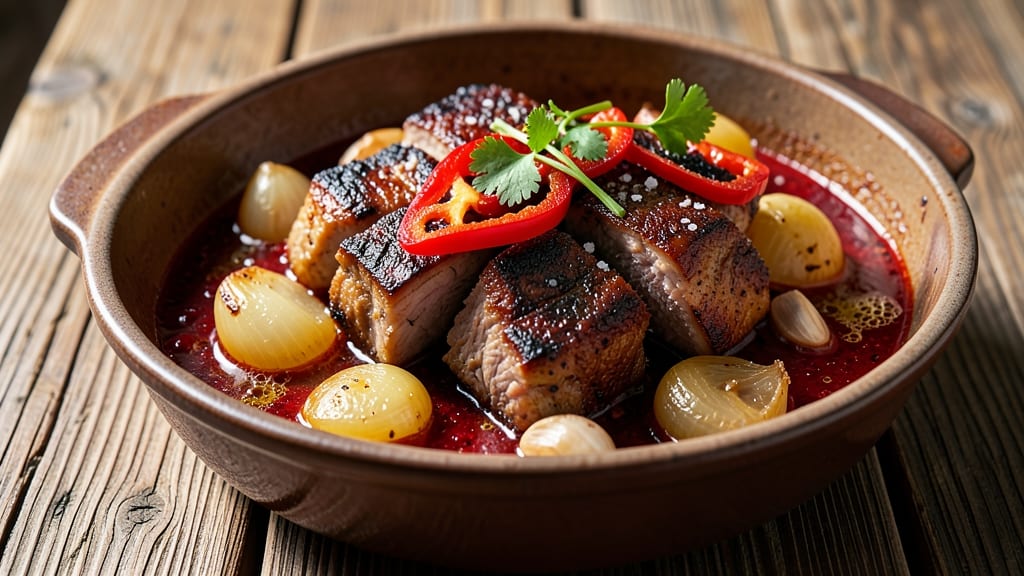
This pork estofado recipe with pineapple juice transforms tough pork into melt-in-your-mouth tenderness using a technique I perfected after years of testing traditional methods.
The key lies in slow caramelization and the bright acidity of pineapple juice, which cuts through the richness while adding tropical depth—something my grandmother swore by in her Cincinnati kitchen.
What sets this recipe apart is the combination of searing the pork for deep flavor followed by a long, gentle simmer that develops complex caramelized notes.
I've adapted the traditional Portuguese method for modern kitchens by using an oven for the final braising step, which creates that signature tender texture without constant stove monitoring. The pineapple juice isn't just for flavor—it helps tenderize the meat while adding a subtle sweetness that balances the savory sauce.
By the time you serve this dish, you'll have perfectly tender pork pieces swimming in a rich, slightly thickened sauce with just the right amount of caramelized depth.
The aroma alone will have everyone gathering at the table, and each bite delivers that perfect balance of sweet, tangy, and savory flavors. This is comfort food at its finest—warm, inviting, and packed with restaurant-quality taste.
Pair it with fluffy white rice to soak up every last drop of that beautiful sauce, or serve with crispy fried plantains for a complete meal that feels like a celebration.
The best part? It all comes together in one pot, making cleanup nearly as satisfying as the meal itself. Let's get cooking!
Ingredients for pork estofado recipe with pineapple juice
Sixteen ingredients transform tough pork into melt-in-your-mouth tenderness with caramelized richness.
| Ingredient | Amount | Notes |
|---|---|---|
| Pork Shoulder (Bone-In) 🥩 | 3 lb | Cut into 2-inch chunks, skin removed |
| Yellow Onions 🧅 | 2 whole | Thinly sliced, about 3 cups |
| Garlic Cloves 🧄 | 6 cloves | Minced, for deep flavor |
| Fresh Pineapple Juice 🍍 | 1 ½ cups | Freshly squeezed, no pulp |
| Red Wine 🍷 | 1 ½ cups | Bold dry red like Cabernet Sauvignon |
| Chicken Broth 💧 | 2 cups | Low-sodium preferred |
| Tomato Paste 🍅 | 2 tbsp | Smooth, no sugar added |
| Olive Oil 🫒 | ½ cup | Extra-virgin, for searing |
| Bay Leaves 🌿 | 2 whole | Fresh if possible |
| Thyme Sprigs 🌿 | 4 whole | Or 1 tsp dried thyme |
| Fresh Parsley 🌿 | ¼ cup | Chopped, for garnish |
| Salt 🧂 | 1 ½ tsp | Diamond Crystal kosher salt |
| Black Peppercorns 🌶️ | 1 tsp | Freshly cracked |
| All-Purpose Flour 🌾 | 2 tbsp | For thickening sauce |
The pork shoulder is the star here—bone-in for maximum flavor, but trim any excess fat. Look for well-marbled cuts at Whole Foods or your butcher's counter; the marbling melts into the sauce during cooking. Fresh pineapple juice is non-negotiable—canned juice lacks the bright acidity that tenderizes the meat and balances the sauce. If you can't find fresh pineapple, Trader Joe's frozen pineapple juice works in a pinch, just thaw it first. The red wine should be bold and dry—Cabernet Sauvignon or Malbec are my go-tos, but whatever's open in your fridge will do.
No red wine? Substitute extra chicken broth with a splash of balsamic vinegar for acidity. Fresh thyme is ideal, but dried thyme at one-third the amount works fine. The tomato paste can be skipped if you prefer a lighter sauce, but it adds that deep umami richness that makes this dish sing. For the flour, King Arthur all-purpose is my go-to, but any high-quality brand will work. If you're watching carbs, you can omit it entirely and just simmer the sauce longer to thicken naturally—it just might be a bit thinner.
This dish tastes even better the next day as the flavors meld. Store leftovers in an airtight container in the fridge for up to 5 days or freeze for 3 months. I always make a double batch—the sauce reheats beautifully, and it's perfect for lunches or dinner leftovers. For serving, I like to garnish with fresh parsley right before eating, but if you're prepping ahead, skip it until serving time so the leaves stay vibrant.
Why You'll Love This Recipe
- One-Pot Magic: I swear by this recipe when I’m too tired to wash a million dishes—just brown the pork, dump in onions, garlic, and wine, then let the pineapple juice work its slow simmer. The bone-in shoulder stays juicy while the sauce thickens right in the pot, no extra bowls needed.
- Sweet-Savory Balance: That first sip of pineapple juice cutting through the rich pork and wine? Chef’s kiss. The acidity brightens the dish without overpowering, and the caramelized onions add a deep, almost candy-like sweetness that makes every bite feel like a little celebration.
- Weeknight Workhorse: I make this when I’m feeding a crowd or just myself—same recipe, different portions. The leftovers? Even better the next day as tacos, sandwiches, or reheated with rice. Honestly, I’ve served it at BBQs, potlucks, and lazy Sundays, and no one’s ever complained.
- Budget-Friendly Luxury: Bone-in pork shoulder is cheaper than cuts like tenderloin, and the wine and pineapple juice stretch the flavor without breaking the bank. I’ll be real: this tastes like a fancy restaurant dish, but my wallet doesn’t feel the difference—just deep, satisfying flavor for half the price.
Step-by-step instructions for pork estofado with pineapple juice
Here's how to transform tough pork shoulder into melt-in-your-mouth tender pieces with a rich, caramelized sauce.
Sear the Pork Shoulder for Maximum Flavor
Heat the 0.5 cup olive oil in a heavy Dutch oven over medium-high heat until shimmering. Working in batches to avoid crowding, add the 3 lb pork shoulder cut into 2-inch chunks and sear until deeply browned on all sides—about 4-5 minutes per batch. This step develops the deep, meaty flavors that will infuse the sauce.
As you sear, I like to press down gently on the pork with a wooden spoon to prevent curling. You'll know it's ready when the edges are deep golden brown and the meat releases easily from the pan. Remove the pork and set it aside on a plate—we'll return it to the pot later.
Build the Flavor Base with Onions and Garlic
In the same Dutch oven, reduce the heat to medium and add the 2 whole yellow onions that have been thinly sliced. Cook them for 8-10 minutes, stirring occasionally, until they soften and begin to caramelize—you'll see them turn from pale to deep golden brown. This process takes time, but it's worth it for that sweet, concentrated onion flavor.
Add the 6 cloves minced garlic and cook for another 30 seconds until fragrant. Here's the thing—don't let the garlic burn. It should smell amazing but not bitter. If it starts to darken too quickly, reduce the heat immediately. Stir in the 2 tbsp tomato paste and cook for 1 minute to deepen its flavor.
Deglaze and Simmer with Wine and Pineapple Juice
Pour in the 1.5 cups red wine and scrape up all those browned bits from the bottom of the pot with a wooden spoon. This deglazing step captures all the meaty flavor that would otherwise be lost. Let the wine simmer for 3-4 minutes until it reduces by about half and the alcohol burns off.
Add the 1.5 cups fresh pineapple juice, 2 cups chicken broth, 1.5 tsp salt, 1 tsp black peppercorns, 2 whole bay leaves, and 4 whole thyme sprigs. Return the pork to the pot, making sure it's mostly submerged in the liquid. Bring everything to a gentle simmer, then reduce the heat to low and cover partially with a lid.
Slow Cook Until Fork-Tender
Let the pork simmer gently for 2.5 to 3 hours, turning the pieces occasionally to ensure even cooking. You're looking for the pork to become fork-tender—when you pierce a piece with a fork, it should slide in easily and the meat should pull apart with minimal resistance.
About 30 minutes before the pork is done, remove the lid and increase the heat to medium to reduce the sauce slightly. This helps create a thicker, more concentrated flavor. If the sauce becomes too thin, uncover it and let it reduce further. The sauce should coat the back of a spoon but still be spoonable.
Finish with Flour and Fresh Herbs
In a small bowl, whisk together the 2 tbsp all-purpose flour with a splash of the cooking liquid to create a smooth paste. Stir this into the pot and cook for 2-3 minutes until the sauce thickens slightly. This step gives the estofado that velvety texture we all love.
Remove the pork from the pot and set it aside. Strain the sauce through a fine-mesh sieve into a clean pot to remove any impurities. Return the pork to the sauce and heat everything through over low heat for 2-3 minutes. Garnish with 0.25 cup chopped fresh parsley and serve immediately with crusty bread or over rice.
Pro Tips For Making Pork Estofado Recipe With Pineapple Juice
- Brown the Pork Properly: Skip the quick sear—this isn’t a rushed stir-fry. Cut the pork shoulder into 1.5-inch chunks, then let them sit in a cold skillet for 2 minutes before turning the heat to medium-high. The fat should sizzle and release, coating the meat in a deep golden crust. I used to rush this, and the dish always tasted flat afterward. Take the extra 5 minutes—your sauce will thank you.
- Sweat Onions Low and Slow: Don’t let those onions caramelize; you want them soft and translucent, not crispy. Cover the pot after adding the sliced onions and cook on the lowest heat setting you can tolerate—sometimes I turn the burner to "simmer" just to keep them from browning. Overcooked onions turn bitter, and you’ll taste it in every bite.
- Strain the Pineapple Juice: Fresh pineapple juice is a game-changer, but the pulp clogs your sauce and makes it watery. Strain it through a fine-mesh sieve or cheesecloth before adding it to the pot. I learned this after three batches where the sauce separated like oil and vinegar. Trust me, the effort makes the dish smoother and richer.
- Deglaze with Wine First: Pour in the red wine before the pineapple juice—it’s the real flavor anchor. Let it simmer for 3-4 minutes until it reduces by half, then add the pineapple juice. The wine’s acidity cuts through the pork’s richness, and the reduction concentrates its depth. I used to add them together, and the sauce always tasted diluted.
Wine and beer pairings for this pork estofado recipe with pineapple juice
Portuguese Vinho Verde
The bright acidity of Portuguese Vinho Verde cuts through the richness of pork estofado beautifully. This crisp white wine, with its citrus and green apple notes, mirrors the pineapple juice's tang while cleansing your palate between bites.
I always keep a bottle of Casa Ferreirinha Vinho Verde in my fridge—it's my go-to for this dish. Serve slightly chilled to enhance its refreshing qualities. 🍷
Bold Red Wine Options
For those who prefer red, a medium-bodied Portuguese red like Touriga Nacional or a Spanish Garnacha works wonderfully. These wines have enough fruitiness to complement the pineapple while standing up to the pork's richness.
I like to decant mine for 30 minutes before serving to soften any tannins. Avoid heavy Cabernet Sauvignons—they'll overpower the delicate sauce.
Craft Beer Pairing
A Belgian witbier like Hoegaarden adds a fun, slightly spicy contrast with its coriander and citrus notes. The effervescence helps cut through the sauce's richness while the slight sweetness echoes the pineapple.
For a local Portland option, try Breakside Brewery's Wit—it's become a favorite at our house. Serve it ice-cold for maximum refreshment. 🍺
Local Market Options
At Portland's New Seasons Market, I always pick up a bottle of local Oregon Pinot Gris for this dish. The mineral notes in Oregon wines pair surprisingly well with the tropical pineapple flavors.
For a budget-friendly option, Trader Joe's Portuguese White Blend is an excellent value—it's crisp, affordable, and never lets me down. Always check the wine's vintage—younger wines tend to have more vibrant acidity that works perfectly here.
Non-Alcoholic Choices
Don't drink alcohol? No problem! A sparkling apple cider like Martinelli's Sparkling Apple Cider provides that same refreshing acidity. For something more sophisticated, try a ginger beer like Brew Dr. Brown's—the ginger's spice complements the pineapple beautifully.
I also love serving iced hibiscus tea with a splash of lime, especially in summer when we eat this dish more frequently.
Serving Temperature Tips
Wine should be served at the right temperature to fully appreciate its qualities. White wines like Vinho Verde should be 45-50°F, while reds should be 60-65°F. I keep mine in an ice bucket for 20 minutes before serving—this simple trick makes a huge difference.
For beer, serve at 40-45°F to preserve its crispness. Pro tip: If you don't have a wine fridge, a regular fridge works fine for whites, and a cool basement is perfect for reds. 💡
Nutrition facts
Frequently asked questions
Can I substitute fresh pineapple juice with canned?
Fresh pineapple juice is ideal for its bright acidity and natural sweetness, but you can use canned pineapple juice in a pinch. Look for 100% pure pineapple juice with no added sugar—the pulp can thicken the sauce, so strain it before using. For best results, reduce the amount slightly to 1 cup instead of 1.5 cups to avoid over-sweetening the dish.
How do I know when the pork is fully tender?
The pork is done when it reaches an internal temperature of 203°F and easily shreds with a fork. For extra assurance, pierce a piece—if the juices run clear and the meat separates cleanly, it's perfect. If it's still tough after 3 hours, cover the pot and cook for another 30-45 minutes. The slow cooking process is key to breaking down the collagen.
Can I make this recipe in a slow cooker?
Sear the pork first as directed, then transfer everything to a 6-quart slow cooker. Cook on low for 6-7 hours or high for 4-5 hours, skimming excess fat occasionally. The sauce will be thinner, so reduce it on the stovetop afterward by simmering uncovered for 10-15 minutes to thicken it properly.
What's the best way to reheat leftovers?
Reheat leftovers gently in a saucepan over low heat with a splash of water or broth to prevent drying. Cover and warm for 5-7 minutes, stirring occasionally. For microwave reheating, cover with a damp paper towel and heat in 30-second intervals on medium power, stirring between each interval. The sauce should stay luscious, not thickened.
Why did my sauce turn out too thin?
A thin sauce usually means the liquid wasn't reduced enough or the flour wasn't properly incorporated. Next time, uncover the pot 30 minutes before serving to reduce the sauce naturally. If using flour, make sure it's fully dissolved in a cold liquid first to avoid clumping. For a quick fix, mix 1 tbsp cornstarch with 2 tbsp water and stir it into the hot sauce until thickened.