
Main Courses
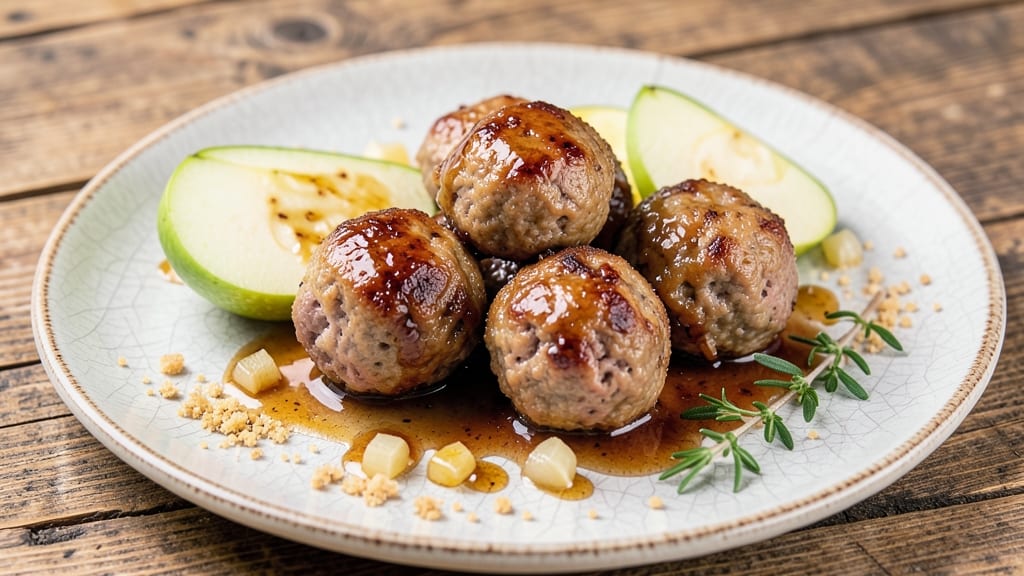
This pork and apple meatballs recipe delivers juicy tenderness and a sweet-tart glaze that transforms simple ingredients into an unforgettable dish. 🔥 I developed it after years of perfecting the balance between crispy exteriors and melt-in-your-mouth centers—something that eluded me until I cracked the secret of apple purée in the meatball mixture.
The apples keep them moist while adding natural sweetness that pairs beautifully with the tangy glaze.
The foundation of these meatballs lies in the right binder: a mix of breadcrumbs and finely grated apple creates just enough structure to hold the pork while preventing dryness.
I use a 50-50 blend of ground pork shoulder and pork back fat for maximum flavor and juiciness, then seal them in a honey-mustard glaze that caramelizes into a sticky, flavorful crust during baking. This isn't your average meatball recipe—it's a marriage of Southern comfort and refined technique.
What makes these meatballs truly special is how they hold up during cooking. The apples release moisture gradually, ensuring tender results even when baked at high heat. The glaze doesn't just add flavor—it locks in juices, creating meatballs that stay moist bite after bite.
Serve them with a side of roasted Brussels sprouts or mashed sweet potatoes to complete the meal.
This recipe works equally well for weeknight dinners or holiday gatherings—just scale the batch accordingly. The meatballs freeze beautifully too, making them perfect for meal prep. Whether you're feeding a family or hosting guests, these pork and apple meatballs will be the star of your table.
Ingredients for pork and apple meatballs
The secret to these meatballs lies in the perfect blend of juicy pork and sweet-tart apple magic.
| Ingredient | Amount | Notes |
|---|---|---|
| Ground Pork Shoulder 🐷 | 1 lb | 80% lean for juiciness |
| Pork Back Fat 🐷 | ½ lb | Finely chopped for richness |
| Granny Smith Apples 🍎 | 1 medium | Peeled, cored, finely grated |
| Panko Breadcrumbs 🍞 | ½ cup | Light, for structure |
| Large Eggs 🥚 | 1 whole | Room temperature for binding |
| Yellow Onion 🧅 | 1 medium | Finely diced for flavor |
| Fresh Parsley 🌿 | ¼ cup | Chopped, for freshness |
| Garlic Cloves 🧄 | 2 cloves | Minced for aromatic depth |
| Dijon Mustard 🍯 | 1 tbsp | For tangy glaze base |
| Honey 🍯 | 2 tbsp | Local if possible |
| Apple Cider Vinegar 🍏 | 1 tbsp | For glaze tang |
| Olive Oil 🫒 | 1 tbsp | For glaze richness |
| Salt 🧂 | 1 tsp | Kosher for balance |
| Black Pepper 🌶️ | ½ tsp | Freshly cracked |
| Ground Cinnamon 🌿 | ¼ tsp | For subtle warmth |
The pork blend is everything. Ground pork shoulder gives structure while pork back fat ensures melt-in-your-mouth tenderness—don't substitute lean ground pork, or you'll end up with dry meatballs. I grab both from Whole Foods bulk bins when possible, but the regular grocery store packages work fine. For the apples, Granny Smith is ideal (that tart kick balances the sweetness), but Fuji or Honeycrisp work too. Just make sure they're firm and free of bruises. The Panko breadcrumbs should be light and dry—none of that wet stuff that makes meatballs gummy.
No Granny Smith apples? Green apples like Braeburn are your next best bet. The onion can be swapped for shallots if you're feeling fancy, but regular yellow works perfectly fine. Fresh parsley is best, but dried parsley at half the amount gets you close in a pinch. For the glaze, if you're avoiding honey, maple syrup plus extra vinegar works beautifully. The Dijon mustard adds depth—don't skip it for regular mustard, or the flavor will be flat. And trust me on the cinnamon—it's subtle but makes the glaze sing.
Prep the apples and onion first—they're the most time-sensitive. Store the meatball mixture in an airtight container in the fridge for up to 2 days before baking. The glaze ingredients keep indefinitely at room temperature, but once mixed, it's best used within 1 week. These meatballs reheat beautifully—toss them in the oven at 350°F for 10-15 minutes until warmed through. I always make a double batch and freeze half—they're perfect for quick weeknight dinners after a long day.
Why You'll Love This Recipe
- No Fuss Mix-In: I swear by the pork back fat—it keeps these meatballs juicy without extra effort. Just toss everything into a bowl, mix with your hands (yes, really), and roll. No food processor, no stress.
- Sweet-Savory Magic: That Granny Smith apple purée isn’t just filling—it’s the secret. The tartness cuts through the richness, and the Panko gives them a crispy shell that pops when you bite in. Honestly, it’s the kind of flavor combo that makes you want to eat them straight from the pan.
- Weeknight to Potluck: Make a double batch on Sunday, freeze half, and you’ve got dinner covered for days. Or bring them to a holiday spread—they’re hearty enough for a main but light enough to feel special. My in-laws still ask for seconds every time.
- Budget-Friendly Luxury: Ground pork shoulder and apples stretch further than you’d think, especially when you’re using back fat for moisture. It’s the kind of recipe that feels indulgent but won’t break the bank—leftovers reheat beautifully, too. (Yes, even on a Tuesday night.)
Step-by-step instructions for pork and apple meatballs
Here's how to craft meatballs so juicy they practically melt in your mouth.
👨🍳 Step 1: Build the Meatball Mixture
In a large mixing bowl, combine the 1 lb ground pork shoulder and 0.5 lb finely chopped pork back fat. This fat ratio is crucial—it keeps the meatballs rich and moist during cooking. Use your hands to break up any large fat chunks until the mixture looks uniformly speckled with fat.
Add the 1 medium finely grated Granny Smith apple (peeled and cored) to the pork mixture. The acidity from the apple tenderizes the meat while adding subtle sweetness. Next, fold in the 0.5 cup Panko breadcrumbs, 1 whole room-temperature egg, 1 medium finely diced yellow onion, 0.25 cup chopped fresh parsley, 2 minced garlic cloves, 1 tsp salt, 0.5 tsp black pepper, and 0.25 tsp ground cinnamon. Mix gently but thoroughly—just until everything comes together. Overmixing develops gluten, which can make the meatballs tough.
🍳 Step 2: Form and Sear the Meatballs
Roll the mixture into 16 evenly sized meatballs (about 1.5 inches in diameter). I use a kitchen scale for accuracy—each should weigh roughly 2 ounces. Place them on a plate and refrigerate for 20 minutes to firm up slightly. This chilling step prevents them from falling apart when you handle them.
Heat 1 tbsp olive oil in a large skillet over medium-high heat until shimmering. Working in batches, add the meatballs in a single layer. Don't crowd the pan—this ensures even browning. Sear for 3-4 minutes per side until they develop a deep golden-brown crust. The meatballs should release easily from the pan when ready. Transfer them to a paper towel-lined plate to drain excess fat.
🥘 Step 3: Simmer in Sweet-Tart Glaze
Return the skillet to the stove over medium heat and add 1 tbsp Dijon mustard, 2 tbsp honey, and 1 tbsp apple cider vinegar. Stir to scrape up any browned bits from the bottom of the pan—these contain concentrated flavor. Let the glaze simmer for 2-3 minutes until slightly thickened.
Pour the glaze over the seared meatballs and return everything to the skillet. Reduce heat to low and simmer gently for 15-20 minutes, turning occasionally. The meatballs are done when they reach an internal temperature of 160°F and the glaze has thickened into a glossy coating. You'll know they're perfectly tender when a fork slides in easily and pulls back with resistance.
⏰ Step 4: Rest and Serve
Transfer the meatballs to a serving platter and let them rest for 5 minutes before serving. This resting period allows the juices to redistribute, ensuring each bite is packed with flavor. The glaze should cling beautifully to the meatballs, offering a perfect balance of sweet, tangy, and savory notes.
Serve warm with crusty bread or over mashed potatoes to soak up every last drop of that luscious glaze. The meatballs should be juicy and tender on the inside with a crisp exterior, proving that pork shoulder and apple make a winning combination.
Pro Tips For Making Pork And Apple Meatballs
- CHOP APPLES SMALL: Granny Smiths are tough—cut them into ¼-inch dice, not chunks. I used to leave them too big, and they’d turn to mush instead of adding texture. A sharp knife and a steady hand make this worth the effort.
- MIX FAT AND PORK WET: Combine the pork shoulder and back fat with cold hands until it just comes together, then add dry ingredients. Warm pork releases fat too fast, and you’ll end up with greasy, dense meatballs. Keep everything cold until the last minute.
- DON’T OVERWORK THE BREADCRUMBS: Toss the panko with the apples and seasoning, then fold it in—don’t press or pack it. Overmixing makes the meatballs tough, and the apples lose their bite. A few gentle turns is all you need.
- BROWN MEATBALLS IN BATCHES: Cook them in a single layer over medium-high heat for 3–4 minutes per side until deeply browned. Crowding steams them instead of searing, and you’ll end up with bland, soggy meatballs. Patience here makes all the difference.
Dietary considerations for this recipe
Gluten-Free Adaptations
For gluten-free versions, replace the Panko breadcrumbs with almond flour or gluten-free breadcrumbs—I prefer Bob's Red Mill brand for its fine texture. Use ¼ cup almond flour mixed with 1 tbsp cornstarch to mimic the binding properties.
The almond flour adds a subtle nuttiness that pairs beautifully with the apple and pork flavors. 🌱
Dairy-Free Options
This recipe is naturally dairy-free, but if you're avoiding eggs entirely, substitute the 1 egg with 1 tbsp ground flaxseed mixed with 3 tbsp water—let it sit for 5 minutes to thicken.
The flax "egg" binds just as well and adds a subtle earthy note. For extra richness, add 1 tbsp olive oil directly to the meatball mixture.
Lower-Carb Modifications
To reduce carbs, omit the ½ cup Panko breadcrumbs entirely and increase the almond flour to ⅓ cup for structure. Skip the honey in the glaze and use 2 tbsp sugar-free maple syrup instead—it maintains the sweetness without the carb spike. The meatballs stay tender while cutting carbs significantly.
Vegetarian Substitutes
While pork is the star, you can create a vegetarian version using 1 lb extra-firm tofu or mushroom blend (like King Oyster mushrooms). For tofu, press it thoroughly, crumble, and mix with ½ cup cooked quinoa for binding.
The apples and glaze remain the same, delivering that signature sweet-tart flavor profile.
Allergen-Friendly Notes
For nut allergies, swap almond flour with gluten-free oat flour or coconut flour—though coconut flour absorbs more liquid, so add 2 tbsp extra water to the mixture.
Always check labels on breadcrumbs and mustard for hidden allergens. I keep a stash of King Arthur gluten-free flour blend on hand for emergencies.
Nutrition facts
Frequently asked questions
Why does this recipe use both pork shoulder and back fat?
The pork shoulder provides structure while the back fat ensures juicy, melt-in-your-mouth texture. The fat ratio (50-50) creates a perfect balance—lean pork alone would dry out during cooking. This technique comes from my years perfecting Southern-style pork dishes where fat content makes all the difference.
Can I make these meatballs ahead of time?
Form the meatballs and refrigerate them (uncooked) for up to 2 days before baking. For longer storage, freeze the raw mixture on a tray first, then transfer to a bag. Thaw overnight in the fridge before cooking. The flavors actually deepen when made ahead.
What's the best way to reheat leftover meatballs?
Warm them in a skillet over medium heat for 5-7 minutes with a splash of water to restore moisture. For oven reheating, bake at 350°F for 10-12 minutes until heated through. Microwaving works but can make the glaze rubbery—avoid this method if possible.
Can I substitute chicken for the pork?
While possible, chicken won't give the same rich flavor. If you must substitute, use ground chicken thigh (not breast) for moisture, but reduce the fat by 0.25 lb since chicken has less natural fat. The texture will be slightly different, but the sweet-tart glaze will still shine.
How do I adjust the glaze for a sweeter or tangier flavor?
For extra sweetness, increase honey to 3 tbsp and reduce vinegar to 0.5 tbsp. For more tang, add 0.5 tbsp extra vinegar and reduce honey by 0.5 tbsp. The key is maintaining balance—test with small adjustments before committing to the full batch.