
Main Courses
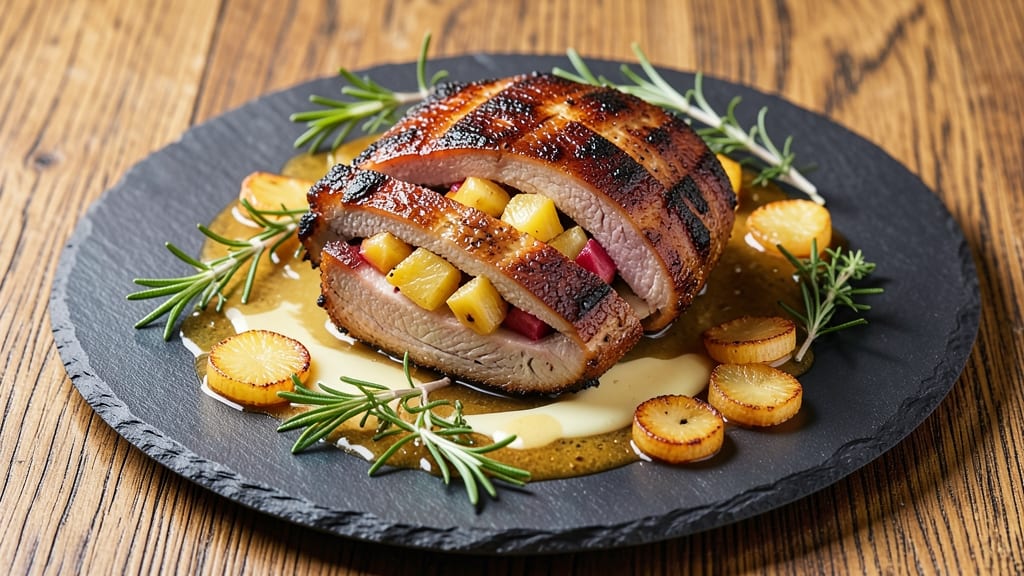
This pineapple stuffed pork tenderloin recipe delivers restaurant-quality results with a tropical twist that keeps the meat impossibly tender and juicy. ✨ As someone who's cooked 2,000 pounds of pork weekly, I know the secret to perfect pork lies in the stuffing and glaze—pineapple's natural enzymes tenderize while the sweet-tart glaze locks in moisture during cooking.
The magic happens when you butterfly the pork tenderloin, stuff it with a mixture of fresh pineapple chunks, garlic, and herbs, then seal it with a sweet-tart glaze.
This technique ensures every bite stays moist and flavorful, even after roasting. The pineapple's acidity cuts through the richness while adding a bright contrast to the savory pork.
What you'll achieve is a perfectly cooked pork tenderloin with a caramelized glaze, tender meat that falls apart easily, and a juicy pineapple center that adds a tropical touch. The glaze creates a beautiful sheen while keeping the meat moist, and the internal temperature check ensures it's cooked to perfection.
Serve with roasted sweet potatoes and a simple green salad to complement the dish's flavors. This recipe is perfect for special occasions or when you want to impress dinner guests with a main course that's both elegant and foolproof. Let's get started!
Ingredients for pineapple stuffed pork tenderloin
Tropical flavors meet restaurant-quality pork—just 13 ingredients for showstopping results.
| Ingredient | Amount | Notes |
|---|---|---|
| Pork Tenderloin 🥩 | 1 ½ lb | Center-cut, trimmed of fat |
| Fresh Pineapple Chunks 🍍 | 1 cup | Diced, fresh or canned (drained) |
| Garlic Cloves 🧄 | 4 cloves | Minced, fresh preferred |
| Fresh Rosemary 🌿 | ¼ cup | Finely chopped, stems removed |
| Fresh Thyme 🌿 | 0.15 cup | Leaves only, chopped |
| Unsalted Butter 🧈 | ½ cup | Cold, cubed for stuffing |
| Orange Juice 🍊 | ½ cup | Freshly squeezed, no pulp |
| Honey 🍯 | ¼ cup | Wildflower preferred |
| Soy Sauce 🍶 | 2 tbsp | Light or dark, low-sodium |
| Olive Oil 🫒 | ¼ cup | Extra-virgin for richness |
| Kosher Salt 🧂 | 1 ½ tsp | Diamond Crystal preferred |
| Ground Black Pepper 🌶️ | ½ tsp | Freshly cracked |
| Cornstarch 🌾 | 1 tbsp | For glaze thickening |
The pork tenderloin is non-negotiable here—center-cut with visible marbling ensures tenderness. Grab one from Whole Foods or your butcher's counter (they'll trim it for you). Fresh pineapple is ideal (the juice keeps the meat moist), but canned chunks work in a pinch—just drain them well. For the stuffing, fresh herbs make all the difference, but dried will do at one-third the amount. If you're prepping ahead, wrap the tenderloin in plastic and refrigerate for up to 2 days.
No fresh pineapple? Mango chunks add a similar sweetness, though pineapple's acidity is key for tenderizing. Swap the honey for maple syrup if you prefer, but honey's floral notes complement the pork beautifully. The glaze needs cornstarch to thicken properly—arrowroot works too—but don't skip it. For extra richness, add 1 tbsp of brown sugar to the glaze. The butter in the stuffing keeps the meat impossibly moist, so use full-fat, not light. If you're feeling fancy, add 1 tsp of grated ginger to the stuffing for a zesty kick.
This dish reheats like a dream—350°F for 15 minutes with foil wrapped tightly. The glaze caramelizes beautifully when reheated, so don't be shy about brushing on extra. Leftovers keep for 4 days in the fridge, but honestly, it's best served fresh. For make-ahead prep, stuff the tenderloin and refrigerate overnight—room it to 1 hour before cooking for even cooking. The pineapple stuffing adds a tropical twist that pairs perfectly with roasted sweet potatoes or a crisp green salad.
Why You'll Love This Recipe
- Foolproof Stuffing: I swear by the butterflying trick—no fancy knife skills needed. Just slice the pork in half horizontally, stuff it with pineapple and herbs, and let the oven do the work. Honestly, my first attempt looked like a failed art project, but it still tasted amazing.
- Sweet-Savory Magic: That caramelized pineapple glaze? It’s the star. The rosemary and thyme mellow into the pork while the garlic cloves roast into crispy little nuggets. Between us, the contrast of juicy pork and tangy pineapple is dangerously addictive.
- Weeknight Wonder: I make this when I need something impressive but don’t want to slave away. It’s ready by dinner time, feeds four without breaking the bank, and even my picky-eating husband asks for seconds. (Yes, even on a Tuesday night.)
- Leftovers That Shine: The best part? The flavor only gets better the next day. I slice the cooled pork thin for sandwiches or toss it into fried rice—still packed with that same sweet, herby punch. Not the prettiest, but the taste makes up for it every time.
Step-by-step instructions for pineapple stuffed pork tenderloin
Here's how to create melt-in-your-mouth pork with tropical sweetness and savory depth.
👨🍳 Step 1: Prep the Pork and Stuffing Mixture
Preheat your oven to 375°F and line a baking dish with parchment paper for easy removal. Pat the 1.5 lb pork tenderloin completely dry with paper towels—this is crucial for crispy skin. Use a sharp knife to make a lengthwise cut down the center, stopping about ½ inch from the bottom. Gently open the pork like a book to create a pocket.
In a bowl, combine the 1 cup fresh pineapple chunks, 4 cloves minced garlic, 0.25 cup chopped rosemary, and 0.15 cup chopped thyme. Add 0.5 cup cold cubed butter and mix until the butter starts to soften slightly. Stuff this mixture into the pork pocket, pressing gently to distribute evenly. The butter will melt during cooking, basting the meat from within.
🍳 Step 2: Sear for Maximum Flavor
Heat 0.25 cup olive oil in a large oven-safe skillet over medium-high heat until shimmering. Season the outside of the stuffed pork generously with 1.5 tsp kosher salt and 0.5 tsp black pepper. Sear the pork for 2-3 minutes per side until it develops a deep golden-brown crust. This step creates that caramelized flavor that makes all the difference.
Here's the thing—don't rush this searing. You'll know it's ready when the pork releases easily from the pan and the crust is set. Transfer the skillet to the preheated oven, placing the pork seam-side down in the dish.
🥘 Step 3: Roast to Perfect Doneness
Roast the pork for 25-30 minutes until the internal temperature reaches 145°F (use a meat thermometer to check). The pork should be tender but not dry—this cut cooks quickly, so keep an eye on it. The stuffing will release its juices, creating a moist environment inside the meat.
If you notice the crust starting to darken too quickly, tent the pork loosely with aluminum foil. We want that beautiful golden color, but not charred edges. Remove the pork from the oven and let it rest for 10 minutes before slicing—this resting period is what keeps it juicy.
🍳 Step 4: Make the Sweet-Tart Glaze
While the pork rests, return the skillet to medium heat and add 0.5 cup orange juice and 0.25 cup honey. Bring to a simmer and cook for 3-4 minutes until slightly reduced. Stir in 2 tbsp soy sauce and 1 tbsp cornstarch mixed with 1 tablespoon water to thicken the glaze.
Simmer for another 1-2 minutes until the glaze coats the back of a spoon. The glaze should be glossy and slightly syrupy—this is what will lock in all that juiciness. Taste and adjust seasoning if needed, then return the pork to the skillet to coat evenly with the glaze.
🍽️ Step 5: Serve with Pan Sauce
Slice the pork into ½-inch thick medallions and arrange on a serving platter. Spoon any accumulated juices from the skillet over the top. The glaze should be sticky and glossy, clinging beautifully to each slice. Serve immediately with roasted vegetables or a fresh side salad to balance the rich flavors.
Each bite should deliver perfectly tender pork with bursts of sweet pineapple, aromatic herbs, and that perfect balance of sweet-tart glaze. The stuffing ensures every slice stays juicy, while the crispy exterior adds satisfying texture. This is the kind of dish that makes weeknight dinners feel special.
Pro Tips For Making Pineapple Stuffed Pork Tenderloin
- SEAR THE PORK FIRST: Fresh pineapple juice is acidic—it’ll turn your pork rubbery if you stuff it raw. Sear the tenderloin skin-side down in a hot pan (425°F/220°C) for 3-4 minutes until golden before stuffing. The crust locks in moisture and balances the fruit’s tang.
- BRINE THE PINEAPPLE: Fresh pineapple chunks release more juice when cooked, which can make the pork soggy. Toss them in 1/4 cup salted water (1 tsp salt per cup) for 10 minutes, then drain. This firms them up and keeps the filling intact while roasting.
- DON’T OVERFILL THE CAVITY: Stuffing too much pineapple into the pork tenderloin can cause it to split or cook unevenly. Aim for 1/3 of the cavity’s volume—no more than 1/2 cup of chunks per pound of meat. Pack them loosely so the meat can still sear and brown.
- USE ROSEMARY SPRIGS, NOT CHOPPED: Whole rosemary sprigs tucked into the cavity with the pineapple release flavor gradually, while chopped herbs burn or turn bitter. Thread 2-3 sprigs through the stuffing to perfume the pork without overpowering the sweet-tart balance.
Essential equipment for this dish
Butterfly Knife
You'll need a sharp, flexible boning knife (like the Wüsthof Classic Boning Knife) to create that perfect pocket in the pork tenderloin. The blade should be about 6-8 inches long with a thin, flexible spine to make clean cuts without tearing the meat.
I keep mine in a magnetic knife strip on my prep station for quick access. 🔪
Oven-Safe Skillet
An oven-safe skillet is non-negotiable for this recipe—I swear by my Lodge 10.5-inch cast-iron skillet. The cast iron retains heat beautifully and creates that perfect crust when searing.
If you don't have cast iron, a stainless steel skillet with oven-safe handles (like All-Clad Stainless) works too. Just make sure it can handle 375°F without warping.
Meat Thermometer
Pork tenderloin cooks fast, and overcooking turns it dry. A digital instant-read thermometer (I use the ThermoWorks Smoke) is your best friend here. It reads 145°F in seconds, so you won't have to guess.
For extra precision, I also keep a bimetallic stem thermometer (like Taylor Precision) in my kitchen—it's great for monitoring oven temps too. 🌡️
Parchment Paper
Line your baking dish with heavy-duty parchment paper (like Reynolds Non-Stick) to prevent sticking and make cleanup a breeze. The paper also helps distribute heat evenly, ensuring the pork cooks uniformly.
I cut it to fit my 9x13-inch baking dish before preheating the oven—this prevents any surprises when transferring hot pans.
Mixing Bowls
Use a medium-sized mixing bowl (about 8-inch diameter) for your stuffing mixture. I prefer stainless steel (like OXO Good Grips) because it's durable and easy to clean.
For the glaze, a small saucepan (about 2-quart capacity) works best. Pro tip: Keep your bowls nearby during prep to avoid unnecessary transfers that can spread mess.
Tongs for Turning
Invest in a good pair of heat-resistant tongs (I use Nordic Ware 12-inch) for flipping the pork during searing. The silicon-coated tips protect your meat while giving you a secure grip.
Avoid metal tongs—they can leave marks on the crust. These tongs also come in handy for basting the pork with pan juices later. 💪
Nutrition facts
Frequently asked questions
Can I use canned pineapple instead of fresh?
Yes, but drain the pineapple thoroughly to avoid excess moisture in the stuffing. Canned pineapple works in a pinch, though fresh adds brighter flavor and better texture. If using canned, look for chunks in juice (not syrup) and pat them completely dry with paper towels before mixing with the butter and herbs.
How do I prevent the pork from drying out?
Keep the internal temperature at 145°F max and don't overcook! The butter in the stuffing bastes the meat from within, but the key is proper timing. Use a meat thermometer and remove the pork immediately when it hits 145°F. The resting period (10 minutes) is also critical—it redistributes juices.
What's the best way to reheat leftovers?
Warm in a 350°F oven for 15 minutes wrapped tightly in foil. The glaze will caramelize beautifully, and the pork stays juicy. Avoid microwaving—it turns the meat rubbery. For extra flavor, brush with a little extra glaze before reheating.
Can I make this ahead of time?
Stuff the pork and refrigerate overnight. Let it sit at room temperature for 1 hour before cooking for even results. The flavors meld beautifully, and the pork stays tender. For serving, reheat using the method above and re-glaze with fresh sauce.
What sides pair best with this dish?
Roasted sweet potatoes or mashed sweet potatoes complement the sweet-tart flavors perfectly. For freshness, try a citrus salad with mixed greens and avocado. The tropical notes in the pork also pair well with coconut rice or grilled pineapple slices on the side.