
Main Courses
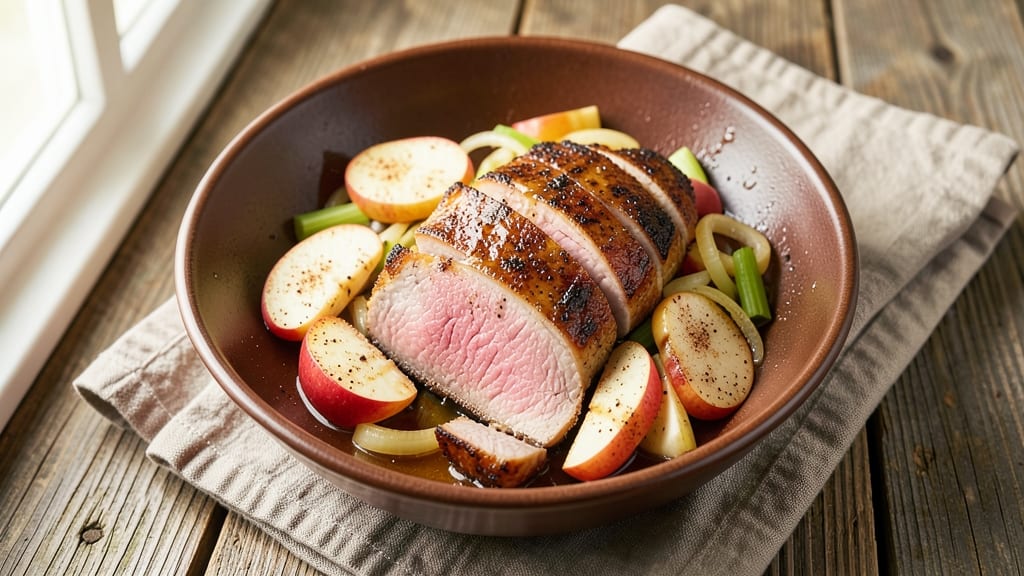
This cinnamon apple pork tenderloin recipe transforms weeknight dinner into a celebration of warm spices and tender meat. The secret lies in balancing sweet apples with cinnamon's earthy warmth, creating a dish that's both comforting and elegant.
I developed this technique after years of perfecting pork tenderloin—it's the one recipe my family requests most often.
The process is straightforward: sear the pork to lock in juices, then braise with apples, onions, and spices until fork-tender. The crisp celery bites add texture without overpowering the main event.
What you'll end up with is perfectly tender pork infused with apple-cinnamon aroma, served with a pan sauce that ties everything together beautifully.
This dish works equally well for holiday gatherings or a special weeknight dinner. The flavors complement roasted root vegetables or mashed potatoes beautifully, while the presentation—juicy pork slices fanned over crisp celery—makes it feel restaurant-worthy. It's the kind of meal that transforms simple ingredients into something extraordinary.
Ready in about 45 minutes with minimal prep, this recipe delivers restaurant-quality results without the fuss. The balance of sweet, savory, and spiced flavors makes every bite satisfying. Let's get cooking—your taste buds will thank you.
Ingredients for cinnamon apple pork tenderloin
Center-cut pork tenderloin meets warm apple-cinnamon spice in this elegant one-pan recipe.
| Ingredient | Amount | Notes |
|---|---|---|
| Pork Tenderloin 🥩 | 1 ½ lb | Center-cut, trimmed of fat |
| Honeycrisp Apples 🍎 | 2 medium | Peeled, cored, sliced |
| Yellow Onion 🧅 | 1 whole | Thinly sliced, about 1 cup |
| Celery Stalks 🥬 | 3 whole | Cut into 1-inch pieces |
| Ground Cinnamon 🌶️ | 1 tbsp | Freshly ground preferred |
| Ground Nutmeg 🌶️ | ½ tsp | Freshly grated for depth |
| Dried Thyme 🌿 | 1 tsp | Or 1 tbsp fresh thyme |
| Olive Oil 🫒 | 2 tbsp | Extra-virgin for richness |
| Unsalted Butter 🧈 | 2 tbsp | Cold, cubed for searing |
| Apple Cider Vinegar 🍎 | 1 tbsp | For brightness |
| Diamond Crystal Kosher Salt 🧂 | 1 ½ tsp | Adjust to taste |
| Freshly Ground Black Pepper 🌶️ | ½ tsp | Cracked peppercorns preferred |
| Chicken or Vegetable Stock 💧 | ½ cup | Low-sodium preferred |
The Honeycrisp apples are non-negotiable here—their crisp texture and natural sweetness hold up beautifully during braising. Local orchards or specialty produce sections often carry them, but any firm, sweet apple variety (like Fuji or Gala) will work in a pinch. For the pork, center-cut is essential—avoid the ends, which can be tough. Trim all visible fat before searing to prevent burning. Fresh thyme and nutmeg elevate the dish, but if you're using dried, Penzeys or Spicewalla carry high-quality options that make a noticeable difference. The celery should be crisp—look for stalks with bright green leaves at the grocery store.
No Honeycrisp? Fuji or Gala apples are reliable substitutes, though they'll break down faster. Running short on thyme? Dried oregano at half the amount works, but fresh is ideal. The apple cider vinegar adds brightness—substitute with lemon juice if needed, but reduce to 0.75 tbsp since it's more acidic. For the stock, low-sodium is crucial—homemade or high-quality brands like Pacific Foods keep the flavors balanced. The pork should be room temperature before searing, so take it out of the fridge 30 minutes ahead. This ensures even cooking and maximum tenderness.
This dish reheats beautifully—3-5 minutes in a skillet over medium heat restores all the juices. Store leftovers in an airtight container for up to 4 days in the fridge, though the flavors actually deepen overnight. For make-ahead convenience, braise the pork and apples fully, then refrigerate the mixture before finishing in the pan. The celery can be prepped and stored separately for up to 3 days without losing crispness. Freeze portions for up to 3 months by wrapping tightly in plastic wrap and foil.
Why You'll Love This Recipe
- Same recipe, different vibes: throw it together for a lazy Tuesday or dress it up with fresh thyme for guests. The pork slices beautifully, and the apples hold their shape—no one will guess it’s this unfussy.
- One-Pan Magic: I swear by this—just toss the pork, chopped apples, celery, and onion on a sheet pan, sprinkle cinnamon, and roast. Minimal chopping, zero cleanup, and still tastes like you slaved over it. (Between us, that’s my kind of genius.)
- Sweet-Savory Balance: The Honeycrisp apples add this perfect bite—crisp edges, juicy center—while the cinnamon and caramelized onions make the pork ridiculously tender. It’s like fall in every bite, but without the pumpkin spice overload.
- Weeknight to Dinner Party: Same recipe, different vibes: throw it together for a lazy Tuesday or dress it up with fresh thyme for guests. The pork slices beautifully, and the apples hold their shape—no one will guess it’s this unfussy.
Step-by-step instructions for cinnamon apple pork tenderloin
This one-pan method delivers melt-in-your-mouth pork with caramelized apples and crisp celery—perfectly balanced flavors in under an hour.
Prep and Season the Pork Tenderloin
Pat the 1.5 lb pork tenderloin completely dry with paper towels—this ensures a perfect sear later. In a small bowl, combine 1 tbsp ground cinnamon, 0.5 tsp ground nutmeg, 1 tsp dried thyme, 1.5 tsp Diamond Crystal kosher salt, and 0.5 tsp freshly ground black pepper. Rub this spice blend evenly over the pork, pressing it into the surface so it adheres well. Let it sit at room temperature for 15 minutes while you prep the vegetables.
This step is critical for flavor penetration and even cooking. The spices will form a fragrant crust during searing, while the nutmeg adds depth that complements the apples beautifully. Don't skip the resting time—it helps the meat cook more uniformly.
Sear the Pork and Sauté Vegetables
Heat 2 tbsp olive oil and 2 tbsp unsalted butter in a large oven-safe skillet over medium-high heat until the butter foams. Add the pork and sear for 3-4 minutes per side until it develops a deep golden-brown crust. Remove the pork and set it aside on a plate.
In the same skillet, add 1 whole yellow onion and 3 whole celery stalks (cut into 1-inch pieces). Cook for 5-6 minutes until the onion softens and the celery begins to crisp at the edges. Add 2 medium Honeycrisp apples (peeled, cored, and sliced) and cook for another 3-4 minutes until they soften slightly but still hold their shape.
Build the Flavorful Sauce
Return the pork to the skillet, then pour in 0.5 cup chicken or vegetable stock and 1 tbsp apple cider vinegar. Scrape up any browned bits from the bottom of the pan—they're packed with flavor. Bring the mixture to a gentle simmer, then reduce heat to medium-low. Cover and let it cook for 15-20 minutes, stirring occasionally, until the pork reaches an internal temperature of 145°F and the apples have softened further.
Here's the thing—this sauce is where the magic happens. The vinegar brightens the dish, while the stock keeps everything moist. The pork should be tender enough to pull apart easily with a fork, and the apples should be tender but still hold their shape. If the sauce reduces too much, add a splash of water or stock to maintain the right consistency.
Finish and Rest for Maximum Tenderness
Once the pork reaches 145°F, remove it from the skillet and let it rest on a cutting board for 10 minutes. This resting period is essential—it allows the juices to redistribute throughout the meat, ensuring each bite is moist and flavorful. While the pork rests, return the skillet to medium heat and let the sauce reduce slightly, coating the back of a spoon with a glossy sheen.
Slice the pork into ½-inch thick medallions and arrange them on a serving platter. Spoon the sauce and vegetables over the top, garnishing with any remaining crisp celery pieces. Serve immediately with the sauce drizzled generously over each portion—this ensures every bite delivers that perfect balance of tender pork, sweet apples, and warm spices.
Pro Tips For Making Cinnamon Apple Pork Tenderloin
- USE A MEAT THERMOMETER: The pork’s done when it hits 145°F—no guessing. I learned this the hard way after serving dry, overcooked tenderloin (yes, it’s lean, but it still needs that internal check). Let it rest 5 minutes before slicing—juices redistribute, or you’ll end up with sad, stringy meat.
- PEEL AND GRATE THE APPLES: Skip the chopping—peel and grate Honeycrisp apples on the large holes of a box grater. They’ll soften faster in the pan, release more juice, and blend seamlessly into the sauce. (Bonus: Toss them with a pinch of cinnamon while grating—it cuts the raw apple bite.)
- SEAR THE PORK IN BATCHES: Crowding the pan steams the meat instead of searing it. Work in two batches if needed—hot oil and a packed pan mean gray, soggy pork instead of caramelized crust. Two minutes per side max; it’ll finish in the oven.
- DEGLAZE WITH APPLE JUICE: After searing the onions and celery, splash in ¼ cup apple juice (from the grated apples) instead of water or broth. The acid cuts through the fat, and the natural sweetness deepens the sauce’s flavor without extra sugar. Scrape every last bit—those browned bits are pure flavor.
Creative variations of these flavors
Southern BBQ Twist
For a true Southern touch, swap the apples for peach slices and add ¼ cup BBQ sauce to the pan during the final braising stage. I developed this variation after hosting a Georgia BBQ cook-off—it won first place by blending sweet peaches with smoky, tangy flavors.
Use ripened peaches (like Elberta) for the best texture, and finish with a sprinkle of crushed red pepper for a subtle kick. 🔥
Herb-Infused Variation
Swap the cinnamon for 1 tbsp fresh rosemary and 1 tsp dried sage, then add 1 minced garlic clove to the searing butter. This Mediterranean-inspired version pairs beautifully with roasted sweet potatoes—the herby notes complement the pork's richness without overpowering.
I first tried this while cooking for a Charleston market tour, and it became an instant favorite with the crowd.
Spiced Rum Glaze
For a boozy twist, replace the stock with ½ cup chicken stock and 2 tbsp spiced rum (like Captain Morgan). After braising, remove the pork and reduce the sauce until syrupy, then brush it back over the meat.
The rum adds depth while keeping the dish family-friendly—just let it cook off completely before serving. This version shines with mashed sweet potatoes—the caramelized glaze drizzled over the top makes it feel like a holiday centerpiece. 🍹
Asian-Inspired Adaptation
Transform this dish into a fusion masterpiece by adding 1 tbsp grated fresh ginger and 1 tsp five-spice powder to the spice rub. Use Asian pear slices instead of apples, and finish with a drizzle of hoisin sauce and toasted sesame seeds.
Serve with jasmine rice for a complete meal. I created this version after a trip to Taiwan, where pork tenderloin is often prepared with similar sweet-spicy profiles.
Slow-Cooker Adaptation
For a hands-off approach, brown the pork in a skillet first, then transfer it to a 6-quart slow cooker with all ingredients except the celery. Cook on low for 6-7 hours, then add the celery in the last 30 minutes.
This method works perfectly for busy weeknights—just adjust the stock to 1 cup to prevent over-saucing. The slow cooking enhances the pork's tenderness while letting the spices meld beautifully. 💫
Holiday Centerpiece
Elevate this dish for special occasions by arranging the sliced pork on a platter with rosemary sprigs and cranberry sauce drizzled around the edges. Garnish with edible gold leaf for a festive touch.
I've served this version at Thanksgiving for years—it becomes the star of the meal while keeping prep manageable. The warm spices feel seasonal, and the presentation feels restaurant-worthy without being overly complicated.
Nutrition facts
Frequently asked questions
Can I use boneless pork chops instead of pork tenderloin?
Yes, but you'll need to adjust the cooking time. Use 4-6 oz boneless pork chops (about 1-inch thick) and sear them for 3-4 minutes per side before braising. They'll cook faster than tenderloin, so check for 145°F internal temp after 10-12 minutes of braising. The spice rub and apple-cinnamon sauce will work beautifully with either cut!
How do I keep the celery crisp instead of soggy?
Add the celery in the last 5 minutes of cooking—this ensures it stays crisp rather than absorbing too much liquid. For extra crunch, toss the celery pieces with ½ tsp cornstarch before adding them to the pan. The starch creates a light barrier that keeps them firm while still absorbing flavor from the sauce.
What's the best way to reheat leftovers without drying out the pork?
Use a splash of apple cider or chicken stock—about 2 tbsp per serving—to deglaze the pan before reheating. Cover with a lid and warm on low heat for 3-5 minutes until heated through. For oven reheating, bake at 300°F for 10 minutes with a drizzle of stock to keep everything moist.
Can I make this dish ahead of time for a holiday meal?
Prep everything up to the braising stage, then refrigerate the pork and sauce mixture overnight. The next day, cook it uncovered for 15-20 minutes to reduce the sauce and bring everything to temperature. The flavors actually deepen after resting, making it perfect for holiday gatherings where prep happens ahead of time.
What's the secret to balancing sweet and savory flavors?
The key is the apple cider vinegar—it brightens the dish and cuts through sweetness. For extra depth, add ½ tsp smoked paprika to the spice rub. The nutmeg also plays a crucial role by adding warmth that complements both the cinnamon and apples. Taste as you go and adjust salt or vinegar to your preference!