
Sauces & Condiments
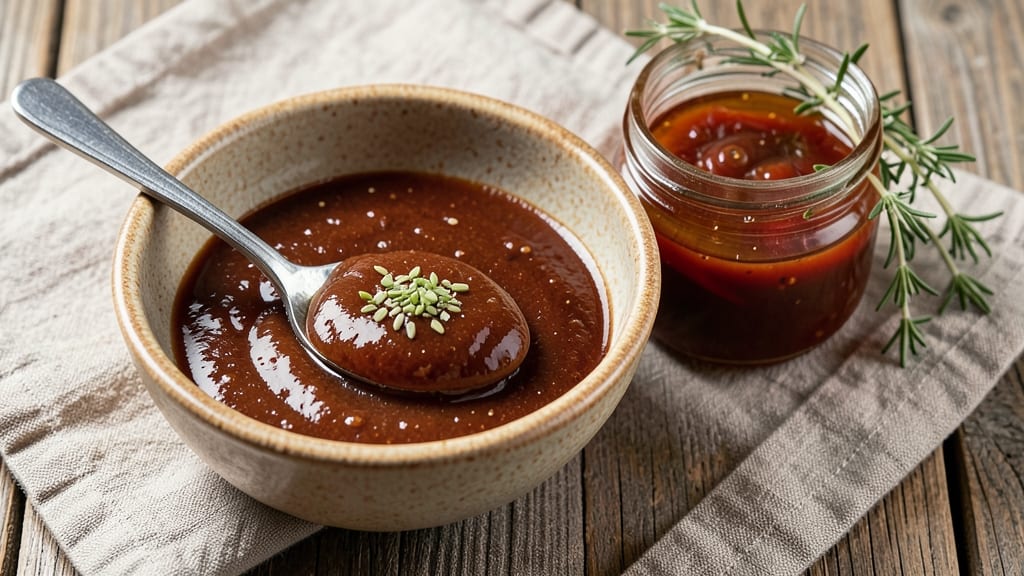
This smoky-sweet BBQ sauce recipe no apple cider vinegar delivers restaurant-quality depth without relying on apple cider vinegar, using celery seeds and black pepper for a subtle crunch that elevates every bite.
The secret lies in balancing molasses and brown sugar for caramelized richness while white vinegar provides the tang needed to cut through the sweetness.
I developed this recipe after realizing many traditional BBQ sauces depend too heavily on apple cider vinegar, which can be hard to find or substitute in a pinch.
The sauce builds layers of flavor through slow simmering, allowing the spices to bloom and the sugars to meld into a glossy, clingy consistency. Celery seeds add an earthy depth, while black pepper provides a gentle kick that enhances rather than overpowers.
This version works equally well on ribs, pulled pork, or even as a glaze for grilled vegetables. The sauce thickens beautifully when reduced, creating that perfect balance between smooth and slightly textured.
What makes this recipe stand out is its versatility—it stores well in the refrigerator for up to two weeks or can be frozen for longer shelf life. The smoky-sweet profile pairs perfectly with bold meats like brisket or chicken, but it also shines as a marinade or dipping sauce.
The celery pepper crunch adds a subtle complexity that sets it apart from standard BBQ sauces, making it a go-to for both grilling and weeknight meals. Once you taste the difference, you’ll never reach for store-bought again.
The slow reduction process ensures a deep, concentrated flavor that’s impossible to achieve with quick recipes. Whether you’re hosting a backyard barbecue or meal prepping for the week, this sauce delivers professional results with simple ingredients and straightforward technique.
Ingredients for bbq sauce recipe no apple cider vinegar
Eleven simple ingredients crafting restaurant-quality BBQ sauce without apple cider vinegar.
| Ingredient | Amount | Notes |
|---|---|---|
| Molasses 🍯 | ½ cup | Unsulphured for deeper flavor |
| Light Brown Sugar 🍚 | ¾ cup | Packed firmly for accuracy |
| White Vinegar 💧 | ½ cup | Distilled for clean tang |
| Tomato Paste 🍅 | ½ cup | High-quality, no salt added |
| Water 💧 | ½ cup | Filtered for best taste |
| Celery Seeds 🌿 | 1 tsp | Ground for earthy depth |
| Ground Black Pepper 🌶️ | ½ tsp | Freshly cracked for heat |
| Onion Powder 🧅 | 1 tsp | For subtle sweetness |
| Garlic Powder 🧄 | 1 tsp | Freshly ground preferred |
| Smoked Paprika 🌶️ | 1 tsp | For authentic smokiness |
| Salt 🧂 | 1 tsp | Kosher or sea salt |
Molasses and brown sugar are the flavor anchors here. Grocery store brands work fine, but if you want to splurge, Whole Foods or Trader Joe's carry high-quality unsulphured molasses that elevates the sauce. The tomato paste? Muir Glen is my go-to—it's consistent and free of additives. Celery seeds can be tricky to find, so check the spice aisle near the celery or order online if needed. For smoked paprika, Penzeys or McCormick are reliable brands that deliver authentic smokiness without bitterness.
No white vinegar? Red wine vinegar or lemon juice works in a pinch, though white provides the cleanest tang. Short on celery seeds? Ground coriander at half the amount mimics the earthiness. Tomato paste tubes are perfect here—no waste, and they keep for months in the pantry. The brown sugar should be packed firmly to avoid under-measuring. If you prefer a smoother sauce, blend the finished mixture for 10 seconds to break up any texture. For extra depth, toast the spices in a dry pan for 30 seconds before adding to the sauce.
This sauce thickens as it cools, so store it in an airtight container with a thin layer of oil on top to preserve freshness. Keeps in the fridge for 2 weeks or freezes for 6 months. I double the batch and freeze half—perfect for future BBQs. The sauce reheats beautifully; just warm it gently on the stove or microwave until bubbly. For a smoother texture, strain before using, but I prefer the subtle crunch from the celery seeds.
Why You'll Love This Recipe
- Pantry Magic: I swear by this sauce because it uses stuff I already have—no special trips to the store. Molasses and brown sugar give it that deep, caramelized richness without needing fancy ingredients.
- Sweet Heat Balance: Honestly, the white vinegar cuts through the sweetness just right, giving it a tangy kick. It’s not too cloying, not too sharp—just that perfect smoky-sweet bite that makes you reach for more.
- Weeknight Hero: Between us, this is my go-to for quick grilled chicken or baked beans. Simmer it down, and it’s ready in the time it takes to wait for the oven to preheat. (Yes, even on a Tuesday night.)
- Budget-Friendly Staple: A single batch stretches across meals—slather it on ribs, drizzle it over fries, or toss it with roasted veggies. The tomato paste adds body, so you don’t need expensive shortcuts. My wallet thanks me every time.
Step-by-step instructions for smoky-sweet BBQ sauce
This method delivers a bold, balanced sauce with deep molasses sweetness and celery pepper complexity.
Combine Base Ingredients in a Saucepan
In a medium saucepan, whisk together the 0.5 cup molasses, 0.75 cup light brown sugar, and 0.5 cup white vinegar. I like to use a wooden spoon for this step—it helps scrape up any sugar that clings to the sides. Bring the mixture to a gentle boil over medium heat, stirring occasionally to prevent scorching. You'll notice the sugar starts to dissolve, creating a thick, syrupy base.
Once boiling, reduce heat to medium-low and let it simmer for 5 minutes. This initial simmer helps break down the sugar molecules, creating a smoother texture for your sauce. If you see any sugar crystals forming at the edges, gently stir them back into the mixture to ensure complete integration.
Incorporate Tomato Paste and Water
Add the 0.5 cup tomato paste and 0.5 cup water to the saucepan. Stir well to combine, scraping the bottom and sides to prevent any ingredients from sticking. The tomato paste will thicken the mixture immediately, while the water helps balance the intensity. Return the heat to medium and let the sauce simmer for another 8-10 minutes, stirring frequently.
During this time, you'll see the sauce transform from a thick syrup into a smoother, more cohesive mixture. The aroma will become rich and complex—molasses sweetness blending with the tangy vinegar and earthy tomato. This is where the foundation of your BBQ sauce develops, so don't rush this step. The sauce should reduce slightly, becoming thicker and more concentrated.
Add Spices and Simmer to Perfection
In a small bowl, combine the 1 tsp celery seeds, 0.5 tsp ground black pepper, 1 tsp onion powder, 1 tsp garlic powder, 1 tsp smoked paprika, and 1 tsp salt. Sprinkle this spice blend into the simmering sauce and stir vigorously to distribute evenly. The celery seeds will add a subtle earthy crunch, while the smoked paprika brings that authentic barbecue smokiness we're after.
Continue simmering the sauce for an additional 10-12 minutes over low heat. You're looking for a sauce that coats the back of a spoon but still has a smooth, pourable consistency. If it thickens too much, you can thin it with a splash of water—just 1 tablespoon at a time—until you reach your desired texture. The sauce should be glossy and rich, with a deep amber color that indicates proper caramelization.
Cool and Adjust Seasoning
Remove the saucepan from heat and let the sauce cool for 10 minutes. This cooling period allows the flavors to meld and the texture to set properly. Once cooled, taste the sauce and adjust the seasoning if needed. You might find it needs a touch more salt to balance the sweetness, or perhaps a hint of additional smoked paprika for more depth.
For best results, transfer the sauce to a clean jar and let it sit at room temperature for at least 4 hours before using. This resting period allows the flavors to fully develop and mature. The sauce will thicken slightly as it cools, creating that perfect consistency for glazing meats or basting ribs. Store any leftovers in the refrigerator for up to 2 weeks, or freeze for longer storage.
Pro Tips For Making Bbq Sauce Recipe No Apple Cider Vinegar
- STIR CONSTANTLY FIRST 10 MINUTES: I learned this the hard way—skipping this step means you’ll end up with a lumpy, uneven sauce. The molasses and brown sugar clump like glue when they hit the heat, so keep a wooden spoon moving until everything dissolves completely. (Yes, even if you’re impatient like me.)
- USE WHITE VINEGAR SPARINGLY: Too much white vinegar makes this sauce taste harsh and one-dimensional. Start with ¼ cup and adjust only if the flavor feels flat—you can always add a splash later, but you can’t take it out. (And trust me, you’ll want to.)
- SIMMER LOW AND SLOW: After the initial boil, drop the heat to medium-low and let it bubble gently for at least 20 minutes. Rushing this step turns the sauce into a sticky mess instead of a rich, balanced glaze. (Your future ribs will thank you.)
- WHISK IN TOMATO PASTE FIRST: Mix the tomato paste into the cold water before adding it to the pot—this prevents clumping and ensures a smoother texture. I was skeptical until I tried it, and now I never skip it. (No, it doesn’t taste like tomato soup.)
Pro cooking tips for bbq sauce recipe no apple cider vinegar
Simmering Mastery
Your simmering technique is the foundation of this sauce—never let it boil vigorously after adding spices. I use low heat after the initial boil to prevent scorching the molasses and sugars, which can create bitter flavors.
A gentle simmer (small bubbles breaking the surface) allows the ingredients to meld without losing moisture or developing harsh notes. 🔥
For even better results, use a heavy-bottomed saucepan (like All-Clad or Calphalon) to distribute heat evenly. If your sauce starts sticking, add 1 tablespoon water and scrape the bottom with a silicone spatula—this prevents flavor loss from burnt bits.
Spice Blooming
Toast your spices in a dry pan for 30 seconds before adding them to the sauce—this releases their essential oils and deepens their flavor. The celery seeds and smoked paprika are particularly important here; their aromas will transform your sauce from good to extraordinary.
I like to grind the celery seeds lightly with a mortar and pestle for extra intensity.
If you don’t have celery seeds, ground coriander (½ tsp) or fennel seeds (¼ tsp) work as substitutes, though they’ll alter the flavor profile slightly. The black pepper should be freshly cracked—pre-ground pepper loses its potency quickly.
Texture Control
The sauce should coat the back of a spoon but remain pourable when finished. If it thickens too much during simmering, thin it with water (1 tbsp at a time) until it reaches your desired consistency.
For a smoother finish, blend the cooled sauce for 10 seconds—this breaks up any texture from the celery seeds while keeping their subtle earthiness.
If you prefer a chunkier sauce, skip blending and let the seeds add a pleasant crunch. The sauce will thicken further as it cools, so adjust while it’s still warm to avoid over-thickening.
Flavor Development
Let the sauce rest for at least 4 hours (or overnight) before using—this allows the flavors to fully meld. The molasses and brown sugar will caramelize slightly, deepening the sweetness, while the white vinegar mellows out, creating a balanced tang.
I often make this sauce the night before so the flavors have time to develop completely.
Taste and adjust seasoning after cooling. Most sauces need a pinch more salt (I usually add another ¼ tsp) to balance the sweetness. For extra depth, a splash of red wine (1 tbsp) or a pinch of ground cinnamon (¼ tsp) can elevate the flavor profile.
Nutrition facts
Frequently asked questions
Can I substitute white vinegar with something else?
For a slightly different profile, use red wine vinegar (same amount) for depth or lemon juice (reduce to ¼ cup) for brightness. Avoid balsamic vinegar—it's too sweet and will throw off the balance. If you prefer a milder tang, try rice vinegar (½ cup), but it lacks the sharpness of white vinegar.
Why does my sauce turn out too thick?
Sauces naturally thicken as they cool, but if it's too thick while warm, you've likely reduced it too much. Thin with 1 tablespoon water at a time until it reaches a pourable consistency. For future batches, reduce simmering time by 2-3 minutes or add 1 extra tablespoon water at the start. The ideal texture coats the back of a spoon but remains smooth.
How can I make this sauce spicier?
Add ½ teaspoon cayenne pepper or 1 teaspoon hot paprika when combining spices. For heat with depth, try ½ teaspoon chipotle powder or a pinch of cayenne plus ½ teaspoon smoked paprika. Always taste first—spices intensify as the sauce cools!
Can I use this sauce on non-meat dishes?
Yes! This versatile sauce glazes grilled vegetables (like eggplant or portobello mushrooms) beautifully, and it's perfect for baked potatoes or tofu. For seafood, reduce the molasses to ¼ cup to avoid overpowering delicate flavors. The smoky-sweet profile also works well as a dipping sauce for fries or pretzels.
How do I store leftovers?
Transfer cooled sauce to an airtight container and refrigerate for up to 2 weeks. For longer storage, freeze in ice cube trays (perfect for small batches) or silicone molds, then transfer to a freezer bag. Thaw overnight in the fridge—never microwave directly from frozen. Add 1 teaspoon water when reheating to restore texture.