
Sauces & Condiments
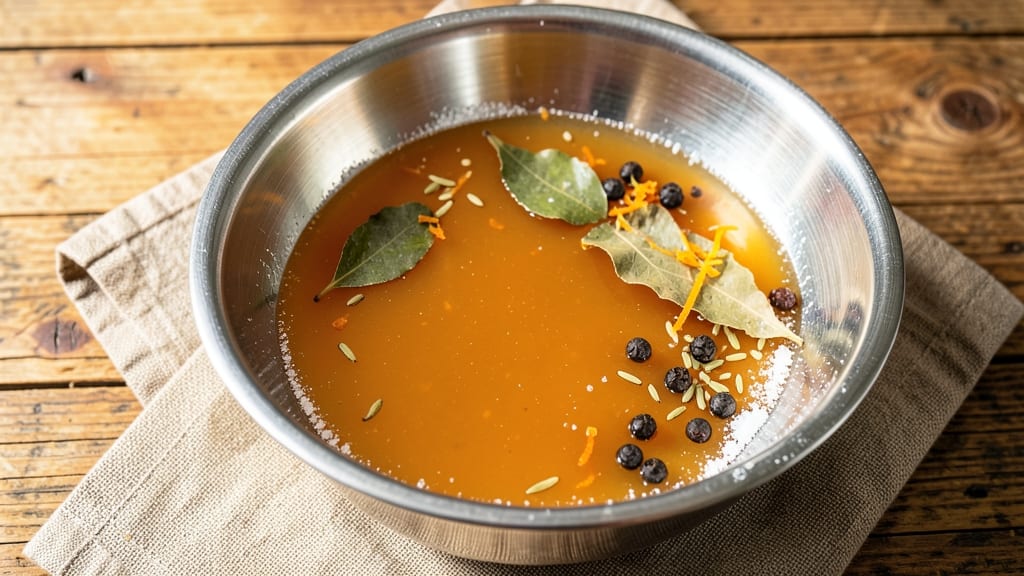
This apple juice brine recipe for pork transforms tough cuts into tender, juicy perfection with just a few simple ingredients. The acidity of apple juice tenderizes while celery and spices infuse flavor, creating a moisture-locking solution that elevates any pork dish.
I developed this method after struggling with dry pork roasts—until I discovered how a few hours in this aromatic brine could make all the difference.
The magic lies in the balance: apple juice provides natural acidity and sweetness, while salt and sugar work together to break down muscle fibers and retain moisture. Optional celery seeds and bay leaves add depth, but even without them, this brine delivers restaurant-quality results.
Best of all, it requires no special equipment—just a container and patience for the flavors to meld.
What you’ll achieve is pork that stays juicy and flavorful even after cooking, with a subtle sweetness and aromatic complexity that pairs beautifully with roasts, chops, or even pulled pork.
The brine can be made ahead and stored for up to 3 days, making it perfect for meal prep or holiday cooking.
Ready in just 30 minutes of prep and 2-4 hours of soaking, this recipe transforms ordinary pork into something extraordinary. Whether you’re cooking for a family gathering or a simple weeknight dinner, this brine ensures every bite is moist, flavorful, and unforgettable.
Ingredients for apple juice brine recipe for pork
Eight ingredients balancing acidity, sweetness, and aromatic depth for pork transformation.
| Ingredient | Amount | Notes |
|---|---|---|
| Unsweetened Apple Juice 🍎 | 4 cups | 100% pure, no added sugar |
| Kosher Salt 🧂 | ½ cup | Diamond Crystal preferred |
| Granulated Sugar 🍚 | ¼ cup | White or brown preferred |
| Celery Seeds 🥬 | 1 tbsp | Whole seeds for maximum aroma |
| Bay Leaves 🌿 | 2 whole | Fresh or dried preferred |
| Black Peppercorns 🌶️ | ½ tsp | Freshly cracked for intensity |
| Garlic Cloves 🧄 | 4 cloves | Peeled, lightly crushed |
| Fresh Celery Stalks 🥬 | 2 whole | Thinly sliced, for infusion |
The apple juice serves as the foundational element, providing natural acidity that tenderizes while maintaining moisture. Opt for 100% pure, unsweetened apple juice—brands like Mott's or Tree Top work well, but avoid those with added sugar or preservatives. Celery seeds and bay leaves are critical for aromatic complexity; Penzeys Spices offers high-quality whole celery seeds that release their full flavor when steeped. Fresh celery stalks add subtle earthiness, but if unavailable, dried celery flakes at one-third the amount suffice. The garlic cloves should be peeled and lightly crushed to release their oils without becoming paste-like.
For substitutions, white grape juice can replace apple juice in a 1:1 ratio, though it lacks the subtle sweetness. If celery seeds are unavailable, one teaspoon of ground celery seed works, though it lacks the same depth. Bay leaves can be omitted entirely, but the brine will lose some complexity. For a sweeter profile, increase sugar to one-third cup, though the original balance is ideal for pork. The kosher salt should be Diamond Crystal if possible—it dissolves more cleanly than table salt, ensuring even distribution in the brine. Black peppercorns can be omitted, but their cracked intensity adds a subtle warmth that complements the pork beautifully.
This brine can be stored in an airtight container in the refrigerator for up to 3 days, maintaining its potency. For best results, use within 24 hours of preparation, as the flavors meld most effectively during this window. The brine should fully submerge the pork, so scale ingredients proportionally for larger cuts. If making ahead, allow the brine to come to room temperature before using it, as cold brine can slow down the tenderizing process. Leftover brine can be reduced by half and used as a glaze for roasted vegetables or as a marinade for other proteins.
Why You'll Love This Recipe
- Pantry Magic: I swear by this brine—no fancy shopping list, just what’s already lurking in my cupboards. The apple juice alone cuts through the salt, and that’s before we even talk about the celery seeds adding a subtle earthy kick without extra effort.
- Sweet-Savory Balance: Honestly, the sugar and salt combo here is chef’s kiss—it tenderizes the pork while keeping it juicy, and the bay leaves add this deep, herbal warmth. It’s like a hug for your taste buds, but make it crispy.
- Weeknight Workhorse: Between us, this is my go-to for quick roasts or slow-cooked pork shoulders. Toss it in the fridge overnight, and boom—next-day meals feel like a restaurant dish with zero stress. (Yes, even on a Tuesday night.)
- Budget-Friendly Luxury: A gallon of apple juice stretches across multiple meals, and the spices cost pennies. I’ve made this for holiday hams, summer BBQs, and lazy Sunday breakfasts—same brine, endless possibilities. The leftovers? Pure gold.
Step-by-step instructions for apple juice brine for pork
Master this celery-spiced brine technique to transform your pork into tender, juicy perfection.
Combine the Brine Base
In a large, non-reactive container (I prefer a stainless steel or glass bowl), combine the 4 cups unsweetened apple juice with the 0.5 cup kosher salt. Stir vigorously with a wooden spoon until the salt fully dissolves—this ensures even distribution throughout the brine. The solution should taste intensely salty at this stage, similar to seawater.
Next, add the 0.25 cup granulated sugar and stir again until completely dissolved. The sugar not only enhances flavor but also helps tenderize the pork during the brining process. This step creates the foundational balance of sweetness and salt that will penetrate the meat deeply.
Infuse with Aromatics
Add the 1 tablespoon celery seeds, 2 whole bay leaves, 0.5 teaspoon black peppercorns, and 4 cloves garlic cloves to the brine mixture. The celery seeds and bay leaves will impart a subtle earthy complexity, while the peppercorns and garlic add depth and warmth. Stir gently to distribute these aromatic elements evenly throughout the liquid.
Finally, slice the 2 whole fresh celery stalks thinly (about 1/8-inch thick) and add them to the container. These slices will infuse the brine with their crisp, fresh flavor while also contributing to the overall moisture retention of the pork. The celery's natural compounds help break down muscle fibers, ensuring the meat remains tender.
Chill and Prepare for Brining
Cover the container with plastic wrap or a lid and refrigerate the brine mixture for at least 4 hours, or ideally overnight. This chilling period allows the flavors to meld completely and ensures the brine reaches an optimal temperature for brining. The cold environment also helps dissolve any remaining solids, creating a fully integrated solution.
Before using the brine, give it one final stir to redistribute any settled ingredients. The mixture should be cool but not icy—around 40°F is ideal. This temperature ensures the pork absorbs the brine evenly without shocking the meat or causing surface drying.
Brine the Pork
Submerge the pork completely in the chilled brine, ensuring it's fully covered. Use a plate or weights if necessary to keep it submerged. Let it brine in the refrigerator for 12 to 24 hours, depending on the size and cut of the pork. For smaller cuts like chops or tenderloin, 12 hours suffices, while larger roasts benefit from the full 24 hours for maximum moisture retention.
During brining, the pork will absorb the apple juice, salt, sugar, and aromatic compounds, transforming into a tender, flavorful masterpiece. The apple juice's natural acidity helps tenderize the meat, while the salt and sugar work together to create an irresistible crust and juicy interior. This process guarantees that every bite will be moist and infused with the celery-spiced complexity.
Pro Tips For Making Apple Juice Brine Recipe For Pork
- Boil the Brine First: Heat your apple juice, salt, and sugar together until the sugar fully dissolves—no cloudy liquid left. I learned this the hard way when my pork turned out bland because the sugar sat undissolved at the bottom. A quick simmer (3-5 minutes) guarantees even flavor distribution.
- Toast the Celery Seeds: Dry-toast the celery seeds in a small pan for 30 seconds until fragrant before adding them to the brine. This step amplifies their earthy aroma—no need to overdo it, just enough to wake them up. Skip this, and you’ll miss that subtle depth in the pork’s flavor.
- Submerge the Pork Fully: Weigh down your pork with a plate or parchment paper to ensure it’s completely submerged in the brine. I once left a pork shoulder floating, and half of it came out dry and flavorless. No excuses—make sure every inch gets bathed.
- Use Cold Juice for Brining: Chill your unsweetened apple juice before mixing with salt and sugar—this prevents the brine from getting too hot when combined. Hot brine can cook the pork’s surface before it even hits the fridge, and you’ll lose that perfect tender bite.
Pro cooking tips for apple juice brine recipe for pork
Temperature Control
Brining works best when the brine temperature stays between 40°F and 50°F—this is the sweet spot for even absorption without shocking the pork. I always let my brine sit at room temperature for 30 minutes before using it, especially if it's straight from the fridge.
Cold brine can cause the pork's surface to tighten, preventing proper flavor penetration. 🌡️
For larger cuts like pork shoulder, I recommend brining in the refrigerator to maintain consistent cold temperatures. If you're short on time, a 12-hour brine at room temperature (around 68°F) will still work, though the results won't be as tender.
Just monitor the pork closely to avoid any bacterial risks.
Salt Dissolution
Kosher salt like Diamond Crystal dissolves more slowly than table salt, which is actually a good thing—it prevents sudden osmotic shock to the meat. Stir the brine vigorously for 2 full minutes until you can no longer see any salt crystals at the bottom.
I've learned the hard way that undissolved salt creates bitter pockets in the pork. 🧂
If you're using a different type of salt (like sea salt), reduce the amount by 25% since it's less dense. For example, 0.5 cup Diamond Crystal equals about 0.375 cup sea salt. Always taste the brine after dissolving—it should be intensely salty but not overwhelming, like well-seasoned seawater.
Pork-to-Brining Ratio
The ideal ratio is 1 cup of brine per pound of pork, but I've found that for tougher cuts like pork shoulder, you can go up to 1.5 cups per pound for extra tenderness.
For delicate cuts like pork tenderloin, stick to 1 cup per pound to avoid over-salting. Always use a non-reactive container—I prefer glass or stainless steel to prevent any metallic flavors from seeping in.
If you're brining a large roast, divide the pork into smaller sections or use a brining bag (like the Norpro Brine Bag) to ensure even coverage. This prevents dry spots where the meat might not fully absorb the brine.
For whole pork tenderloins, I pierce them with a meat needle in several places to help the brine penetrate deeper.
Post-Brining Rinse
After brining, always rinse the pork under cold water and pat it dry with paper towels. This removes excess salt and creates a better sear when cooking.
I like to let the pork sit uncovered in the fridge for 10-15 minutes before cooking—this helps the surface dry slightly, giving you a crispier crust when roasting or grilling. 💡
For grilled pork chops, I skip the rinse and pat them dry immediately after brining. The residual brine helps create a juicy, caramelized crust that locks in all those delicious flavors.
Just be mindful of the salt level—if you're serving with salty sides (like pickles or sauerkraut), you might want to rinse more thoroughly.
Brining Time Cheat Sheet
Here’s my go-to guide for brining times based on pork cuts: - Pork chops (1-inch thick): 4-6 hours - Pork tenderloin (1-2 lbs): 6-12 hours - Pork shoulder (4-6 lbs): 12-24 hours - Pork belly (whole): 24-48 hours For holiday roasts, I always err on the longer side—24 hours for maximum tenderness.
The extra time lets the apple juice’s acidity work its magic, breaking down connective tissue without overpowering the meat’s natural flavor. 🍖
Pro tip: If you're short on time, double the brine ingredients and reduce the brining time by half. The increased concentration of salt and sugar speeds up the tenderizing process, though the results won’t be as deeply infused. This is my go-to for last-minute weeknight dinners!
Nutrition facts
Frequently asked questions
Can I use store-bought apple juice with added sugar for this brine?
I don't recommend it! The added sugar can make the brine too sweet and potentially cause uneven cooking. Stick to 100% pure, unsweetened apple juice like Mott's or Tree Top for the best results. The natural sweetness from the juice alone balances perfectly with the salt and spices.
How do I adjust the brine for different pork cuts?
For tender cuts like pork tenderloin, use 1 cup of brine per pound for 6-12 hours. For tougher cuts like pork shoulder, increase to 1.5 cups per pound and brine for 12-24 hours. Always ensure the pork is fully submerged to prevent dry spots.
What if I don't have celery seeds or bay leaves?
No problem! Skip them entirely—the brine will still work beautifully. For extra flavor, try adding 1 teaspoon of ground celery seed or 1/2 teaspoon of dried thyme. The apple juice and salt will still tenderize and flavor your pork perfectly.
Can I reuse leftover brine?
After removing the pork, strain out any solids and store the leftover brine in an airtight container in the fridge for up to 3 days. Use it as a glaze for roasted vegetables or a marinade for chicken. Just reduce it by half on the stove first to intensify the flavor.
Will this brine work for other meats?
Yes! This apple juice brine works wonderfully for chicken, turkey, or even fish. Just adjust the brining time—chicken typically needs 4-6 hours while fish only requires 30-60 minutes. The acidity from the apple juice helps tenderize all these proteins beautifully.