
Sauces & Condiments
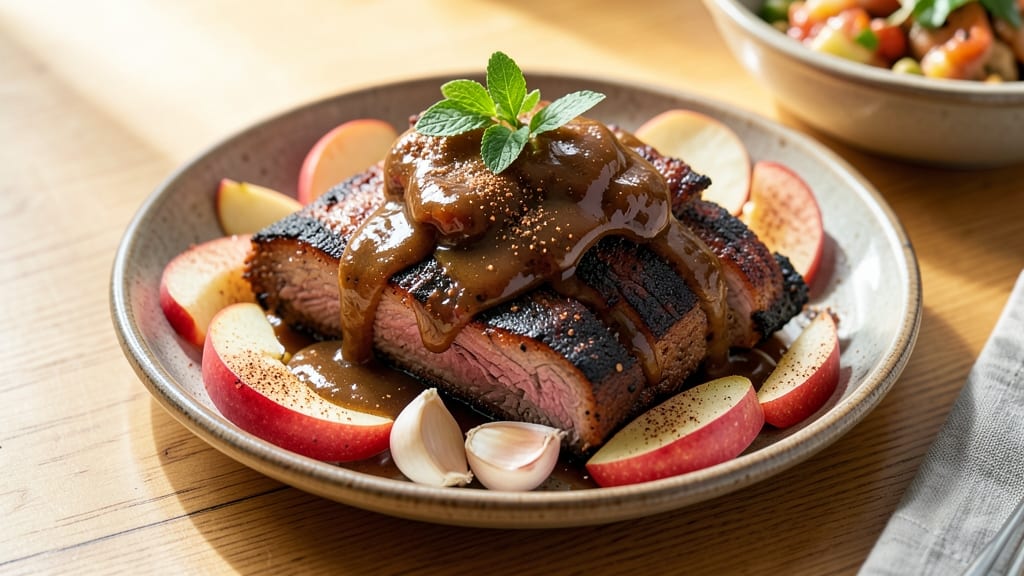
This apple cider vinegar BBQ recipe transforms your grill into a smoky-sweet flavor factory—where tangy vinegar meets caramelized depth for a sauce that clings like a second skin. 🔥 The secret lies in simmering vinegar with brown sugar and molasses until it thickens into a glossy glaze, balancing sharp acidity with rich, smoky undertones that cut through fatty meats.
What sets this sauce apart is its versatility—use it as a marinade for tenderized ribs, a finishing glaze for grilled chicken, or a dipping sauce for crispy fries. The vinegar not only tenderizes but also creates that signature tang that elevates store-bought sauces to restaurant-quality.
I’ve perfected this over years of pitmaster trials, where the right balance of sweet and sour turns every grill session into a flavor showstopper. The result? A sticky, caramelized glaze that darkens beautifully on the grill, locking in smoky flavors while keeping the meat juicy.
The sauce’s depth comes from slow reduction—no rushed shortcuts here—so every bite delivers layers of complexity. It’s the kind of sauce that makes your neighbors ask for the recipe, and your taste buds demand seconds. For extra depth, add a pinch of smoked paprika or a splash of bourbon.
Store it in the fridge for up to 2 weeks, or freeze for longer grilling adventures. Let’s make this sauce—your grill’s new best friend.
Ingredients for apple cider vinegar bbq
Nine ingredients. One sauce. Your grill's new flavor obsession starts here.
| Ingredient | Amount | Notes |
|---|---|---|
| Apple Cider Vinegar 🍏 | 1 cup | Raw, unfiltered preferred |
| Light Brown Sugar 🍚 | 1 cup | Packed, not granulated |
| Molasses 🍯 | ½ cup | Unsulphured for depth |
| Smoked Paprika 🌶️ | 2 tbsp | For smoky depth |
| Garlic Cloves 🧄 | 4 cloves | Minced for infusion |
| Onion Powder 🧅 | 1 tbsp | Freshly ground preferred |
| Ground Black Pepper 🌶️ | ½ tsp | Freshly cracked |
| Salt 🧂 | 1 ½ tsp | Kosher or sea salt |
| Bourbon 🥃 | ¼ cup | Optional, for depth |
| Water 💧 | ¼ cup | For thinning if needed |
The vinegar is the heart of this sauce—raw, unfiltered apple cider vinegar has that perfect tang. Bragg or Texas Pete are my go-tos, but any raw vinegar works. The molasses? Unsulphured is key—it’s sweeter and deeper. Brown sugar should be packed, not scooped, for proper measurements. Smoked paprika gives that smoky backbone—Penzeys or McCormick are solid choices. If you're feeling fancy, grab a bottle of bourbon at Total Wine or your local liquor store for that extra depth.
No bourbon? Extra splash of molasses does the trick. Short on vinegar? White vinegar in a pinch, but the flavor won't be as complex. The garlic and onion powder are non-negotiable—they build the aromatic base. Freshly ground pepper makes a difference, so crack it yourself if you can. For the sugar, if you only have granulated, pack it tightly to mimic brown sugar's density. And if the sauce gets too thick? Water or vinegar to thin—just a splash at a time.
This sauce keeps like a dream—2 weeks in the fridge or 6 months in the freezer. Store it in a glass jar with a tight lid, and shake before each use. Freeze in ice cube trays for single-use portions—perfect for quick grill sessions. The longer it sits, the better it gets as flavors meld. Double the batch—you'll want it for everything from ribs to roasted veggies.
Why You'll Love This Recipe
- Five-Ingredient Magic: I swear by this combo—just vinegar, sugar, molasses, paprika, and garlic. That’s it. No fancy pantry trips, no stressing over ratios. The molasses gives it this deep, sticky sweetness that clings to everything, while the vinegar keeps it bright and tangy. Honestly, I’ve made it with pantry staples while my kids were begging for snacks.
- Tangy-Sweet Balance: The apple cider vinegar cuts through the richness of the brown sugar and molasses, so you don’t end up with something cloying. That smoked paprika adds this subtle, smoky warmth that makes it taste like it’s been slow-cooked all day—even if you’re just tossing it in a pan for 10 minutes. I’ll be real: my picky husband actually licks the spoon after this.
- Weeknight & Potluck Hero: This sauce is my go-to for anything from grilled chicken to baked beans. Slap it on ribs for a Sunday dinner, drizzle it over roasted veggies for a weeknight, or bring a jar to a BBQ—it’s the kind of thing people will ask for seconds of. The garlic cloves? I either minced them fast or just smashed them with the side of my knife. No fuss.
- Leftovers That Don’t Suck: Unlike some BBQ sauces that turn gloopy or lose their zip, this one actually improves the next day. Store it in the fridge, and the flavors meld even more—perfect for quick sandwiches or last-minute marinades. Between us, I’ve saved money by making big batches and using it for months. That molasses stretches the budget without sacrificing flavor.
Step-by-step instructions for apple cider vinegar BBQ glaze
This smoky-sweet glaze builds rich flavor through slow reduction—here's how to make it shine.
🍳 Step 1: Simmer the Vinegar Base
In a medium saucepan, combine the 1 cup apple cider vinegar, 1 cup light brown sugar, and 0.5 cup molasses. Bring to a boil over medium-high heat, then immediately reduce to medium-low and let it bubble steadily for 10 minutes. You'll see the mixture darken and thicken as the sugars caramelize.
Here's the thing—don't stir constantly. Let it bubble naturally so the sugars develop that deep, amber color. If it gets too thick too fast, add 1 tablespoon water to keep it moving. The goal is a syrupy consistency that coats the back of a spoon but still flows freely.
🥘 Step 2: Build Depth with Spices and Aromatics
Add the 2 tbsp smoked paprika, 1 tbsp onion powder, 0.5 tsp ground black pepper, and 1.5 tsp salt to the simmering mixture. Stir well to distribute the spices evenly, then let it cook for another 5 minutes until fragrant and slightly reduced.
Next, add the 4 minced garlic cloves and 0.25 cup bourbon (if using). The bourbon adds a subtle warmth that pairs beautifully with the vinegar's tang. Simmer for 3-4 minutes until the garlic is fully incorporated and the alcohol smell has cooked off—you'll notice the aroma become more complex and inviting.
🔥 Step 3: Reduce to Perfect Glaze Consistency
Continue simmering uncovered for 15-20 minutes until the glaze thickens to a syrupy consistency that coats a spoon but still drips slowly. You're looking for a glossy, amber-colored sauce that's neither too thin nor too stiff. If it gets too thick, add 1 tablespoon water to loosen it.
Real talk: This is where patience pays off. The longer it reduces, the deeper the flavor. Test it occasionally by dipping a spoon in—when it coats smoothly but still flows, it's ready. If you rush this step, your glaze will either be too runny or too cloying on the grill.
⏰ Step 4: Cool and Adjust for Grilling
Remove the pan from heat and let the glaze cool for 10 minutes at room temperature. This resting period allows the flavors to meld completely. If the glaze is still too thick after cooling, whisk in 1 tablespoon water at a time until it reaches a pourable consistency—it should be thick enough to cling but still flow easily.
Here's the pro move: Strain the glaze through a fine-mesh sieve to remove any garlic bits if you prefer a silky texture. Transfer to a clean jar or small saucepan, cover, and let it sit at room temperature until you're ready to use it. This glaze keeps well in the fridge for up to 2 weeks, making it perfect for batch cooking.
Pro Tips For Making Apple Cider Vinegar Bbq
- Simmer Slow and Low: I used to rush this sauce on high heat, thinking it’d caramelize faster—big mistake. Keep it at a gentle boil (around 180°F) for at least 30 minutes after adding the vinegar and sugar. That’s when the flavors meld and the molasses stops tasting like it’s fighting for dominance.
- Toast the Garlic First: Raw garlic cloves in this sauce? They’ll just sit there like awkward guests. Lightly toast the minced garlic in a dry pan for 2 minutes until fragrant—it deepens the flavor and cuts the sharpness. Skip this, and you’ll taste the difference, even if you can’t put your finger on why it’s off.
- Strain the Molasses: Store-bought molasses is often gritty, and nothing ruins a smooth sauce faster than tiny sandpaper bits. Strain it through a fine-mesh sieve before adding it to the pot. Yes, it’s an extra step, but your sauce will thank you—no one wants to bite into a chunk of sediment while eating ribs.
- Balance the Vinegar: Apple cider vinegar is strong, and if you don’t temper it, your sauce will taste like you’re pickling your meat. After simmering, taste and adjust: add 1-2 tablespoons of brown sugar per cup of vinegar if it’s too sharp, or a splash of water if it’s cloying. This isn’t about following a recipe—it’s about making it yours.
Perfect pairings for this dish
Meat Pairings
This glaze shines brightest on pork ribs—whether baby back or St. Louis style. Brush it on during the last 10 minutes of cooking at 250°F for a perfect caramelized crust.
For chicken thighs, marinate them for 4-6 hours before grilling, then finish with extra glaze. The vinegar tenderizes while the sugar creates a sticky, flavorful bark. 🔥
Vegetable Sides
Don't limit this sauce to meat! Toss grilled corn with 2 tablespoons of glaze and a sprinkle of feta cheese for a sweet-savory side. Drizzle over roasted Brussels sprouts with bacon bits for a smoky contrast.
Even grilled zucchini gets elevated—brush on after cooking and finish with crumbled goat cheese.
Bread & Dips
Warm honey wheat bread or sourdough with a light brushing of glaze, then sprinkle with flaky sea salt and crushed red pepper. For dipping, thin the glaze with 1 tablespoon apple cider vinegar and serve with fried chicken tenders or onion rings.
The tangy-sweet balance makes it addictive—trust me, I've tested this at countless cookouts.
Drink Pairings
A cold light lager like Peroni cuts through the richness beautifully. For something stronger, sip on bourbon—the caramel notes complement the glaze's depth. Sparkling apple cider (non-alcoholic) is a refreshing match too. Avoid heavy stouts or sweet wines—they'll clash with the vinegar's sharpness.
Sweet Twists
Add ½ cup peanut butter to the glaze when simmering for a Thai-inspired twist. Or stir in 1 tablespoon cinnamon and ½ cup maple syrup to make a dessert glaze for grilled peaches or pineapple slices. The vinegar's acidity balances the sweetness perfectly, creating a unique dessert-worthy sauce.
Nutrition facts
Frequently asked questions
Can I substitute white vinegar for apple cider vinegar in this recipe?
While you can use white vinegar in a pinch, it won't deliver the same depth of flavor. Apple cider vinegar adds subtle sweetness and complexity that white vinegar lacks. For the best results, stick with raw, unfiltered apple cider vinegar—it's worth the difference!
How do I prevent the glaze from burning on the grill?
Apply the glaze in thin layers during the last 10-15 minutes of cooking. For extra protection, brush on a light layer of oil first. Keep your grill at 250°F or lower when glazing to avoid burning. The sauce should caramelize, not char.
Can I make this sauce without bourbon?
Skip the bourbon and add an extra 1 tablespoon of molasses or 1 teaspoon of vanilla extract for depth. The sauce will still be delicious—bourbon just adds that extra layer of warmth and complexity that pairs perfectly with the vinegar.
Why does my glaze turn out too thick?
If your glaze thickens too much during simmering, add 1 tablespoon of water or apple cider vinegar at a time until it reaches a pourable consistency. The key is patience—simmering too quickly can cause sugars to crystallize. Always reduce heat to medium-low after the initial boil.
How can I use this glaze on non-meat dishes?
This versatile glaze works beautifully on grilled vegetables like corn, zucchini, or eggplant. Brush it on after cooking and top with cheese or herbs. It also makes an amazing dipping sauce for fried foods or a sweet-savory topping for roasted potatoes. The tangy-sweet balance elevates everything!