
Sauces & Condiments
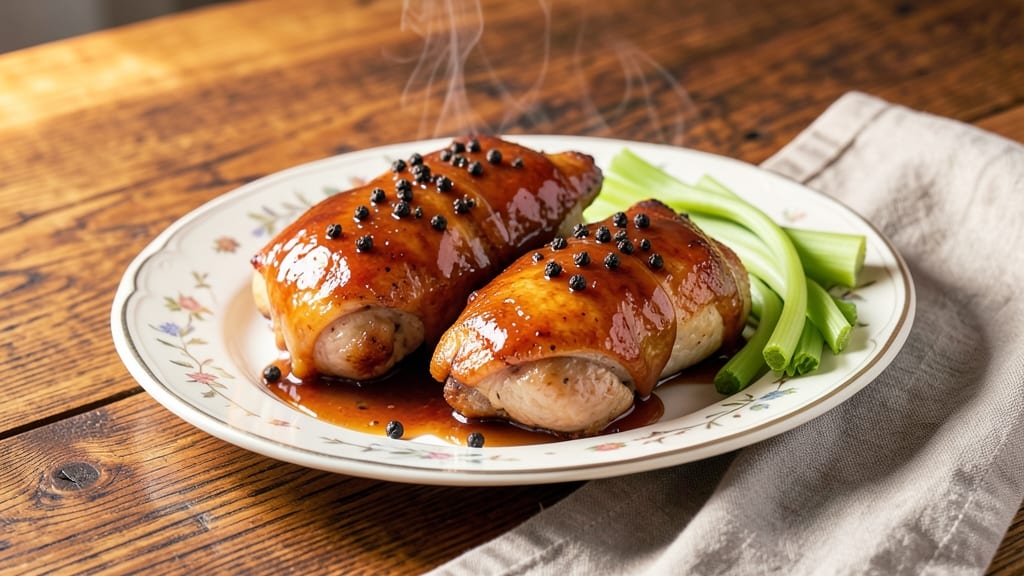
This apple cider glazed chicken thighs recipe transforms simple ingredients into a restaurant-worthy centerpiece with caramelized crunch and warm autumn flavors.
The secret lies in simmering apple cider into a thick, tangy glaze that clings beautifully to crispy skin, while celery and pepper add a bright, herby contrast that cuts through the richness.
I developed this method after years of testing—it’s the kind of dish that makes weeknight dinners feel special without requiring hours in the kitchen.
The process is straightforward: pan-sear the chicken thighs until golden, then build the glaze by reducing apple cider with butter, brown sugar, and spices until it thickens into a sticky, glossy finish.
Basting the chicken with the glaze during the last few minutes ensures every bite is coated in that perfect balance of sweet, smoky, and slightly tangy flavors. The celery-pepper garnish adds a fresh crunch that keeps the dish from feeling too heavy.
What you’ll end up with is juicy, crisp-skinned chicken thighs smothered in a glossy, caramelized glaze that’s rich but not cloying. The glaze clings beautifully, making each bite feel indulgent, while the celery and pepper add a bright, refreshing contrast.
This dish pairs perfectly with roasted sweet potatoes or a simple green salad, but it’s delicious enough to stand alone.
Best of all, the glaze can be made ahead and reheated, so you can focus on cooking the chicken while the sauce simmers. The result is a foolproof method that delivers professional-quality results with minimal effort—ideal for impressing guests or treating yourself to a cozy, flavorful meal. Let’s get started!
Ingredients for apple cider glazed chicken thighs
Restaurant-quality flavors start with these simple, quality ingredients for caramelized chicken thighs.
| Ingredient | Amount | Notes |
|---|---|---|
| Boneless, Skin-On Chicken Thighs 🍗 | 1 ½ lb | Evenly sized for consistent cooking |
| Unsalted Butter 🧈 | ½ cup | Cold, cubed for even browning |
| Apple Cider 🍎 | 1 cup | Unfiltered for best flavor |
| Light Brown Sugar 🍚 | ¼ cup | Packed for accurate measurement |
| Fresh Celery Stems 🧅 | ½ cup | Finely chopped for garnish |
| Fresh Black Peppercorns 🌶️ | 1 tbsp | Coarsely cracked for texture |
| Fresh Thyme Leaves 🌿 | 1 tbsp | From 2 sprigs, stems removed |
| Fresh Rosemary Sprigs 🌿 | 2 whole | For aroma during cooking |
| Granulated Garlic 🧄 | 2 tsp | Or 2 fresh garlic cloves minced |
| Kosher Salt 🧂 | 1 ½ tsp | For seasoning chicken |
| Ground Black Pepper 🌶️ | ½ tsp | Freshly ground preferred |
| Apple Cider Vinegar 🍶 | 1 tbsp | For glaze tanginess |
The chicken thighs are non-negotiable—skin-on and bone-in for maximum flavor and juiciness. Look for evenly sized pieces (about 6-8 ounces each) at Whole Foods or your local butcher for the best quality. If you can't find bone-in, skin-on thighs, bone-in, skinless works too, but the skin is what gives that crispy texture. For the apple cider, unfiltered brands like Woodchuck or Angry Orchard add depth of flavor. The brown sugar should be light, not dark—it dissolves better and won't overpower the glaze. Fresh herbs make all the difference here, so skip the dried stuff unless it's a true emergency.
No apple cider vinegar? Substitute lemon juice at half the amount—it won't be identical, but it'll add the tang. Running short on fresh thyme or rosemary? Dried works at one-third the amount, but fresh is worth hunting down at a farmers market. The celery and pepper garnish can be swapped for fresh parsley and red pepper flakes if you prefer a different crunch. For the butter, European-style (like Plugrá) has higher fat content and gives a richer glaze. If you're in a pinch, vegetable shortening can work, but it won't be as flavorful. The granulated garlic is a time-saver—if you're using fresh, 2 cloves equals about 2 teaspoons minced.
The glaze keeps beautifully—reheat in a saucepan over medium heat until warm, about 2-3 minutes. Store leftovers in an airtight container in the fridge for up to 4 days, or freeze the glaze separately for 3 months. I like to portion the chicken thighs into meal prep containers with a small spoonful of glaze on top—reheat at 350°F for 15-20 minutes until fully warmed through. The glaze thickens as it cools, so add a splash of water or apple cider if it's too stiff when reheating. Freshly cracked pepper keeps its bite for about 1 week in the fridge, so store it in a sealed container.
Why You'll Love This Recipe
- One-Pan Magic: I swear by this recipe when I’m too tired to scrub pots—just toss the thighs, celery, and butter in a skillet, then pour in the cider. The brown sugar caramelizes right there, turning the pan into a sticky, flavorful mess that’s exactly the kind of cleanup I can handle in 30 seconds.
- Fall in Love: That first bite? Buttery, crispy skin with a sweet-tart glaze that clings like syrup on pancakes. The celery adds a bright crunch, and the cider’s warmth makes it taste like autumn in a bite—honestly, I’ve made this in July just to feel cozy.
- Weeknight Hero: Between us, this is the dish that saves my dinners when I’m low on energy or inspiration. Double the batch, reheat the leftovers for lunch, or serve it over mashed potatoes for a meal that feels fancy but takes zero effort. (Yes, even on a Tuesday night.)
- Budget-Friendly Luxury: Skin-on thighs stretch my grocery budget, and the cider glaze makes them feel special without costing a fortune. A single bag of celery and a jar of brown sugar turn this into a repeatable favorite—no overpriced shortcuts needed. My wallet and my taste buds thank me.
Step-by-step instructions for apple cider glazed chicken thighs
Transform simple ingredients into restaurant-quality chicken with crispy skin and a caramelized glaze.
Season and Sear the Chicken Thighs
Pat the 1.5 lb boneless, skin-on chicken thighs completely dry with paper towels—this ensures maximum crispiness. Place them skin-side down in a cold skillet and refrigerate for 15 minutes to chill the fat. This prevents premature rendering.
Remove the skillet from the fridge and place it over medium-high heat. Add 0.5 cup cold, cubed unsalted butter and let it melt completely, about 2 minutes. Sprinkle 1.5 tsp kosher salt and 0.5 tsp ground black pepper evenly over the skin. Cook undisturbed for 8-10 minutes until the skin turns deep golden brown and crispy.
Flip the thighs and cook the meat side for 5-6 minutes until reaching an internal temperature of 165°F. Transfer to a plate and tent loosely with foil to keep warm. The skin should be crisp enough to stand up to a gentle poke—this is your signal for success.
Build the Celery-Pepper Bite Aromatics
In the same skillet (no need to clean it—the browned bits add flavor), reduce heat to medium. Add 2 tsp granulated garlic and cook for 30 seconds until fragrant. Add 0.5 cup finely chopped fresh celery stems and cook for 3-4 minutes until softened.
Stir in 1 tbsp fresh thyme leaves and 2 whole fresh rosemary sprigs, crushing them slightly with a wooden spoon. Cook for 1 minute until the herbs release their aroma. Sprinkle 1 tbsp coarsely cracked fresh black peppercorns over the mixture and toast for 30 seconds—this adds a subtle heat that balances the sweet glaze.
Create the Apple Cider Glaze
Pour in 1 cup apple cider and 1 tbsp apple cider vinegar, scraping up any browned bits from the bottom of the pan. Bring to a simmer and cook for 5 minutes until reduced by half. Stir in 0.25 cup packed light brown sugar and cook for another 3-4 minutes until the mixture thickens slightly and coats the back of a spoon.
Return the chicken thighs to the skillet, skin-side up, and spoon the glaze evenly over them. Cover and simmer on low heat for 5 minutes, basting occasionally with the pan juices. The glaze should caramelize into a sticky, amber coating—this is what creates that irresistible crunch.
Finish and Garnish
Transfer the chicken to a serving platter and tent with foil. Let rest for 5 minutes—this allows the juices to redistribute, ensuring each bite is moist. Spoon any remaining glaze from the skillet over the top.
Garnish with additional finely chopped fresh celery stems and a sprinkle of freshly cracked black peppercorns for both visual appeal and texture contrast. Serve immediately with roasted vegetables or crusty bread to soak up the glaze. The skin should be crisp and caramelized, the meat tender, and the glaze perfectly balanced between sweet and tangy.
Pro Tips For Making Apple Cider Glazed Chicken Thighs
- Brown the Skin First: That crispy skin isn’t just for looks—it’s where all the flavor hides. Sear the thighs skin-side down in a cold pan for 8-10 minutes, letting the butter melt and render slowly. I used to rush this, and the skin turned greasy instead of golden. Patience here makes the glaze stick better later.
- Use Thick Celery Stems: Skip the leafy tops and grab the thick, stringy bottoms of celery stalks. They add depth without turning the glaze into soup. Roughly chop them—no need for precision—and let them caramelize with the butter first. This isn’t the prettiest method, but it works every time.
- Reduce the Cider Low and Slow: After searing, pour in the apple cider and scrape up those browned bits—don’t skip this. Then simmer uncovered on medium-low for at least 10 minutes. I learned this the hard way: high heat turns the glaze into syrup, not a glossy coat. Let it bubble gently until it’s syrupy enough to coat the back of a spoon.
- Add Sugar at the End: Tossing in the brown sugar too early burns it before the glaze can form. Wait until the cider’s reduced by half, then stir in the sugar and let it melt completely. This guarantees a glossy finish, not a grainy mess. (Yes, even if you’re impatient like me.)
Wine and beer pairings for this recipe
Red Wine Pairings
For this dish, I reach for a dry red wine with enough acidity to complement the apple cider glaze's sweetness. A Pinot Noir from Oregon—like Domaine Serene—works beautifully, with its bright cherry notes and subtle earthiness cutting through the caramelized richness.
The wine's natural acidity mirrors the glaze's tang, creating harmony on your palate. 🍷
If you prefer something bolder, a Cabernet Franc from the Loire Valley offers a peppery edge that enhances the black pepper garnish. Look for a Château de la Ménitré—its herbal notes and moderate tannins balance the dish's sweetness without overpowering it.
Serve slightly chilled (55-60°F) to refresh your palate between bites.
Crisp White Wine
A dry Riesling from Germany—such as Dr. Loosen Blue Slate—is my go-to white wine pairing. Its crisp acidity and hints of green apple and citrus cleanse your palate between rich, glazed bites. The wine's mineral notes also complement the celery garnish beautifully. 🍷
For a lighter option, try a Sauvignon Blanc from New Zealand, like Cloudy Bay. The wine's zesty lime and grapefruit flavors contrast perfectly with the caramelized glaze, while its herbal undertones echo the thyme and rosemary in the dish. Serve at 45-50°F to maintain its vibrant acidity.
Beer Pairings
When it comes to beer, I always opt for a crisp lager to balance the dish's richness. A German Pilsner like Warsteiner or St. Pauli Girl works wonders—its clean, hoppy bitterness cuts through the glaze's sweetness while complementing the celery's freshness.
The effervescence also helps refresh your palate between bites. 🍺
For something more robust, try a Belgian Witbier like Hoegaarden. The wine's coriander and orange peel notes pair surprisingly well with the apple cider glaze, while its slight tartness mirrors the apple cider vinegar in the recipe. Serve at 45-50°F to enhance its crisp, refreshing qualities.
Seasonal Cider
If you're serving this dish in autumn, skip the wine or beer entirely and offer a dry hard cider as a pairing. A French Poiré like Domaine Dupont—made from fermented pear juice—adds a fruity, slightly effervescent complement to the apple cider glaze.
Its tannins and acidity mirror the dish's flavors without overpowering it. 🍎
For a local option, look for a dry American hard cider like Angry Orchard Dry. Its crisp, slightly tart profile balances the glaze's sweetness, while its apple notes create a cohesive flavor experience. Serve chilled (45-50°F) to highlight its refreshing qualities.
Nutrition facts
Frequently asked questions
Can I use chicken breasts instead of thighs?
Chicken breasts will work, but thighs are ideal for this recipe because they stay juicier with longer cooking times. If using breasts, reduce cooking time to 5-6 minutes per side (until 165°F internal temp) and avoid covering with foil during the glaze step—breasts don't need the extra moisture. The skin won't crisp as dramatically, but the glaze will still be delicious.
How do I fix if the glaze turns out too thin?
If your glaze is too runny, simply return the skillet to medium heat and simmer uncovered for 2-3 extra minutes, stirring occasionally. For a thicker texture, mix 1 tsp cornstarch with 1 tbsp cold water, stir into the glaze, and cook for 1 more minute until it thickens. Never add sugar—it'll burn before the glaze thickens properly.
Can I make this recipe in the oven instead of stovetop?
Yes! Preheat oven to 400°F. Sear the chicken thighs in a skillet as directed, then transfer them to a baking dish. Roast for 15 minutes, then add the glaze ingredients to the skillet, reduce, and pour over the chicken. Return to oven for 5-7 minutes until caramelized. The oven method works well for larger batches—just baste occasionally with the pan juices.
What's the best way to reheat leftovers?
Reheat in a skillet over medium heat for 3-4 minutes per side until the glaze bubbles and the chicken reaches 165°F. For crispiness, broil for 1-2 minutes at the end. Microwaving works in a pinch, but the skin won't be crispy. Store leftovers in an airtight container with a splash of apple cider to keep the glaze moist.
Can I substitute apple cider vinegar?
Yes! Use lemon juice (half the amount) or white vinegar (same amount) for tang. For depth, try 1 tsp balsamic vinegar plus ½ tsp lemon juice. Avoid apple juice—it lacks the necessary acidity to balance the sweetness. The vinegar is key for that bright, tangy finish that cuts through the richness of the glaze.