
Sauces & Condiments
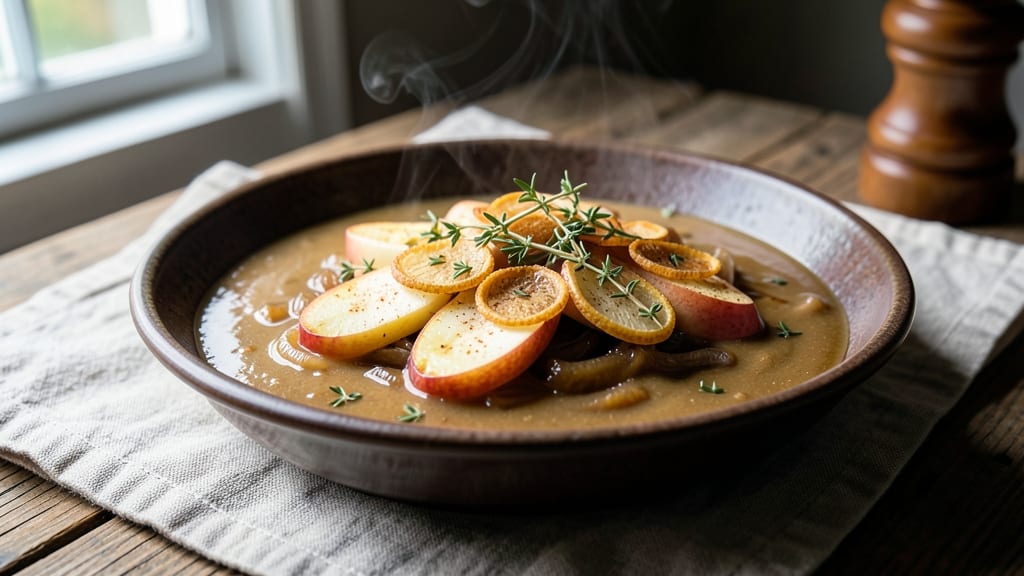
This apple and onion gravy recipe transforms humble ingredients into a velvety, complex sauce that elevates everything from mashed potatoes to roasted meats. The secret lies in caramelizing onions until deep golden, then balancing their sweetness with tart apples and a rich, velvety finish.
What starts as a simple combination becomes a flavor powerhouse—savory, slightly sweet, and impossibly smooth.
A proper roux forms the foundation, creating that signature thickness without graininess, while apples add natural sweetness that cuts through richness. I've tested this gravy countless times, adjusting ratios until the flavors sing—just enough acidity to brighten, just enough depth to satisfy.
The result? A sauce so versatile it works as a dipping companion or a main event.
What makes this gravy truly special is its ability to transform ordinary meals into something extraordinary. The onions develop a caramelized depth that pairs beautifully with the apples' subtle tartness, while the roux ensures every spoonful is luscious and clingy.
It's the kind of sauce that makes people ask for seconds—and then thirds.
Perfect for holiday dinners, family gatherings, or even a cozy weeknight supper, this gravy comes together in about 30 minutes with simple pantry staples. The best part? It tastes even better the next day as flavors meld. Let's make this gravy that steals the show.
Ingredients for apple and onion gravy
Nine essential ingredients transform humble pantry staples into luxurious, velvety apple and onion gravy.
| Ingredient | Amount | Notes |
|---|---|---|
| Yellow Onions 🧅 | 2 large | Thinly sliced for caramelization |
| Apples 🍎 | 2 medium | Tart variety like Granny Smith |
| All-Purpose Flour 🌾 | ½ cup | For roux foundation |
| Unsalted Butter 🧈 | ½ cup | Cold for proper roux development |
| Beef Broth 💧 | 2 cups | Low-sodium preferred |
| Apple Cider Vinegar 🍏 | 2 tbsp | For brightness and acidity |
| Granulated Sugar 🍚 | 1 tbsp | Balances tartness |
| Fresh Thyme Leaves 🌿 | 1 tbsp | Or 1 tsp dried thyme |
| Salt 🧂 | 1 tsp | Diamond Crystal preferred |
| Black Pepper 🌶️ | ½ tsp | Freshly ground |
The onions and apples are the flavor anchors. Yellow onions should be sweet and fresh, with crisp layers that caramelize beautifully—skip the wilted ones at the back of the bin. For apples, Granny Smiths deliver that perfect tartness, but Honeycrisp works too if you prefer sweeter notes. Whole Foods and Trader Joe's carry excellent quality for both. The flour and butter form the gravy's backbone, so use all-purpose flour (not cake flour) and unsalted butter for precise flavor control. The beef broth should be low-sodium to avoid overpowering the delicate balance of flavors.
No beef broth? Vegetable broth works equally well, though the flavor profile shifts slightly. Substituting apples? Pear or cranberry juice adds depth without altering the method. The apple cider vinegar can be swapped for lemon juice at half the amount, though it lacks the subtle apple notes. For a richer finish, add 1 tbsp of apple butter at the end. The thyme is non-negotiable—it rounds out the savory-sweet balance. If you're using dried thyme, toast it lightly in a dry pan first to deepen the flavor. The sugar isn't just for sweetness; it helps caramelize the onions further during cooking.
This gravy thickens as it sits, so reheat with a splash of water or broth to restore consistency. Store in an airtight container in the fridge for up to 5 days, or freeze for 3 months. For holiday prep, make a double batch—the extra reheats beautifully and becomes even more flavorful. The roux stage is critical; don't rush it. The onions should be deep golden, almost jammy, before adding apples. Patience here transforms this from ordinary gravy to extraordinary.
Why You'll Love This Recipe
- Pantry Magic: I swear by this recipe when I forget to shop. Onions and apples? Always in my fridge. Butter and flour? The basics. Boom—gravy in 15 minutes with what’s already there.
- Sweet-Savory Balance: That caramelized onion meets apple? It’s like a hug for your taste buds. The apples add a subtle sweetness that cuts through the richness of the butter, making every spoonful feel special.
- Leftovers Reinvented: Turns plain roast chicken or mashed potatoes into a showstopper. I’ve even drizzled it over pancakes for breakfast—yes, really. The beef broth keeps it rich without needing extra ingredients.
- Budget-Friendly Luxury: Uses simple ingredients that won’t break the bank. A single onion and apple stretch for multiple meals, and the flour-butter roux makes it feel fancy without costing a fortune. My wallet thanks me.
Step-by-step instructions for apple and onion gravy
This rich gravy transforms humble ingredients into a velvety sauce with perfect balance of sweet and savory.
Develop a Golden Roux with Butter and Flour
Place the 0.5 cup unsalted butter in a heavy-bottomed saucepan over medium heat. Let it melt completely, then reduce heat to medium-low and whisk in the 0.5 cup all-purpose flour all at once. This creates a roux - the foundation of our gravy.
Whisk continuously for 3-4 minutes until the mixture turns a deep, golden brown color - about the shade of peanut butter. This color indicates proper development of the roux, which adds depth of flavor. If it darkens too quickly, reduce the heat slightly. The roux should smell nutty and toasty - this is your cue that it's ready for the next step.
Caramelize Onions and Apples for Depth
Add the 2 large thinly sliced yellow onions and 2 medium diced apples to the roux. Stir well to coat the vegetables completely in the golden mixture. Increase heat to medium and cook for 8-10 minutes, stirring frequently.
You'll see the onions soften and the apples break down, releasing their juices. Continue cooking until the mixture becomes a deep amber color and the raw onion taste disappears completely. This caramelization process develops complex sweet and savory notes that form the heart of our gravy. The apples will soften and contribute natural sweetness that balances the savory elements.
Deglaze with Vinegar and Broth
Pour in the 2 tbsp apple cider vinegar and stir vigorously to scrape up any browned bits from the bottom of the pan. These flavorful bits are called fond, and they contain concentrated flavor that would otherwise be lost. Let the vinegar simmer for 1-2 minutes until it's mostly evaporated.
Gradually whisk in the 2 cups beef broth, one ladle at a time, allowing each addition to incorporate completely before adding more. This gradual approach prevents lumps and ensures a smooth, velvety texture. Bring the mixture to a gentle simmer and cook for 10 minutes, stirring occasionally, until it thickens slightly.
Season and Finish to Perfection
Add the 1 tbsp granulated sugar, 1 tbsp fresh thyme leaves, 1 tsp salt, and 0.5 tsp black pepper to the simmering gravy. Stir well to combine all the ingredients thoroughly. Taste and adjust seasoning if needed - you may need a bit more salt to balance the sweetness from the apples and caramelized onions.
Simmer for an additional 5 minutes to allow all the flavors to meld together. The gravy should coat the back of a spoon and have a glossy sheen. If it's too thick, whisk in 1-2 tablespoons of water to reach your desired consistency. Remove from heat and let it rest for 5 minutes before serving to allow the flavors to fully develop.
Pro Tips For Making Apple And Onion Gravy
- COOK ONIONS LOW AND SLOW: I learned this the hard way—when you rush the onions, they turn bitter and release too much water, thinning your gravy into mush. Simmer them on medium-low for 10-12 minutes until they’re deep golden and translucent, not a single crispy edge left. That’s when the sweetness comes out, and your gravy won’t taste like sad office coffee.
- GRATE APPLES, DON’T CHOP: Thinly sliced apples turn to mush and make your gravy gluey. Use a box grater or food processor for a fine, even texture—it cooks faster and blends smoothly without clumps. (Yes, even if you’re impatient like me, resist the urge to dice them.)
- WHISK FLOUR IN LIKE SNOW: Dumping flour all at once creates lumps that won’t dissolve, no matter how long you stir. Add it gradually to the cold butter while whisking vigorously—think of it like mixing a milkshake, not a science experiment. A smooth roux is the thing that matters most here.
- SALT THE BROTH FIRST: Unsalted butter and broth can leave your gravy tasting flat. Season the broth before adding it to the roux, then adjust at the end—this guarantees flavor, not guesswork. (Your future self will thank you when you’re not frantically adding salt at the table.)
Storing and reheating this dish
Refrigerator Storage
Let your apple and onion gravy cool completely before transferring to an airtight container—I use glass Pyrex with snap-on lids for best results. Store it in the refrigerator at 40°F or below for up to 5 days.
The flavors actually deepen overnight as the spices meld, making it even more delicious the next day. 💫
Freezer Storage
For longer storage, portion the gravy into quart-sized freezer bags or glass containers, leaving 1 inch of headspace for expansion. Freeze for up to 3 months—the texture remains velvety smooth when reheated properly.
I recommend labeling with the date so you can track freshness. Thaw overnight in the fridge for best results.
Stovetop Reheating
My preferred method is reheating on the stovetop to maintain that perfect consistency. Pour the gravy into a saucepan and warm over medium-low heat, stirring frequently. If it thickens too much, whisk in 1-2 tablespoons of water or beef broth to restore its silky texture.
Simmer for 5-7 minutes until heated through—165°F internal temperature ensures safety. 🔥
Microwave Reheating
For quick reheating, transfer gravy to a microwave-safe bowl and cover loosely with a microwave-safe lid or damp paper towel. Heat on 50% power in 1-minute intervals, stirring between each interval. This prevents overheating and keeps the texture smooth. Avoid microwaving uncovered—it can cause splattering and alter the consistency.
Reviving Thickened Gravy
If your gravy thickens too much after storage, don't despair! Simply whisk in 1-2 tablespoons of warm water, broth, or even apple cider until it reaches your desired consistency.
The acidity in the cider helps cut through any richness that might have developed during storage. This trick works wonders for restoring that velvety texture. ✨
Garnishing for Freshness
Before serving reheated gravy, garnish with a sprinkle of fresh thyme leaves or a drizzle of apple cider to brighten the flavors. A pinch of smoked sea salt adds an extra layer of depth.
These finishing touches make reheated gravy taste almost as good as fresh—trust me, it's a game-changer for leftovers! 💡
Nutrition facts
Frequently asked questions
Can I substitute regular flour for the all-purpose flour in this gravy?
Yes, you can use regular flour, but there's a slight difference. All-purpose flour creates a smoother, more velvety texture due to its balanced protein content. Regular flour has slightly more protein, which can make the gravy slightly thicker and potentially more prone to lumps. For best results, stick with all-purpose flour, but if you must substitute, whisk the regular flour vigorously into the butter to prevent clumping.
How do I adjust the thickness of this gravy?
If your gravy is too thick, whisk in 1-2 tablespoons of warm water, beef broth, or apple cider until it reaches your desired consistency. For a thicker gravy, simmer uncovered for 3-5 extra minutes to reduce the liquid. Remember, gravy thickens as it cools, so it's better to err on the thinner side when serving immediately. The acidity in apple cider helps balance the richness beautifully.
What's the best way to use up leftover gravy?
This versatile gravy works perfectly as a dipping sauce for biscuits, dinner rolls, or roasted vegetables. It also makes an excellent topping for mashed potatoes, roasted chicken, or even as a glaze for pork chops. For a creative twist, use it as a filling for pot pies or empanadas. The flavors actually deepen when reheated, so don't hesitate to get creative with leftovers!
Can I make this gravy vegetarian?
Simply replace the beef broth with 2 cups vegetable broth and add 1 tbsp soy sauce or mushroom powder for depth. The umami from these ingredients helps balance the sweetness from the apples and caramelized onions. For extra richness, stir in 1 tablespoon of nutritional yeast at the end for a cheesy, savory note. The texture and flavor will still be incredibly satisfying.
Why did my gravy turn out too sweet?
This often happens when using sweeter apple varieties or when the onions caramelize too much. To balance the sweetness, add 1 extra tablespoon of apple cider vinegar or lemon juice to brighten the flavors. If the sweetness persists, a pinch of smoked paprika or a dash of cinnamon can add warmth that complements the apples beautifully. Taste as you go—this gravy is all about finding that perfect balance!